Vocabulary development Plants and Animals Worksheets for Ages 5-8
4 filtered results
-
From - To
Explore our engaging Vocabulary Development: Plants and Animals Worksheets designed for ages 5-8! These educational resources help young learners expand their vocabulary while discovering the wonders of nature. Each worksheet integrates fun activities and vivid illustrations, making it easy for kids to identify and remember new words related to plants and animals. Ideal for use at home or in the classroom, these worksheets encourage curiosity and enhance reading skills. Whether learning about flowers, trees, mammals, or insects, our worksheets inspire a love for science and the environment through targeted vocabulary practice. Start your child's learning adventure today!
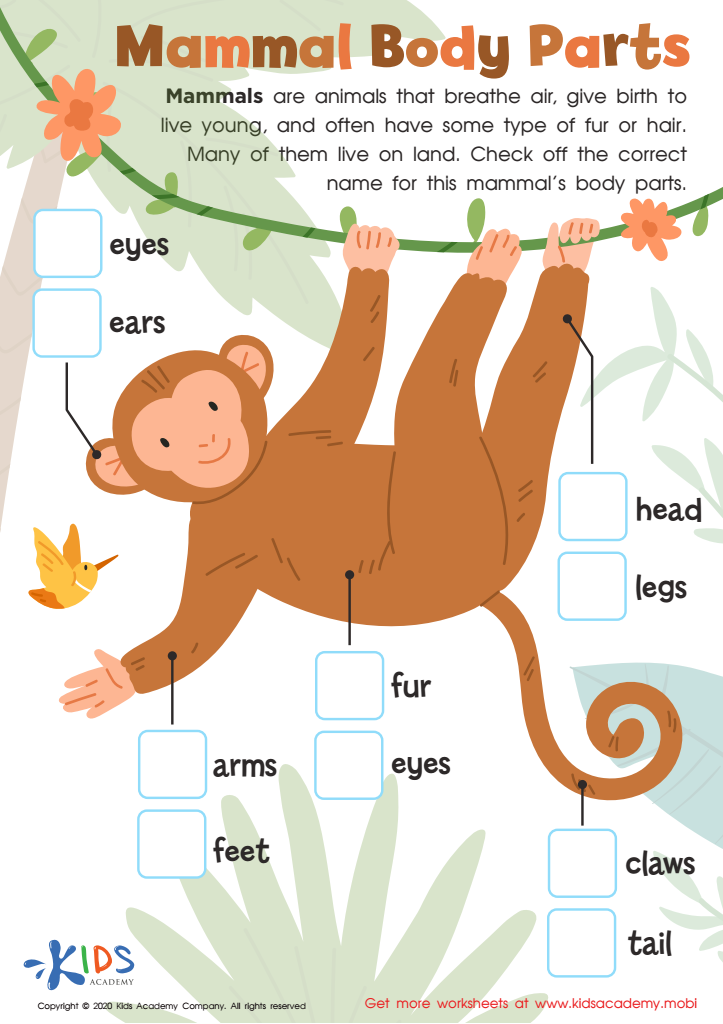
Mammal Body Parts Worksheet
 Assign to My Students











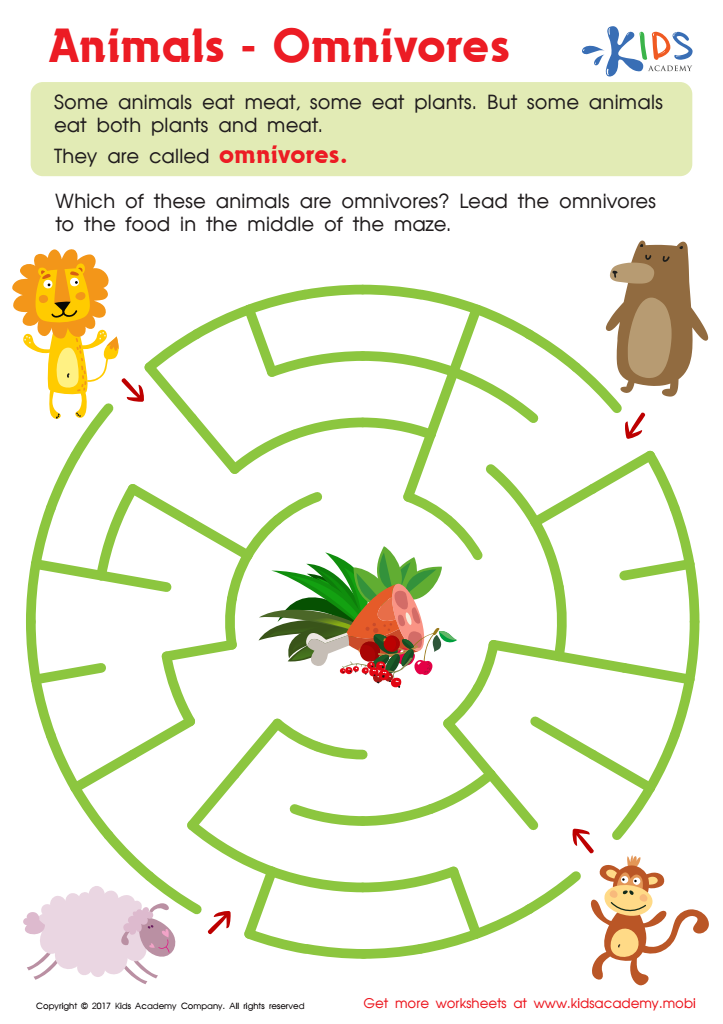
Omnivores Animals Worksheet
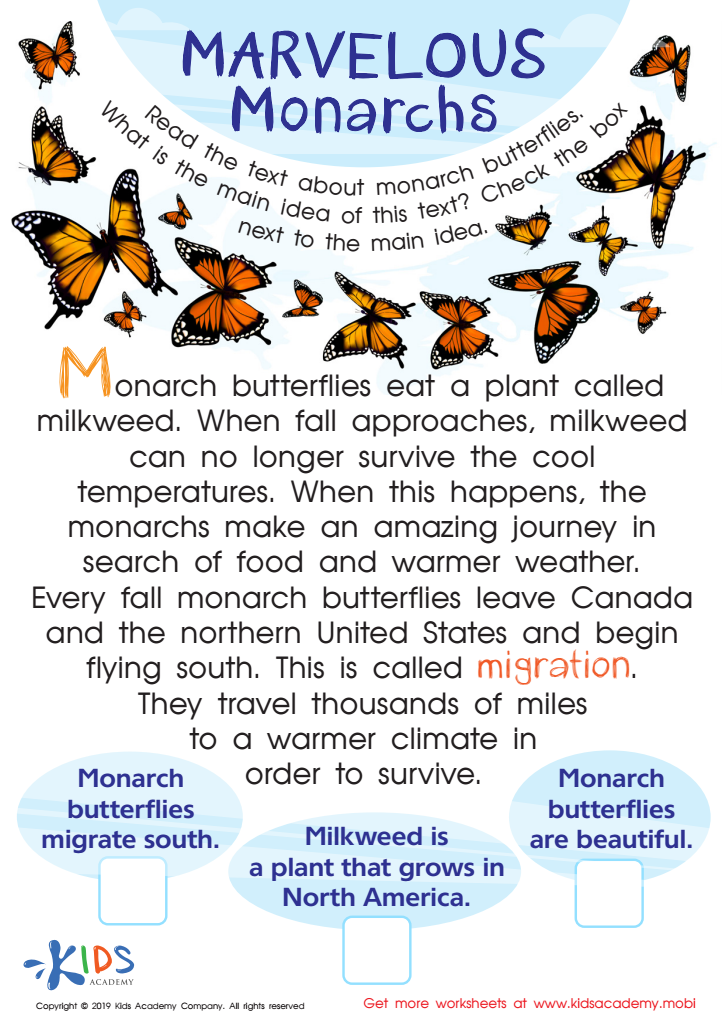
Marvelous Monarchs Worksheet
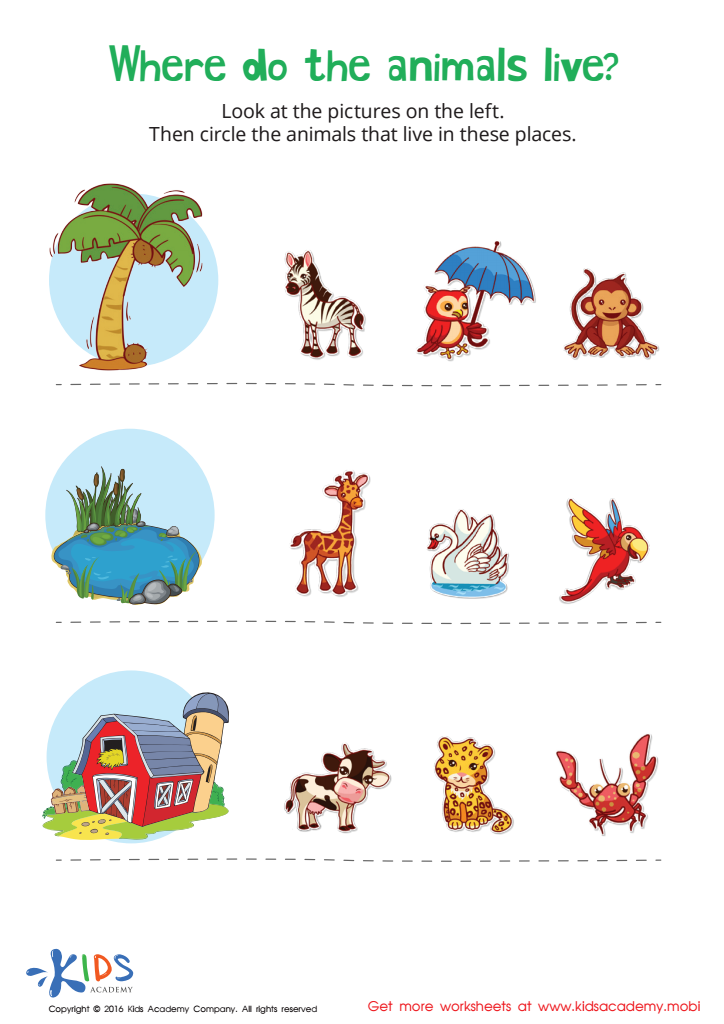
Where Animals Live Worksheet








Vocabulary development in areas like plants and animals is critical for children aged 5-8, as it lays the foundation for their overall cognitive and academic growth. At this age, children's brains are highly receptive to new information and language acquisition. Building a rich vocabulary related to plants and animals helps stimulate their curiosity about the natural world, fostering a love for science and the environment.
When children understand terms like "photosynthesis" or "carnivore," they don't just memorize words; they gain insights into how ecosystems function, the interdependence of living organisms, and the basics of life sciences. This foundational knowledge is essential for later learning in subjects like biology, environmental science, and geography.
Moreover, discussing plant and animal vocabulary enhances children's language skills, including reading comprehension and verbal expression. For example, knowing the names and characteristics of different animals and plants boosts descriptive language abilities, enriching their storytelling and conversation skills.
Teachers and parents play a pivotal role by encouraging exploration and providing learning resources, such as books, educational games, and outdoor experiences. This early investment in vocabulary development drives academic success, promotes critical thinking, and nurtures an appreciation for the natural world, setting children on a path of lifelong learning and curiosity.








