Cultural awareness Community Worksheets for Ages 5-8
3 filtered results
-
From - To
Explore our Cultural Awareness Community Worksheets for Ages 5-8, designed to help young learners understand and appreciate the diverse cultures within their communities. These engaging worksheets promote inclusivity and respect, allowing children to discover various cultural traditions, holidays, and practices. Through interactive activities, kids will build critical thinking and communication skills while fostering empathy and understanding towards others. With colorful visuals and age-appropriate tasks, these resources are perfect for classrooms or at-home learning. Encourage your child’s curiosity about the world around them and help them celebrate cultural differences with our thoughtfully crafted worksheets. Dive into cultural exploration today!
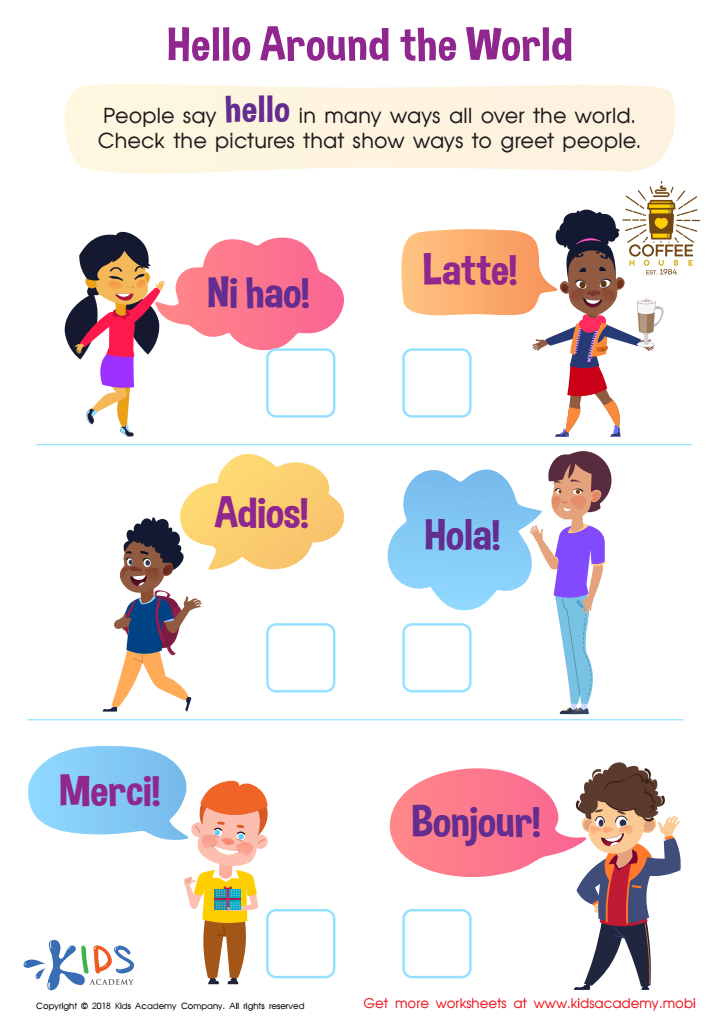
Hello Around the World Worksheet
 Assign to My Students
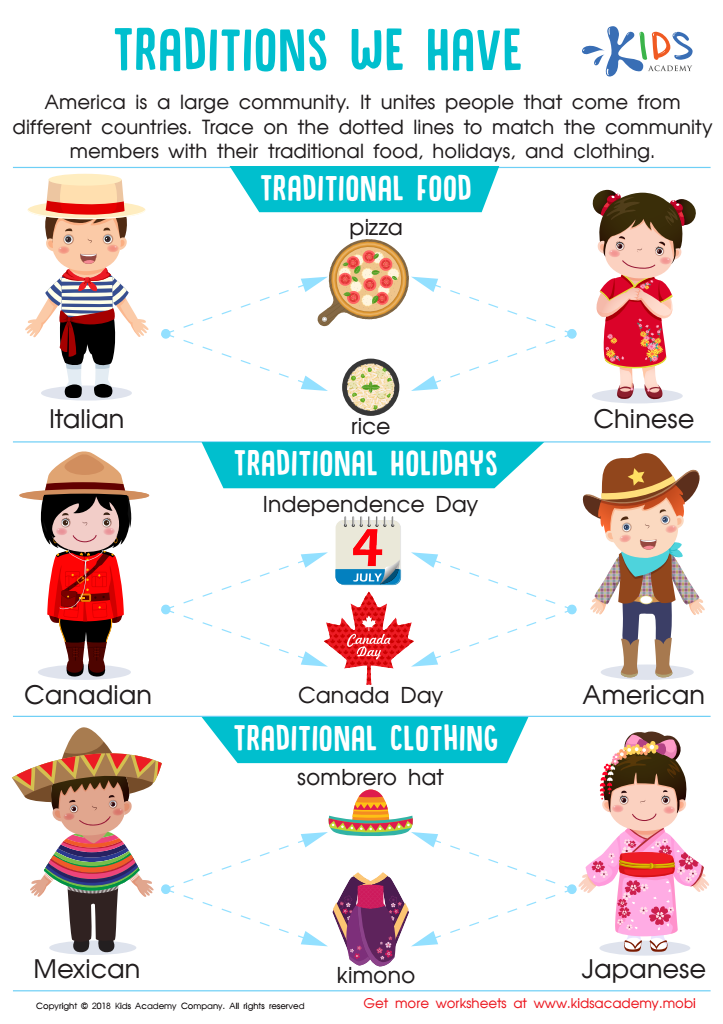
Traditions We Have Worksheet
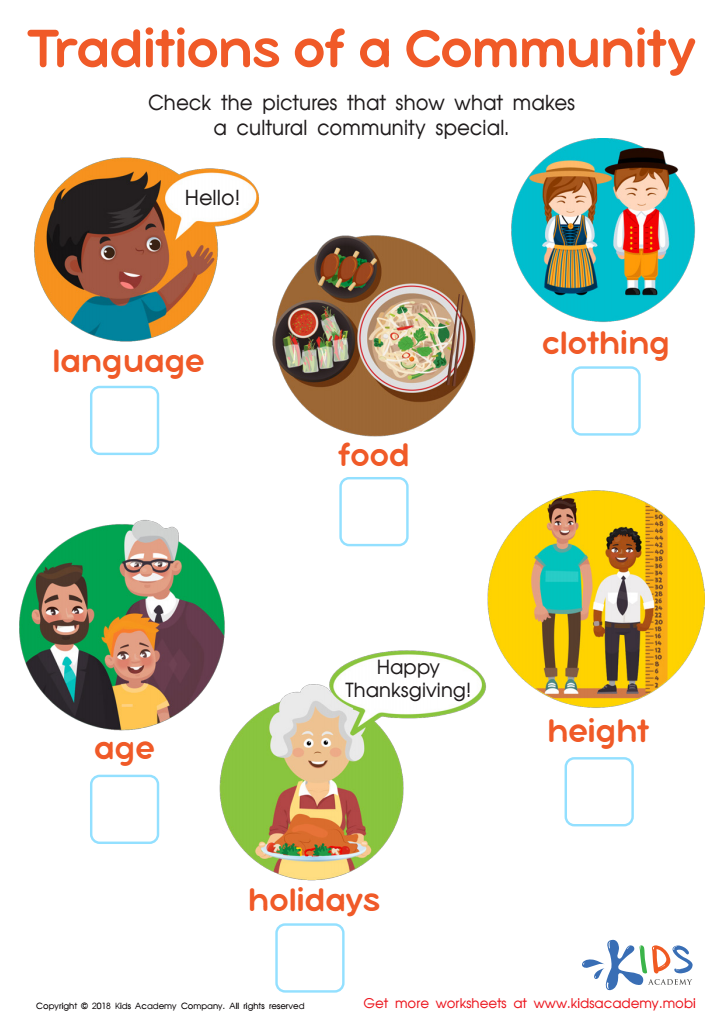
Traditions of a Community Worksheet








Cultural awareness in children aged 5-8 is essential because it fosters a sense of respect, empathy, and inclusiveness in young learners. At this age, children are forming their understanding of the world, and exposure to diverse cultures can significantly shape their worldview. When parents or teachers nurture cultural awareness, children learn to appreciate different traditions, languages, and perspectives, making them more open-minded and compassionate individuals.
Additionally, promoting cultural awareness helps combat stereotypes and biases from an early age. When children engage with stories, activities, and discussions about various cultures, they begin to see the richness of diversity rather than differences that divide. This understanding prepares them for a globalized society where collaboration and respect for others are crucial.
Moreover, culturally aware children develop stronger social skills and the ability to form friendships with peers from various backgrounds. This sense of community enriches their learning experience, enhancing creativity and problem-solving skills.
Overall, caring about cultural awareness in education not only benefits children individually but paves the way for a more inclusive and harmonious society. By investing time in this area, educators and parents play a vital role in shaping informed, respectful future citizens.








