Fine Motor Skills Community Worksheets for Ages 5-8
3 filtered results
Difficulty Level
Grade
Age
-
From - To
Subject
Activity
Standards
Nurture your child's fine motor skills with our specially designed Fine Motor Skills Community Worksheets for ages 5-8. At Kids Academy, we understand the importance of developing dexterity and precision. Our engaging, community-themed worksheets include activities like tracing, cutting, and drawing that help strengthen coordination and control. Perfectly tailored for young learners, these exercises are not only educational but fun, encouraging kids to explore and learn about their world. Enhance your child's motor skills and boost their confidence with our expertly crafted resources. Visit Kids Academy for these essential worksheets that make learning an enjoyable adventure!
Favorites
With answer key
Interactive
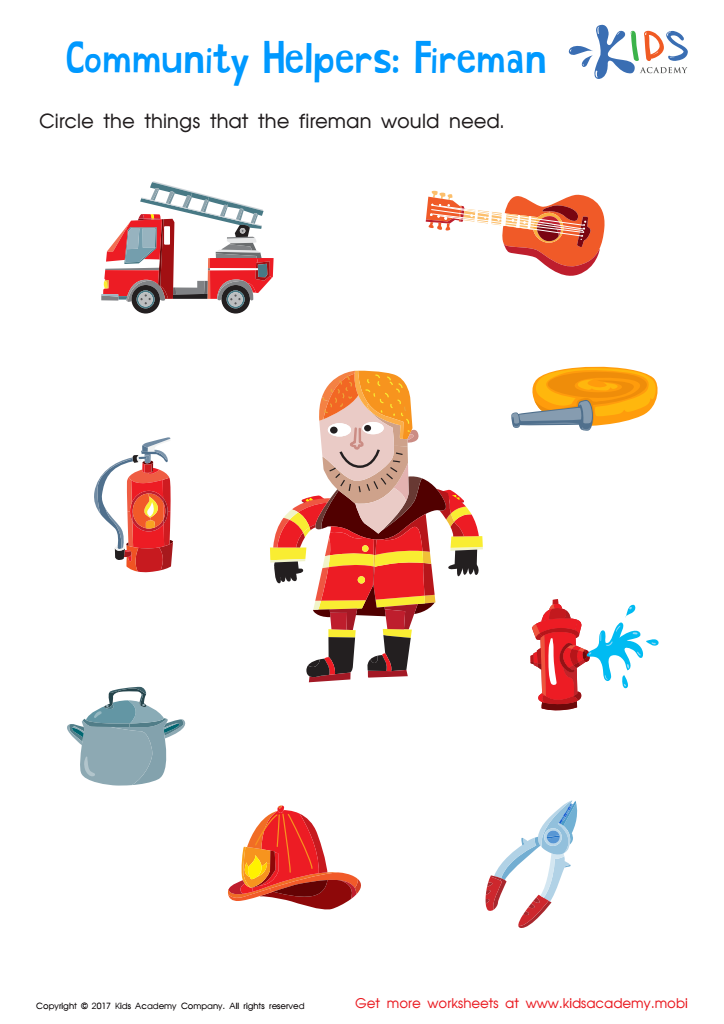
Fireman Worksheet
Kids love firemen and their big fire engines! Inspire your child to learn about their duties with this fun fireman worksheet. It'll help your child understand the role of firemen, as well as develop matching and problem solving skills. Get your kid started on understanding a key role in society and have fun too!
 Assign to My Students
Fireman Worksheet
Worksheet


Playground Worksheet
Head to the park with this playground worksheet! It strengthens sorting and cognitive skills while encouraging problem solving. Plus, it's fun-filled and engaging! When finished, head out to the park to see what items your child finds in the playground!
Playground Worksheet
Worksheet
Join Kids Academy for Free
Who is primarily going to use this learning content?







Fine motor skills are the small muscle movements that occur in coordination with the eyes, such as grasping a pencil, tying shoelaces, or handling small objects. From ages 5-8, children are at a pivotal stage of developing these skills, which are crucial for their overall growth and daily tasks. The Fine Motor Skills Community provides focused support, resources, and communal knowledge to aid parents and teachers in nurturing this essential aspect of child development.
Firstly, fine motor skills are integral to academic success. Proficiency in writing, drawing, and manipulating educational tools can heavily influence a child's performance in school. Mastery of these skills boosts confidence and fosters a positive attitude toward learning.
Secondly, fine motor skills have broader life implications. They enable children to perform everyday tasks independently, building self-reliance and problem-solving abilities. The community environment facilitates sharing of strategies, activities, and innovations to make this aspect of development both fun and effective.
Lastly, fine motor skills are closely linked to cognitive development. Activities that develop these skills often also enhance hand-eye coordination, spatial awareness, and cognitive planning.
By engaging in the Fine Motor Skills Community, parents and teachers can access valuable insights, collaborate on effective practices, and ensure a deeper, more comprehensive approach to supporting their children's development in these formative years.