
Event sequencing Social Studies Worksheets for Ages 5-8
3 filtered results
Difficulty Level
Grade
Age
-
From - To
Subject
Activity
Standards
Discover our engaging Event Sequencing Social Studies Worksheets designed specifically for children aged 5-8! These printable resources help young learners develop critical thinking and comprehension skills by encouraging them to organize events in chronological order. Our worksheets feature age-appropriate activities that cover various historical and social topics, fostering curiosity and an understanding of cause-and-effect relationships. With colorful images and interactive exercises, these worksheets make learning fun and accessible. Ideal for homeschooling or classroom use, our Event Sequencing Social Studies Worksheets promote creativity, enhance storytelling skills, and boost young minds’ abilities to connect events. Start your educational journey today!
Favorites
With answer key
Interactive
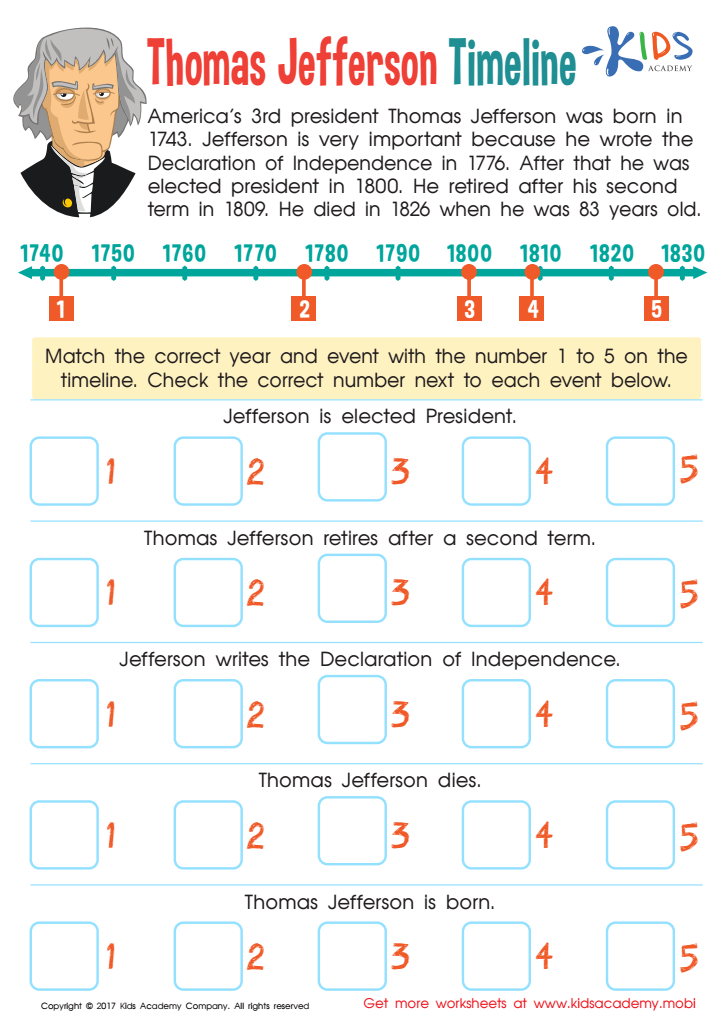
Thomas Jefferson Timeline Worksheet
Check your child's reading comprehension and knowledge of US history with this Thomas Jefferson timeline worksheet! Have them read the paragraph to learn about him, then use what they've read to fill in the timeline.
 Assign to My Students
Thomas Jefferson Timeline Worksheet
Worksheet
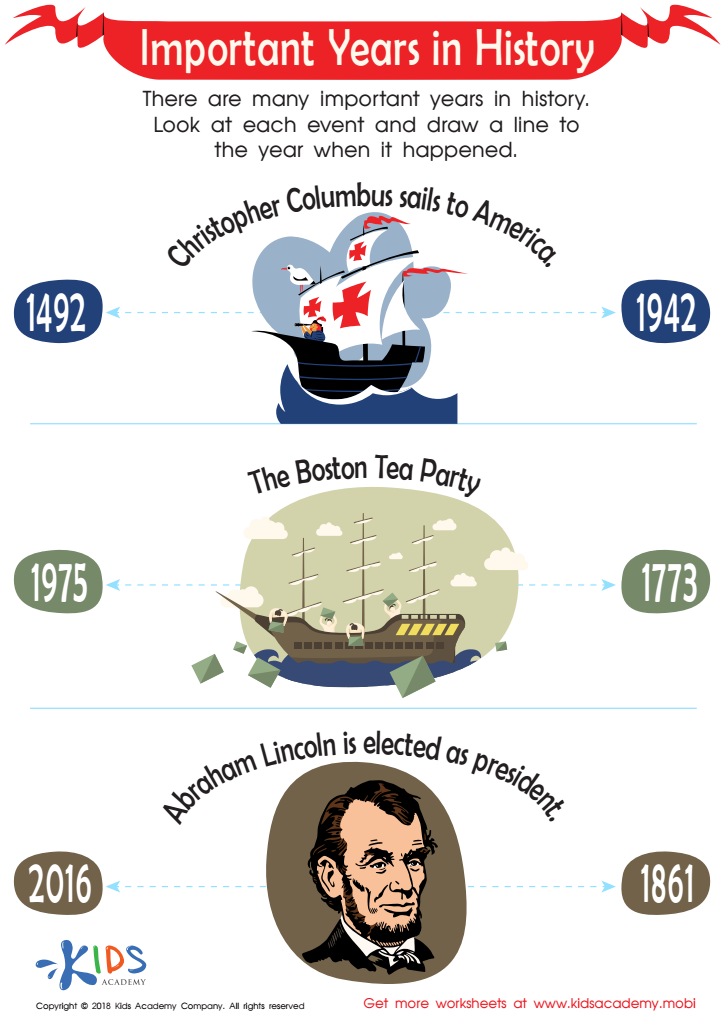
Important Years in History Worksheet
Ask your students if they can name any important dates in history. Then, look at the images in the worksheet with them. Read the sentences above each one to them and have them trace a line to the year when the event occurred.
Important Years in History Worksheet
Worksheet
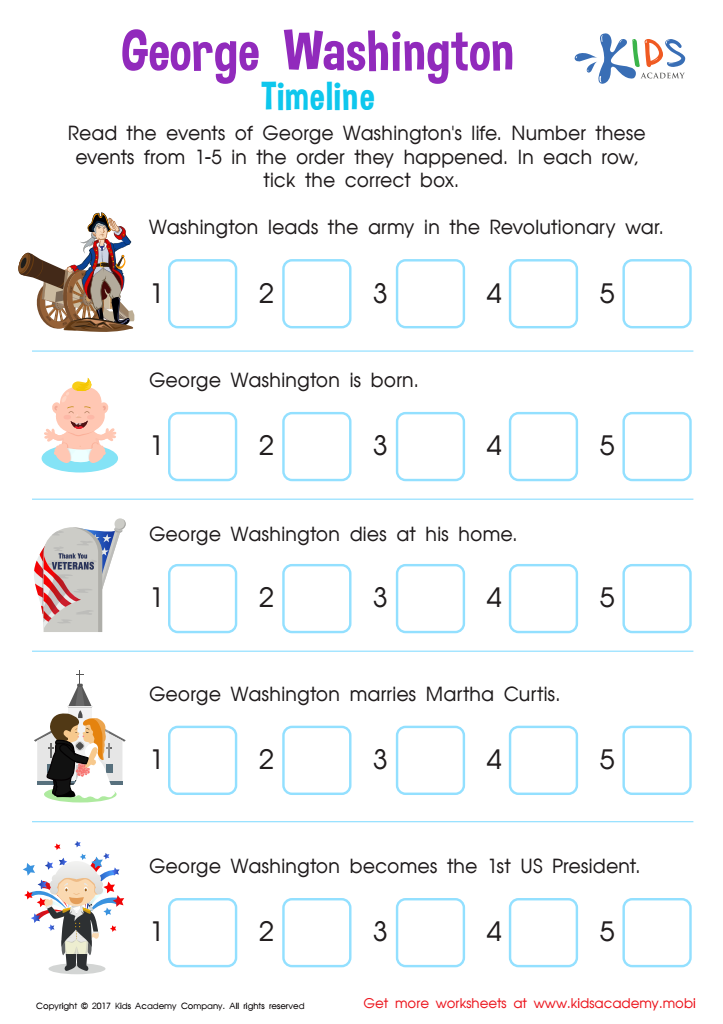
George Washington Timeline Worksheet
Help your child learn about George Washington and practice sequencing events! This printable worksheet will boost their reading and comprehension skills while they review historical facts. It's a great challenge to keep them engaged and learning.
George Washington Timeline Worksheet
Worksheet
Join Kids Academy for Free
Who is primarily going to use this learning content?







Event sequencing is a crucial skill in social studies for children aged 5-8, and it's essential for parents and teachers to recognize its importance. From a young age, our students begin to understand historical narratives, which involves grasping the concepts of past, present, and future. By learning to sequence events, children develop critical thinking skills that allow them to analyze stories and histories logically. This skill helps them comprehend cause-and-effect relationships, enabling them to see how one event leads to another, enhancing their overall understanding of social contexts.
Furthermore, event sequencing fosters early literacy and language development. As children describe or retell events in chronological order, they practice using expressive language skills beneficial across all subject areas. This cognitive development is intertwined with their understanding of society, bridging lessons in history, geography, and culture.
Moreover, teaching event sequencing encourages empathy and perspective-taking. For instance, understanding how historical events affect people helps children appreciate diverse experiences, fostering social awareness and inclusion. Parents and teachers who prioritize event sequencing in social studies thus equip children with vital skills for academic success, critical citizenship, and lifelong learning. This foundational understanding shapes the way they perceive and interact with the world around them.








