Geographic Understanding Social Studies Worksheets for Ages 5-8
3 filtered results
-
From - To
Discover engaging and educational "Geographic Understanding Social Studies Worksheets" designed for children aged 5-8. These colorful and interactive worksheets introduce young learners to essential geography concepts such as maps, globes, and basic geographic terms. Each worksheet encourages critical thinking and problem-solving skills while making learning fun and accessible. Perfect for both classroom settings and at-home learning, these worksheets help children build a solid foundation in social studies, enhancing their understanding of the world around them. Boost your child's geographic knowledge with these expertly crafted resources from Kids Academy.
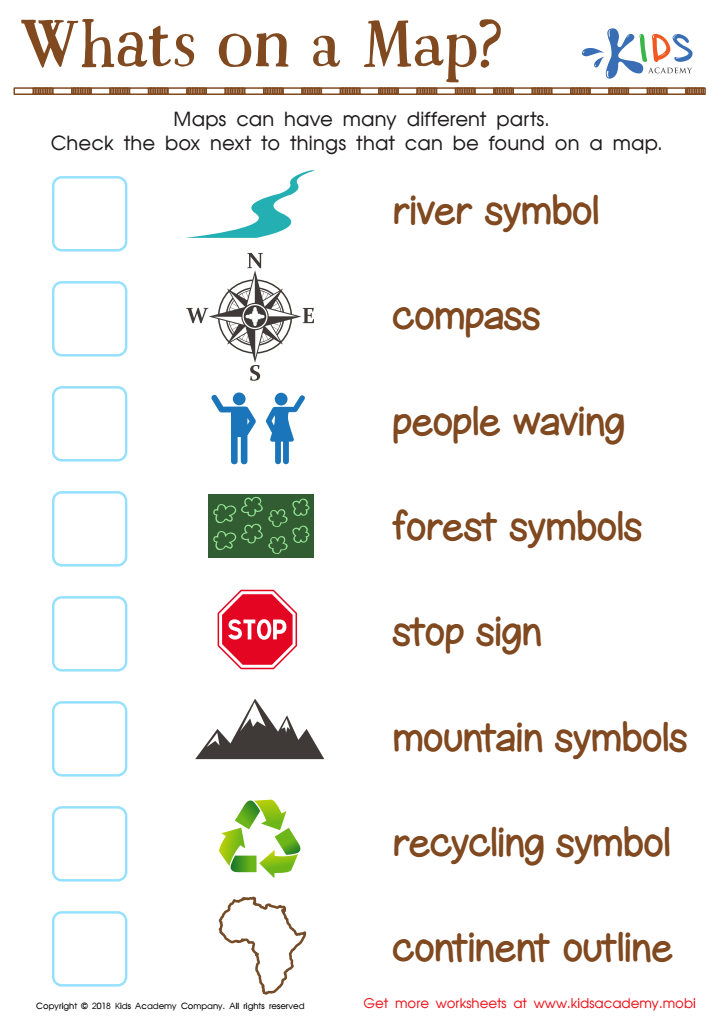
Whats on a Map? Worksheet
 Assign to My Students
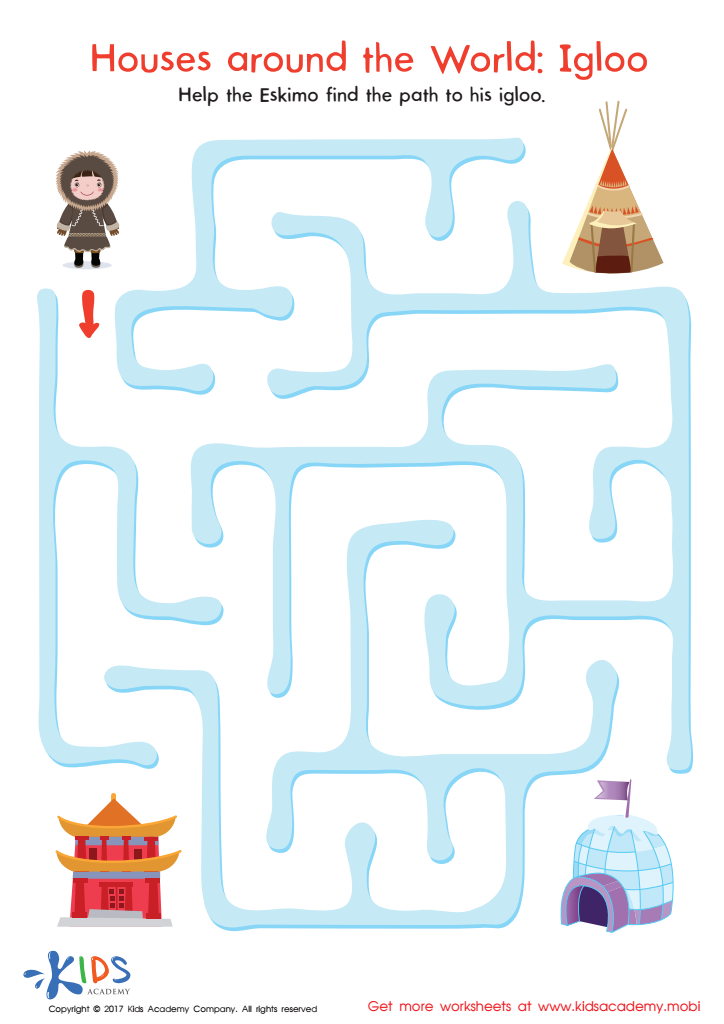
Houses Around the World: Igloo Printable
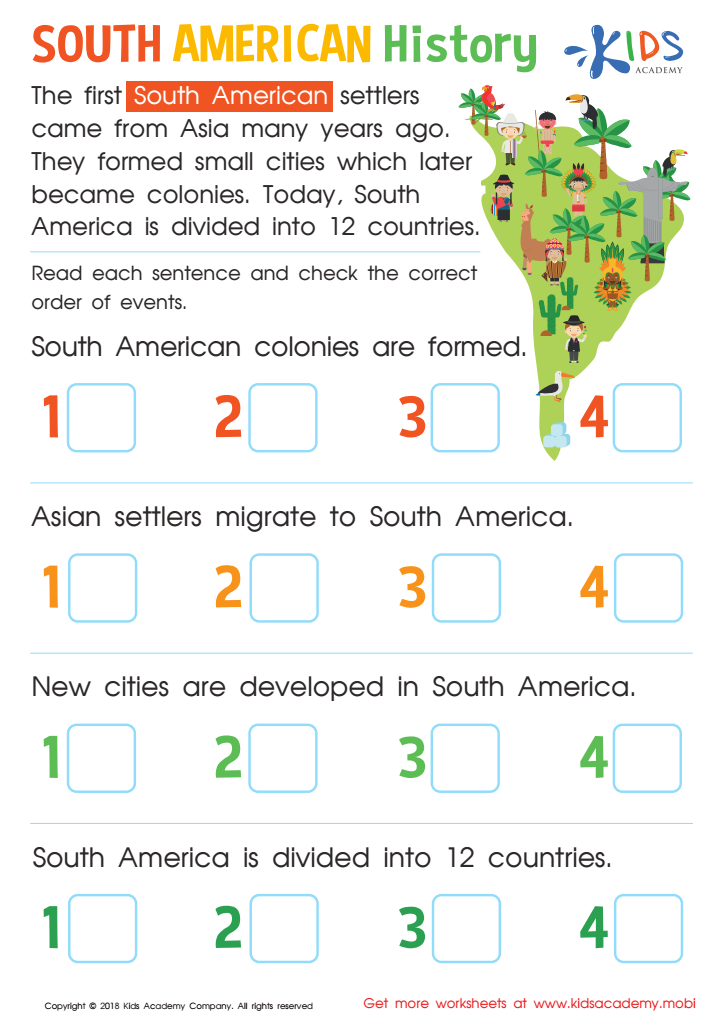
South American History Worksheet






Geographic understanding in social studies for ages 5-8 is crucial because it lays a foundational awareness of the world around them. Young children are naturally curious and eager to learn about their surroundings. Teaching them about geography helps spark that curiosity into a structured understanding of different places, cultures, and environments.
At this age, geographic knowledge promotes cognitive development by enhancing spatial thinking, which is the ability to visualize and understand the locations and relationships between different objects. It also fosters critical thinking and problem-solving skills as children begin to interpret maps and recognize geographical features like continents, oceans, mountains, and rivers.
Geography education at an early age instills a sense of place and belonging, helping children to comprehend their own position within the wider world and appreciate the diversity that exists. This understanding can nurture empathy and respect for others from different geographical and cultural backgrounds, fostering social cohesion and harmony.
Moreover, integrating geography with other disciplines like history and environmental science can make learning more holistic and interdisciplinary. Teachers and parents should emphasize geographic understanding because it prepares children for future learning, shapes informed global citizens, and inspires curiosity, exploration, and lifelong love for learning about the world.








