
Logical Reasoning Social Studies Worksheets for Ages 5-8
9 filtered results
Difficulty Level
Grade
Age
-
From - To
Subject
Activity
Standards
Enhance your child's critical thinking with our engaging Logical Reasoning Social Studies Worksheets designed for ages 5-8. These worksheets provide a fun and interactive way for young learners to explore social studies concepts while developing essential reasoning skills. Each activity encourages children to think logically, solve problems, and make connections between ideas. With colorful illustrations and relatable scenarios, your child will enjoy learning about community, geography, and human interactions. Whether at home or in the classroom, our worksheets are perfect for fostering a love of learning and building foundational skills necessary for academic success. Download and stimulate young minds today!
Favorites
With answer key
Interactive
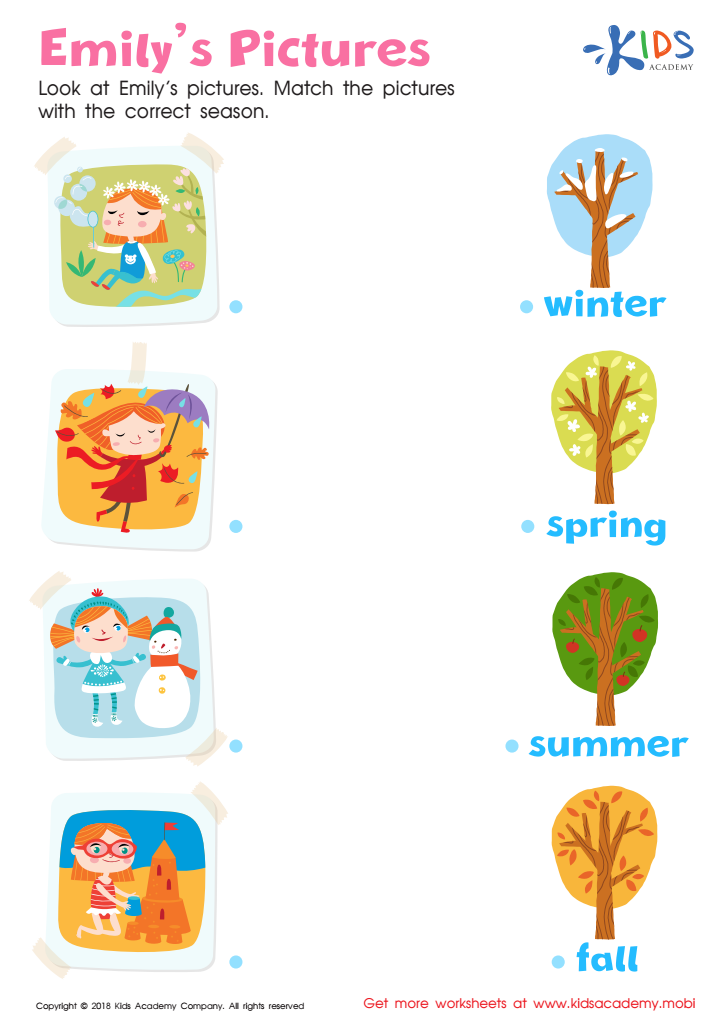
Emily's Pictures Worksheet
Look at the pictures of Emily on the left. Ask your child what she's doing in each one. Then, match the activities to the seasons on the right. Help your kids identify the correct season for each activity. Shorten to 80 words: Look at the pictures of Emily on the left. Ask your child what she's doing in each one, then match the activities to the seasons on the right. Help your kids find the correct season for each activity.
Emily's Pictures Worksheet
Worksheet
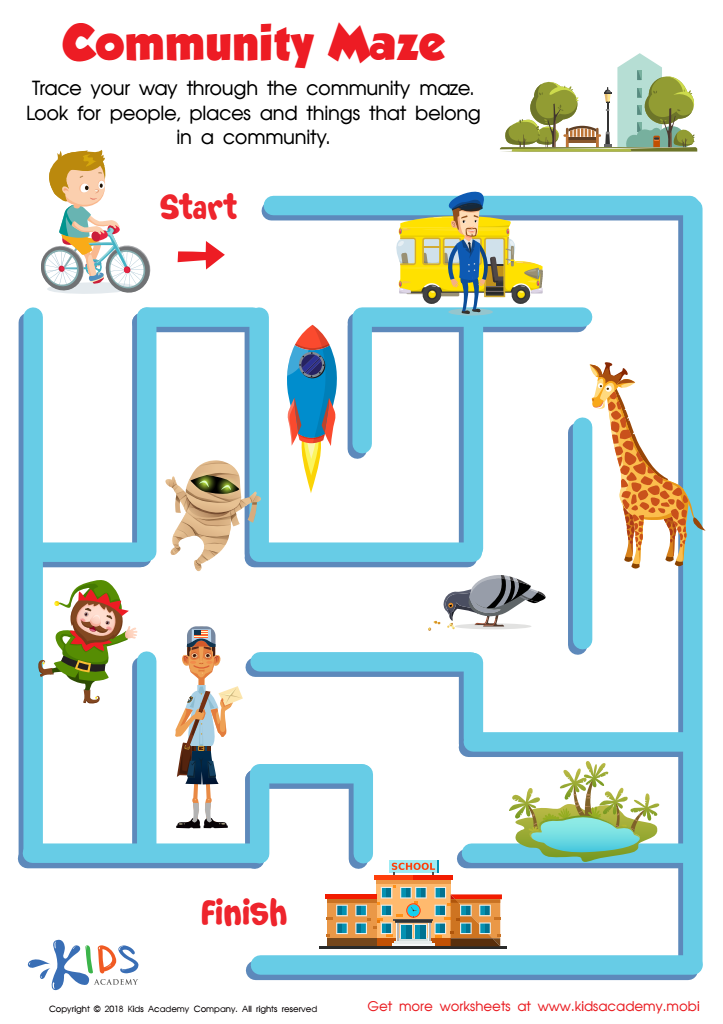
Community Maze Worksheet
Your kids will have a blast as they use their fine motor skills to trace their way through the community maze worksheet. Plus, they'll enjoy meeting people, places, and creatures to sort out who and what belong in a community and who and what don't! Help their friend bike to the neighborhood school and reinforce what life is like in a community.
Community Maze Worksheet
Worksheet
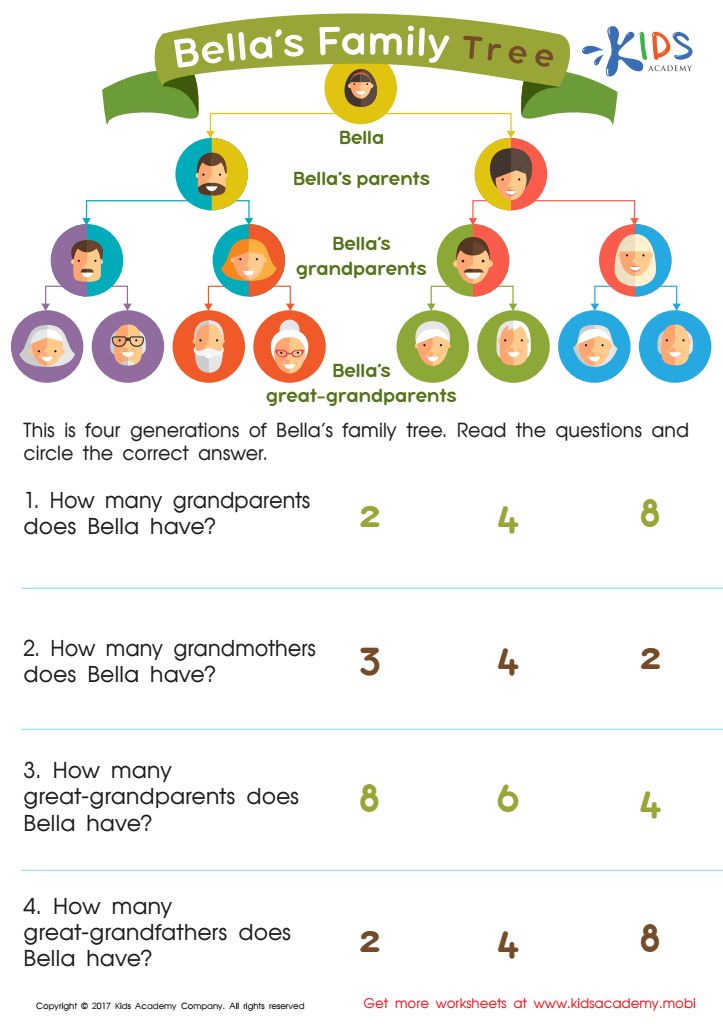
Bella's Family Tree Worksheet
Grade 2 kids learn 4 generations of a family with Kids Academy's new family tree worksheet. They explore Bella's tree, reading and answering questions about her grandparents and great-grandparents. It's an easy way to understand family relationships.
Bella's Family Tree Worksheet
Worksheet
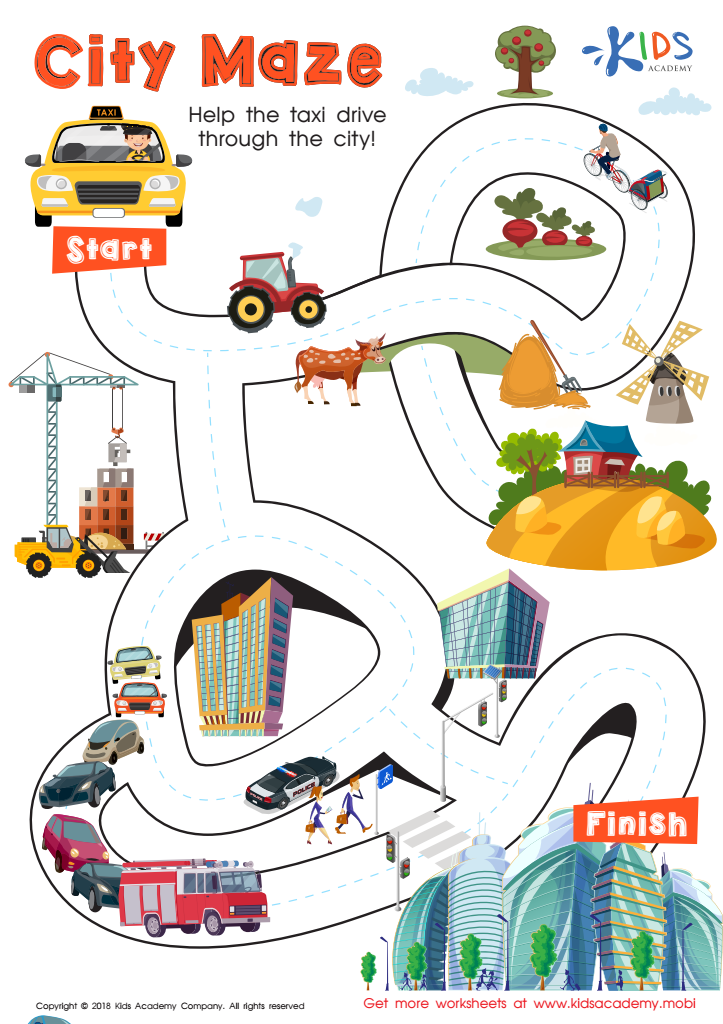
City Maze Worksheet
Kids love mazes! This free PDF city maze worksheet is sure to be a hit. Help your friend the taxi driver get through the maze, following traceable lines through different communities to the big city. It's a fun and challenging way to practice fine motor skills and succeed!
City Maze Worksheet
Worksheet
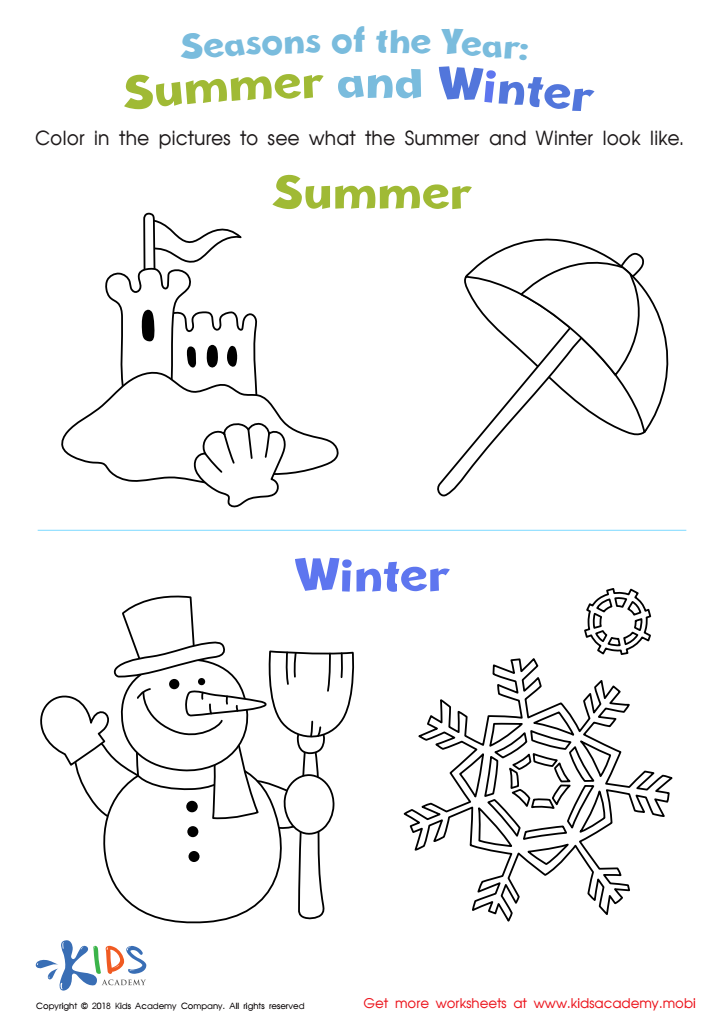
Summer and Winter Worksheet
Ask your child what they associate with winter and summer. What do they look forward to in winter? What colors do they see most? What do they love doing in summer? Help them color in the pictures of winter and summer in the worksheet, choosing the colors they think best represent each season.
Download (PDF)
 Assign to My Students
Assign to My Students
Summer and Winter Worksheet
Worksheet
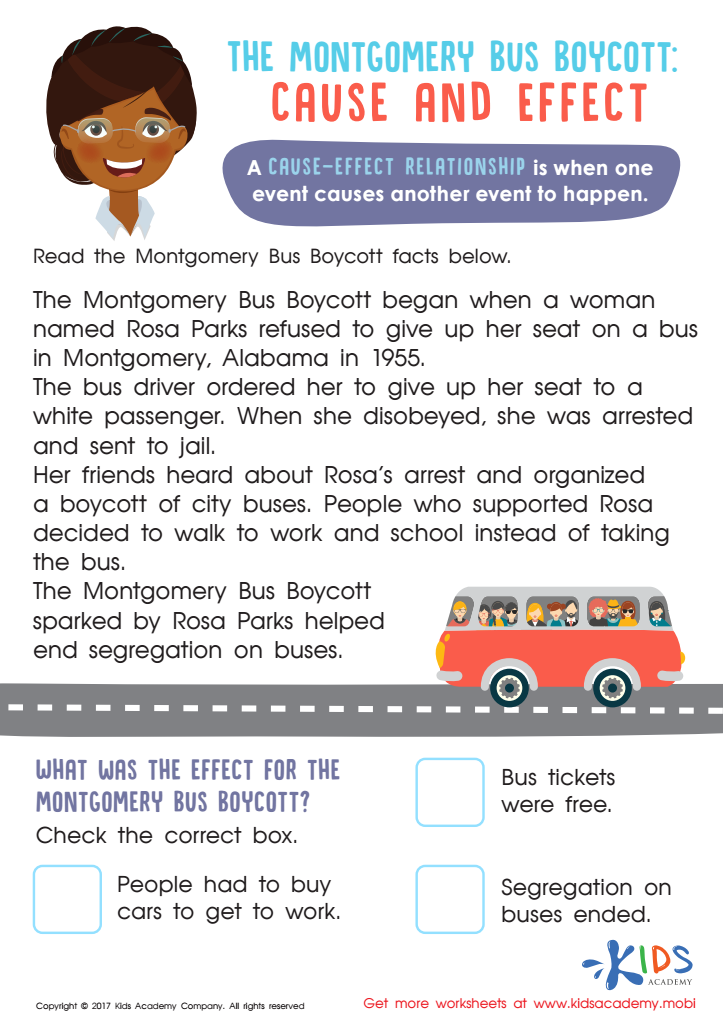
The Montgomery Bus Boycott Cause and Effect Worksheet
Kids Academy's cause-effect worksheet PDF introduces 2nd graders to cause-effect relationships through the Montgomery bus boycott. Kids read the story based on real facts and check the answers to demonstrate their understanding.
The Montgomery Bus Boycott Cause and Effect Worksheet
Worksheet
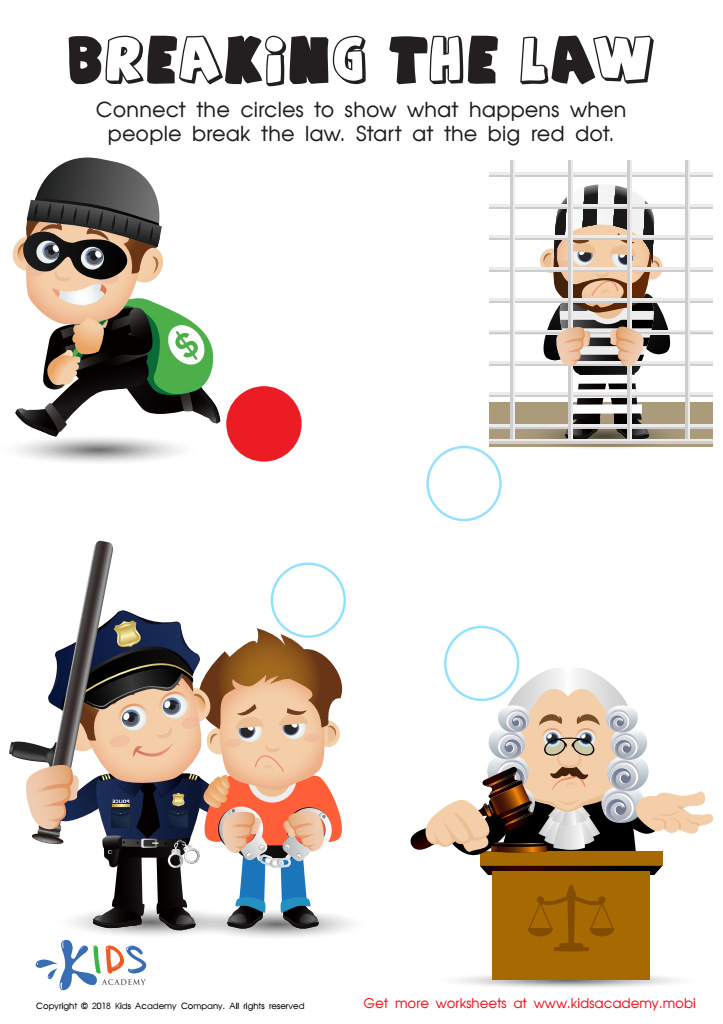
Breaking the Law Worksheet
Explain to your child why people go to jail. Show them this worksheet; it illustrates the stages a criminal goes through from breaking the law to receiving their punishment. Guide them in connecting the circles from the big red dot. Finish with a discussion on why it's important to follow the law.
Breaking the Law Worksheet
Worksheet
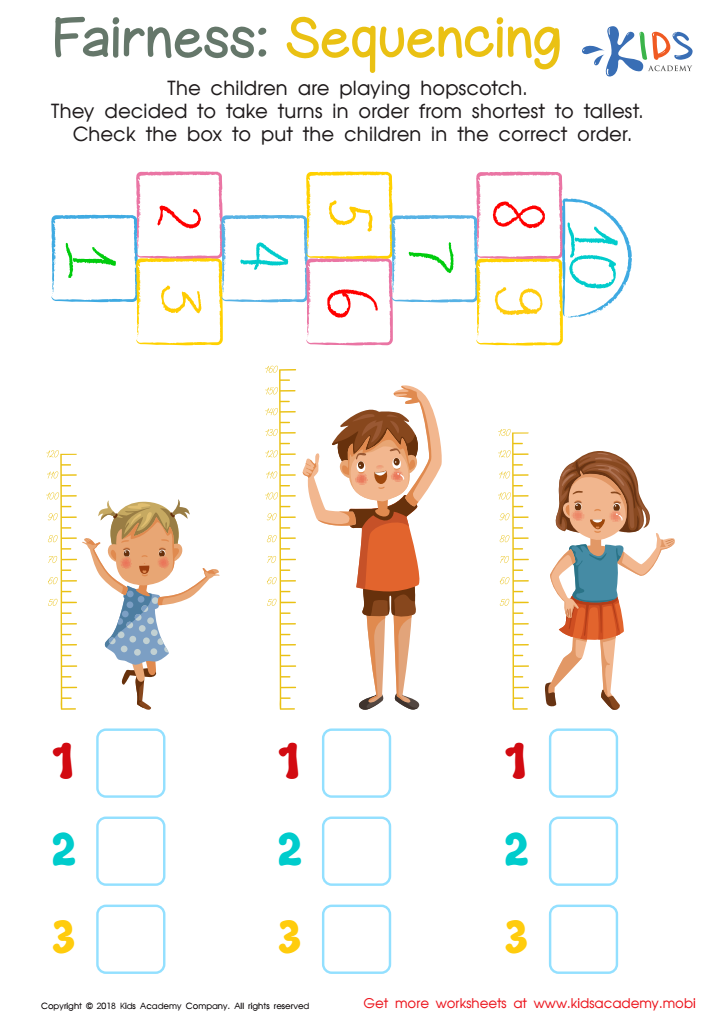
Fairness: Sequencing Worksheet
Kids likely already know how to play hopscotch. Ask them to show you the shortest, tallest and middle child in the worksheet. Then, help them order them from shortest to tallest by checking the boxes.
Fairness: Sequencing Worksheet
Worksheet
Join Kids Academy for Free
Who is primarily going to use this learning content?






Logical reasoning is a fundamental skill that enhances critical thinking and problem-solving abilities in young children. For ages 5-8, Social Studies presents a unique platform to nurture these skills. By exploring topics such as community, culture, and history, children can engage in activities that promote reasoning and understanding of the world around them.
Parents and teachers should care about integrating logical reasoning within Social Studies because it encourages students to ask questions, draw conclusions, and evaluate information. For instance, when discussing different cultures, children learn to compare and contrast various practices, thereby developing an analytical mindset. These reasoning skills not only support their academic growth but also contribute to their social-emotional development, helping them to understand diverse perspectives and fostering empathy.
Moreover, fostering logical reasoning in Social Studies prepares young learners for future educational challenges. As they learn to construct arguments, identify relationships, and make informed decisions, they become better equipped to tackle complex issues in higher grades and in real life. Ultimately, investing in logical reasoning within social studies enhances children’s ability to think critically, communicate effectively, and actively participate in their communities, laying a solid foundation for informed citizenship.








