Logical Reasoning World Around Us Worksheets for Ages 5-8
5 filtered results
-
From - To
Discover our engaging "Logical Reasoning World Around Us Worksheets" designed specifically for children aged 5-8. These printable resources aim to enhance critical thinking and problem-solving skills through fun exercises. Your young learners will explore patterns, categorize objects, and develop reasoning abilities while discovering the fascinating world around them. Our worksheets incorporate vibrant visuals and interactive activities that make learning enjoyable and effective. Perfect for classroom settings or home practice, these logical reasoning exercises will help build a strong foundation for future academic success. Start your child’s journey into logical reasoning today and watch them thrive educationally and cognitively!
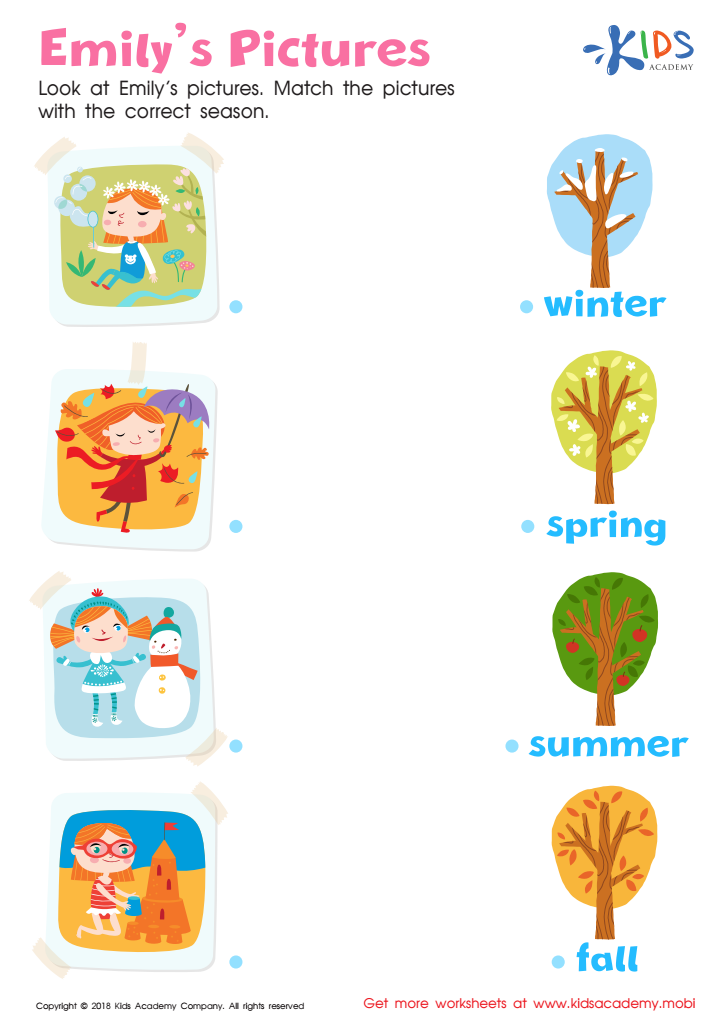
Emily's Pictures Worksheet
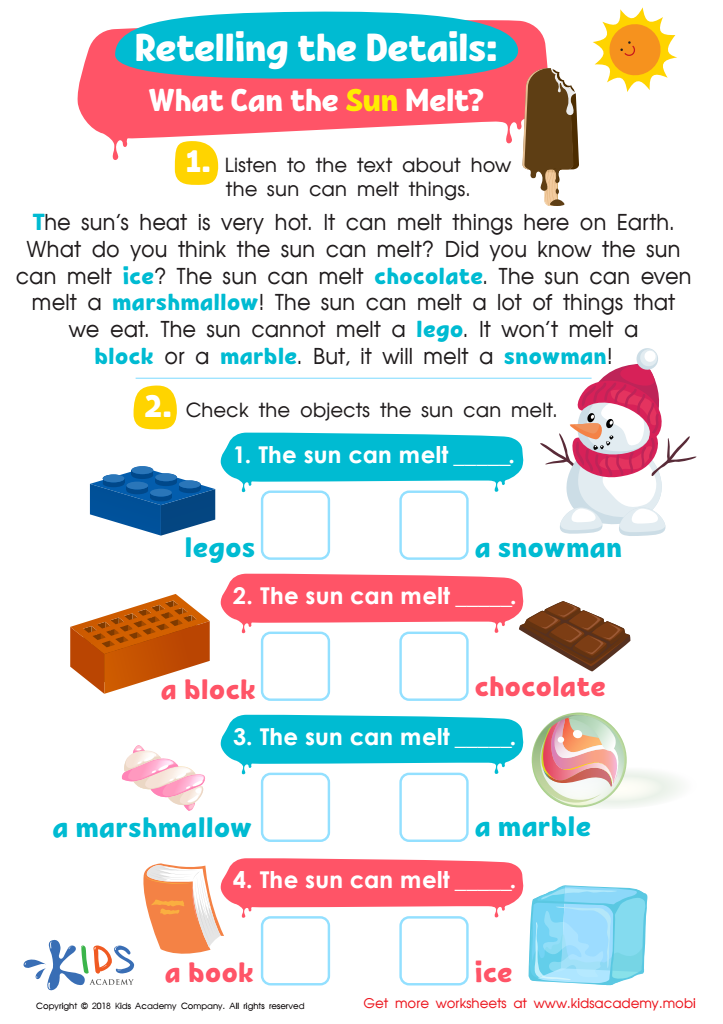
Retelling the Details: What Can the Sun Melt? Worksheet
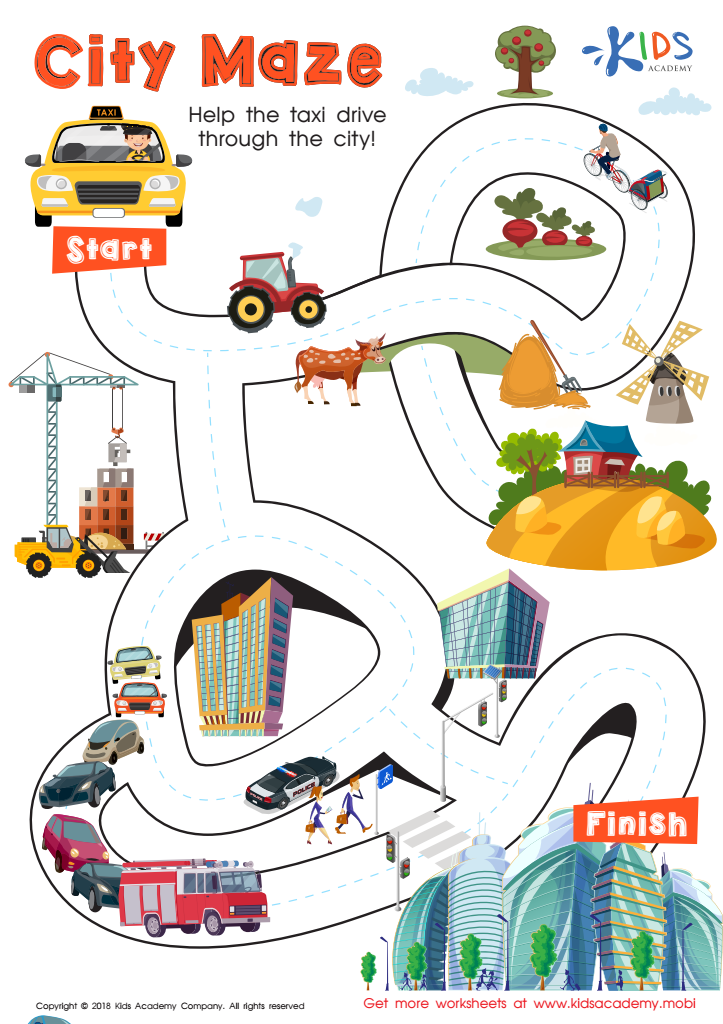
City Maze Worksheet

Summer and Winter Worksheet
 Assign to My Students







.jpg)
Teaching logical reasoning to young children aged 5-8 is essential for their cognitive and social development. At this age, kids are naturally curious and eager to explore the world around them. Logical reasoning skills enable them to connect ideas, solve problems, and make decisions based on evidence rather than impulse. This not only enhances their academic abilities but also builds a strong foundation for critical thinking.
Moreover, logical reasoning aids in the development of communication skills. As children learn to articulate their thought processes and justify their answers, they become more confident and effective communicators, both in and out of the classroom. Engaging with logical reasoning activities also fosters creativity, encouraging children to think outside the box and consider multiple perspectives when facing challenges.
For parents and teachers, supporting logical reasoning in children means providing them with tools to navigate everyday situations and making informed choices. It empowers children to ask questions, explore alternative solutions, and develop a sense of autonomy. As these skills are increasingly valued in today’s fast-paced world, prioritizing logical reasoning not only enriches children’s educational experiences but also prepares them for lifelong success and adaptability in an ever-changing environment.