Phonics recognition Grammar Worksheets for Ages 5-8
5 filtered results
-
From - To
Explore our engaging Phonics Recognition Grammar Worksheets designed specifically for children ages 5 to 8! These worksheets aim to enhance young learners' reading and writing skills by introducing them to essential phonics concepts and grammar fundamentals. Through interactive activities, kids will practice letter sounds, word formation, and sentence structure, all while having fun. Each worksheet is crafted to boost confidence in literacy and helps strengthen foundational language skills. Suitable for home or classroom use, our resources make learning enjoyable and effective. Check out our colorful, user-friendly worksheets today, and watch your child's phonics recognition and grammar skills soar!
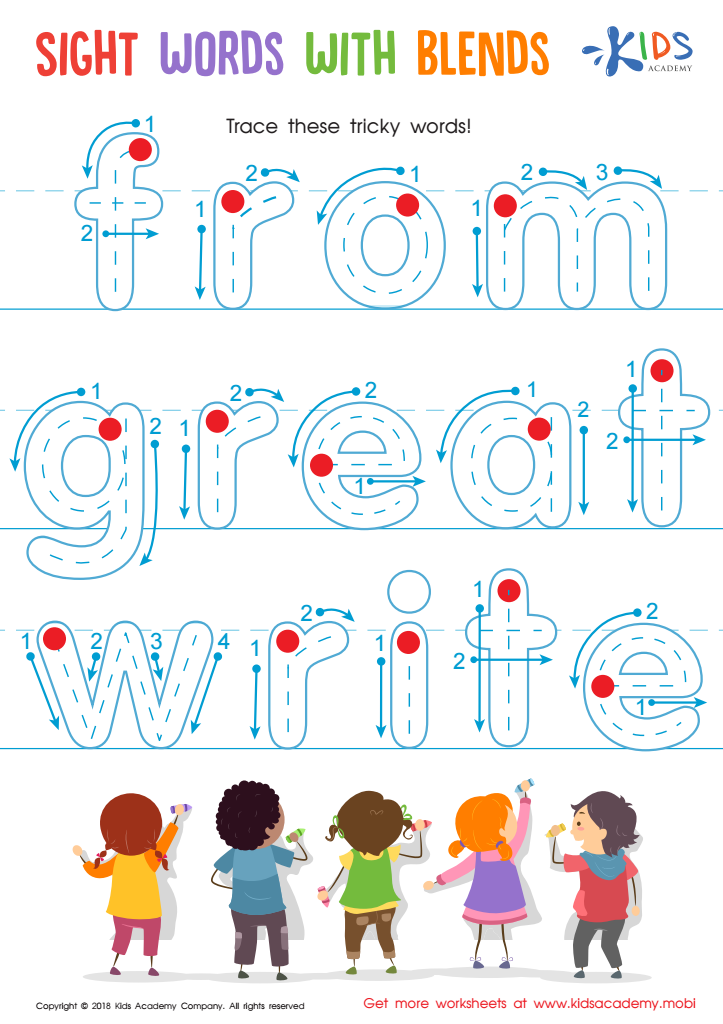
Sight Words with Blends Worksheet
 Assign to My Students
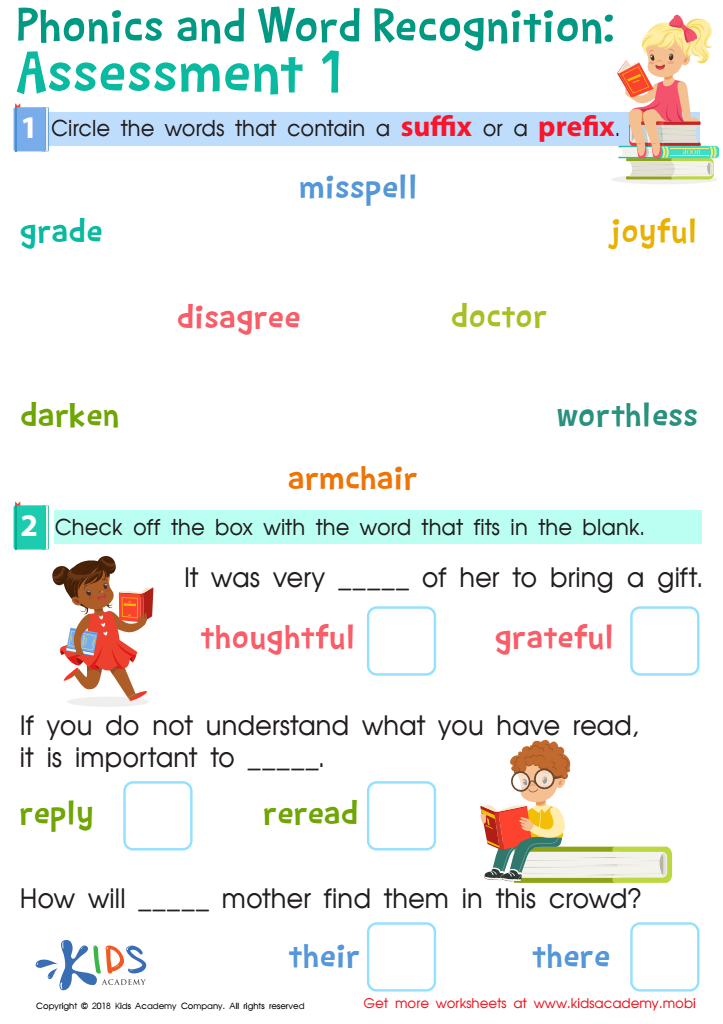
Phonics and Word Recognition: Assessment 1 Worksheet
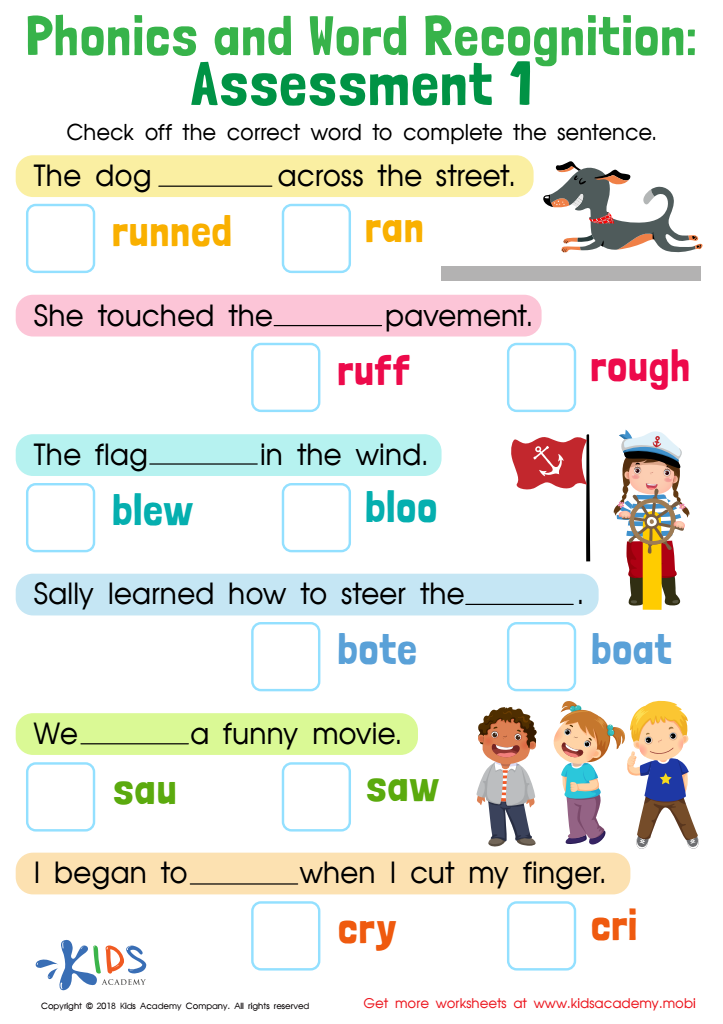
Phonics and Word Recognition: Assessment 1 Worksheet
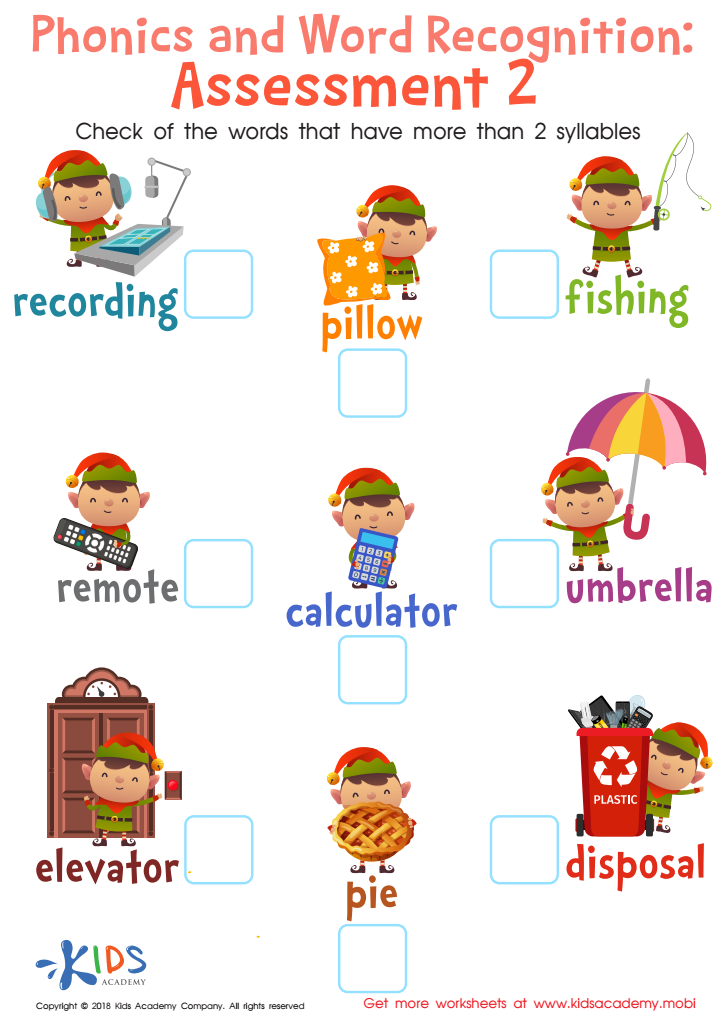
Phonics and Word Recognition: Assessment 2 Worksheet
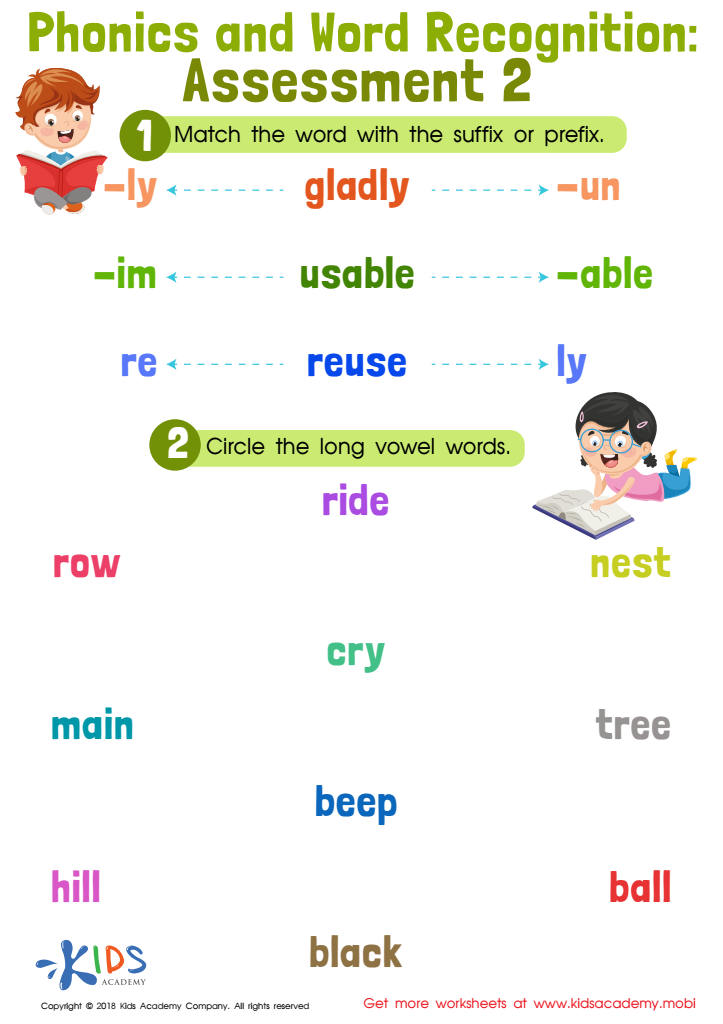
Phonics and Word Recognition: Assessment 2






Parents and teachers play a pivotal role in the early literacy development of children aged 5-8, and an understanding of phonics recognition and grammar is essential in this process. Phonics recognition helps children connect letters to their corresponding sounds, promoting reading fluency and comprehension. By mastering phonics, children can sound out words independently, enhancing their confidence and encouraging a lifelong love of reading.
Grammar, on the other hand, lays the foundation for effective communication. When children understand basic grammatical structures, they can express themselves clearly and correctly in both speaking and writing. This proficiency boosts their overall literacy skills, supporting academic success across subjects.
Moreover, focusing on phonics and grammar during these formative years establishes crucial cognitive connections essential for later complex language structures and comprehension. Early proficiency in these areas is linked to better literacy outcomes, reducing the risk of learning difficulties in later grades.
Ultimately, by prioritizing phonics recognition and grammar, parents and teachers not only nurture a child’s reading and writing capabilities but also empower them with vital skills needed for effective communication and problem-solving throughout their educational journey and beyond.