Critical Thinking Writing Worksheets for Ages 5-8
4 filtered results
-
From - To
Nurture your child's cognitive development with our "Critical Thinking Writing Worksheets for Ages 5-8." These engaging worksheets are designed to stimulate young minds, fostering problem-solving and analytical skills through fun writing activities. Tailored for early learners, each worksheet encourages kids to think creatively and thoughtfully while honing their writing abilities. From solving puzzles to answering thought-provoking questions, our resources are crafted to make learning an adventure. Perfect for both classroom use and homeschooling, these worksheets provide a solid foundation for lifelong critical thinking. Explore our collection today and watch your child's intellect and imagination soar!
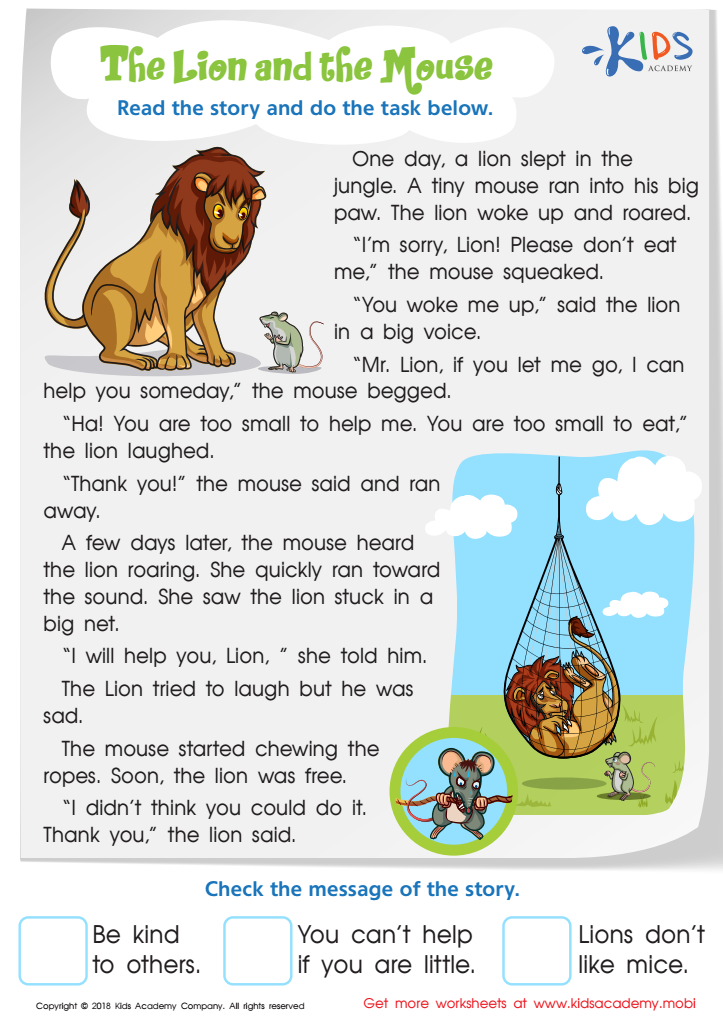
The Lion and the Mouse Worksheet
 Assign to My Students

Capitalization: Fix the Story Worksheet
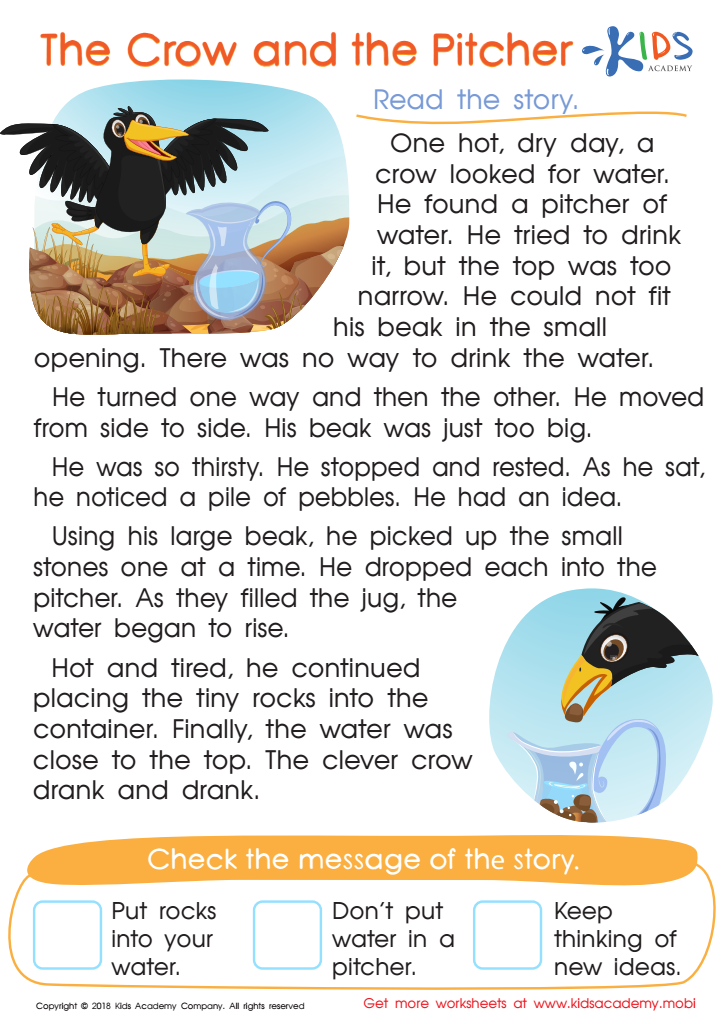
The Crow and the Pitcher Worksheet
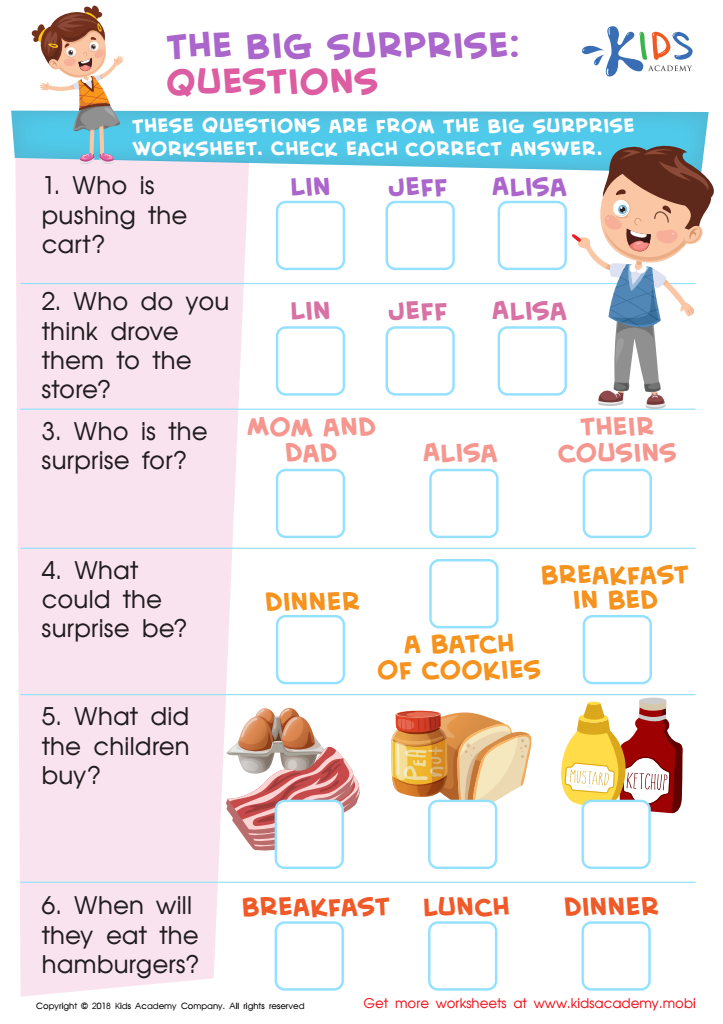
The Big Surprise: Questions Worksheet






Encouraging critical thinking writing in children aged 5-8 is essential for their cognitive and emotional development. At this foundational stage, critical thinking fosters curiosity, enhances problem-solving skills, and nurtures creativity. When young children are prompted to think deeply and express their thoughts in writing, they learn to analyze information, form their own opinions, and articulate ideas effectively.
Critical thinking writing activities, like simple story creations or responses to age-appropriate questions, help children develop important literacy skills. These activities improve their vocabulary, grammar, and understanding of sentence structure. Additionally, it encourages them to make connections between their personal experiences and broader concepts, fostering empathy and understanding of different perspectives.
Moreover, the process of critical thinking helps children become more independent learners. They learn to inquire, ask pertinent questions, and seek answers, making them more engaged and motivated in their education. This confidence in their ability to think and write critically supports lifelong learning and adaptability, crucial skills in our rapidly changing world.
For teachers and parents, nurturing these skills early sets a strong educational foundation. It equips children with the tools needed to face academic challenges confidently and ensures that they grow into thoughtful, well-rounded individuals capable of informed decision-making in the future.








