
Enhancing reading skills Writing Worksheets for Ages 5-8
3 filtered results
Difficulty Level
Grade
Age
-
From - To
Subject
Activity
Standards
Boost your child's reading confidence with our "Enhancing Reading Skills Writing Worksheets for Ages 5-8." Designed to align with early literacy goals, these printable worksheets engage young learners through fun and interactive activities. Kids will develop essential skills such as phonemic awareness, vocabulary building, and comprehension while honing their writing abilities. With vibrant illustrations and age-appropriate content, our worksheets make learning a delightful experience. Whether at home or in the classroom, these resources encourage children to explore reading and writing in a structured yet enjoyable manner. Start your child's journey to literacy success today!
Favorites
With answer key
Interactive
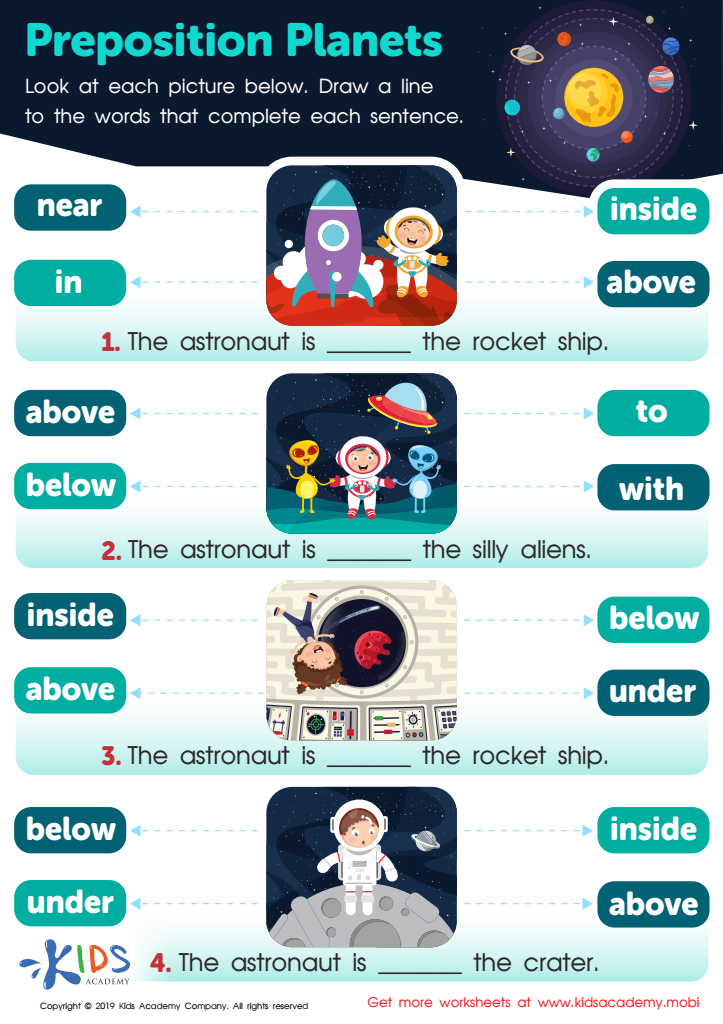
Preposition Planets Worksheet
Remind your child about outer space: which planet do we live on, and who travels there for research? Explain that prepositions show location, direction, and time. Look at the worksheet with colorful pictures of astronauts. Help your kids draw lines to the words that complete each sentence.
 Assign to My Students
Preposition Planets Worksheet
Worksheet
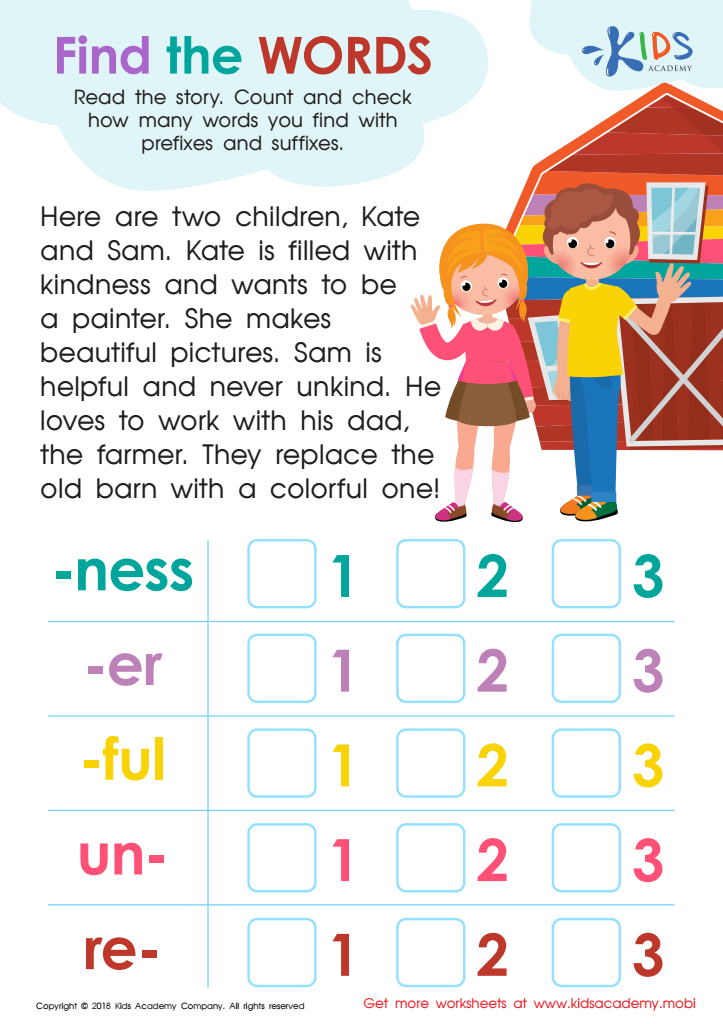
Prefix and Suffix Worksheet For Grade 3
Read the story about Sam and Kate and help your grade 3 child tally all the words with prefixes and suffixes. Check their work by counting the words and ticking the appropriate boxes. This entertaining worksheet will help develop their reading and counting skills! (80 words)
Prefix and Suffix Worksheet For Grade 3
Worksheet
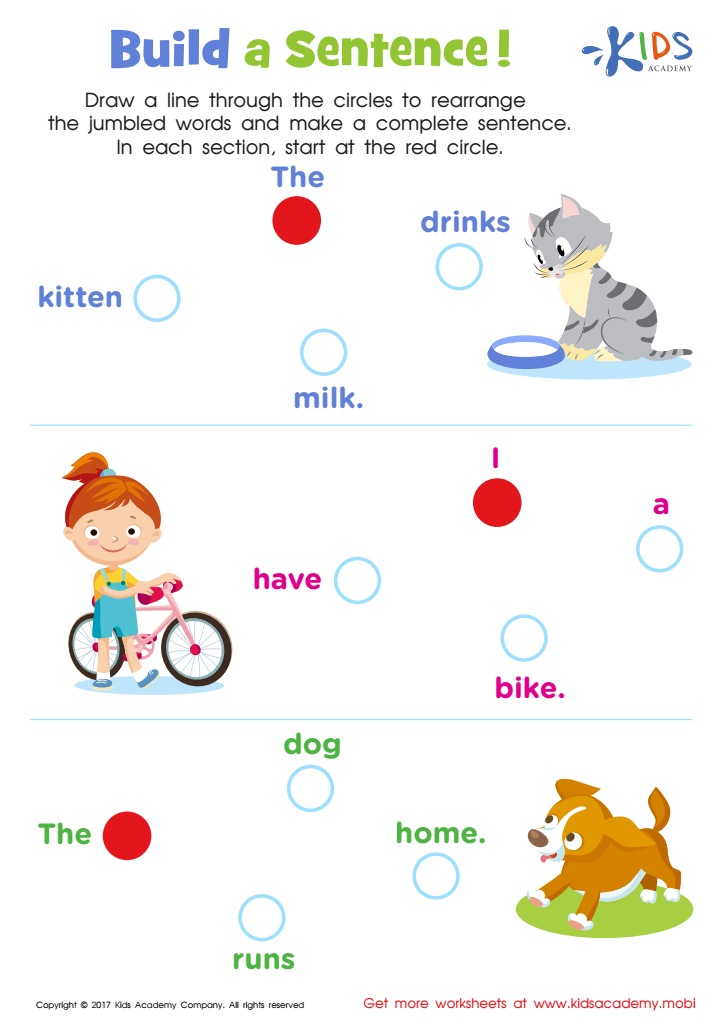
Sentence Structure Printable
Let your child enjoy learning sentences with this fun PDF. It'll help build confidence in writing, plus foster a sense of accomplishment when sentences are correctly formed!
Sentence Structure Printable
Worksheet
Join Kids Academy for Free
Who is primarily going to use this learning content?







.jpg)
Enhancing reading skills and writing for children aged 5-8 is crucial for their overall development and future success. During these formative years, children are building foundational literacy skills that set the stage for lifelong learning. Improved reading abilities boost comprehension, vocabulary, and critical thinking, enabling children to engage with the world around them and understand complex concepts in math and science as they progress through school.
For parents and teachers, fostering these skills not only supports academic achievement but also instills a love for reading and writing. When children can express their thoughts and ideas clearly, they develop confidence and independence. This empowerment translates to increased participation in classroom discussions and creative endeavors.
Moreover, literacy skills are intrinsic to social development. Sharing stories and writing promotes empathy, as children learn to appreciate different perspectives. In our increasingly digital world, being proficient in reading and writing also enhances communication skills, preparing children for a technology-driven future.
Ultimately, investing time in reading and writing during these early years lays a robust foundation for academic excellence, personal growth, and the ability to navigate and contribute to society meaningfully, making it essential for both parents and educators to prioritize these activities.








