Phonological awareness Phonics Worksheets for Ages 5-9
9 filtered results
-
From - To
Our Phonological Awareness Phonics Worksheets for ages 5-9 strengthen foundational reading and spelling skills essential for young learners. Through engaging activities, children immerse in sound recognition, word segmentation, and blending exercises. These worksheets effortlessly blend fun with education, ensuring kids grasp key concepts like rhyming, syllables, and phonemic awareness. Designed to cater to diverse learning styles, our printables are perfect for classroom or home use, reinforcing important phonics skills. Ignite a passion for reading early and set your child on the path to literacy success with our expertly crafted phonological awareness phonics worksheets.
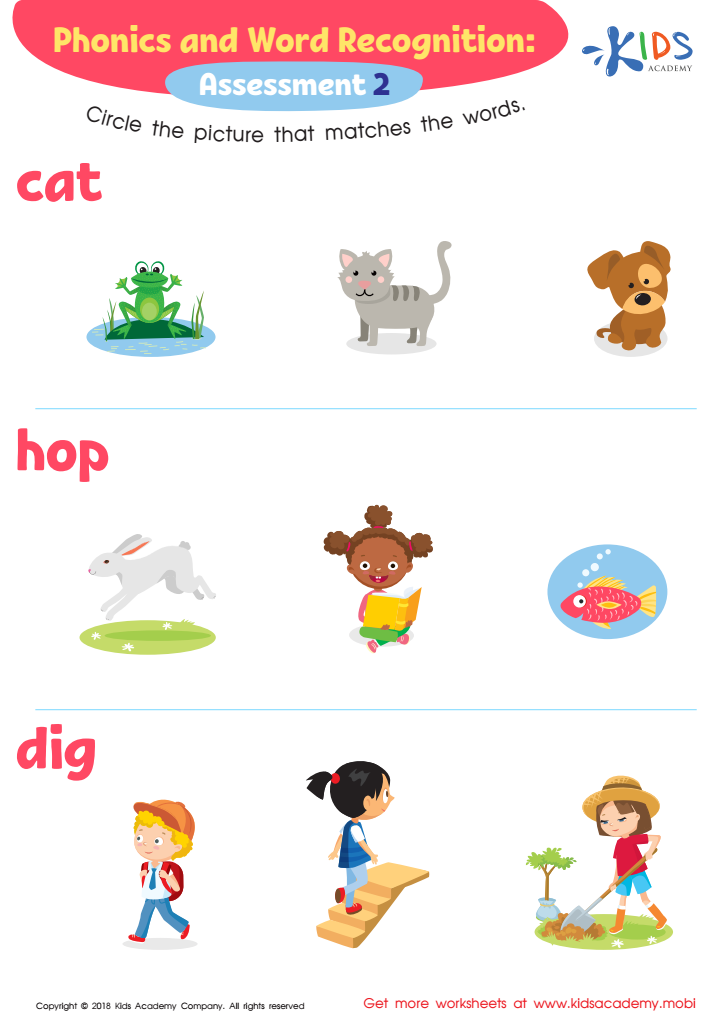
Phonological Awareness: Assessment 2 ELA Worksheet
 Assign to My Students
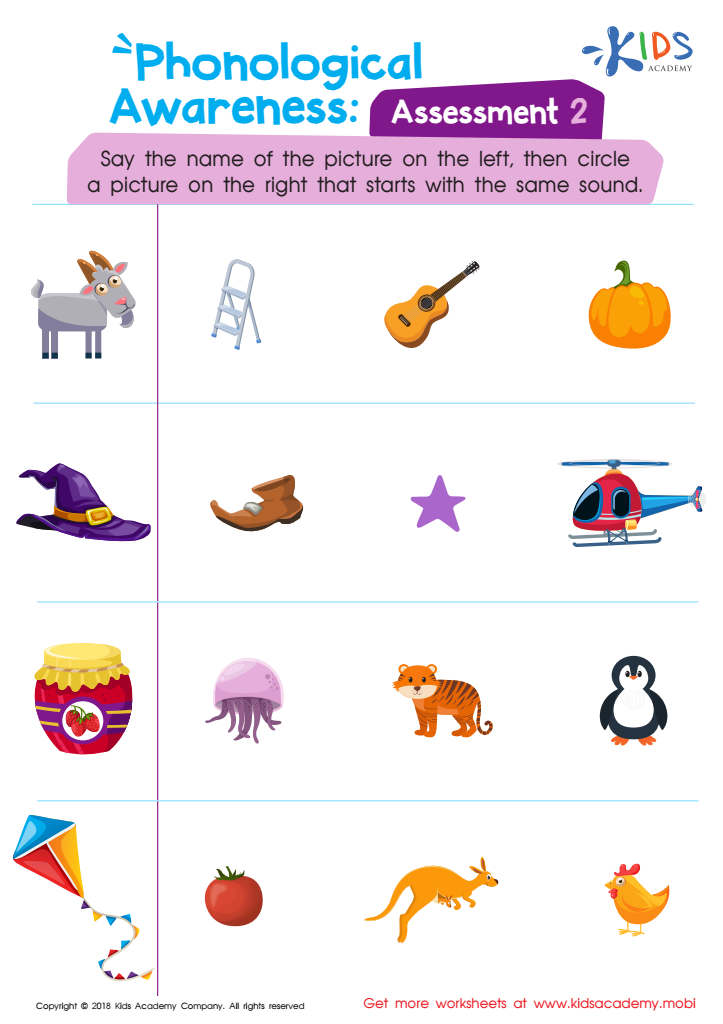
Phonological Awareness: Assessment 2 Worksheet
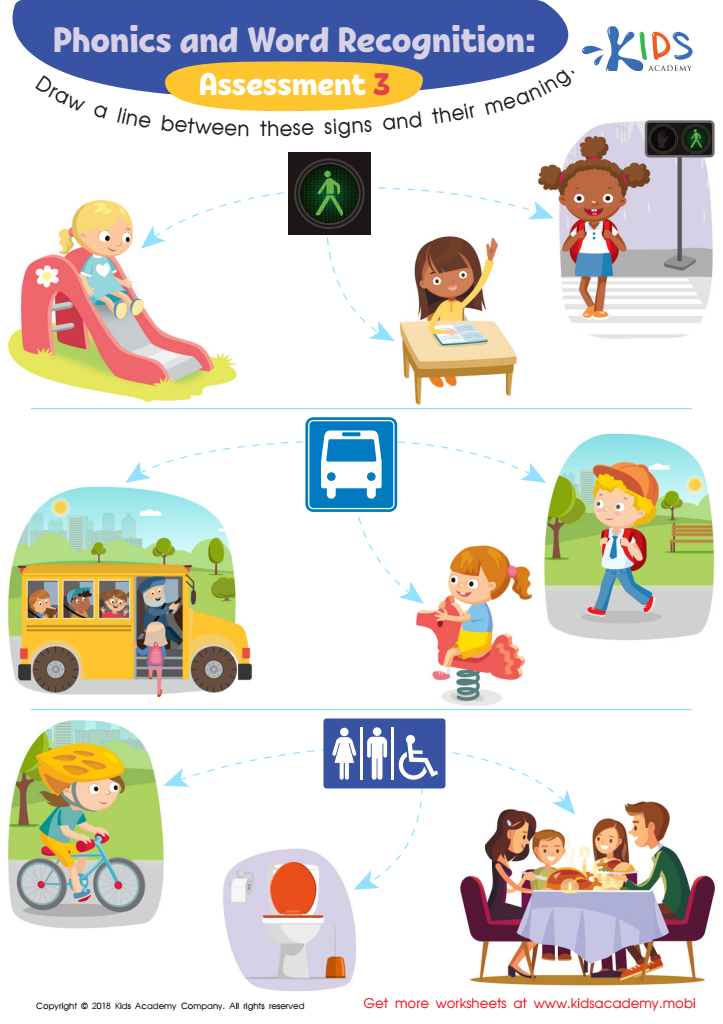
Phonological Awareness: Assessment 3 ELA Worksheet
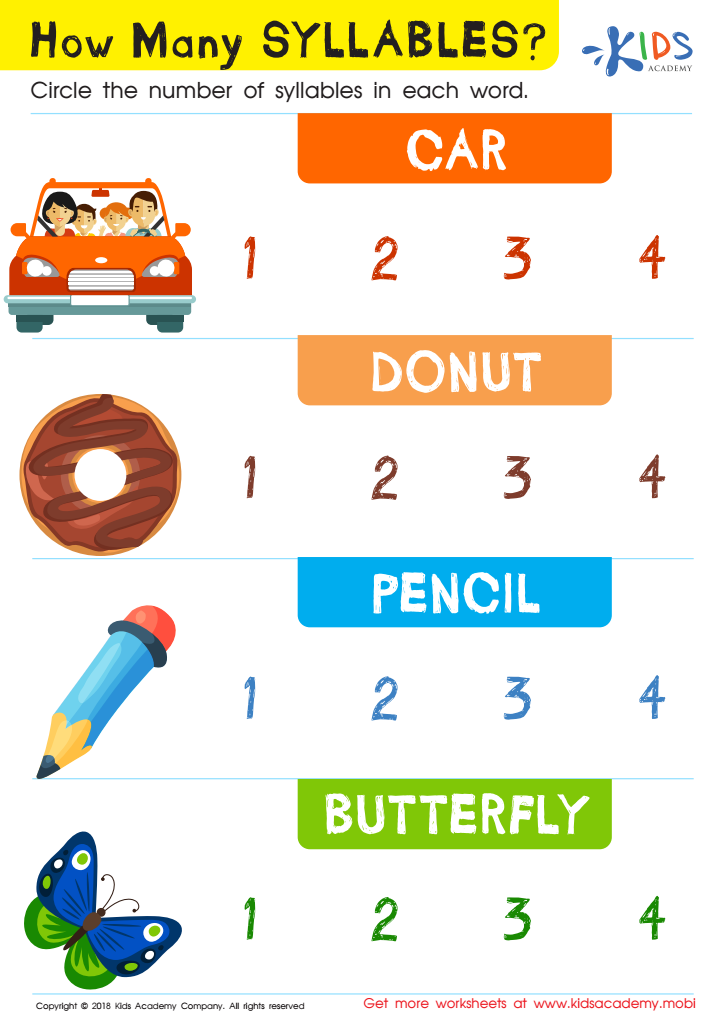
How Many Syllables? Worksheet
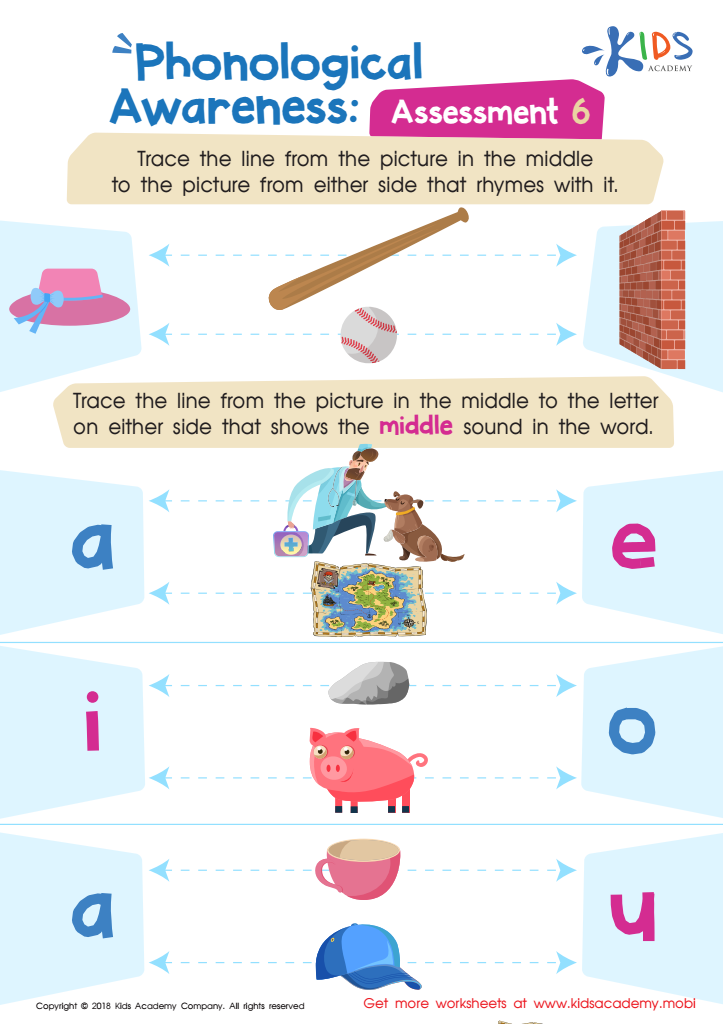
Phonological Awareness: Assessment 6 Worksheet
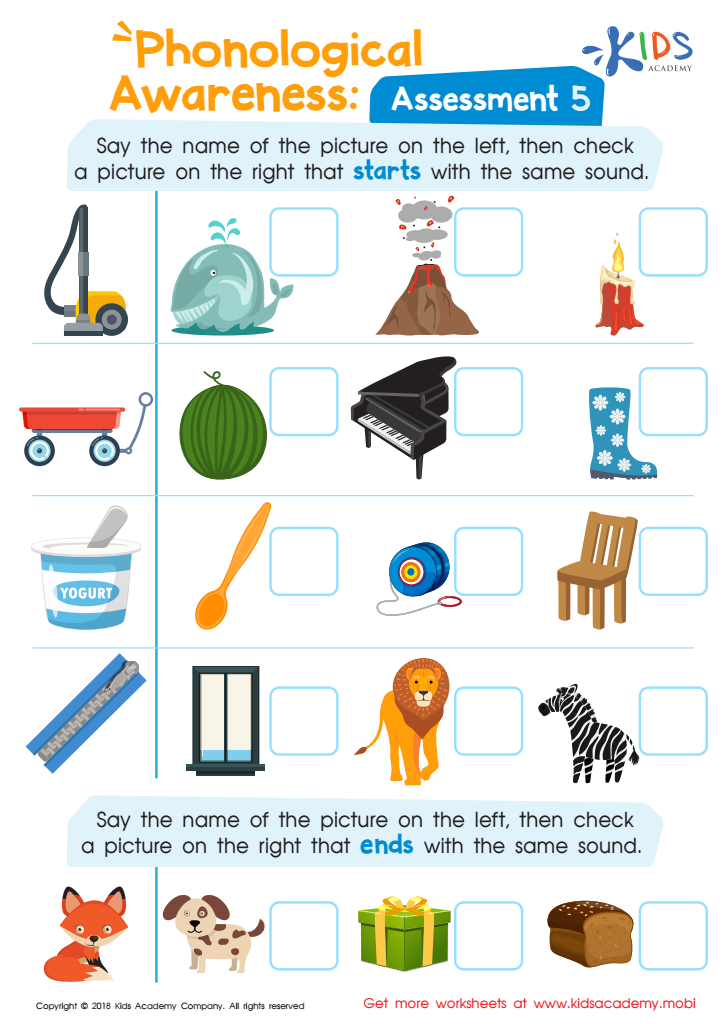
Phonological Awareness: Assessment 5 Worksheet
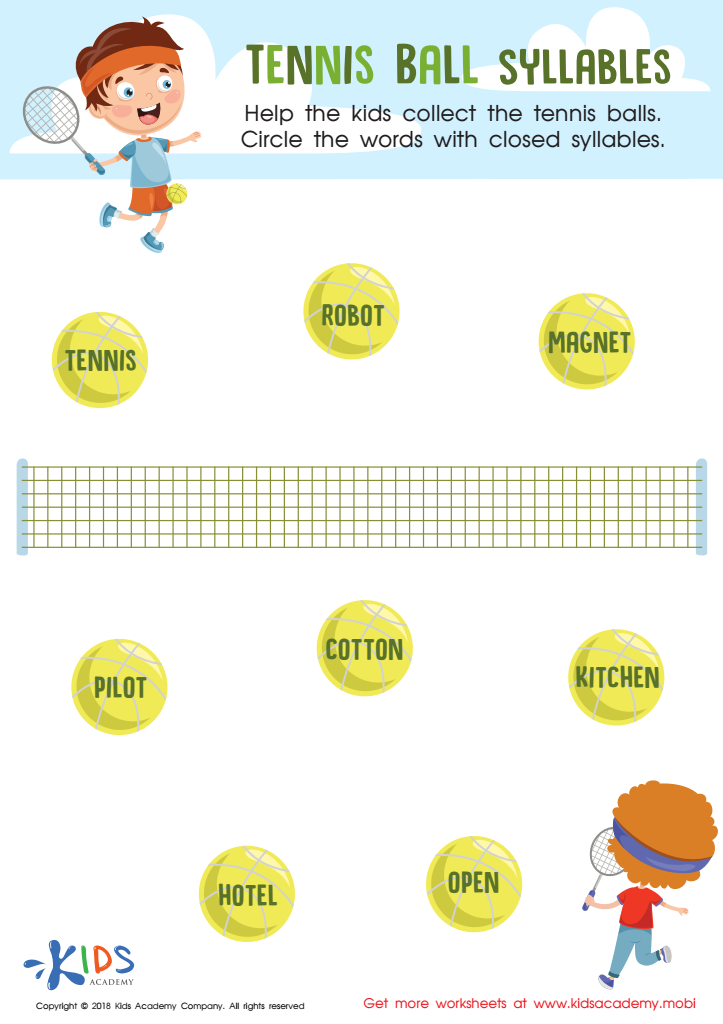
Tennis Ball Syllables Worksheet
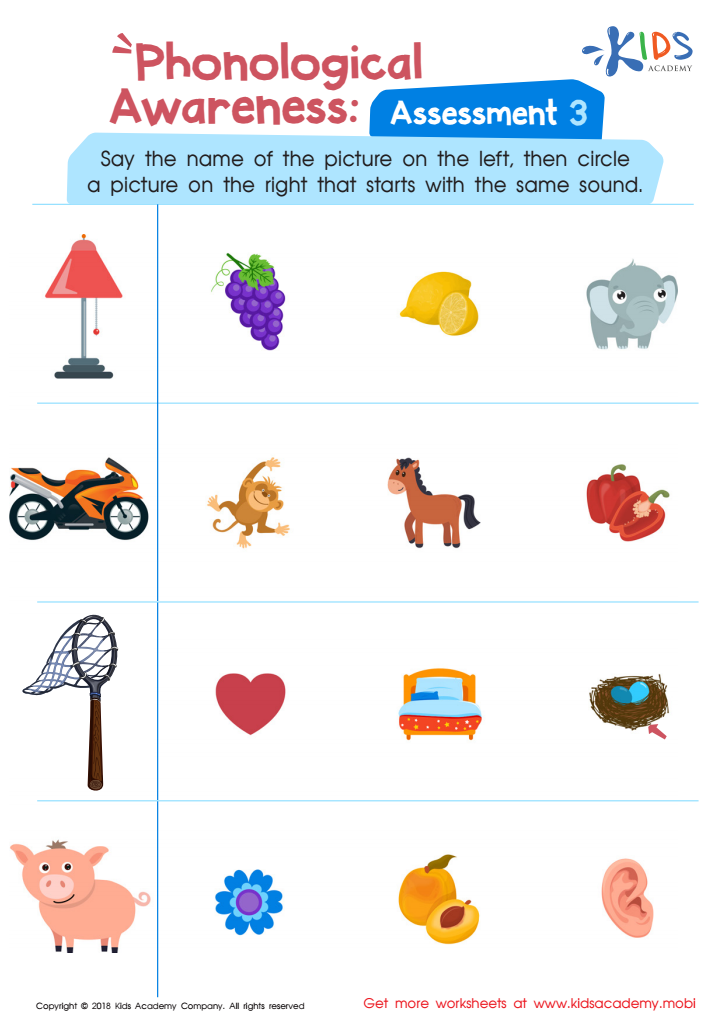
Phonological Awareness: Assessment 3 Worksheet
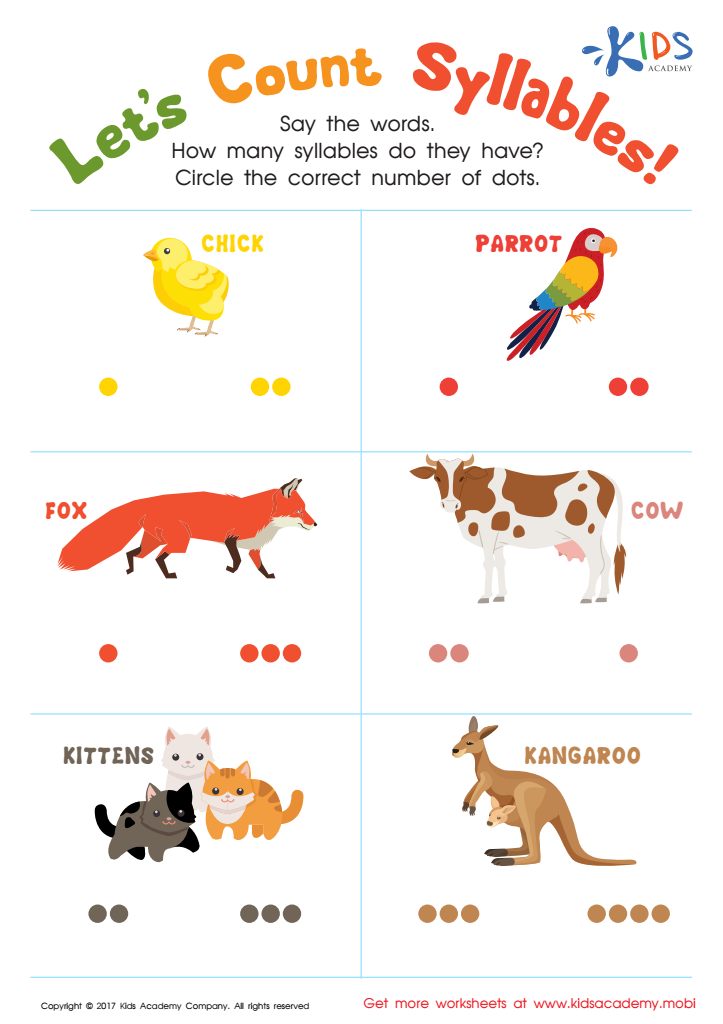
Lets Count Syllables Worksheet








Phonological awareness and phonics are foundational skills for literacy and are crucial for children aged 5-9. Phonological awareness involves recognizing and manipulating sounds in spoken language, such as rhyming, syllable counting, and identifying initial sounds. This auditory skill is essential because it allows children to understand that words are made up of smaller sound units, laying the groundwork for decoding and spelling.
Phonics, on the other hand, is the relationship between these sounds and their corresponding letters or letter groups in written language. Teaching phonics helps children link sounds to written symbols, enabling them to decode new words and develop fluent reading skills. For example, understanding that the letters "c-a-t" produce the sounds /k-a-t/ helps children read the word "cat."
Both skills are predictors of later reading success. Children with strong phonological awareness tend to find it easier to grasp phonics rules, which in turn accelerates their ability to recognize words automatically, leading to better reading comprehension. Failure to develop these skills early can result in reading difficulties, which can affect a child's academic performance and self-esteem. Therefore, parents and teachers should emphasize activities and lessons that build strong phonological awareness and phonics skills to ensure the successful literacy development of children.







