Spatial understanding Worksheets for Ages 5-9
5 filtered results
-
From - To
Our Spatial Understanding Worksheets for Ages 5-9 are designed to enhance your child's ability to comprehend and interact with their environment. With engaging and interactive activities, these worksheets help children develop essential spatial skills, including recognizing patterns, understanding maps, and mastering shapes. Perfect for early learners, they foster critical thinking and problem-solving abilities in a fun and educational manner. By practicing with these resources, kids build a solid foundation in spatial awareness, essential for future academic success in math, science, and everyday life. Boost your child's learning journey today with our expertly crafted spatial understanding worksheets.
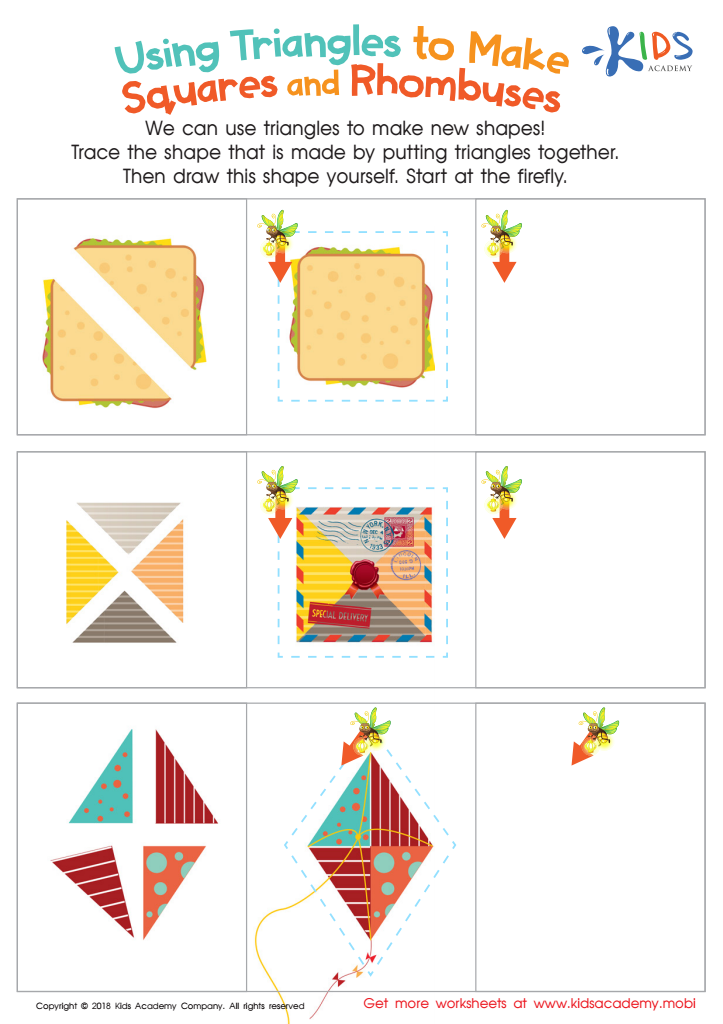
Using Triangles to Make Squares and Rhombuses Worksheet
 Assign to My Students
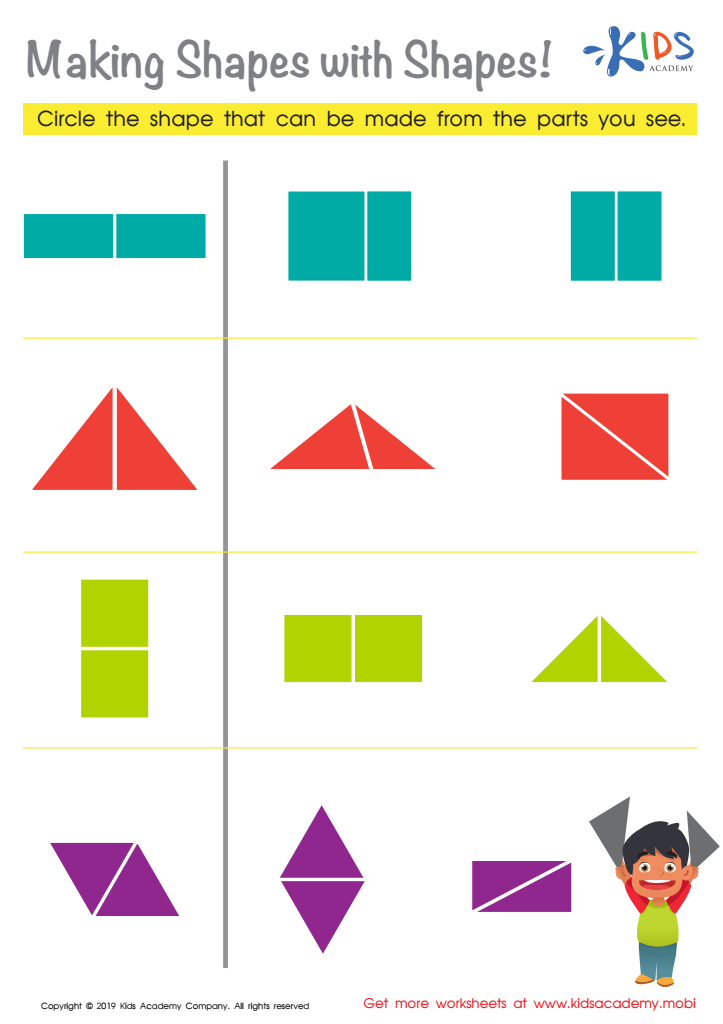
Making Shapes with Shapes Worksheet
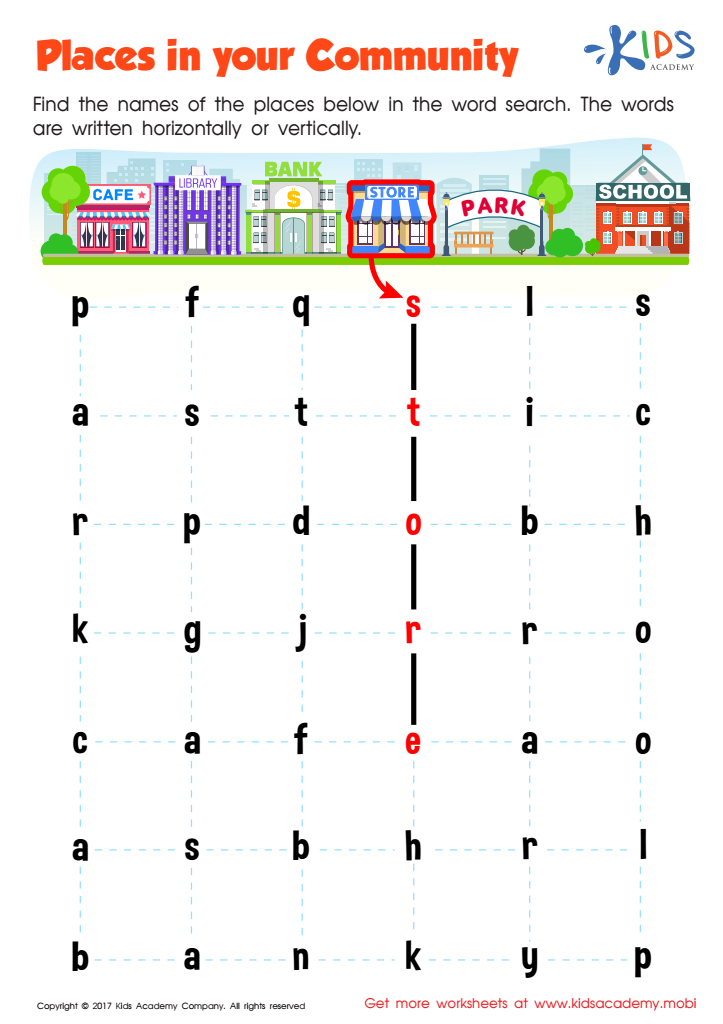
Places in Your Community Worksheet
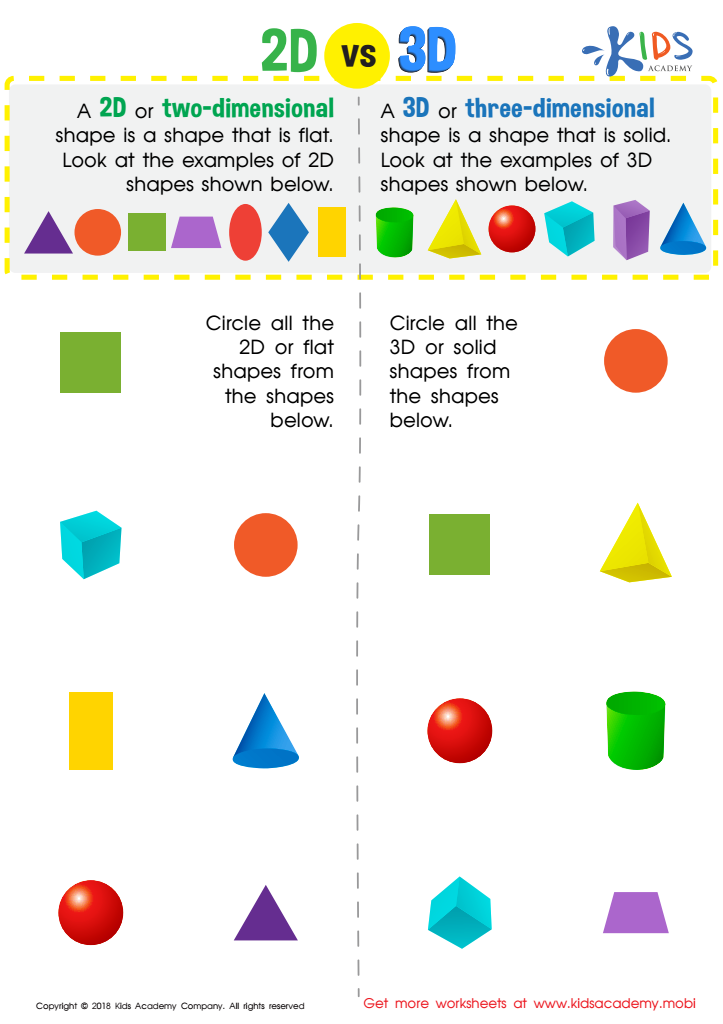
2D vs 3D Shapes Worksheet







Spatial understanding is crucial for children between the ages of 5-9 as it lays the foundation for many cognitive and practical skills that will benefit them throughout life. Spatial skills involve the ability to perceive, understand, and interpret the relationships between objects. This capability is fundamental for subjects like mathematics, where children learn to measure distances, understand shapes, and eventually grasp more complex concepts like geometry.
Outside of academics, strong spatial understanding enhances problem-solving abilities. For instance, it enables children to navigate maps, assemble puzzles, and engage in activities like drawing or building with blocks. Improved spatial skills also correlate with better performance in sports and physical activities, enhancing coordination and spatial awareness in their physical environment.
Furthermore, fostering spatial understanding supports the development of critical thinking and encourages a more profound understanding of the world around them. It helps children understand patterns, relationships, and how things fit together, creating essential building blocks for science and technology learning in the future.
Parents and teachers should intentionally include activities that bolster spatial skills, such as playing with building toys, engaging in hands-on science projects, and encouraging drawing and model-making. These activities are not only educational but also enjoyable, thereby facilitating learning through play and experience. Prioritizing spatial understanding in early childhood helps cultivate a well-rounded skill set that children will build upon for years to come.








