Understanding fractions Worksheets for Ages 5-9
275 filtered results
-
From - To
Discover expertly crafted "Understanding Fractions" worksheets suitable for ages 5-9, available at Kids Academy. Our engaging and interactive printable resources are designed to introduce young learners to the fundamental concepts of fractions in a fun and accessible manner. Featuring visually appealing illustrations and easy-to-follow instructions, these worksheets help children grasp the basics of fractions, from recognizing halves and quarters to understanding more complex fraction relationships. Perfect for use at home or in the classroom, these materials support the development of essential math skills, ensuring a solid foundation for future learning. Download now and inspire a love for math in your child!
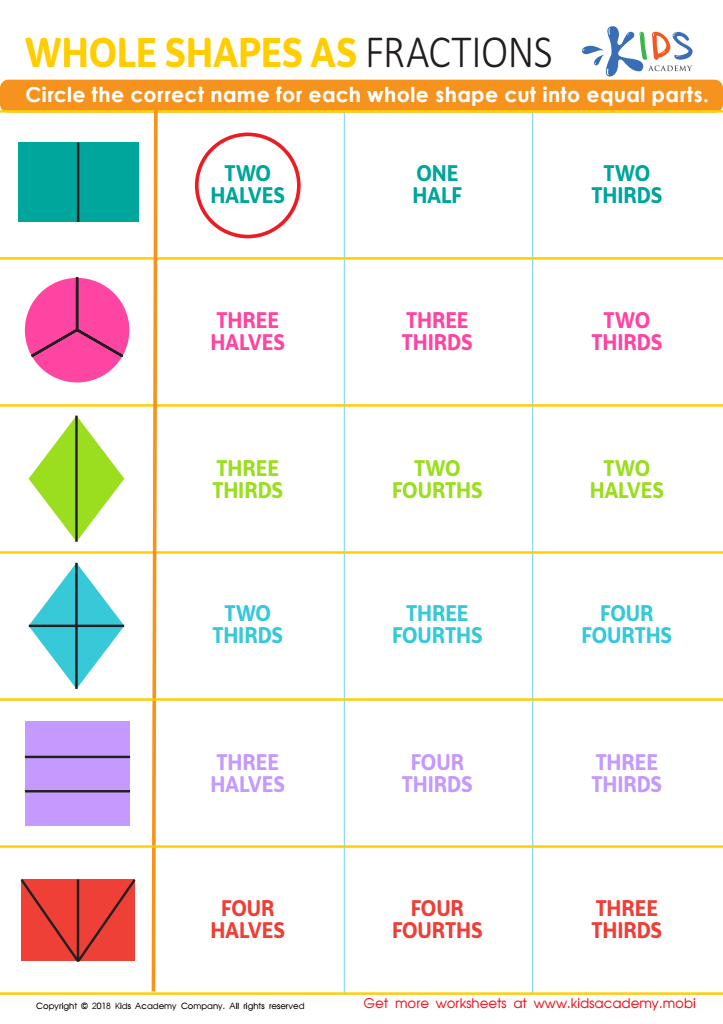
Whole Shapes as Fractions Worksheet
 Assign to My Students
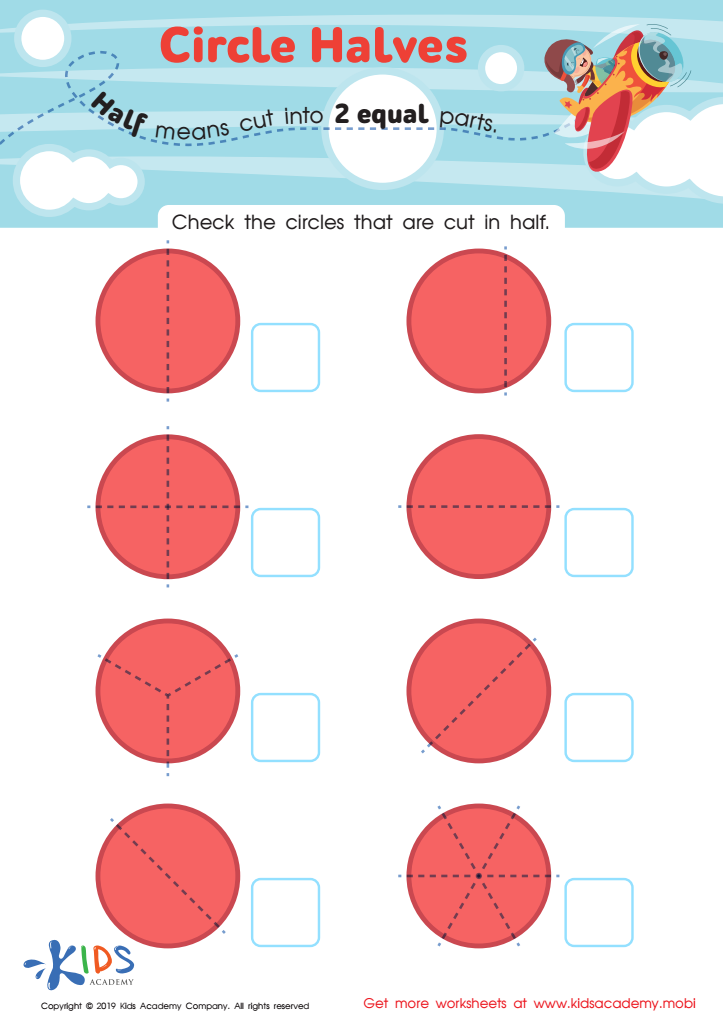
Circle Halves Worksheet
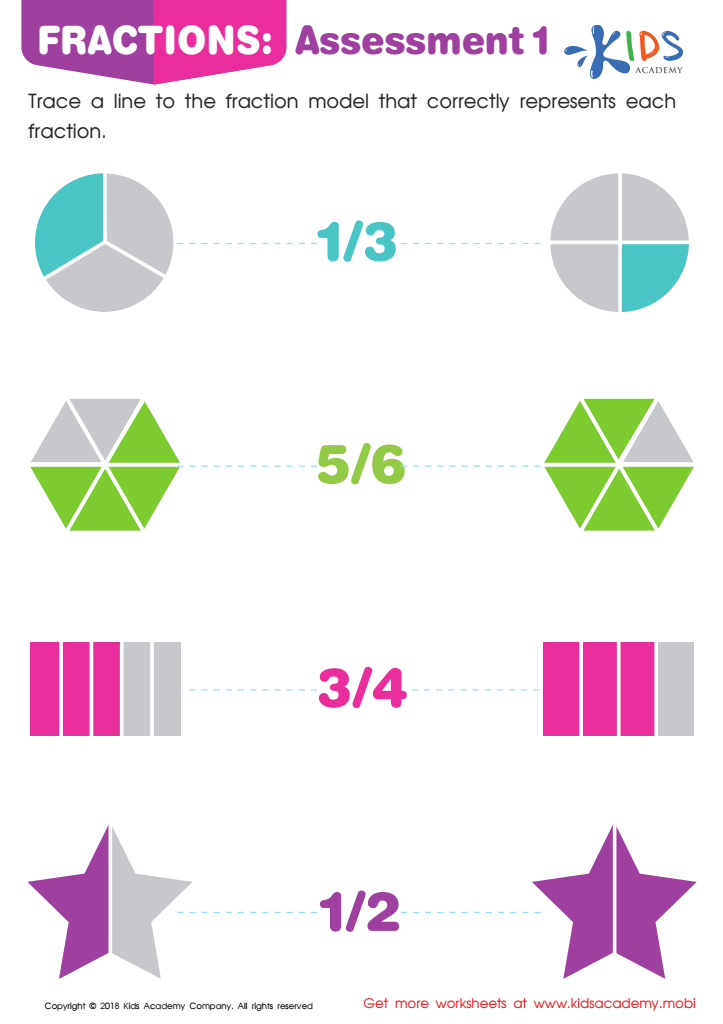
Fractions: Assessment 1 Worksheet
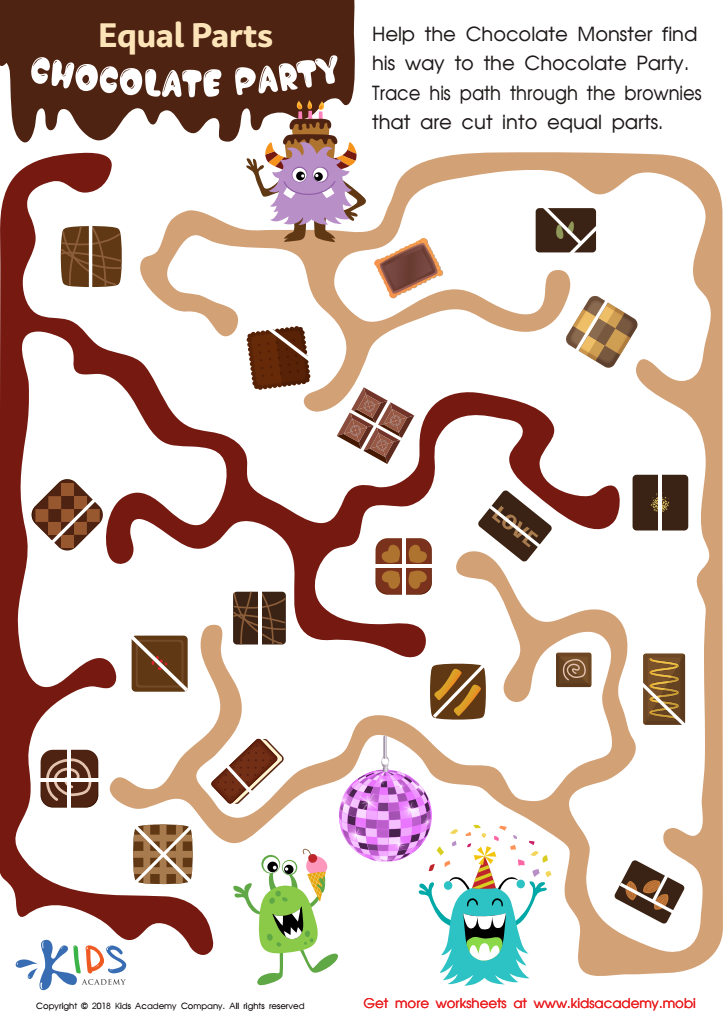
Equal Parts: Chocolate Party Worksheet
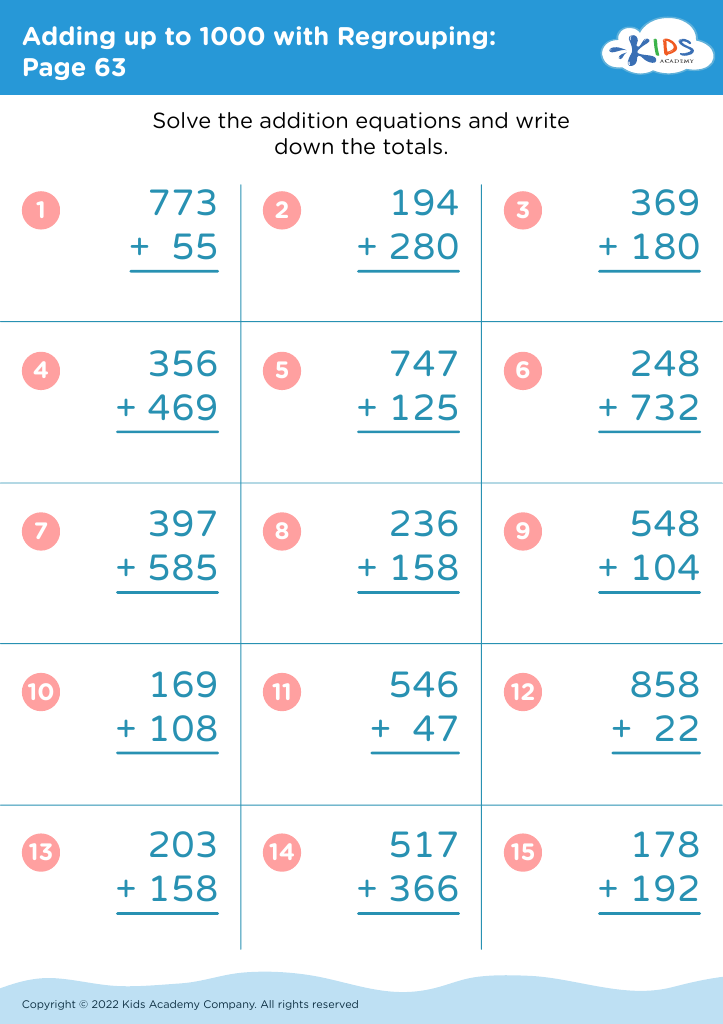
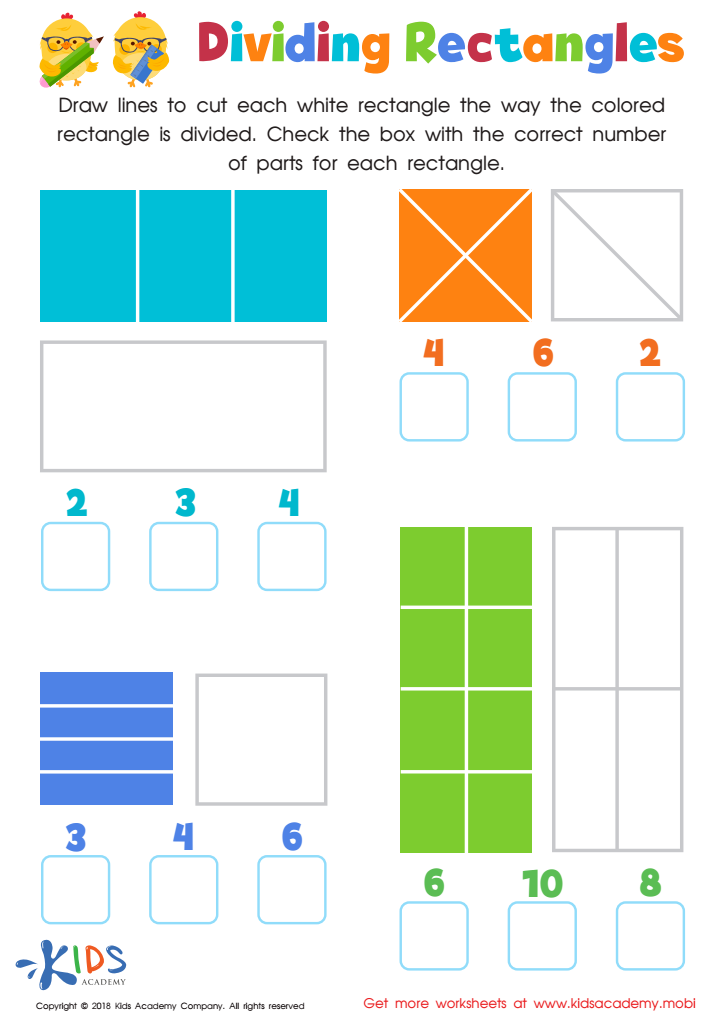
Dividing Rectangles Worksheet
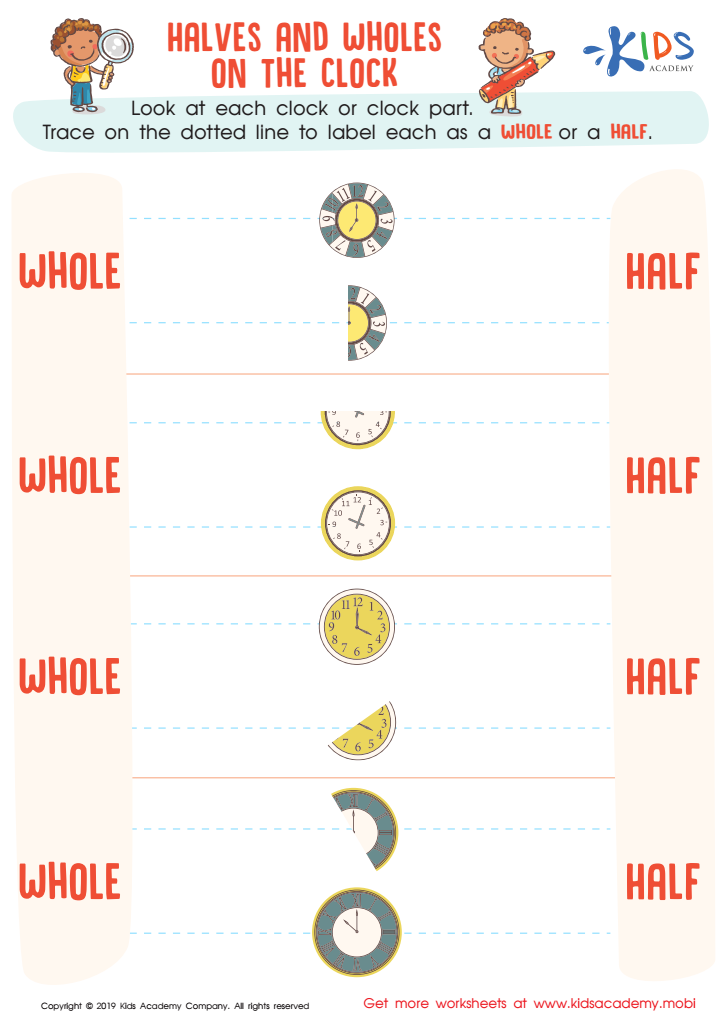
Halves and Wholes on the Clock Worksheet
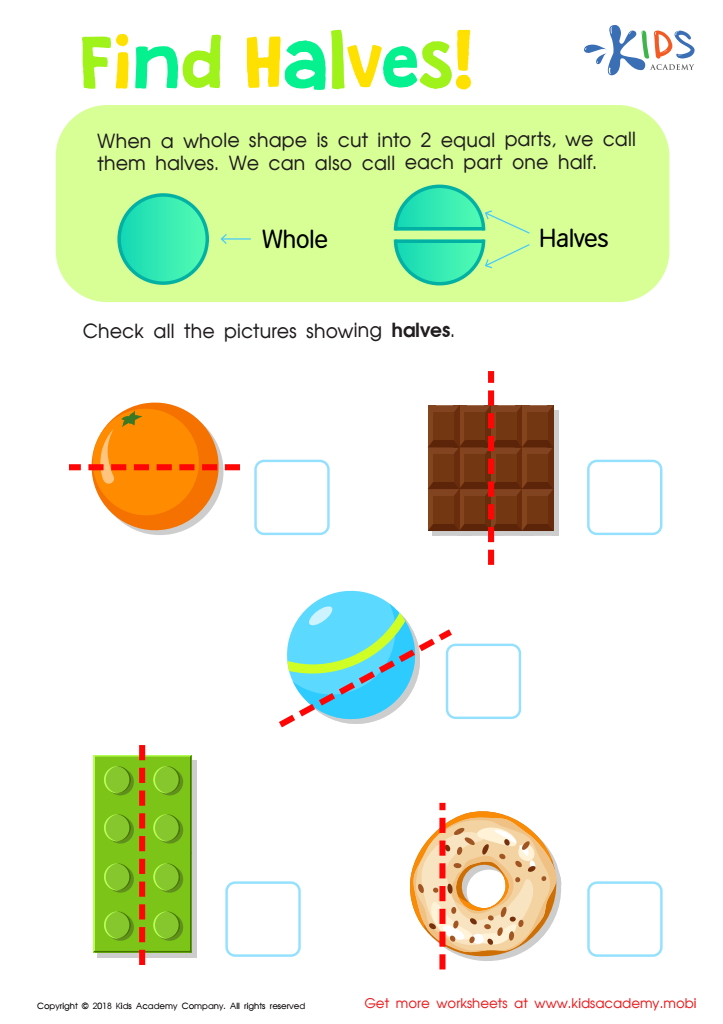
Find Halves Worksheet
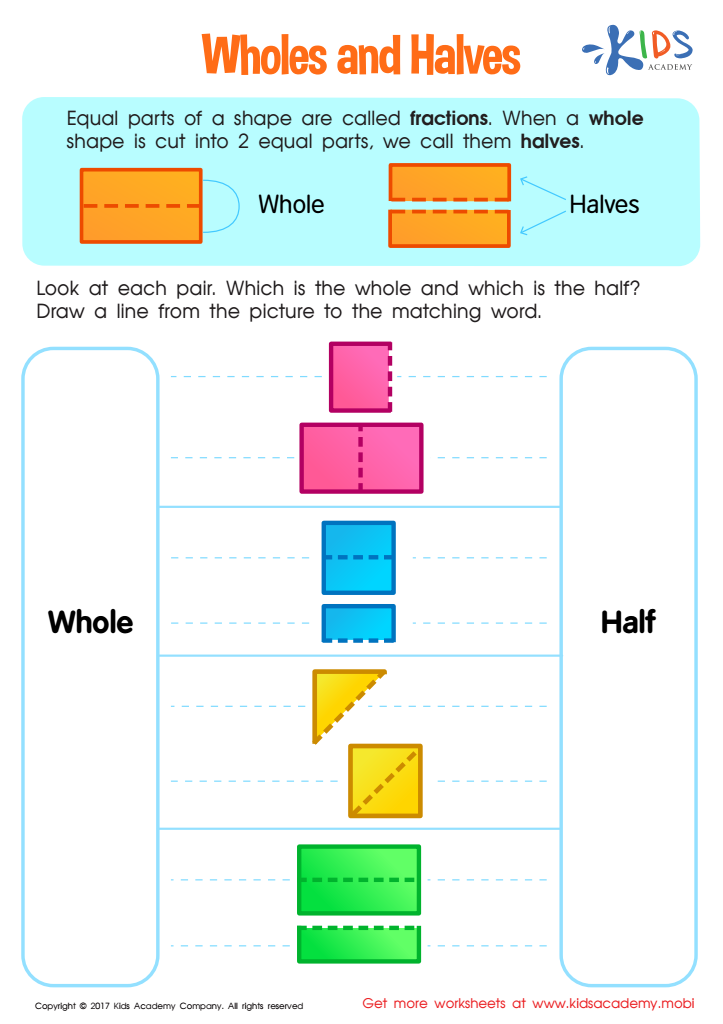
Wholes and Halves Worksheet
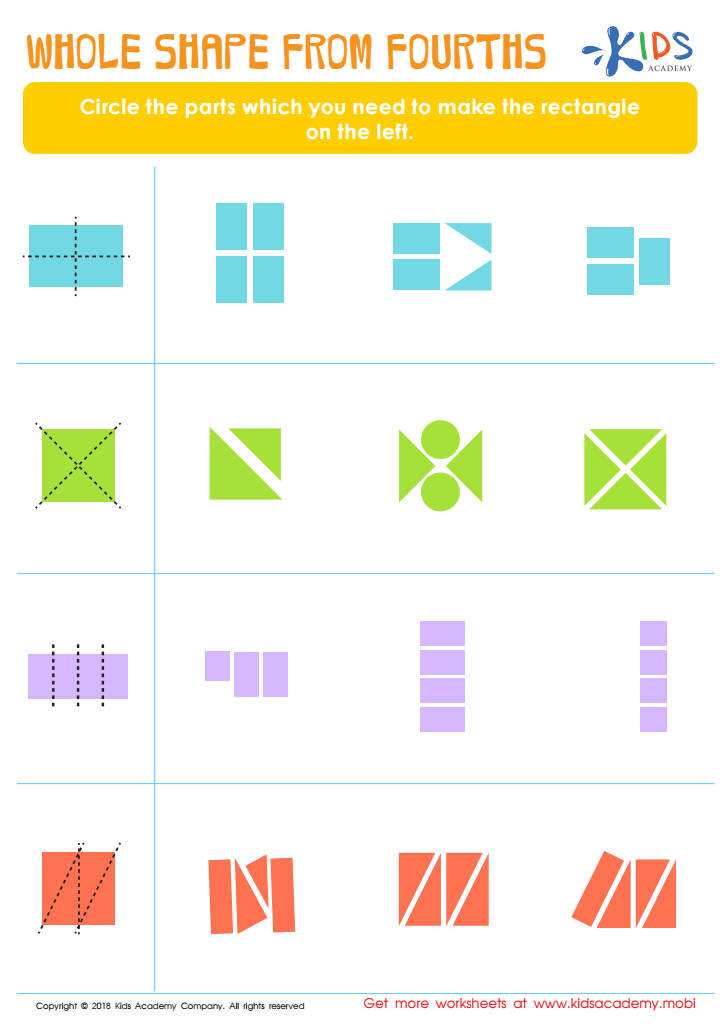
Whole Shape from Fourths Worksheet
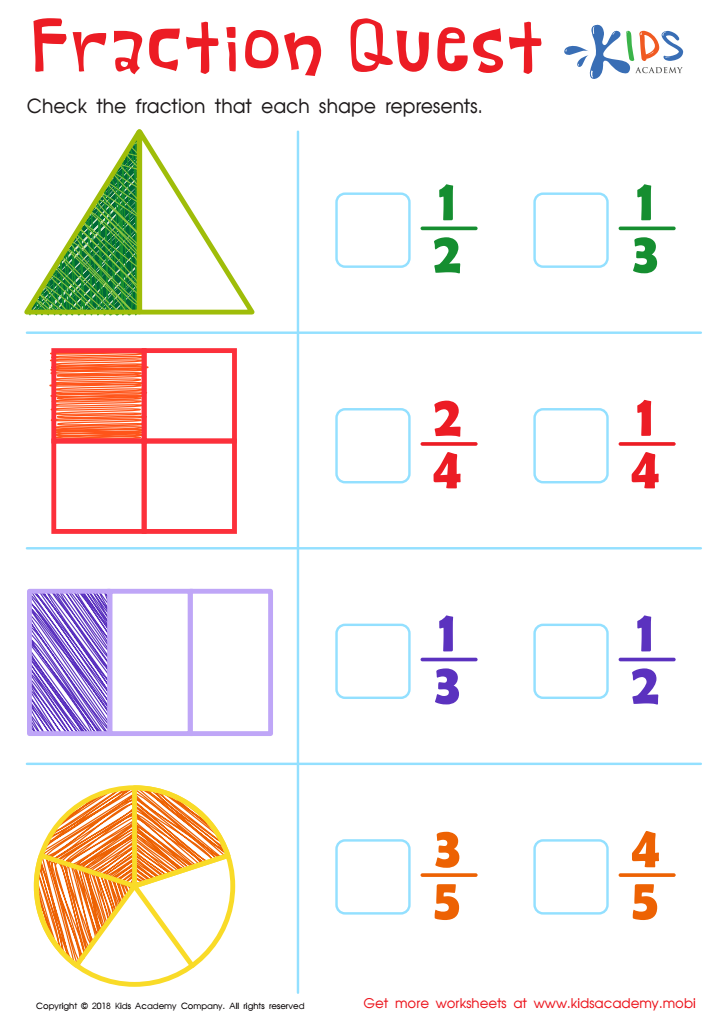
Fraction Quest Worksheet
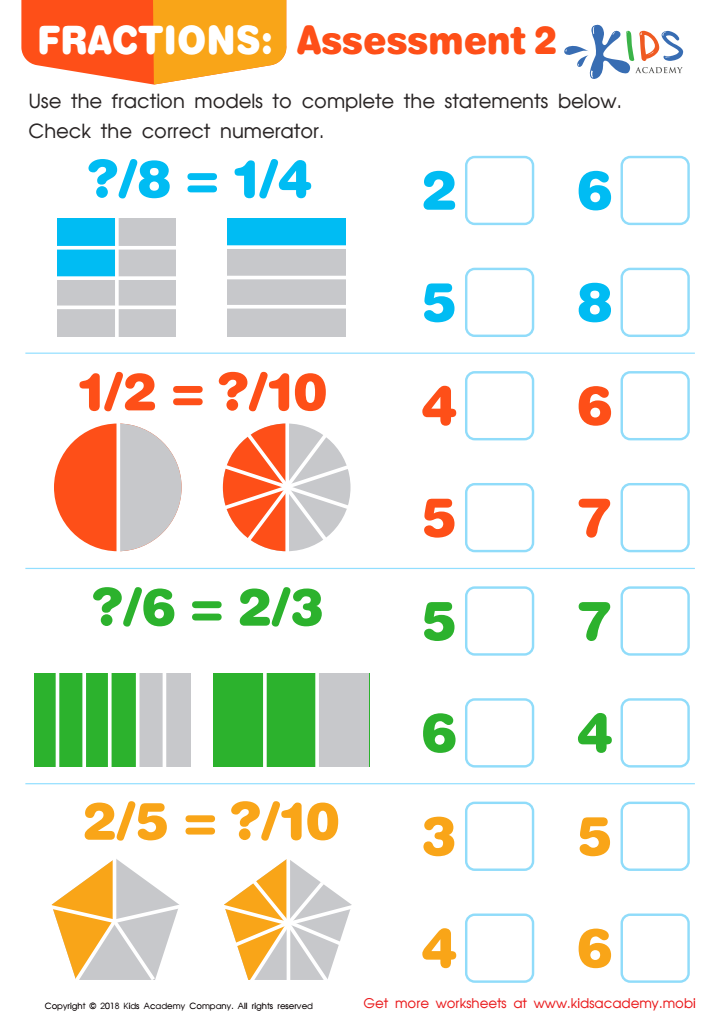
Fractions: Assessment 2 Worksheet








Understanding fractions at a young age (ages 5-9) is crucial because it lays a foundation for future mathematical learning and everyday practical tasks. At this stage, children are developing critical thinking skills and an understanding of numbers and operations. Introducing them to fractions early helps them grasp concepts like parts of a whole, which is essential not just in advanced math but also in real life. For instance, when sharing a pizza among friends or understanding time (half an hour), knowing fractions support these practical experiences.
From an academic perspective, early mastery of fractions sets the stage for success in more complex math topics in later grades, such as algebra. It builds numerical fluency and flexibility, fostering a deeper understanding of division and ratios.
Moreover, learning fractions encourages problem-solving and logical reasoning. Children begin to appreciate that numbers can be expressed in different forms, fostering cognitive development and mental flexibility.
Parents and teachers must care because these skills are not just academic but also vital for making sense of the world. Engaging activities and real-life examples make learning fractions enjoyable, promoting a positive attitude toward math. Investing in this early education prevents future math anxiety and builds confident, competent young mathematicians.








