2D Shapes Worksheets for Ages 5-9 - Page 4
75 filtered results
-
From - To
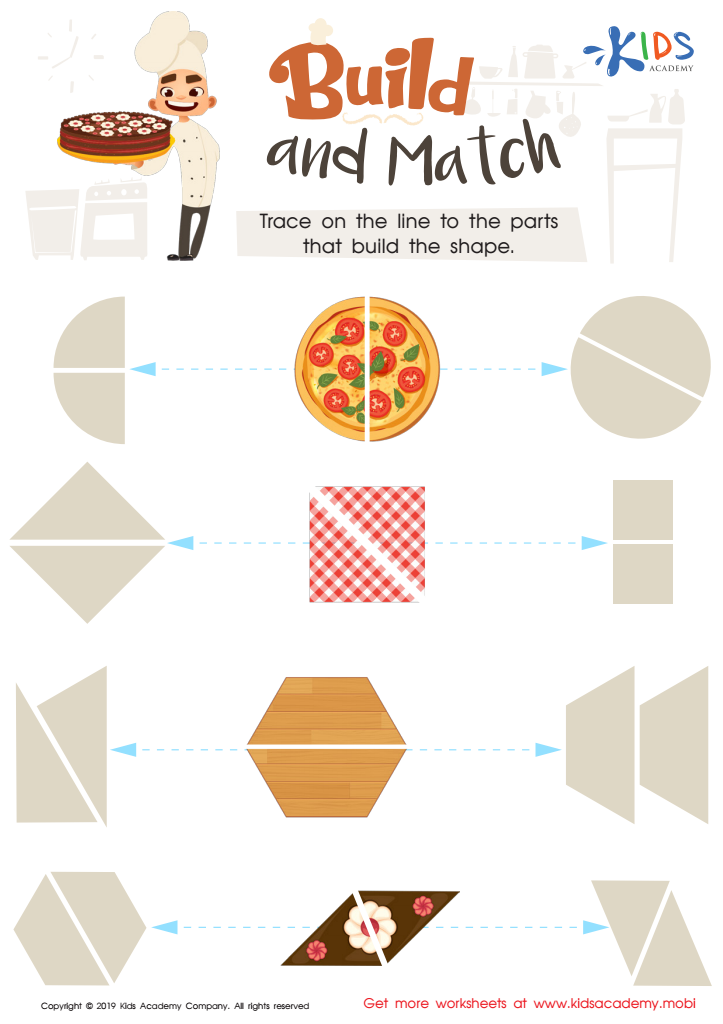
Build and Match Worksheet
 Assign to My Students

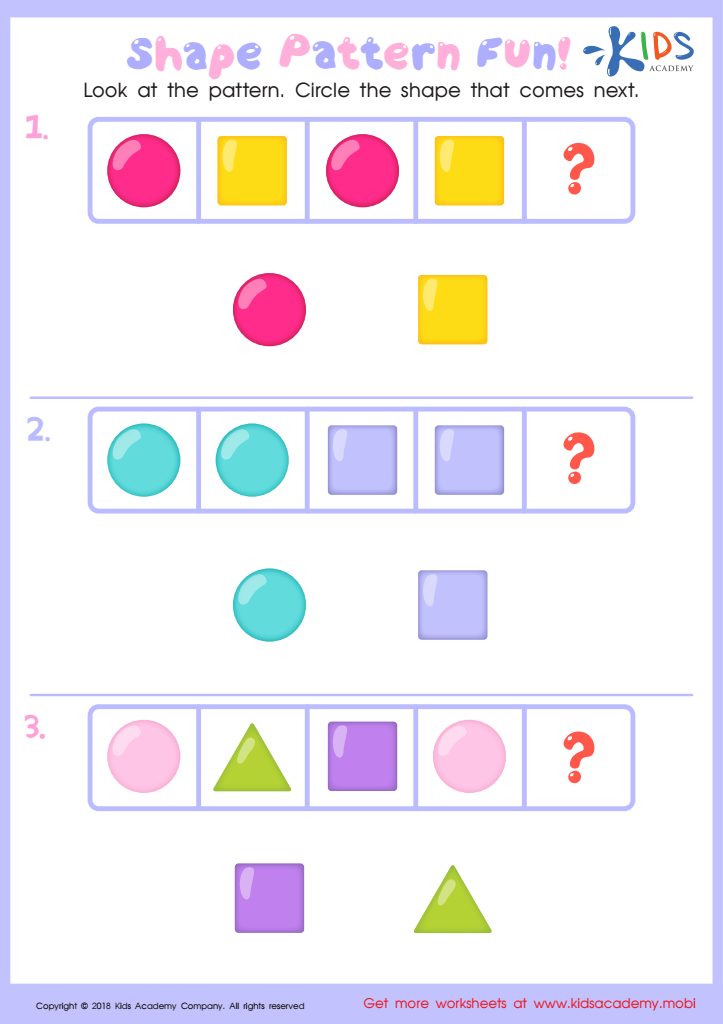
Shape Pattern Fun Worksheet
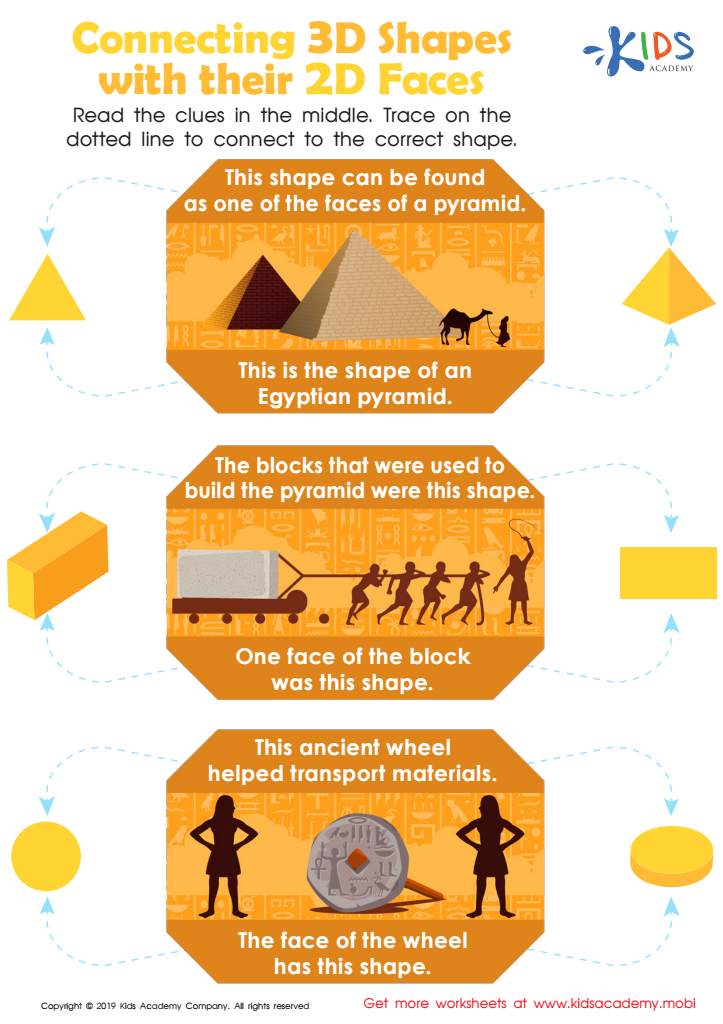
Connecting 3D Shapes with Their 2d Faces Worksheet








Understanding 2D shapes is crucial for children aged 5-9, as it lays the foundation for their mathematical learning and cognitive development. At this stage, children are naturally curious, and engaging them with shapes nurtures their exploration and critical thinking skills.
Firstly, recognizing 2D shapes helps children build spatial awareness, which is essential for their ability to navigate the physical world. Geometry comes into play in everyday life, from understanding maps to organizing spaces. Additionally, grasping the properties of shapes—such as the number of sides or angles—supports logical reasoning and problem-solving skills that are invaluable both inside and outside the classroom.
Furthermore, learning about 2D shapes enhances vocabulary and communication skills. It provides children with specific language to describe their environment, better articulating ideas during collaborative projects. Art and creativity also benefit from this understanding as students relate shapes to art, design, and architecture, encouraging innovation.
Lastly, early shape recognition promotes future success in mathematics. By developing a solid geometric foundation, children become more confident as they progress into complex mathematical concepts, ultimately facilitating lifelong learning. Therefore, parents and teachers should prioritize activities centered around 2D shapes to enrich children's educational development and everyday experiences.