Shape Recognition Comparison Worksheets for Ages 5-9
3 filtered results
-
From - To
Introduce your child to the exciting world of geometry with our Shape Recognition Comparison Worksheets for ages 5-9. Designed to build foundational math skills, these worksheets are perfect for young learners. Your child will engage in activities that involve identifying and comparing different shapes, enhancing their visual and cognitive abilities. Each worksheet is crafted to make learning fun and support critical thinking. Ideal for both classroom and at-home learning, these resources encourage problem-solving and spatial awareness. Start their shape recognition journey today and watch their confidence in math grow!
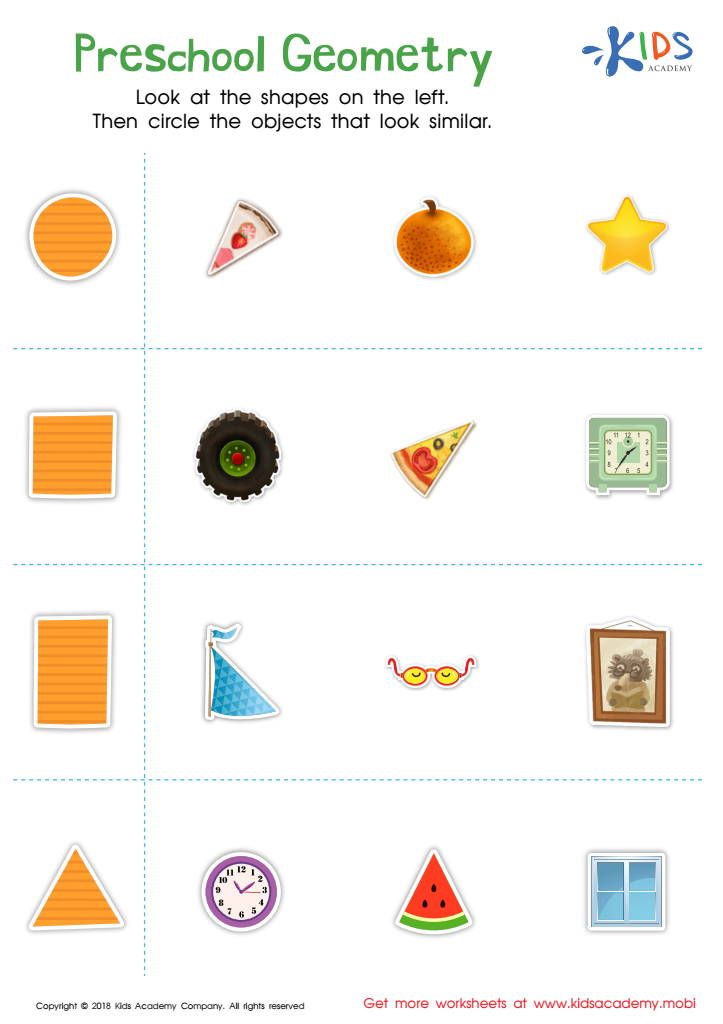
Preschool Geometry Worksheet
 Assign to My Students
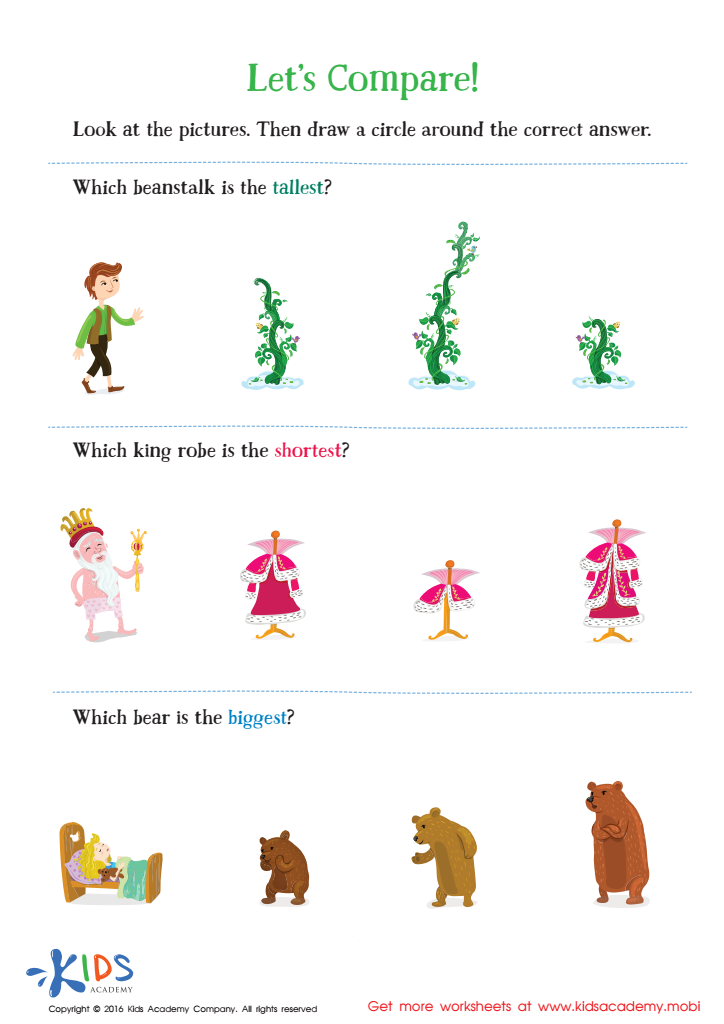
Fairy Tale Worksheet: Let's Compare
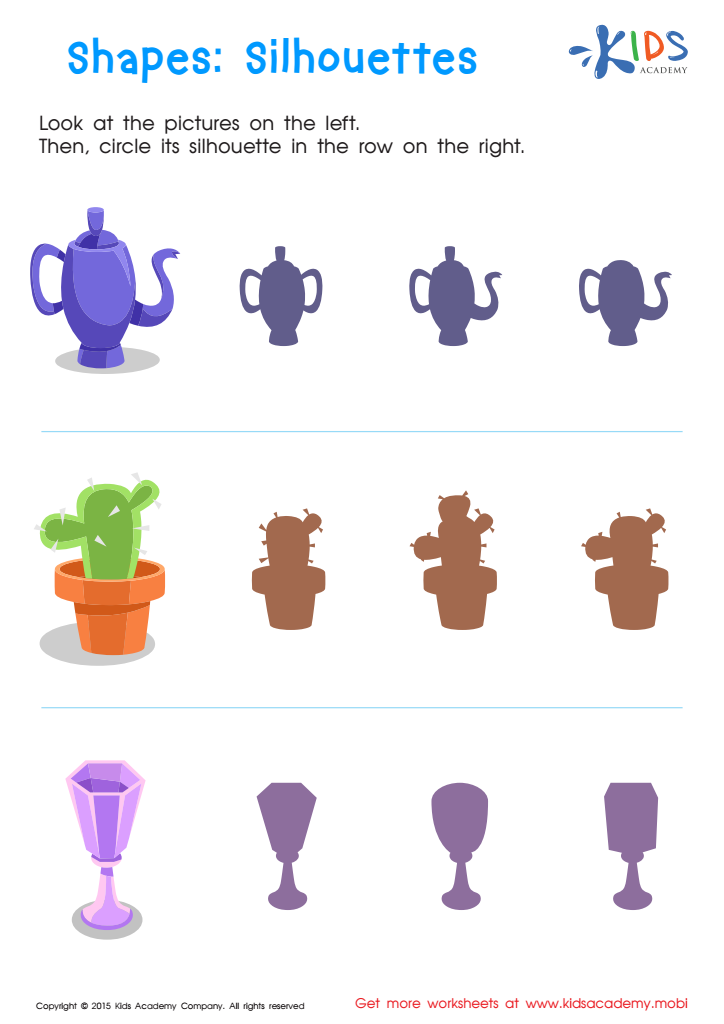
Silhouettes – Shapes Worksheet






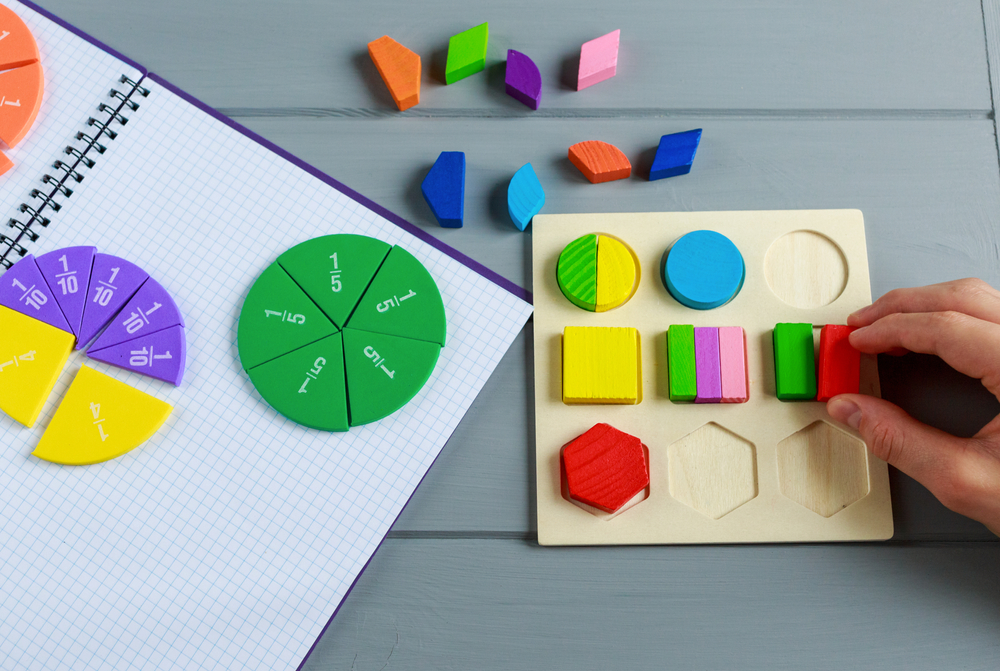
Shape recognition comparison is a foundational skill that lays the groundwork for a child's cognitive, language, and mathematical development. This skill typically begins to emerge between ages 5-9 and plays a crucial role in various aspects of learning and daily life.
First and foremost, shape recognition aids in the understanding of mathematics. Recognizing and comparing shapes help children grasp basic geometry concepts, which are essential for more advanced mathematical reasoning. Identifying shapes also improves spatial awareness, enabling children to understand the concepts of size, symmetry, and spatial relationships, which are vital for problem-solving.
Beyond mathematics, shape recognition enhances language and literacy skills. Through activities involving shapes, children learn new vocabulary and concepts such as "circle," "square," "compare," and "attribute." These activities bolster their descriptive language abilities and their capacity to categorize and conceptualize the world around them.
Shape recognition comparison also supports the development of visual discrimination–the ability to notice differences and similarities among shapes and objects. This cognitive skill is directly linked to reading, as children must differentiate between letters and words.
Moreover, engaging in shape-based activities can strengthen fine motor skills, as children often trace, draw, and manipulate shapes. This boosts hand-eye coordination, preparing them for writing tasks.
Overall, emphasizing shape recognition comparison in early education allows parents and teachers to foster a well-rounded skill set that supports various domains of a child's developmental journey.








