Spatial Orientation Geometry Worksheets for Ages 5-9
3 filtered results
-
From - To
Unlock the world of geometry for your little ones with our engaging Spatial Orientation Geometry Worksheets, designed specifically for ages 5-9. These interactive activities help young learners develop their spatial reasoning skills through fun exercises that involve shapes, positions, and directions. Each worksheet reinforces vital concepts, boosting confidence and proficiency in geometry. With colorful graphics and age-appropriate challenges, children will enjoy learning about maps, patterns, and three-dimensional objects. Perfect for both classroom and home practice, these worksheets foster critical thinking and problem-solving abilities, setting the foundation for more advanced math skills in the future. Explore the joy of learning geometry today!
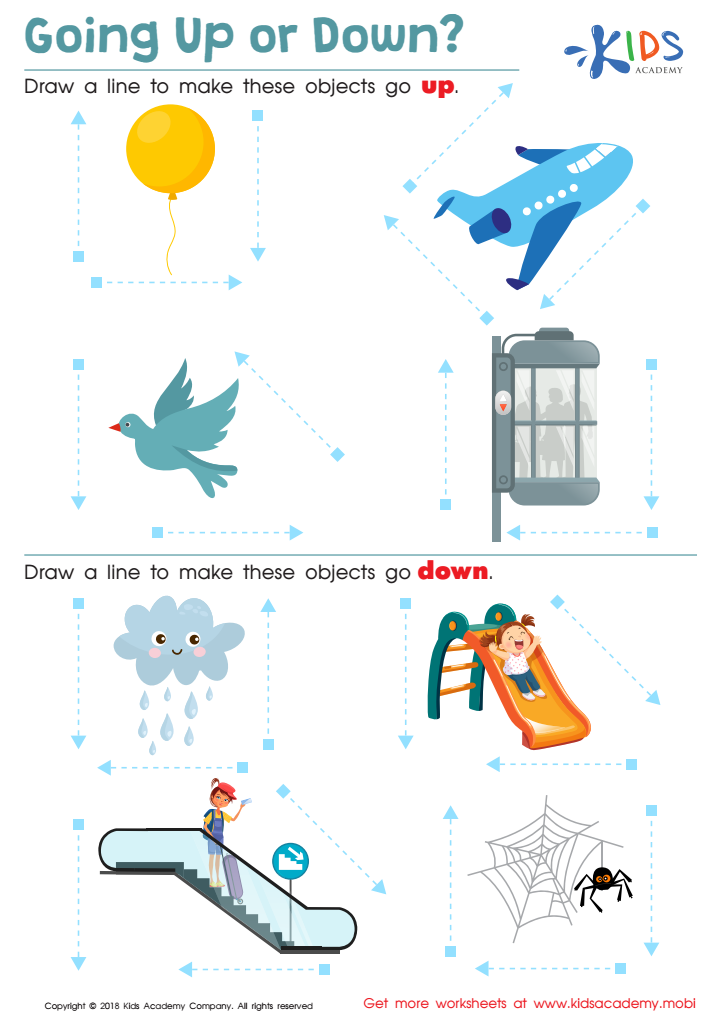
Going up or Down? Worksheet
 Assign to My Students











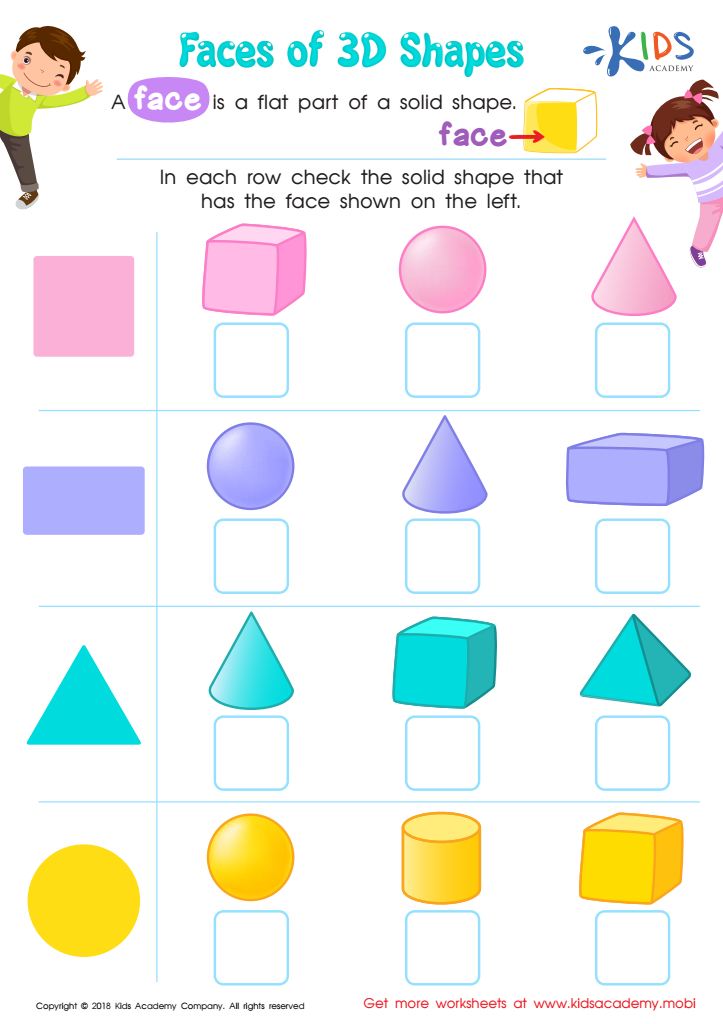
Faces of 3D Shapes Worksheet
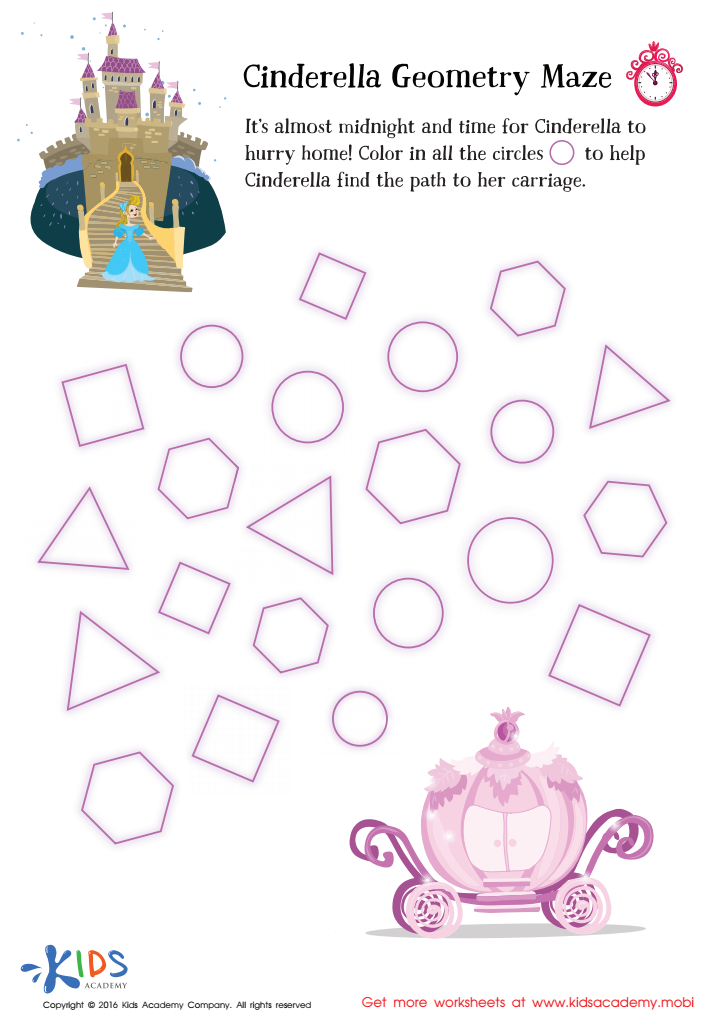
Cinderella Geometry Maze Worksheet








Spatial orientation geometry is crucial for children aged 5-9 as it lays the foundation for their cognitive development and problem-solving skills. At this age, children are naturally curious about the world around them, and spatial orientation helps them understand relationships between objects, navigate spaces, and visualize dimensions. Engaging in spatial activities enhances their ability to think critically and approach challenges methodically.
For parents and teachers, nurturing spatial skills can significantly benefit students’ overall learning. Mastery of spatial concepts fosters mathematical reasoning, enabling children to grasp measurements, shapes, and patterns that are essential not just in math, but across disciplines. Furthermore, these skills enhance visual literacy, important for subjects like art and science.
Encouraging activities that promote spatial orientation—like building with blocks, completing puzzles, and playing geometry-focused games—can improve a child's spatial awareness and boost their confidence. This early investment in spatial skills can contribute to success in later learning pursuits, including STEM (Science, Technology, Engineering, and Mathematics) fields, where spatial reasoning is vital. By prioritizing spatial orientation geometry, parents and teachers play a significant role in shaping well-rounded learners prepared for future academic and real-world challenges.








