Fraction Addition Numbers Worksheets for Ages 5-9
3 filtered results
-
From - To
Discover our engaging Fraction Addition Numbers Worksheets designed specifically for children ages 5-9! These interactive worksheets make learning fractions fun and accessible, helping young learners master the fundamentals of fraction addition with ease. Each worksheet features colorful illustrations and relatable scenarios that encourage critical thinking and problem-solving skills. Ideal for early grade classrooms or home learning, our printable resources provide clear instructions and a range of exercises to suit various learning paces. Equip your students with the essential math skills they need while fostering a love for numbers. Access a world of learning today with our Fraction Addition worksheets!
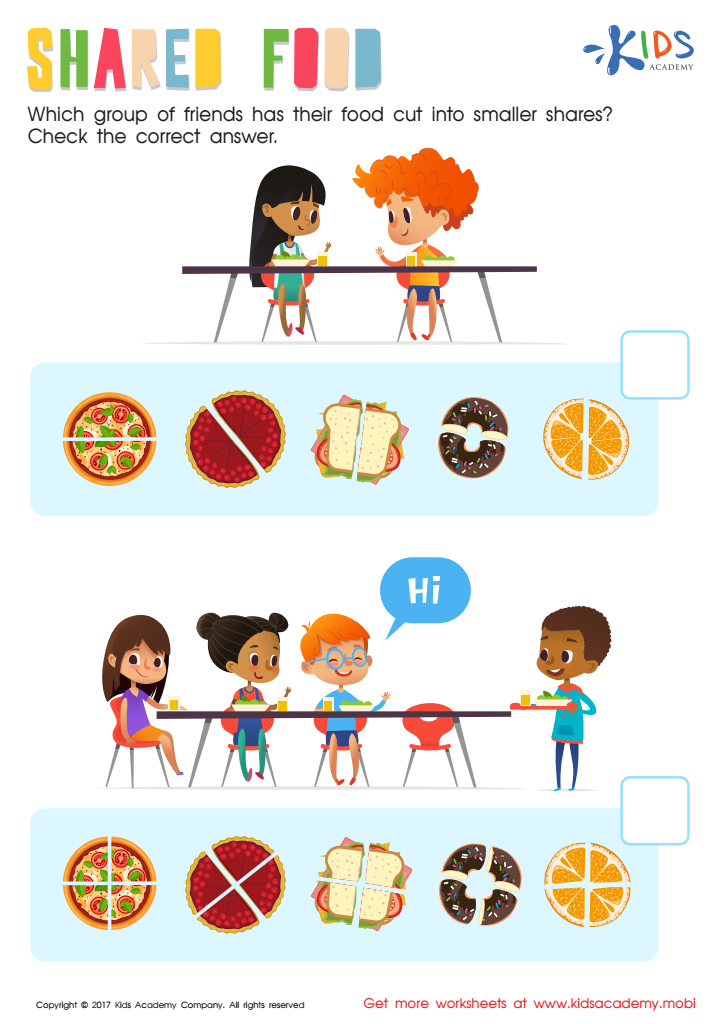
Shared Food Worksheet
 Assign to My Students
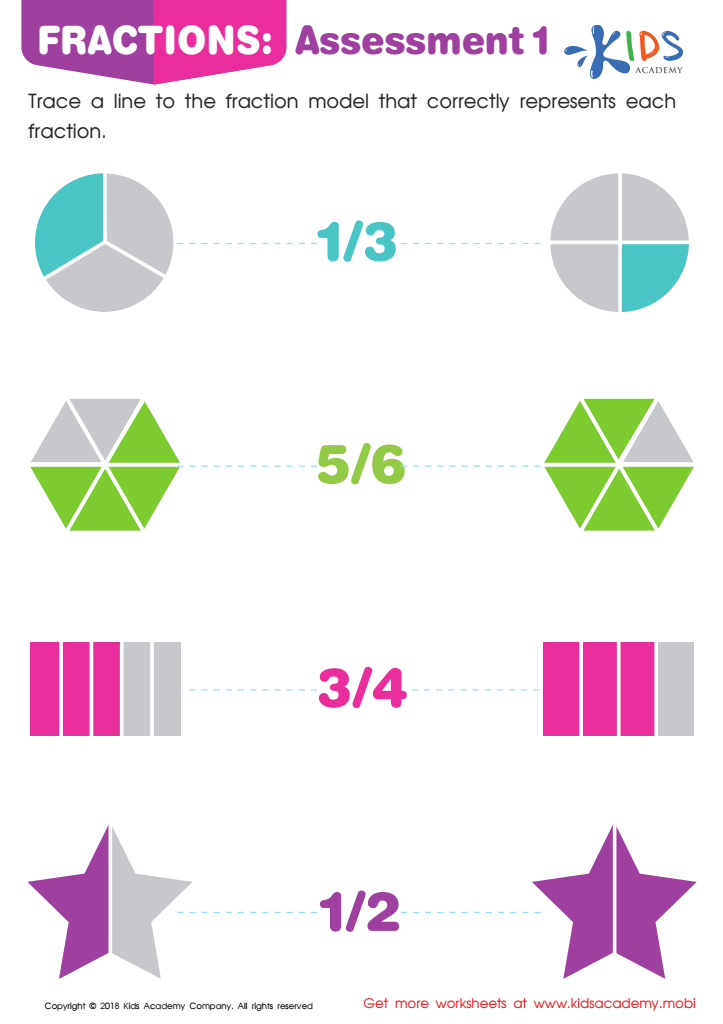
Fractions: Assessment 1 Worksheet
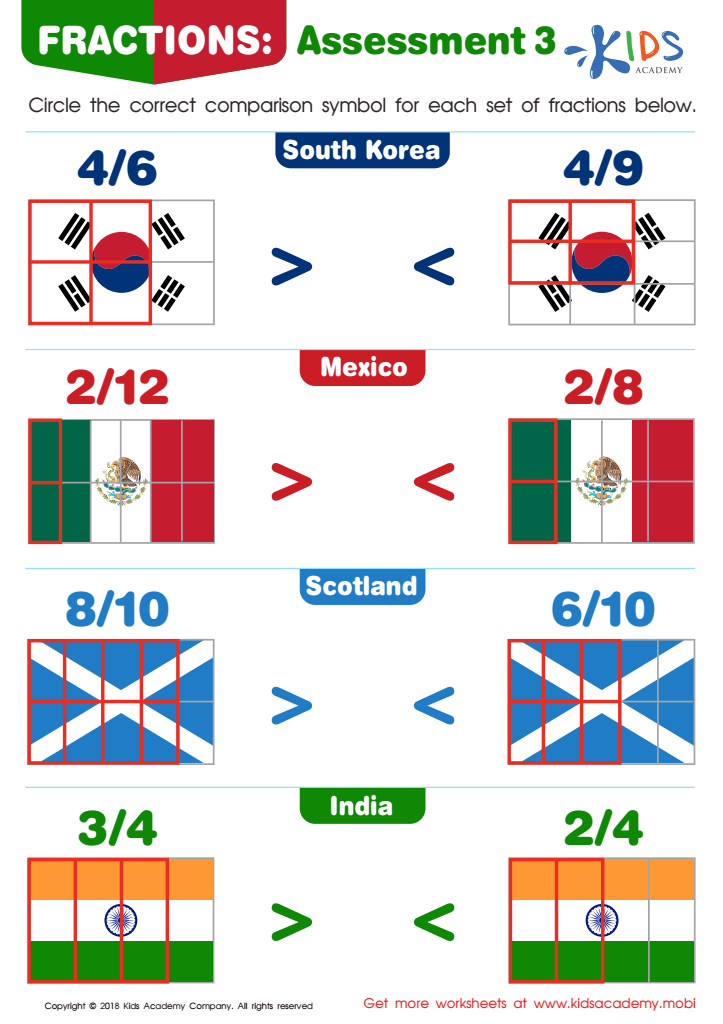
Fractions: Assessment 3 Worksheet








Understanding fraction addition is crucial for children aged 5-9, as it lays the foundation for their future mathematical skills. At this developmental stage, children begin to grasp concepts of numbers, quantities, and relationships, making it an ideal time to introduce fractions. Mastery of fractions not only enhances arithmetic abilities but also fosters logical reasoning and problem-solving skills.
When parents and teachers prioritize fraction addition, they are equipping young learners with the tools to comprehend more complex mathematical ideas later on, such as division, proportions, and algebra. Early exposure to fractions promotes a deeper understanding of the world—in real life, children encounter fractions when measuring ingredients in recipes or dividing objects among friends, reinforcing the relevance of math in everyday situations.
Additionally, engaging students with fraction addition boosts their confidence and encourages a positive attitude toward math. When children learn to add fractions successfully, they develop persistence and resilience, valuable traits that extend beyond the classroom. By supporting children's mastery of fraction addition, parents and teachers are guiding them on a path to academic success and nurturing a lifelong appreciation for mathematics. Ultimately, early engagement with these concepts ensures a stronger foundation for future learning.








