Basic math application Math Worksheets for Ages 5-9
5 filtered results
-
From - To
Discover our engaging Basic Math Application Math Worksheets, designed specifically for ages 5-9. These expert-crafted resources help young learners develop essential math skills through fun and interactive activities. With a focus on foundational concepts such as addition, subtraction, multiplication, and division, each worksheet provides a perfect blend of challenge and excitement to keep kids motivated. Our printable worksheets not only enhance math proficiency but also boost confidence in solving problems. Ideal for both classroom and home use, they are a great way to support your child's educational journey, ensuring they build a strong mathematical foundation for future success.
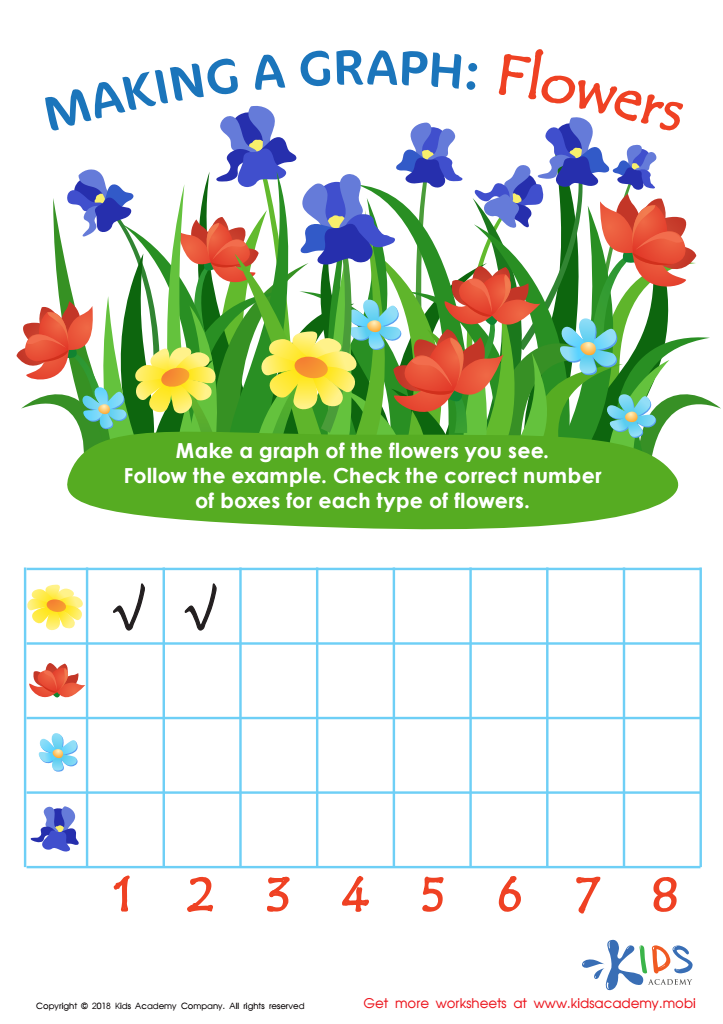
Making a Graph: Flowers Worksheet
 Assign to My Students
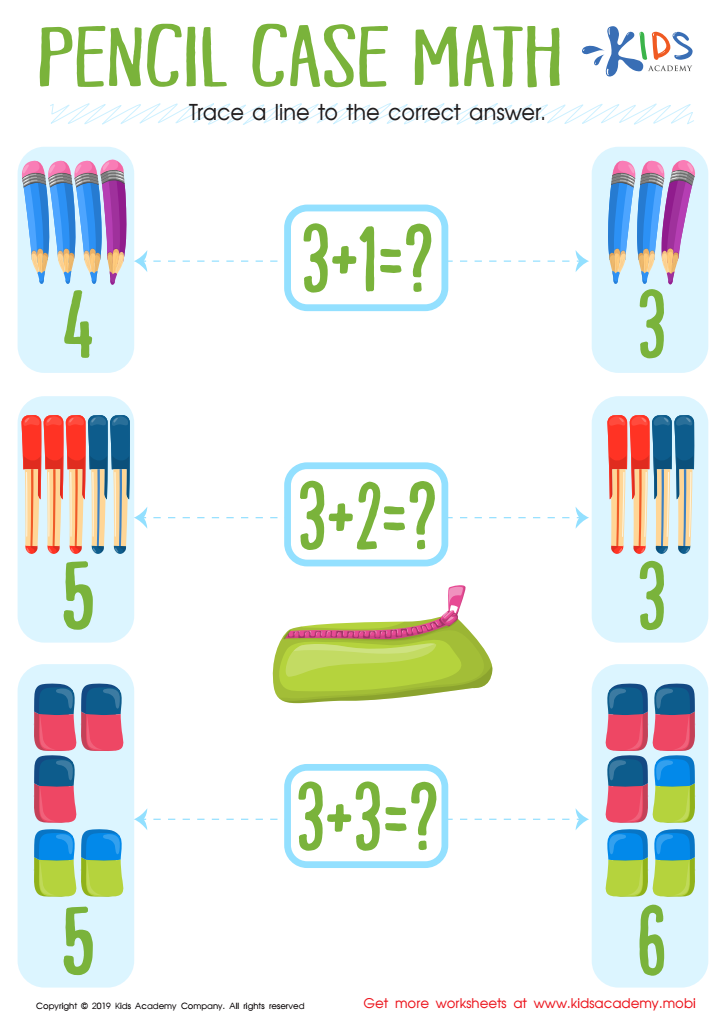
Pencil Case Math Worksheet
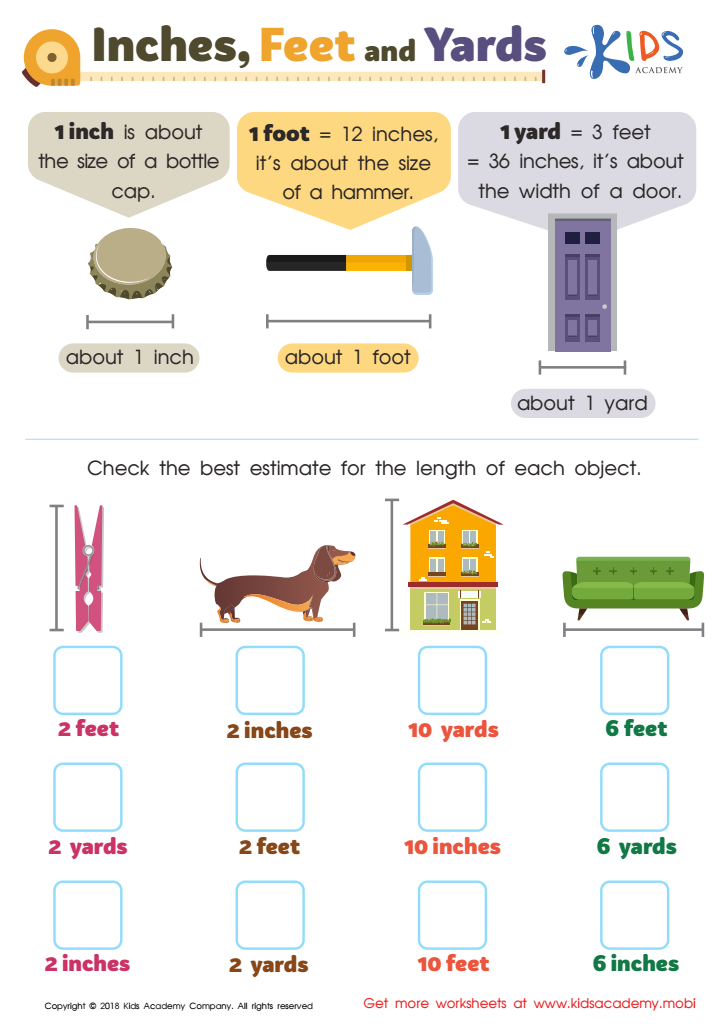
Inches, Feet and Yards Worksheet
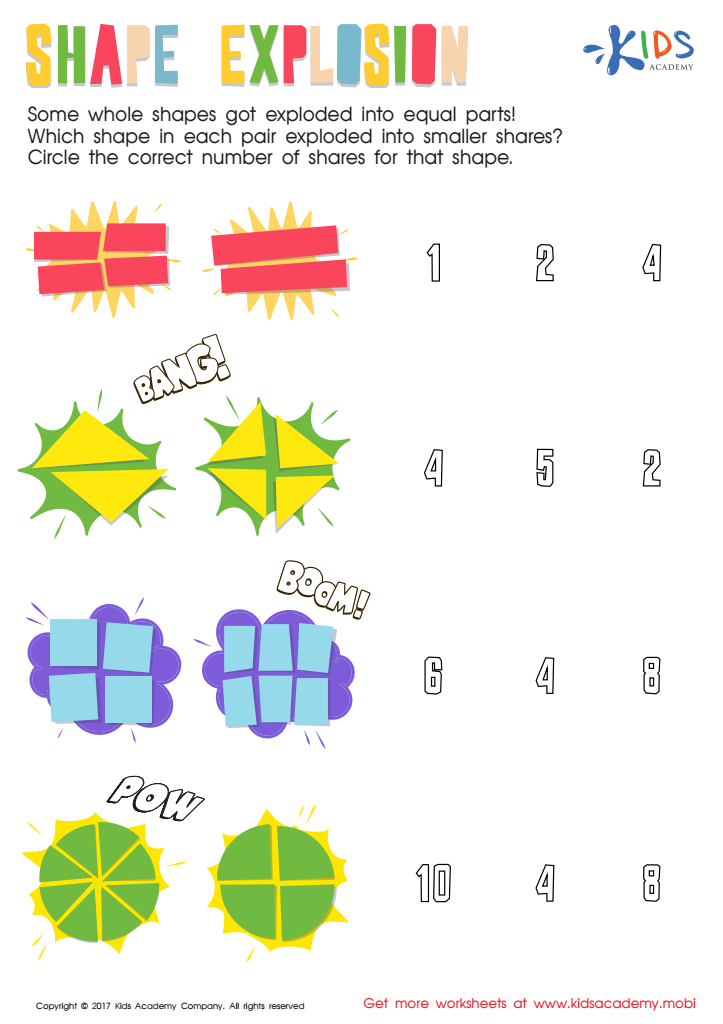
Shape Explosion Worksheet
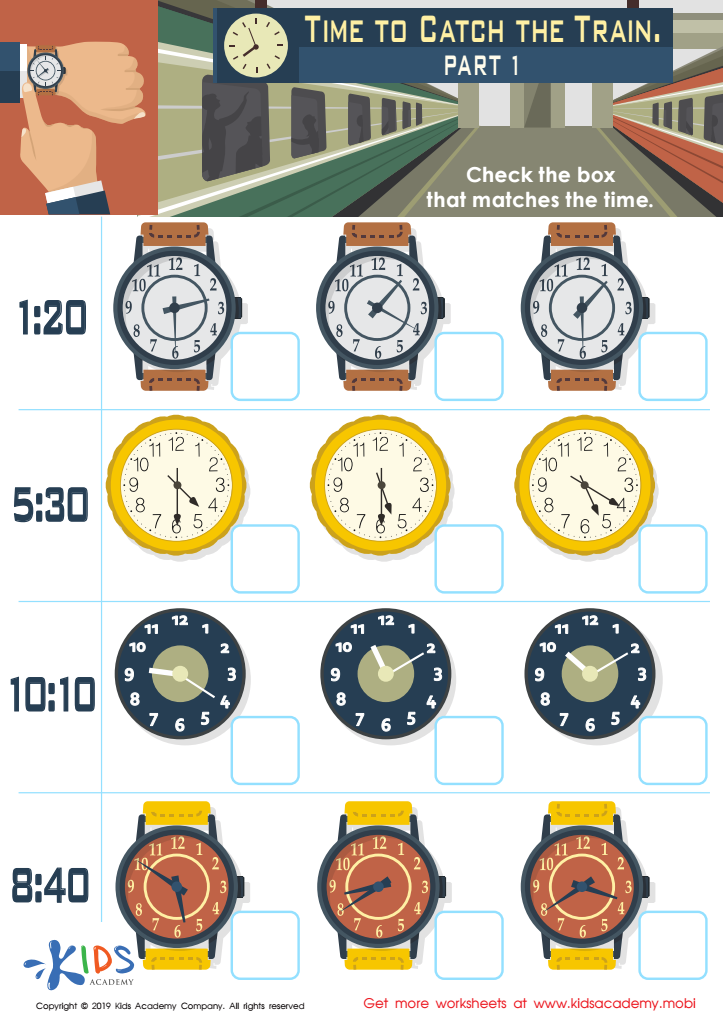
Time to Catch the Train Part 1 Worksheet






Parents and teachers should care about basic math applications for children aged 5-9 because foundational math skills are critical for cognitive development and future academic success. In these early years, children develop number sense, an understanding of quantities, and basic operations such as addition and subtraction. These skills are the building blocks for more complex mathematical concepts they will encounter later in their education. By fostering an early proficiency in basic math, parents and teachers help children develop problem-solving skills, logical reasoning, and critical thinking.
Additionally, early exposure to math helps children feel confident and positive about the subject, reducing math anxiety. Math skills are not only essential for daily life—such as telling time, handling money, and measuring ingredients for a recipe—but they are also crucial for future careers in science, technology, engineering, and mathematics (STEM) fields. Regular practice with interactive math apps engages children in a playful but educational manner, making learning fun and accessible.
Moreover, early mastery of basic math skills is empirically linked to academic performance in other subjects. Understanding patterns, sequencing, and spatial awareness in math translates to better reading comprehension and logical structuring in writing. In summary, investing in basic math applications for young learners sets a solid foundation for lifelong learning and success.








