
Division practice Math Worksheets for Ages 5-9
14 filtered results
Difficulty Level
Grade
Age
-
From - To
Subject
Activity
Standards
Boost your child's math skills with our engaging Division Practice Math Worksheets designed for ages 5-9. Our expertly crafted worksheets make learning division fun and easy, reinforcing basic arithmetic skills through a variety of exercises tailored to young learners. Each printable worksheet focuses on simple division problems, helping children build confidence and proficiency. Perfect for classroom or home use, our worksheets cater to different learning styles, ensuring that every child can master division concepts at their own pace. Encourage early math success with our comprehensive division practice resources.
Favorites
With answer key
Interactive
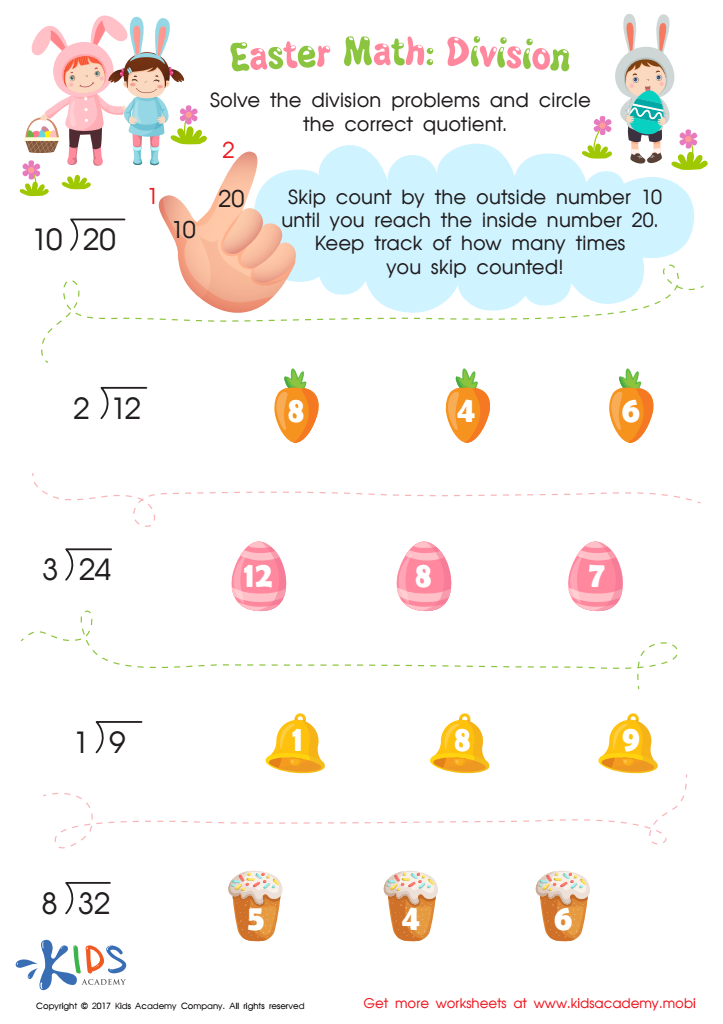
Division Worksheet
Try this Easter-themed PDF worksheet for grade 3: perfect for teaching division with a fun, new trick! It's full of bright, colorful pictures your child will love, and it's as easy as skip counting to solve the problems.
 Assign to My Students
Division Worksheet
Worksheet
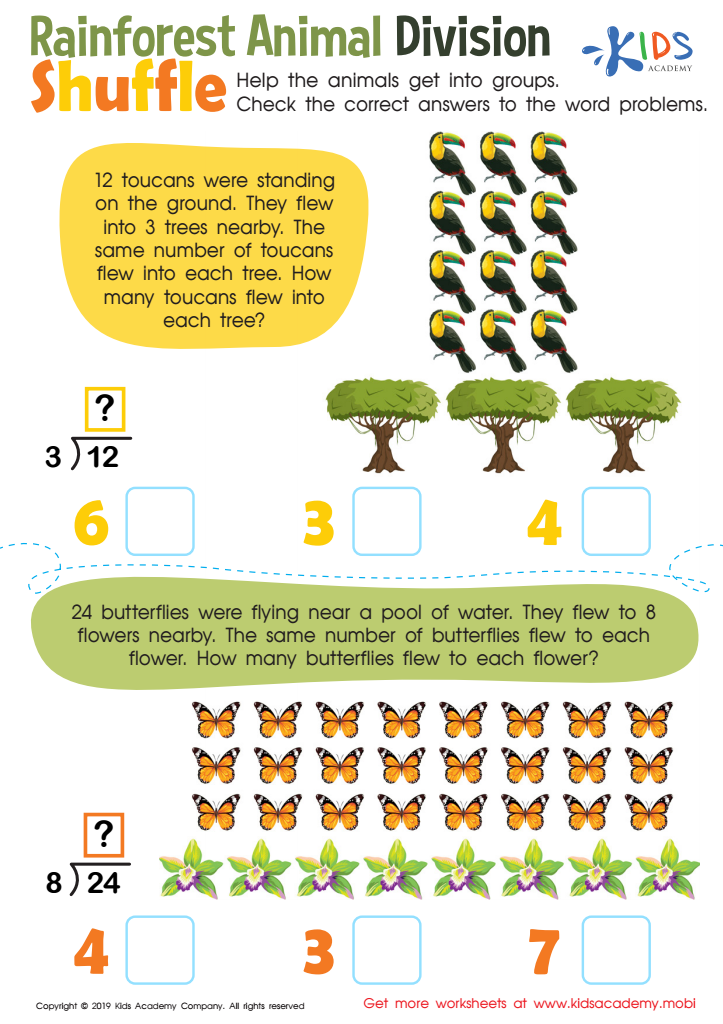
Rainforest Animal Division Worksheet
Children can save the rainforest and learn about division with this worksheet! It helps kids understand that division involves creating equal groups of specific numbers, and with its visual representation, they can grasp the concept more easily. They'll have fun learning about their place in the world and their role in protecting the environment.
Rainforest Animal Division Worksheet
Worksheet
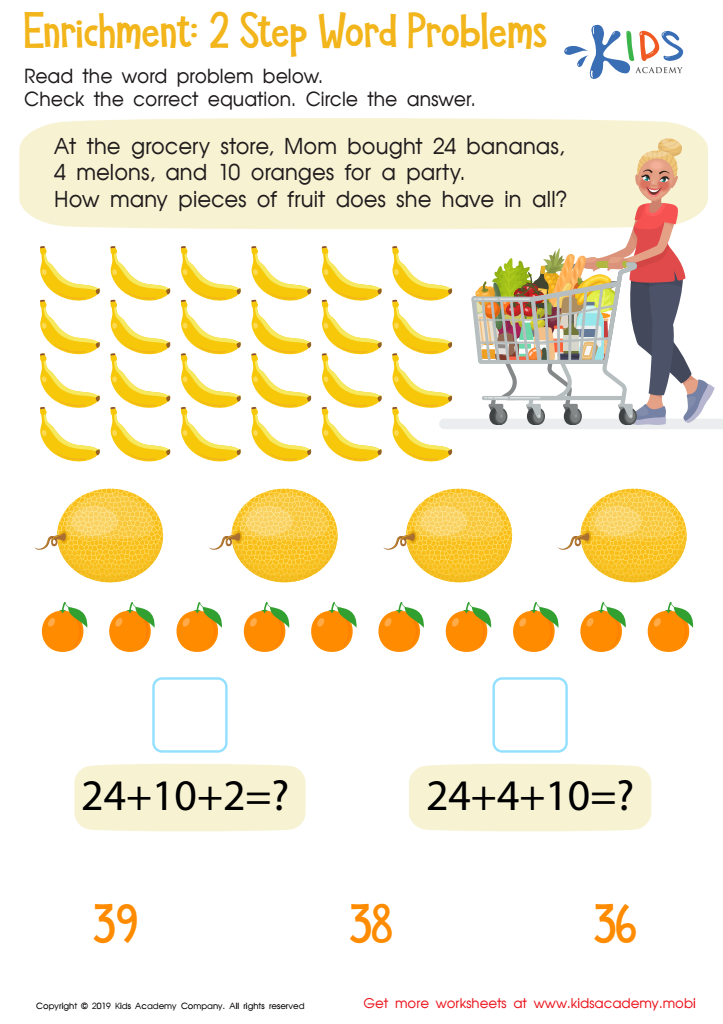
Enrichment -2 Step Word Problems Worksheet
Help your students learn math easier and faster with this colorful worksheet. Read the word problem and then guide them in checking the correct equation and finding the answer. Your students will benefit from the extra help, as they work through new concepts each day.
Enrichment -2 Step Word Problems Worksheet
Worksheet
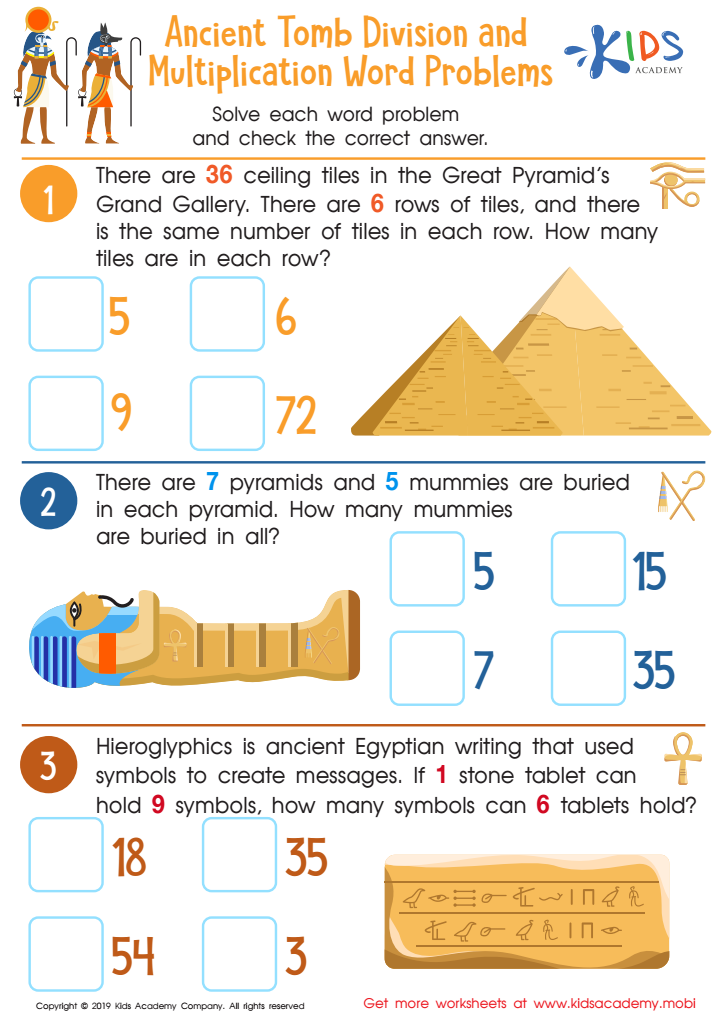
Ancient Tomb Division and Multiplication Word Problems Worksheet
This worksheet teaches kids math, plus a bit about ancient Egypt. Read the text and point to the pictures to explain them. There are three word problems - help kids interpret and solve each one, then find and check the answer. 80 words
Ancient Tomb Division and Multiplication Word Problems Worksheet
Worksheet
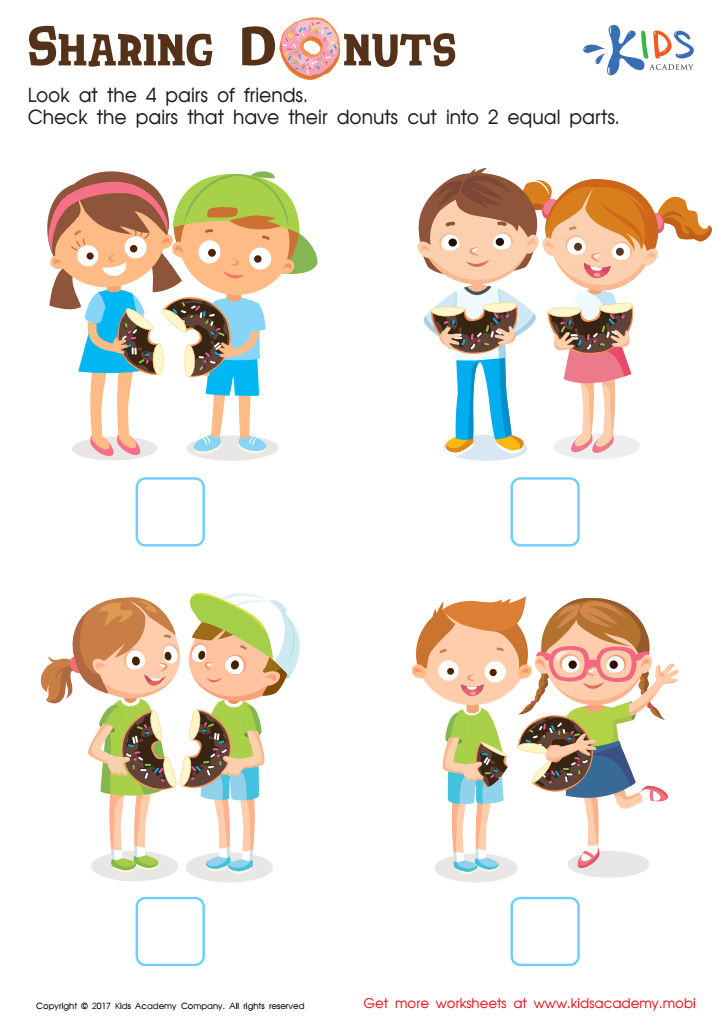
Sharing Donuts Worksheet
Get your kids to check which of the 4 pairs of friends in the worksheet have evenly-split donuts. No one likes being cheated out of a treat, so it's important to make sure the donuts are divided fairly. Plus, your kids will love the challenge!
Sharing Donuts Worksheet
Worksheet
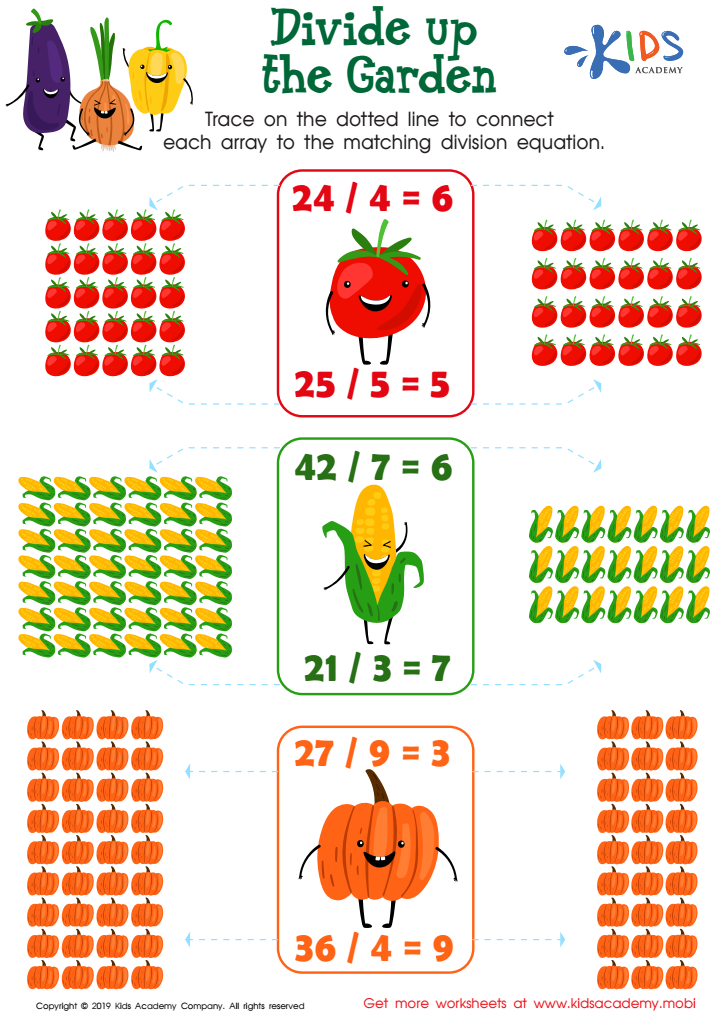
Divide up the Garden Worksheet
Dividing is simply grouping items into equal sets. This worksheet helps kids see division problems in array form. They'll match each equation with a picture group, using the lines provided. It's a great way for beginners to understand division more concretely.
Divide up the Garden Worksheet
Worksheet
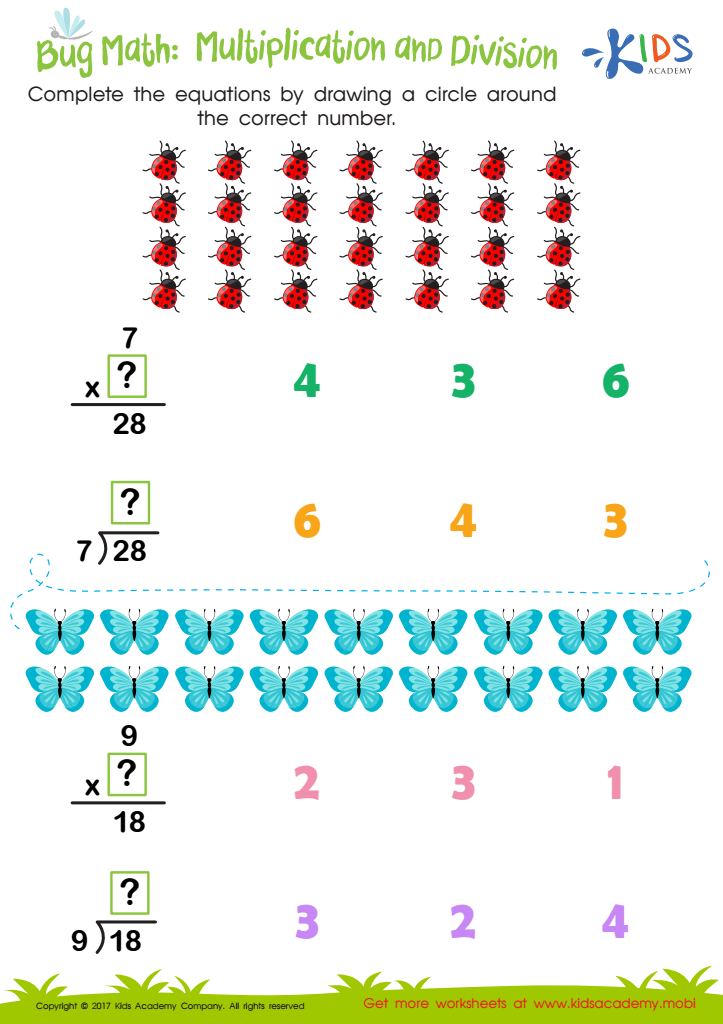
Multiplication and Division Worksheet
Third graders can solve tricky multiplication and division problems with visuals of springtime bugs. Pictures guide them through the process, making it easier to understand. Plus, it's fun!
Multiplication and Division Worksheet
Worksheet
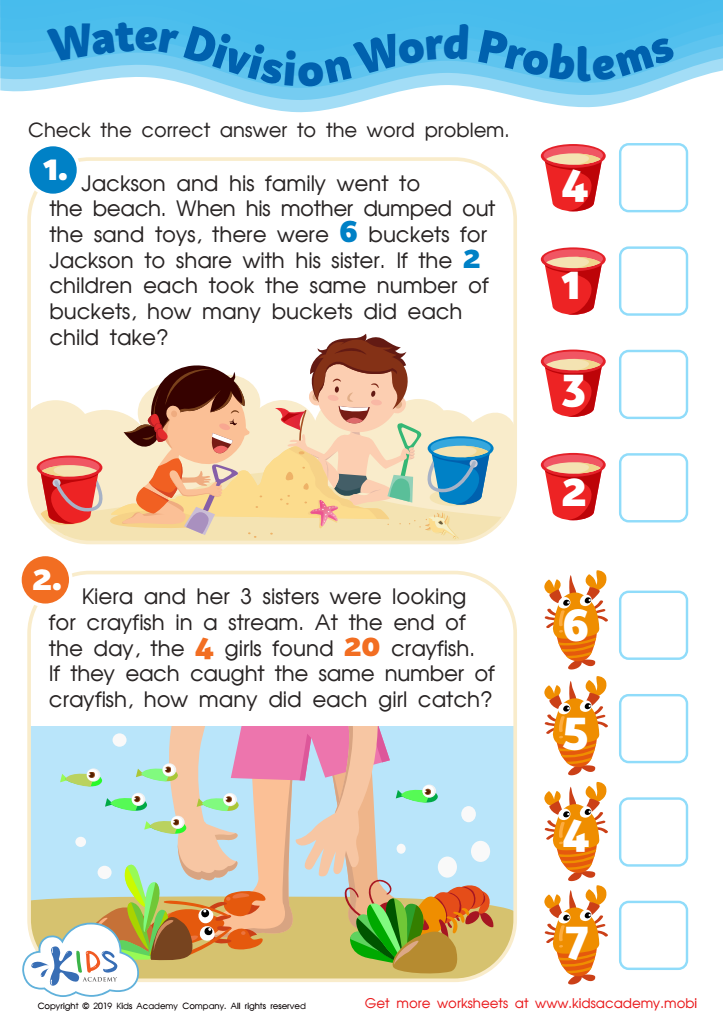
Water Division Word Problems Worksheet
Kids can sharpen their math skills with this fun PDF! They'll see pictures of friends at the beach, plus bold numbers and colorful pictures. All they need to do is read and understand the problem to find the answer - without even realizing they're doing division. A great way to make math enjoyable!
Water Division Word Problems Worksheet
Worksheet
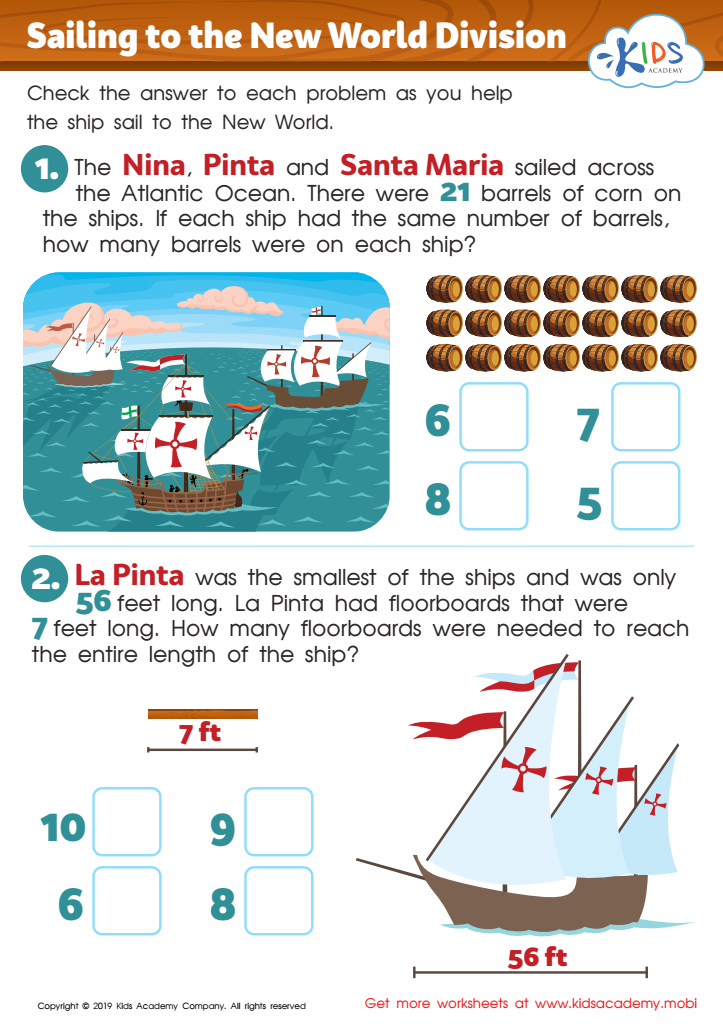
Sailing to the New World Division Worksheet
This worksheet combines history and math, helping kids make sense of problem-solving. Christopher Columbus sailing the ocean blue is combined with picture representations of division word problems in bold colors and highlighted numbers. Kids can learn while having fun figuring out the problems, regardless of whether it's math or history.
Sailing to the New World Division Worksheet
Worksheet
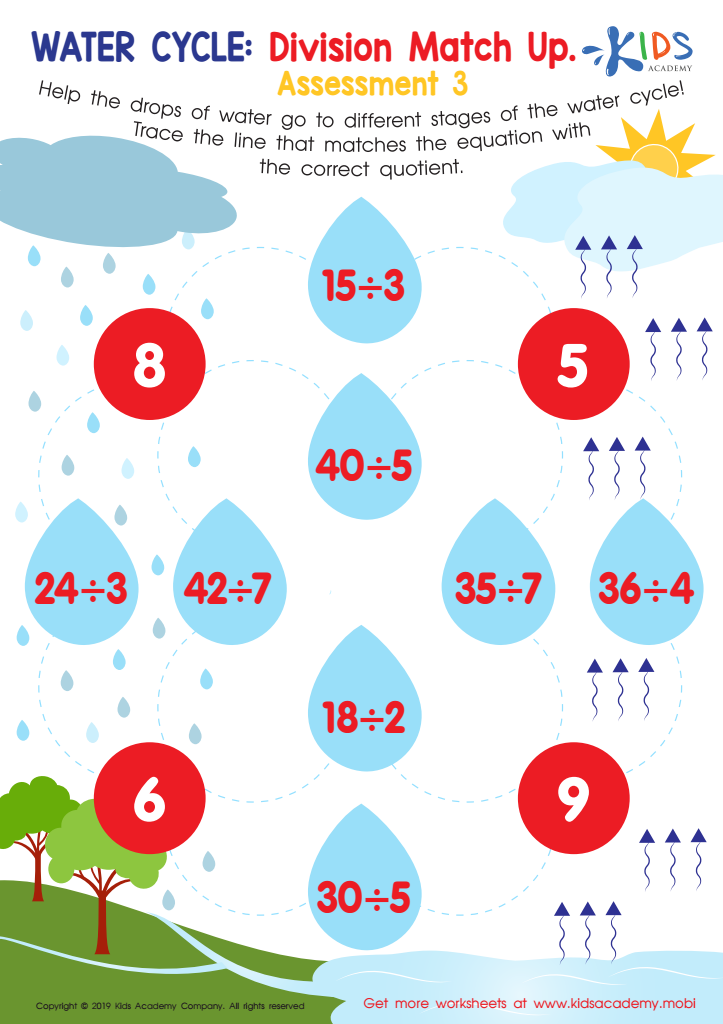
Water Cycle Division Match Up Assessment 3 Worksheet
Division is more fun than schoolwork with this assessment! Traceable lines let kids match equations to quotients, helping them build automaticity and giving you an easy way to see their progress.
Water Cycle Division Match Up Assessment 3 Worksheet
Worksheet
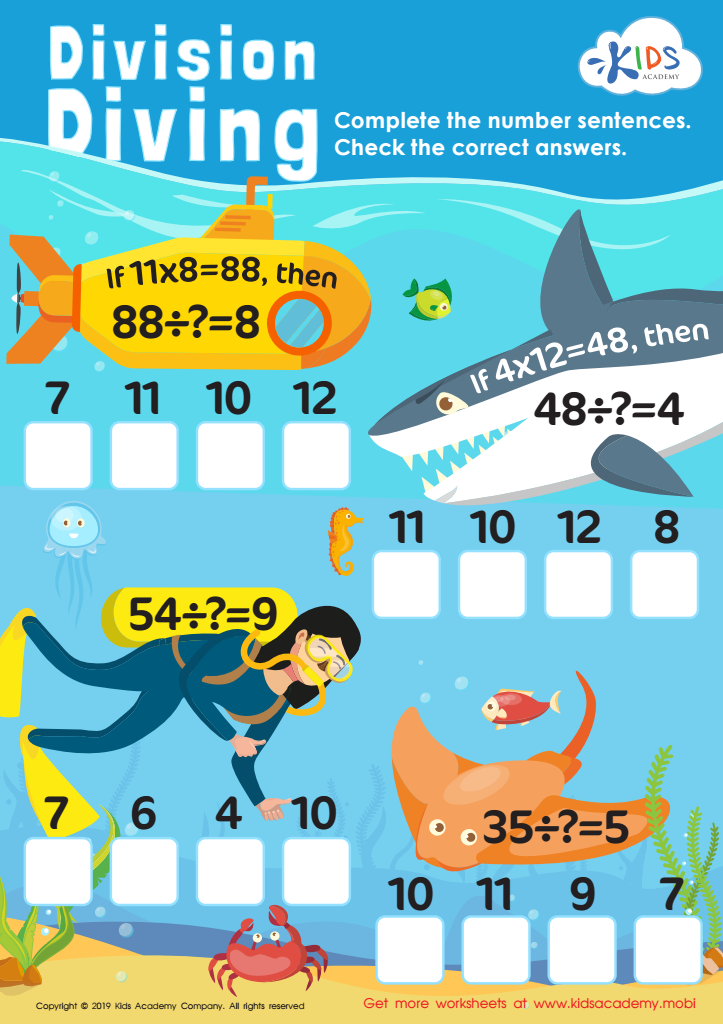
Division Diving Worksheet
Kids love exploring water and this free PDF worksheet is a great way to bring the fun and math together! Kids can help the underwater friends with number sentences, and use their fact family knowledge to solve for the missing number, then choose the correct answer. This worksheet is an enjoyable way for them to practice division!
Division Diving Worksheet
Worksheet
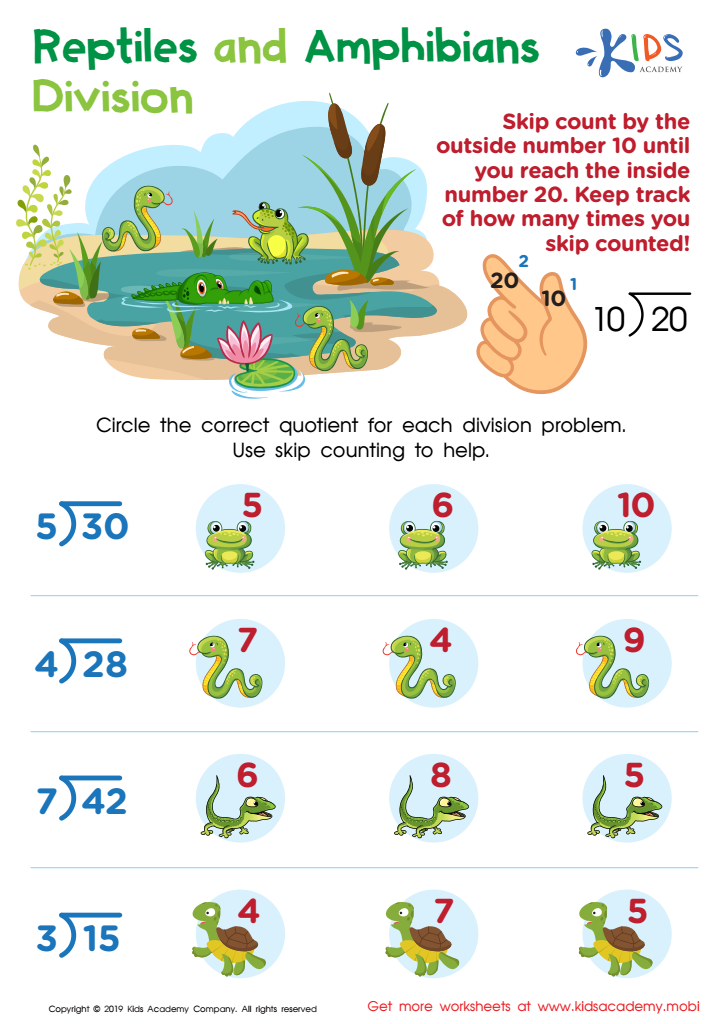
Reptile and Amphibians Division Worksheet
Skip counting is key in division. This PDF worksheet helps children practice this skill with fun reptile and amphibian friends. They must circle the right quotient among the choices given to reinforce their pattern recognition. Perfect for mastering division!
Reptile and Amphibians Division Worksheet
Worksheet
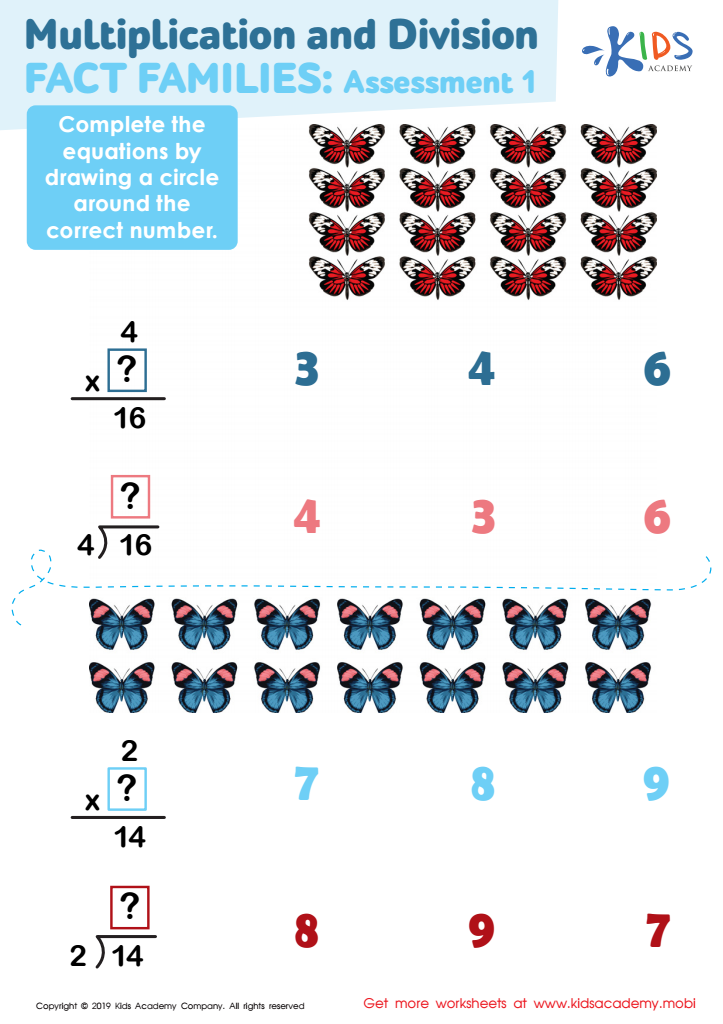
Multiplication and Division Fact Families Assessment 1 Worksheet
When it comes to multiplication and division, automaticity and efficiency are key. Test your child's understanding of fact families with this free butterfly worksheet. They'll practice equations, picture concepts and fact families to arrive at the correct number. Repetition will help them develop strong skills and confidence.
Multiplication and Division Fact Families Assessment 1 Worksheet
Worksheet
Join Kids Academy for Free
Who is primarily going to use this learning content?




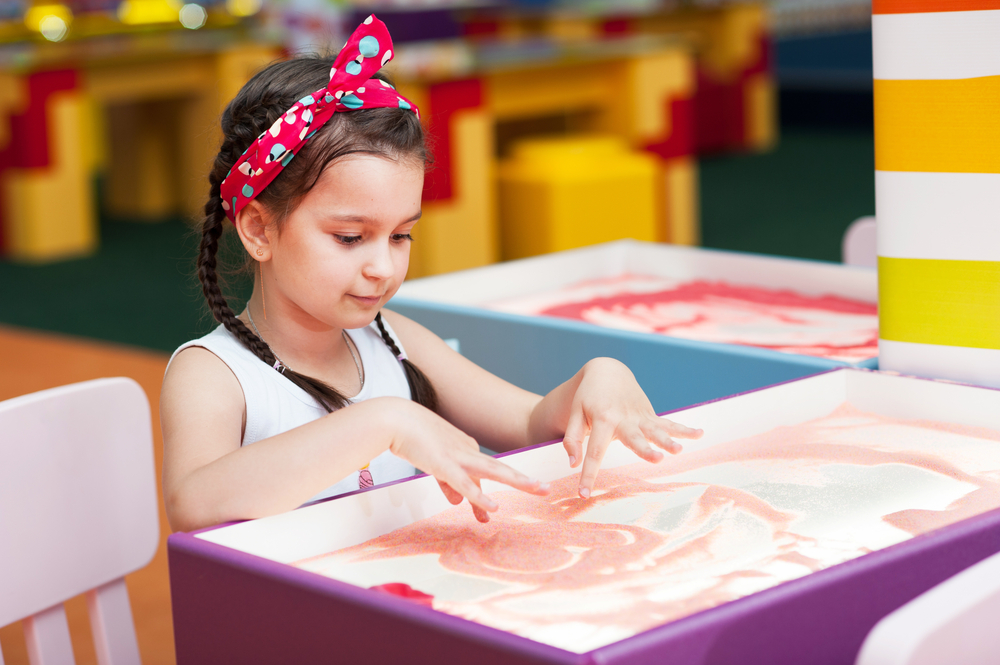
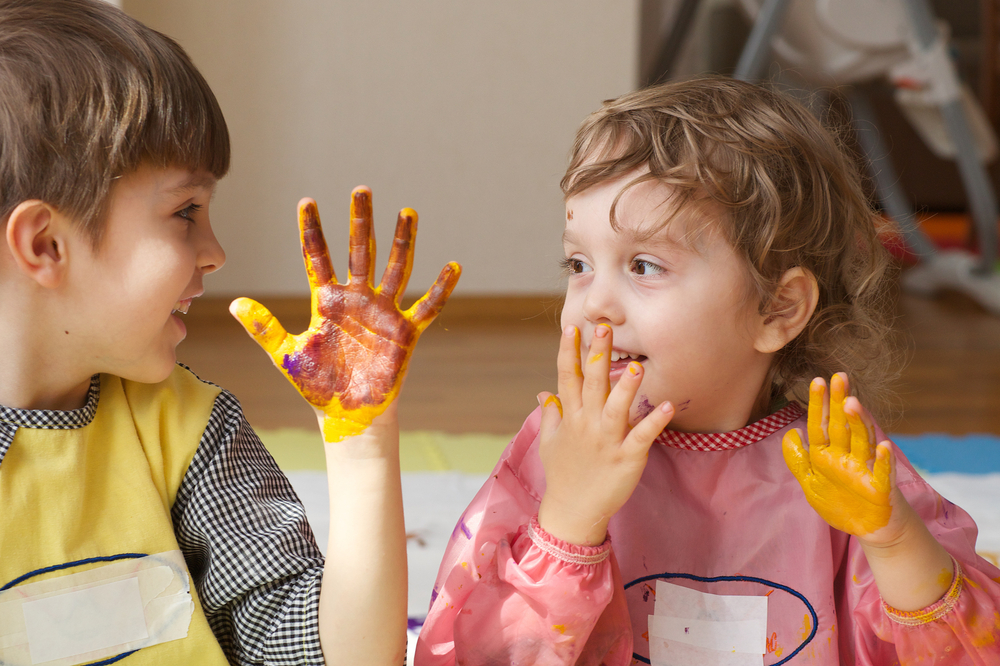

Parents and teachers should care about division practice for ages 5-9 because mastering early math skills builds a strong foundation for future learning and everyday life. Division helps children understand the concept of fairness, sharing, and breaking things into equal parts, which are essential principles in problem-solving and reasoning.
At this developmental stage, children are highly receptive and can absorb complex concepts more easily if introduced gradually and playfully. Engaging in division practice enhances their numerical literacy and boosts confidence, reducing anxiety around math as they grow older. This age-appropriate intervention encourages logical thinking, critical analysis, and the ability to make connections between different mathematical concepts.
Moreover, regular practice in a supportive environment instills perseverance and patience. As kids struggle with and eventually solve division problems, they develop resilience. Consistent practice also parallels skills required in real-world scenarios, such as budgeting, cooking, or dividing items among friends or family.
In summary, division practice for children ages 5-9 is not just about learning to divide numbers; it’s about nurturing a versatile and robust mathematical mindset. It prepares them for higher-level math and ingrains essential life skills that will serve them well into adulthood. Therefore, parents and educators should prioritize these activities to aid holistic development.








