
Simplifying Fractions Math Worksheets for Ages 5-9
22 filtered results
Difficulty Level
Grade
Age
-
From - To
Subject
Activity
Standards
Help young learners master the concept of simplifying fractions with our engaging math worksheets for ages 5-9! Perfect for building foundational math skills, these worksheets offer clear, step-by-step instructions that make learning fun and effective. Designed by education experts, each printable activity breaks down complex tasks into manageable steps, promoting confidence and clarity. Your child will enjoy colorful illustrations and interactive problems, making fractions a breeze. Ideal for classroom use or homeschooling, our worksheets are an invaluable resource for parents and teachers aiming to boost kids' mathematical proficiency. Make learning enjoyable with Kids Academy today!
Favorites
With answer key
Interactive
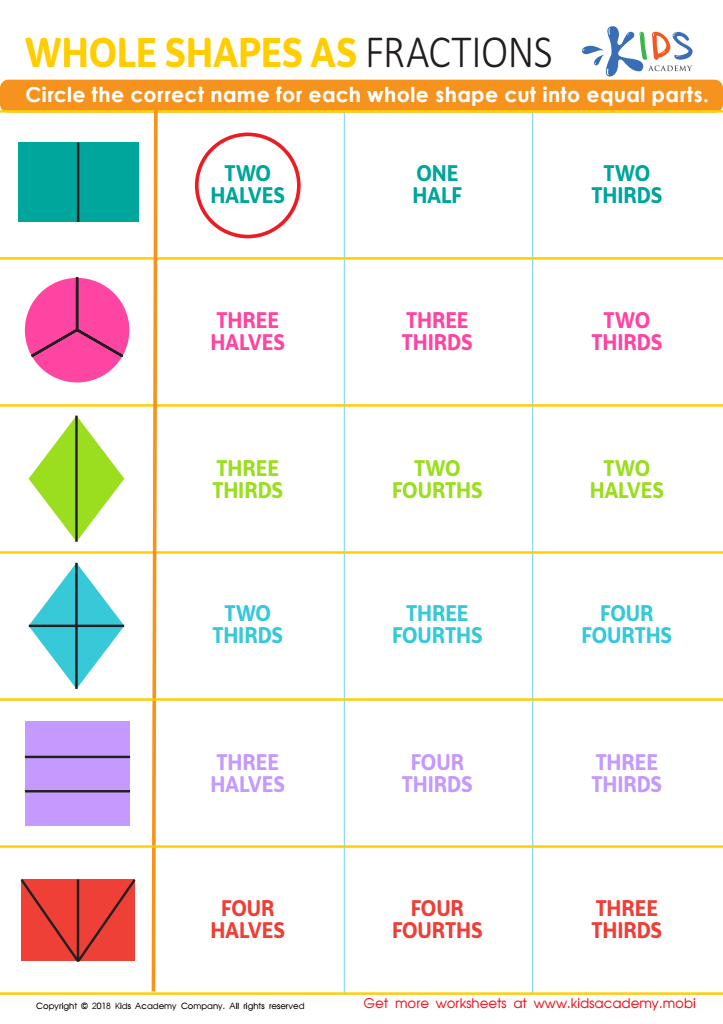
Whole Shapes as Fractions Worksheet
Introduce your child to fractions! After they can draw whole shapes, have them represent them as fractions using a simple worksheet. This will help improve their understanding of naming whole shapes cut into equal parts.
 Assign to My Students
Whole Shapes as Fractions Worksheet
Worksheet
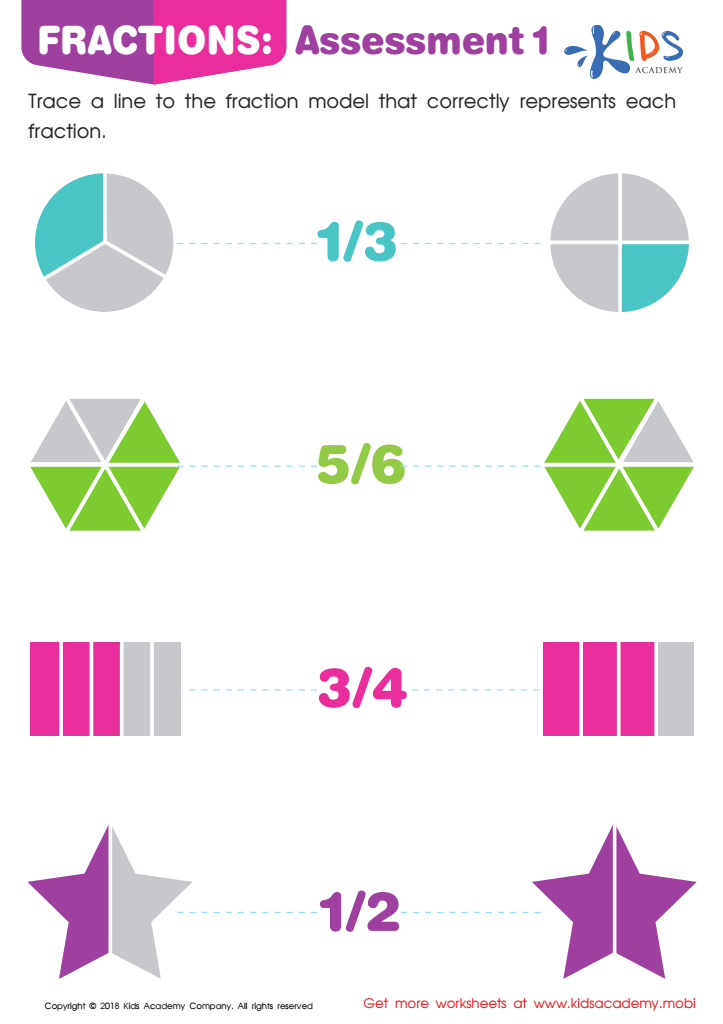
Fractions: Assessment 1 Worksheet
Master fractions easily with this worksheet! It has four sets of fraction models and fraction equations with two models each. Guide your kids to trace a line to the correct fraction model for each equation.
Fractions: Assessment 1 Worksheet
Worksheet
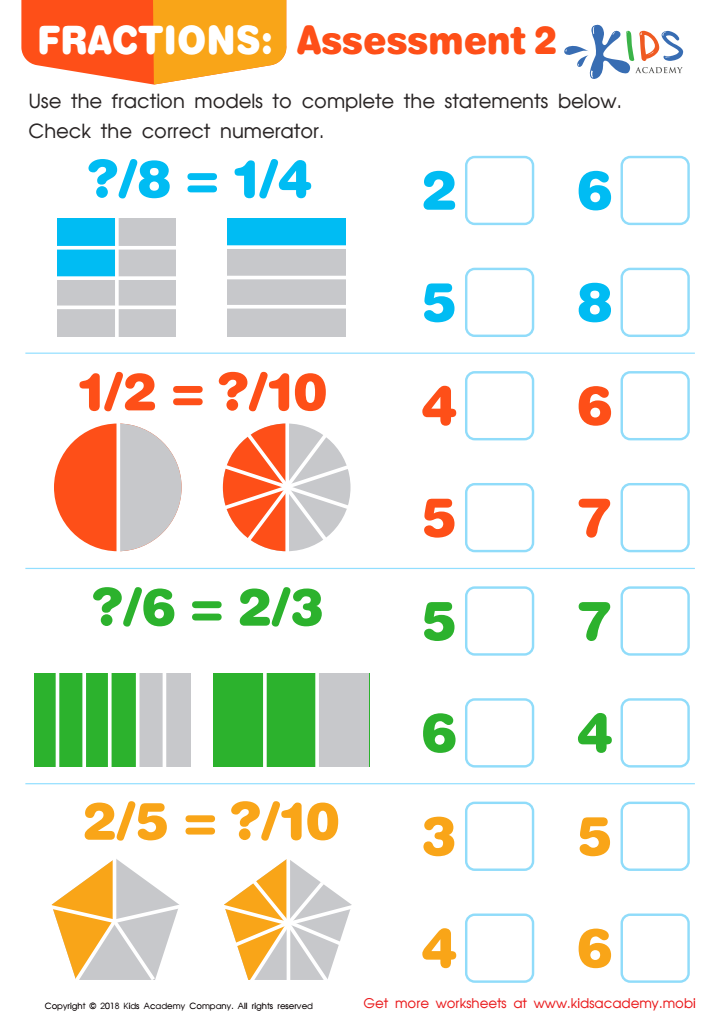
Fractions: Assessment 2 Worksheet
Help your kids understand fractions better with this worksheet. Ask them to complete the fraction statements using the fraction models on the left and then check the correct numerators. This can help clear up any confusion they may have with fractions and fraction models.
Fractions: Assessment 2 Worksheet
Worksheet
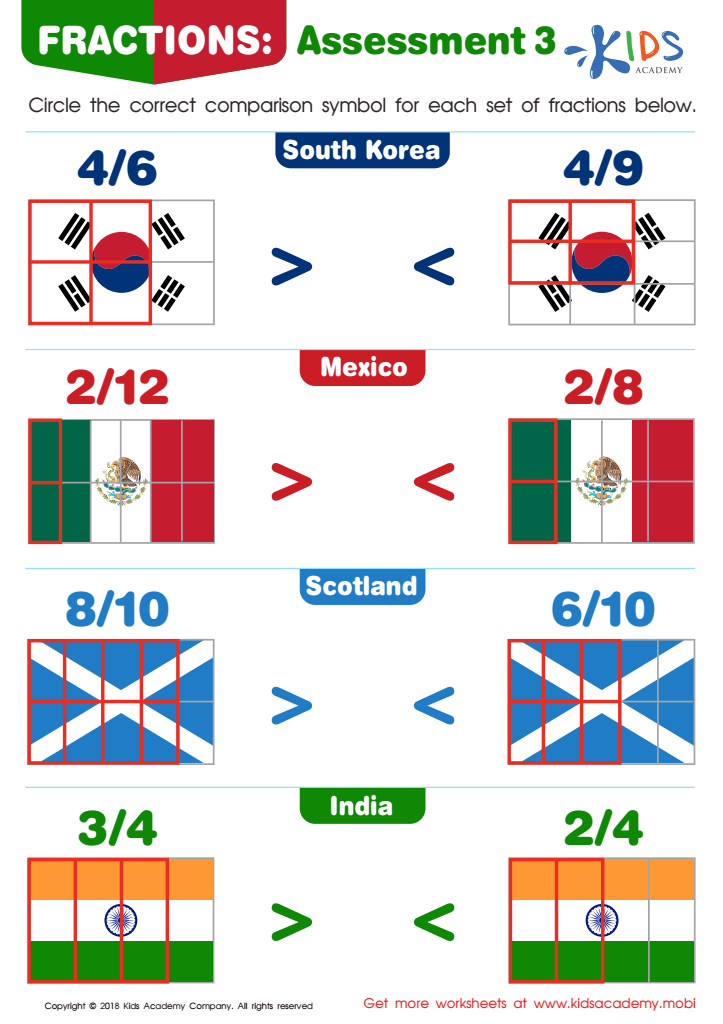
Fractions: Assessment 3 Worksheet
This worksheet helps teach kids about fractions and introduces them to countries and their flags. Have them read the country names and point to the flags. Then help them assess the fractions, and ask them to circle the symbol that shows their values.
Fractions: Assessment 3 Worksheet
Worksheet
Join Kids Academy for Free
Who is primarily going to use this learning content?








Parents and teachers should care about simplifying fractions for ages 5-9 because it establishes a critical foundation for future math skills. Simplifying fractions helps young learners develop a deeper understanding of numbers and mathematical relationships, fostering analytical thinking and problem-solving abilities. At this early age, solidifying these concepts enables children to grasp more complex ideas more easily as they advance to higher grades.
Moreover, fractions are ubiquitous in everyday life, be it in cooking, dividing objects, or understanding time. Introducing fractions simplification early makes mathematics more relatable and practical, enhancing a child's ability to apply math skills outside the classroom. Simplified fractions are also fundamentally easier to work with, leading to fewer errors and better comprehension.
Caring about teaching this skill addresses varying learning styles and needs. Engaging activities and visual aids tailored to young learners can make complex concepts accessible, ensuring no child falls behind. Investing time in teaching fractions early on cultivates confidence in mathematics, turning apprehension into a sense of mastery and curiosity. In sum, an early grasp of simplifying fractions is a stepping-stone towards academic success and practical competence in everyday math situations.








