Logical Reasoning Matching Worksheets for Ages 5-9
5 filtered results
-
From - To
Explore our engaging Logical Reasoning Matching Worksheets designed specifically for children ages 5-9! These worksheets help young learners develop critical thinking and problem-solving skills through fun activities that require matching concepts and drawing connections. Tailored for early grade learners, each worksheet features colorful illustrations and age-appropriate challenges that make learning entertaining. Perfect for homeschooling or classroom use, our resources encourage logical reasoning in a playful way, ensuring that students build confidence as they learn. Download our worksheets today and support your child's cognitive development while sparking their curiosity and creativity through interactive reasoning tasks!
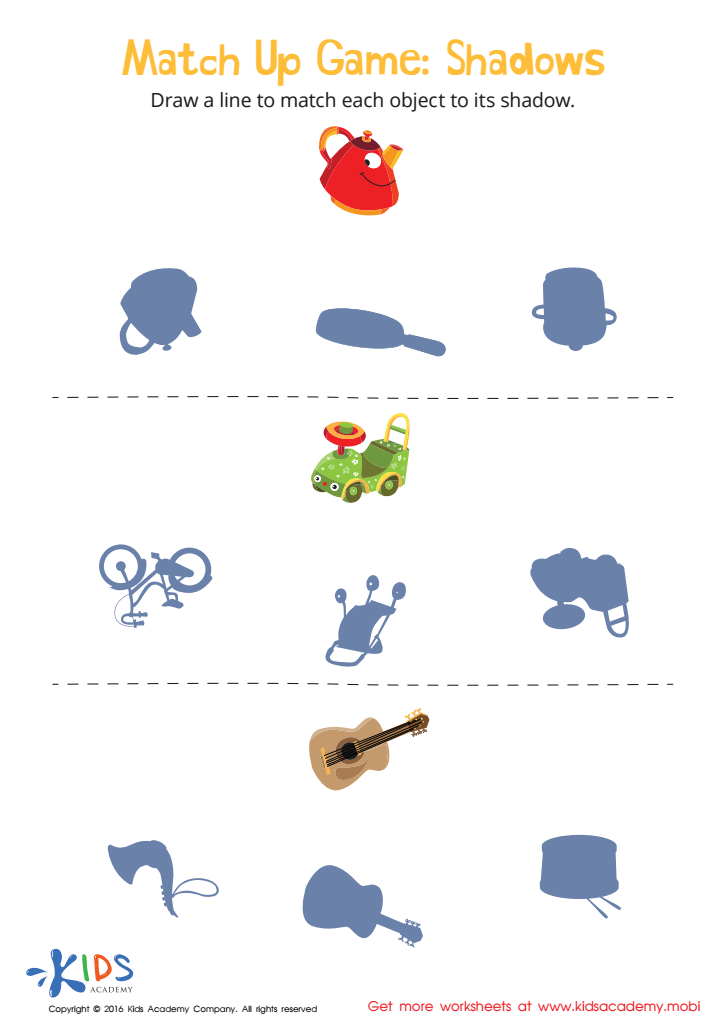
 Assign to My Students
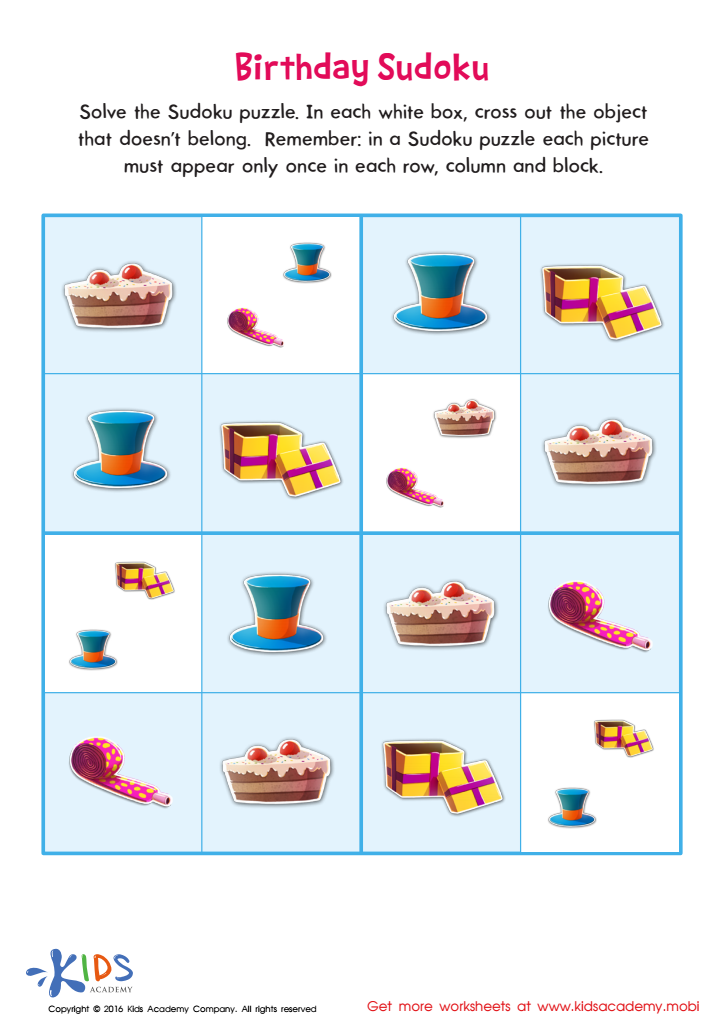
Birthday Sudoku Sorting Worksheet
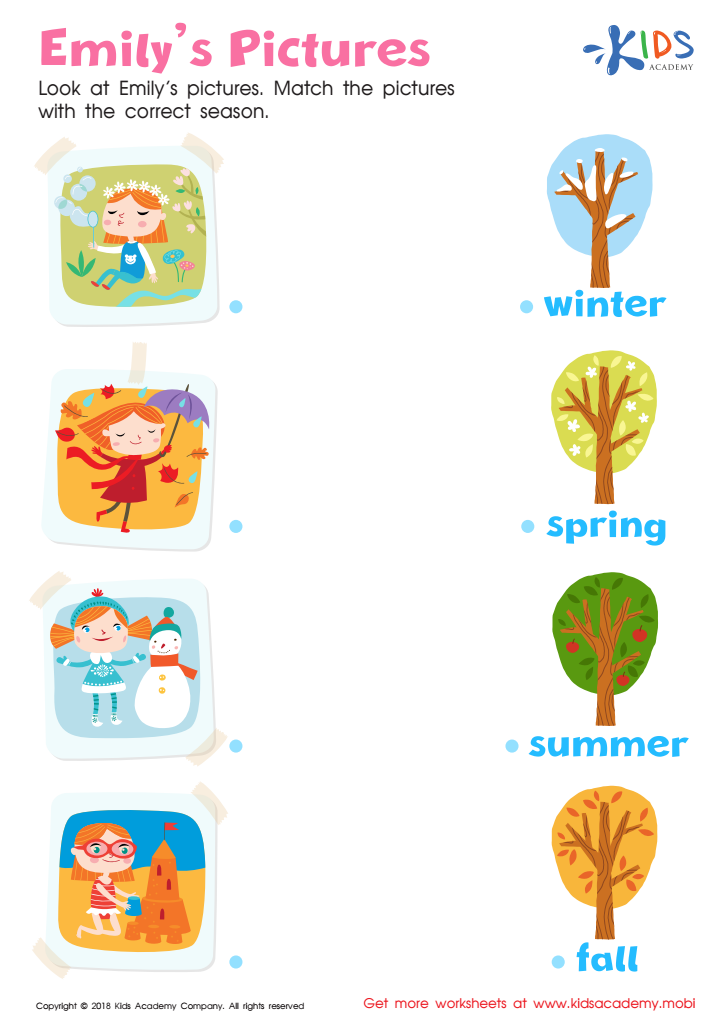
Emily's Pictures Worksheet

Find the Pattern Worksheet
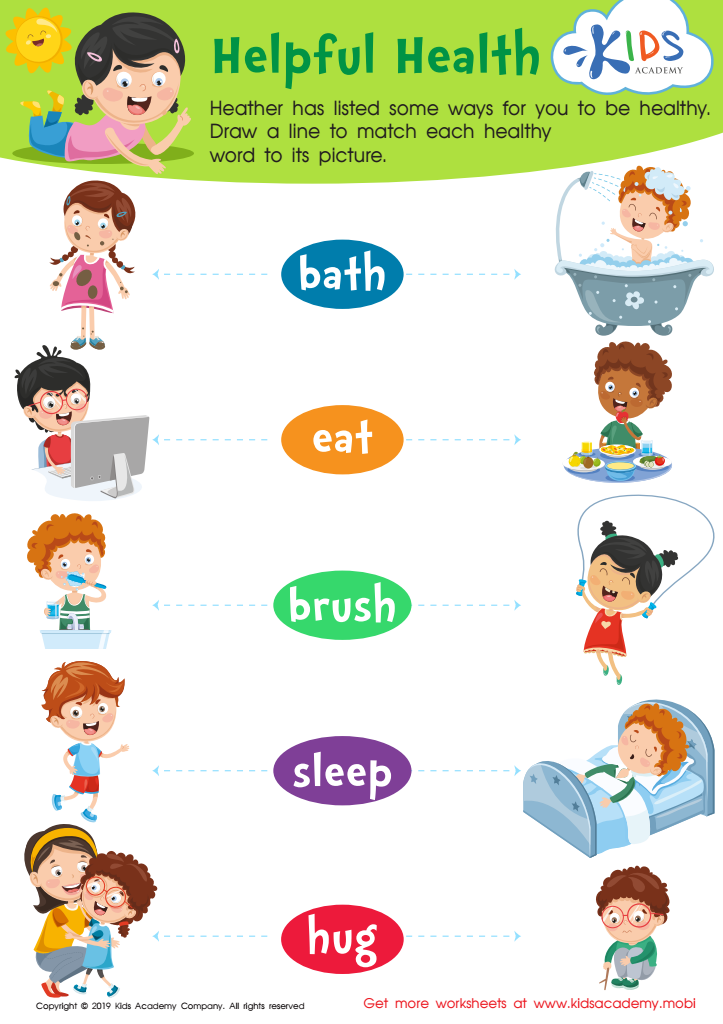
Helpful Health Worksheet








Logical reasoning skills are essential for children's cognitive development, particularly for those aged 5 to 9. These skills empower children to solve problems, make decisions, and understand relationships between concepts. When children engage in logical reasoning activities, such as matching tasks, they enhance their ability to think critically and analytically, which are crucial skills for success in both academic and real-world situations.
Parents and teachers should prioritize logical reasoning matching because it fosters essential skills like pattern recognition, categorization, and deductive reasoning. These skills not only aid in subject areas like math and science but also nurture creativity and adaptability in various situations. Moreover, engaging in these activities can boost children's confidence as they successfully navigate challenging tasks.
Additionally, early exposure to logical reasoning can build a strong foundation for future learning. As these children progress in their education, the skills acquired through matching activities will translate into better performance in assessments and everyday problem-solving scenarios. By nurturing logical reasoning now, parents and teachers can equip children with the tools they need to thrive academically and socially in an increasingly complex world. Encouraging such development is an investment in children’s futures, fostering lifelong learners and skilled problem-solvers.








