Numbers up to 100 Worksheets for Ages 5-9 - Page 3
51 filtered results
-
From - To
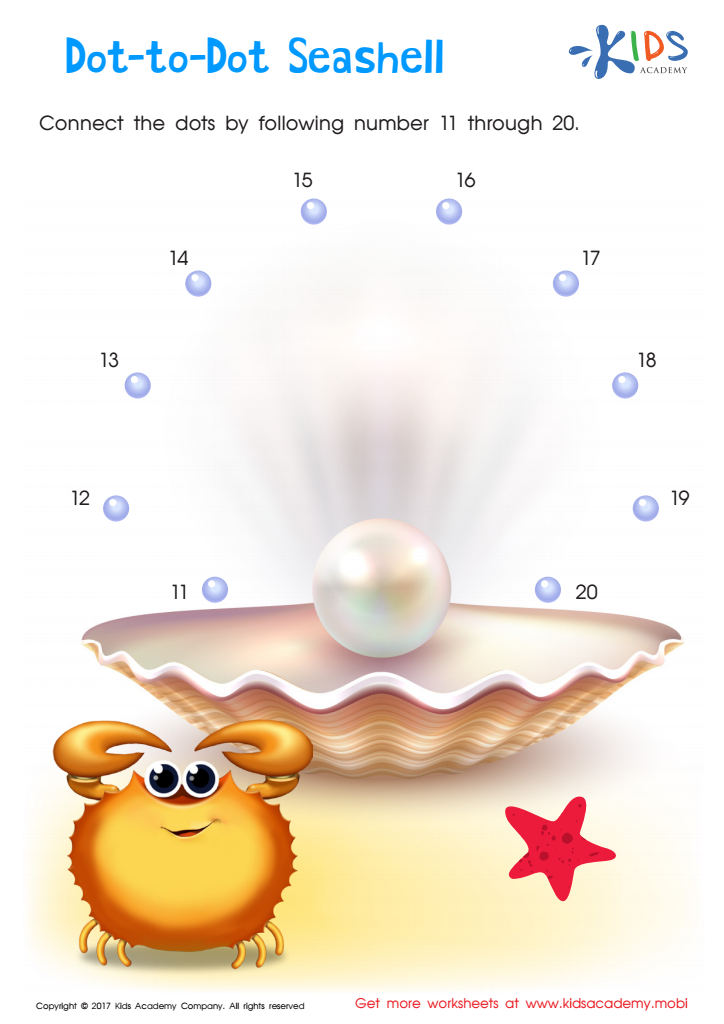
Ordering 11–20: Dot–to–dot Seashell Printable
 Assign to My Students
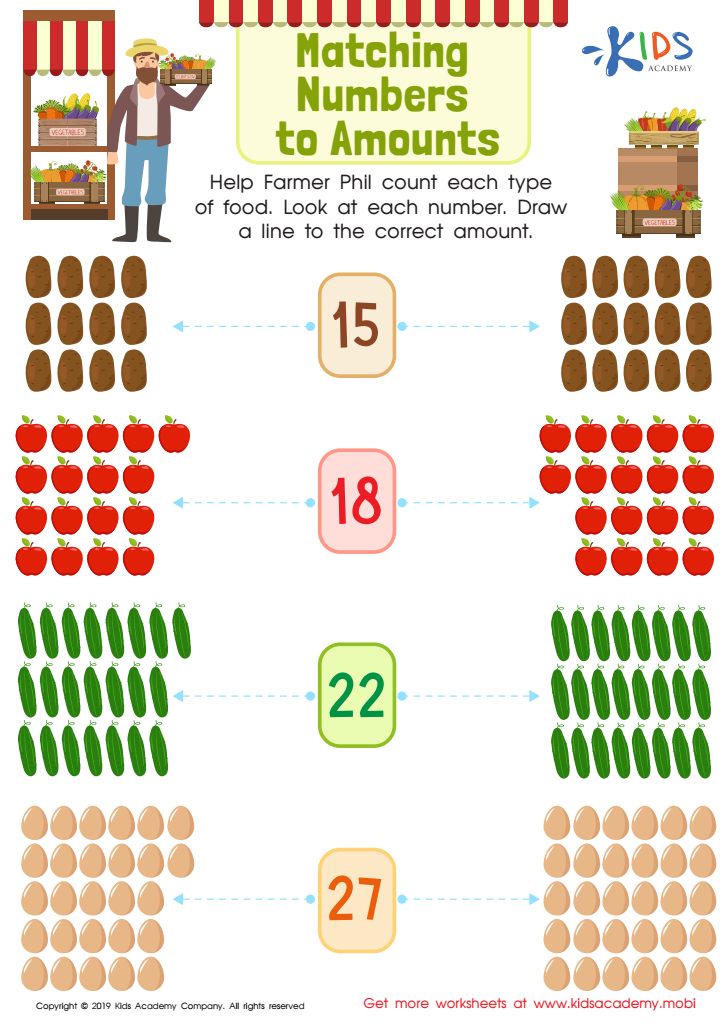
Matching Numbers to Amounts Worksheet

Counting on the City Skyline: Dot-to-Dot Worksheet








Understanding numbers up to 100 is crucial for children aged 5-9 as it lays the foundation for their mathematical development, critical thinking, and problem-solving skills. Within this age range, children are in a key phase of cognitive growth, and engaging with numbers helps enhance their recognition of patterns, relationships, and basic arithmetic operations.
Familiarity with numbers up to 100 aids in nurturing confidence in young learners. Parents and teachers can support children's abilities to read, write, and compare numbers, which prepares them for more complex mathematical concepts in later grades. Furthermore, this numerical comprehension fosters essential life skills, such as budgeting, telling time, and managing quantities, ensuring children feel empowered in everyday situations.
Incorporating playful activities like counting games, number songs, and hands-on exercises can make learning enjoyable and effective. As children engage with fun, educational resources, they develop a positive attitude toward math, reducing anxiety around the subject. Encouraging children to explore numbers through practical applications also builds a connection to their learning. Thus, by caring about numbers up to 100, parents and teachers create a powerful support system that cultivates a lifelong appreciation for mathematics and learning in general.








