Sentence structure understanding Reading Worksheets for Ages 5-9
3 filtered results
-
From - To
Enhance your child’s reading skills with our specialized Sentence Structure Understanding Reading Worksheets, designed for ages 5-9. These engaging activities help young learners grasp essential grammar concepts, such as identifying the subject, verb, and complete sentences. Through fun exercises and vibrant illustrations, children will improve their reading comprehension and writing abilities. Our worksheets offer a step-by-step approach, beginning with simple sentences and gradually introducing more complex structures. Perfect for classroom use or at-home education, these free, printable worksheets are an excellent resource to support your child's literacy development. Jumpstart your child's journey to mastering sentence structure today!
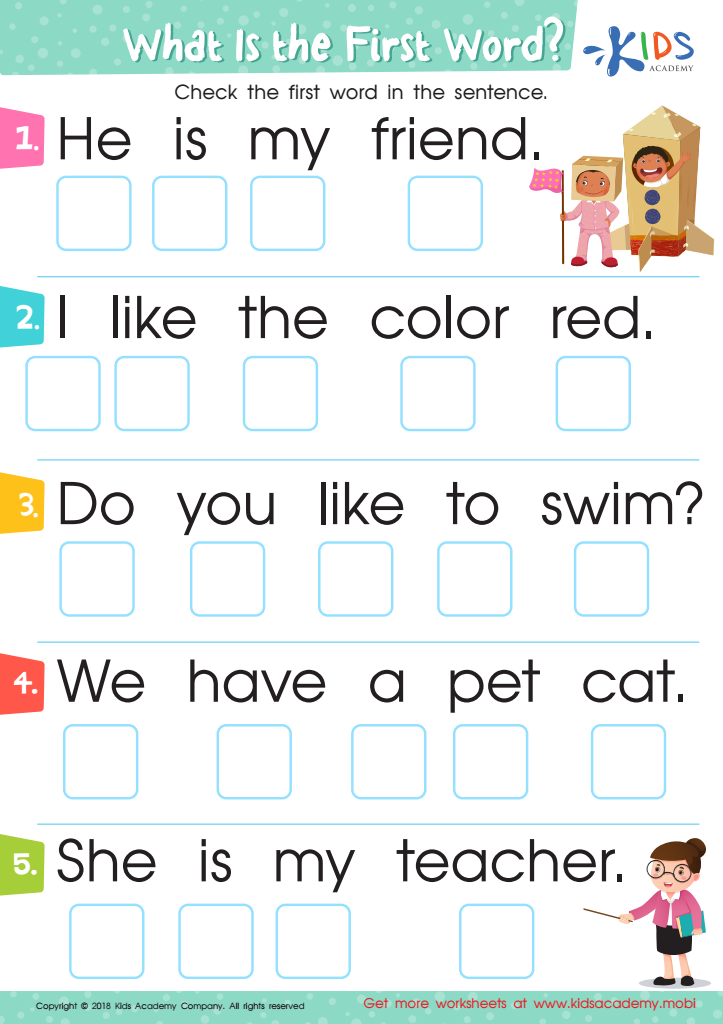
What is the First Word? Worksheet
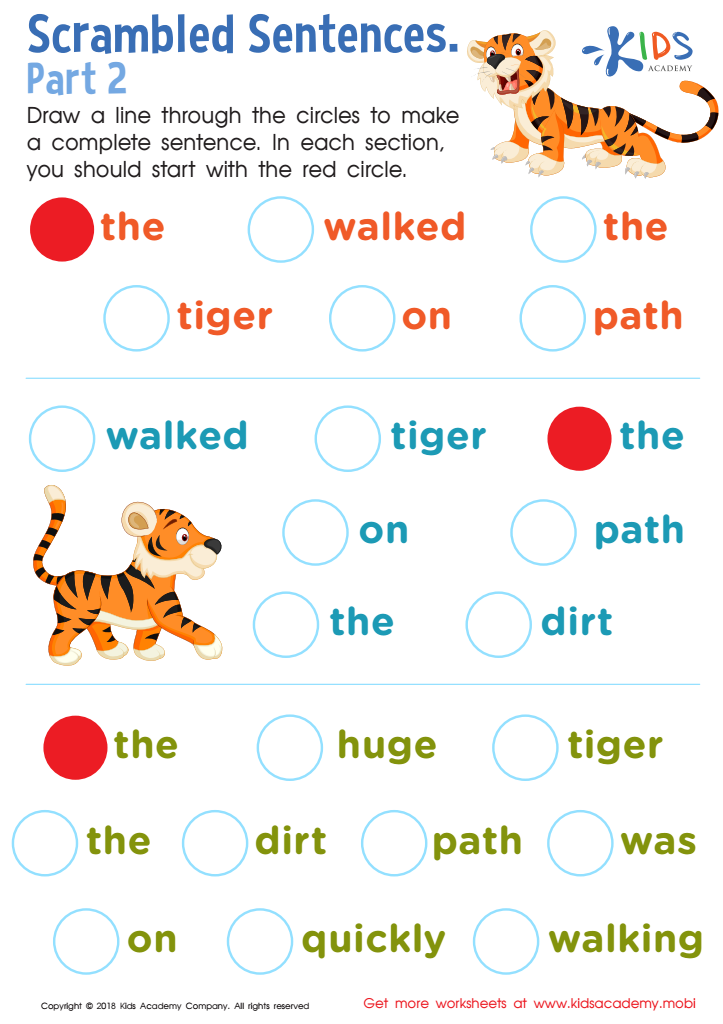
Scrambled Sentences Part 2 Worksheet
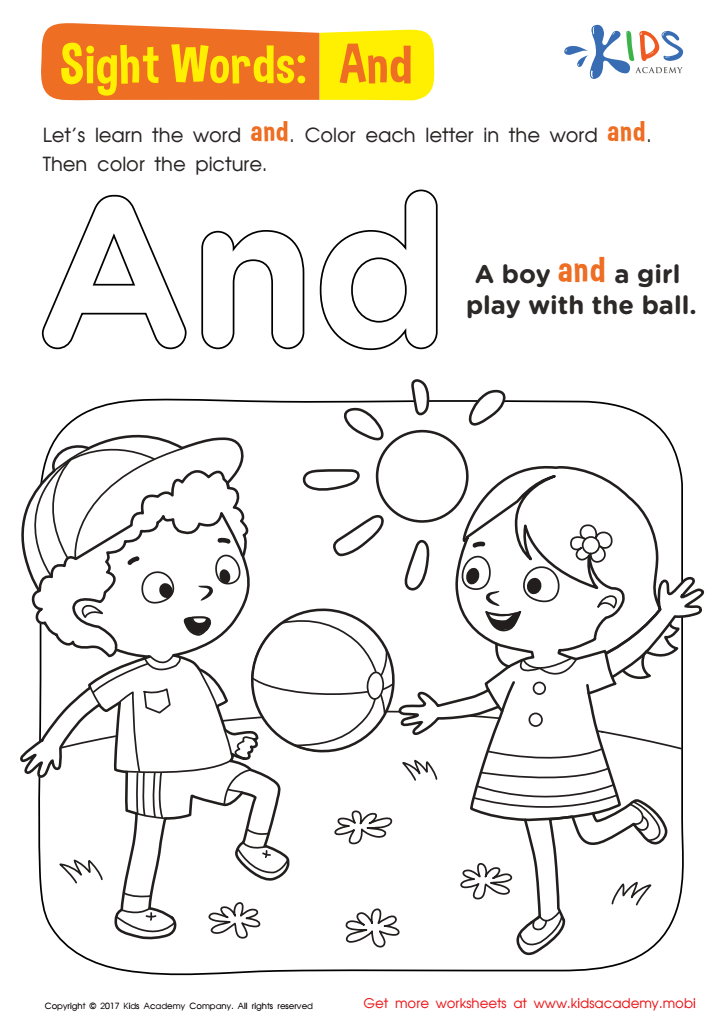
And Worksheet Sight Words Worksheet
 Assign to My Students








Understanding sentence structure is a fundamental skill in early childhood development, particularly in the age group of 5-9 years. Parents and teachers need to prioritize this aspect of reading because it forms the basis for effective communication and cognitive development. During these formative years, children’s brains are highly receptive to language acquisition. Proper comprehension of sentence structure helps them grasp how words come together to convey complete thoughts, enhancing both their expressive and receptive language skills.
Mastering sentence structure boosts reading comprehension, making it easier for children to follow stories, understand instructions, and absorb new information. When children understand sentences well, they are more likely to enjoy reading and engage with it. This, in turn, fosters a lifelong love for learning.
Moreover, a good foundation in sentence structure helps children in writing. Being able to form coherent sentences allows them to better express their thoughts and ideas, which is crucial in both academic settings and daily interactions.
From a social perspective, strong sentence comprehension aids children in understanding and responding appropriately in conversations, enhancing their social skills and relationships. Therefore, parents and teachers should invest time and resources in nurturing this skill, acknowledging its long-term benefits in academic achievement and social development.








