Critical thinking skills Reading Comprehension Worksheets for Ages 5-9
6 filtered results
-
From - To
Unlock your child's potential with our Critical Thinking Skills Reading Comprehension Worksheets designed for ages 5-9. At Kids Academy, we believe that honing critical thinking is essential for young minds. Our engaging and educational worksheets not only enhance reading comprehension but also challenge students to think deeply, make connections, and draw inferences. Perfect for home or classroom use, these printable resources cater to various skill levels, ensuring each child can achieve academic success. Cultivate curiosity, bolster analytical abilities, and foster a lifelong love of learning. Transform reading time into a brain-boosting adventure with Kids Academy today.
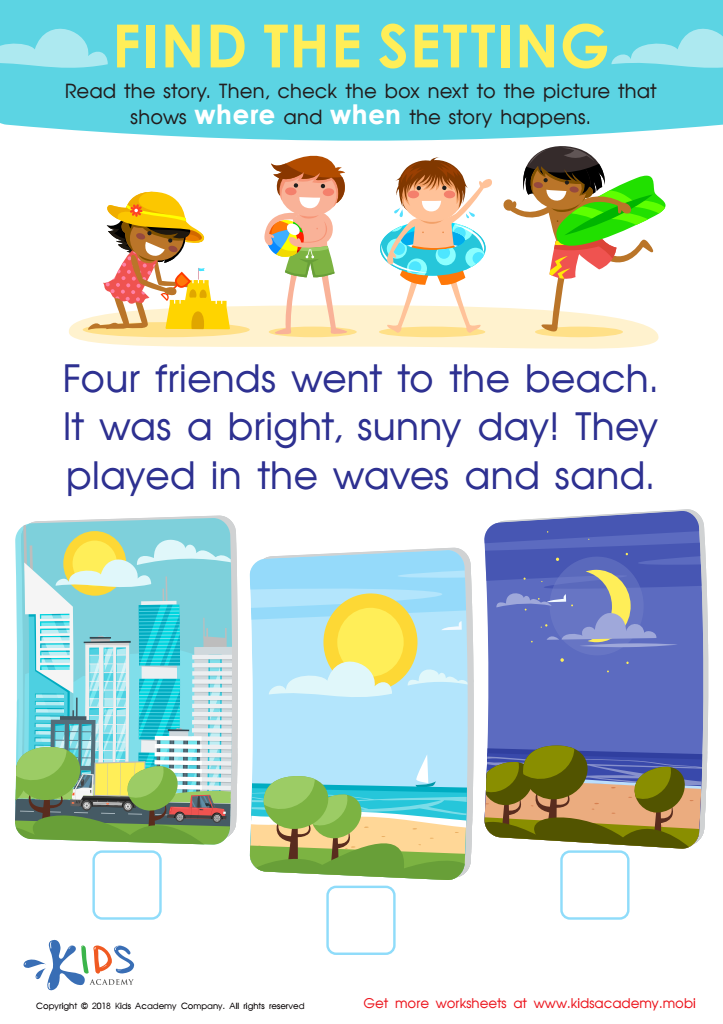
Find the Setting Worksheet
 Assign to My Students
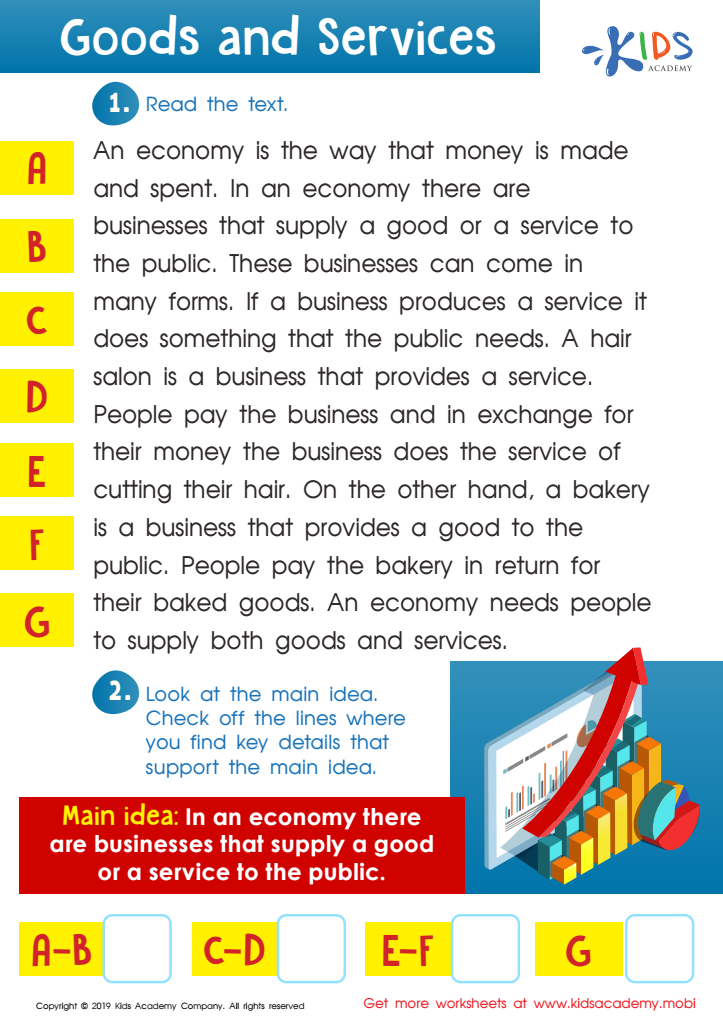
Goods and Services Worksheet
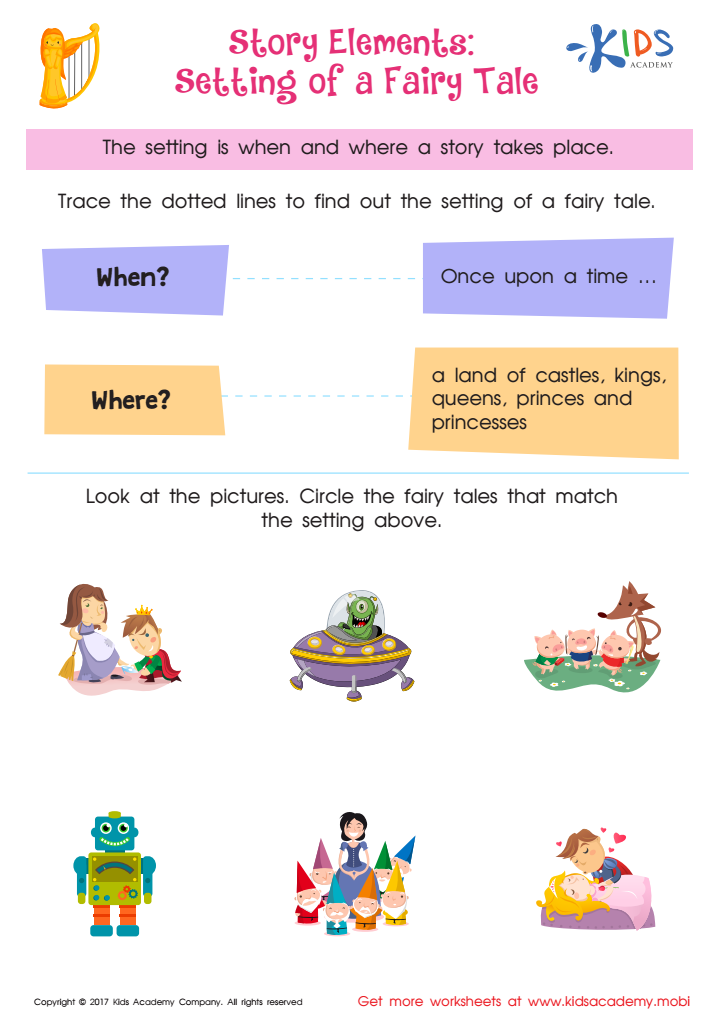
Story Elements: Setting of a Fairy Tale Printable
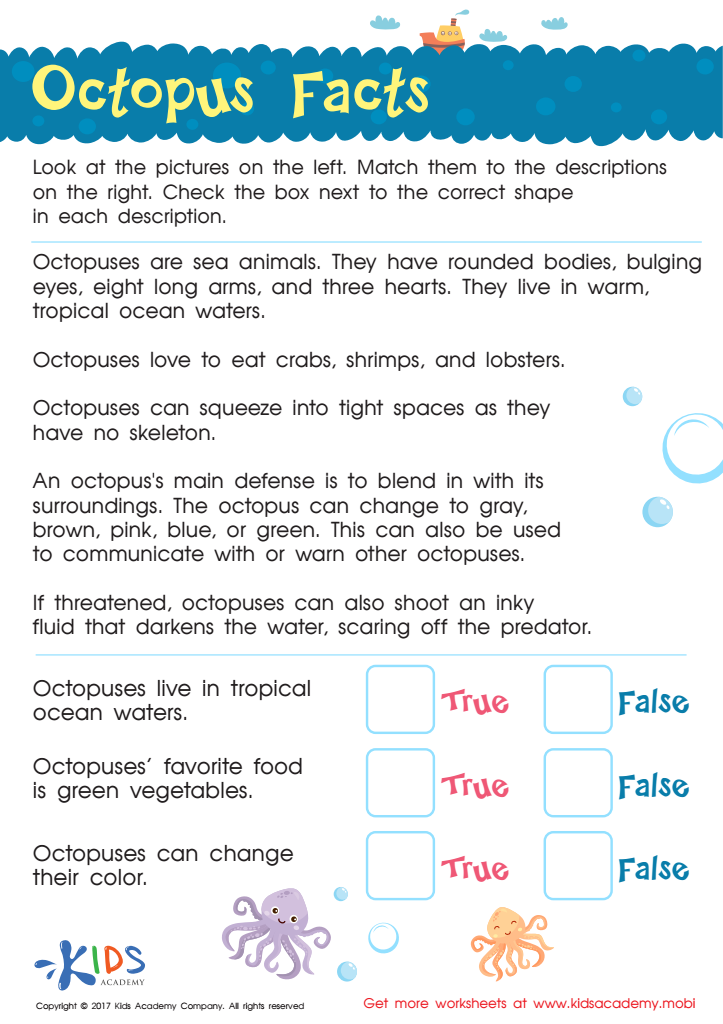
Octopus Facts Worksheet For Kids
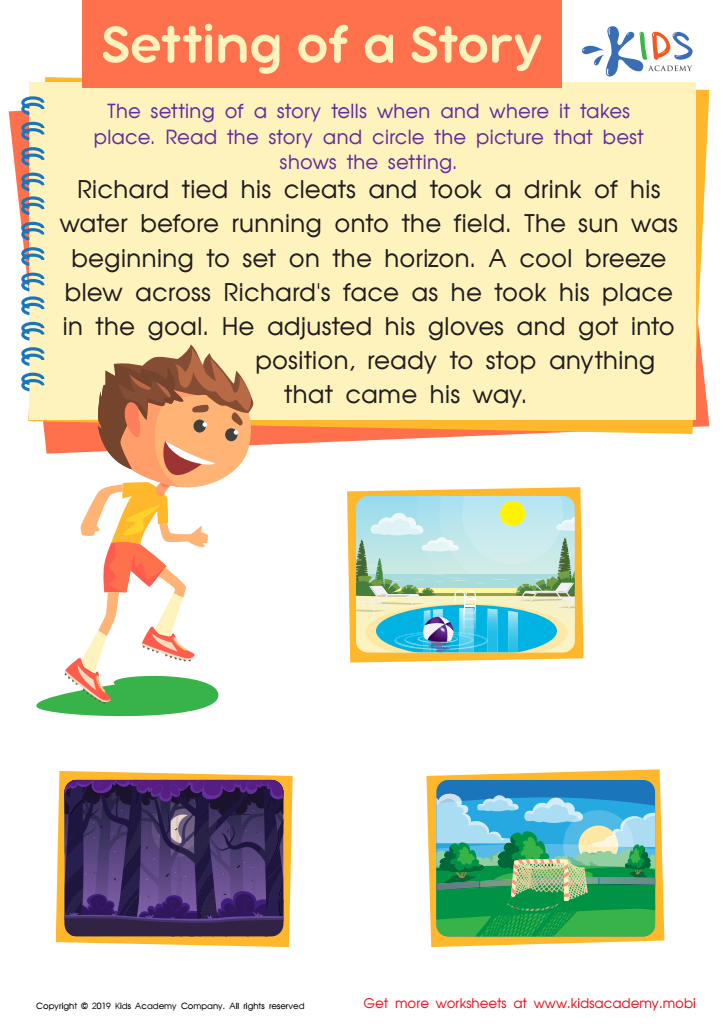
Setting of a Story Worksheet
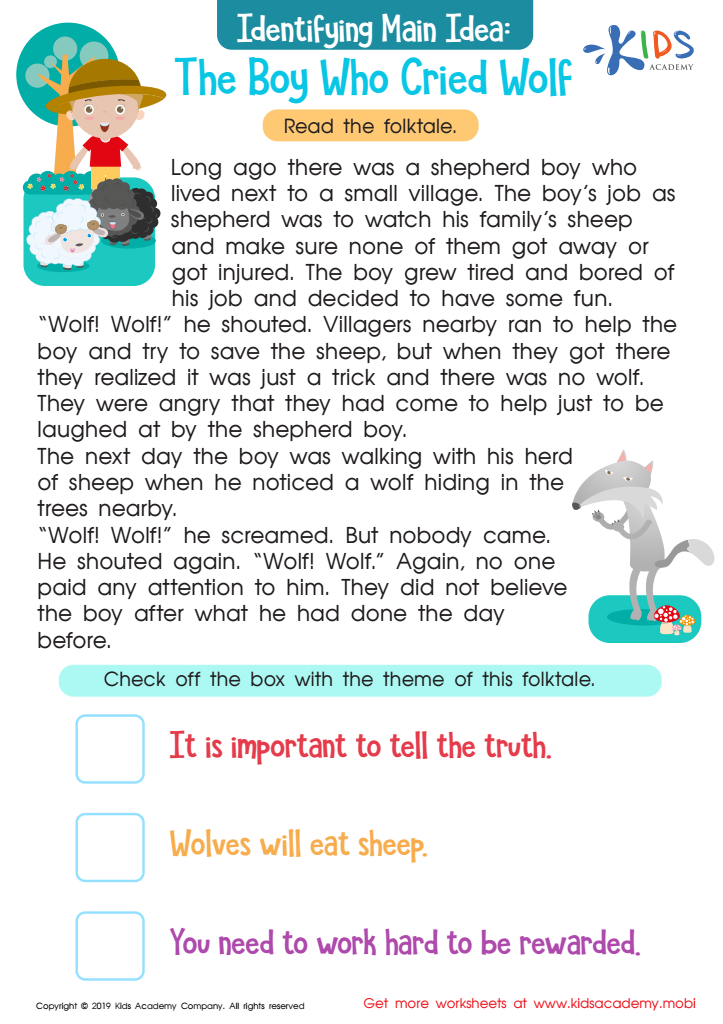
The Boy Who Cried Wolf Part 2 Worksheet







Parents and teachers should prioritize critical thinking skills and reading comprehension for children aged 5-9 because these foundational abilities are crucial for long-term academic and life success. At this developmental stage, children are highly receptive and are building the cognitive frameworks that will guide their future learning. Reading comprehension goes beyond just understanding words; it involves grasping the meaning, making connections, and fostering appreciation for literature. Mastering these skills early equips children with the ability to process information effectively, a crucial asset across all subjects.
Critical thinking, meanwhile, enhances a child’s capacity to analyze, evaluate, and create new ideas from the information they encounter. It promotes curiosity, problem-solving, and the ability to differentiate between fact and opinion. When children learn to think critically and understand what they read, they become more independent learners, capable of approaching new situations and challenges with confidence and creativity.
Moreover, fostering these skills early can help bridge educational gaps and set a positive trajectory for a child’s future. Children who excel in reading comprehension and critical thinking tend to perform better academically overall, enjoy learning more, and are better prepared to face increasingly complex societal and technological landscapes as they grow. Investing in these skills is an investment in a child's holistic development and lifelong success.








