Information retention Reading Comprehension Worksheets for Ages 5-9
4 filtered results
-
From - To
Boost your child's reading skills with Information Retention Reading Comprehension Worksheets for ages 5-9. Designed by educators, these engaging worksheets aim to enhance young learners' abilities to retain and understand information through interactive activities. By focusing on comprehension strategies, children develop critical thinking and the capacity to recall key information from texts. Perfect for classroom use or home practice, our worksheets cover various topics that cater to different interests and reading levels. Ensure your child gets a strong foundation in reading comprehension with our expertly crafted, fun, and educational resources. Explore our extensive collection today!
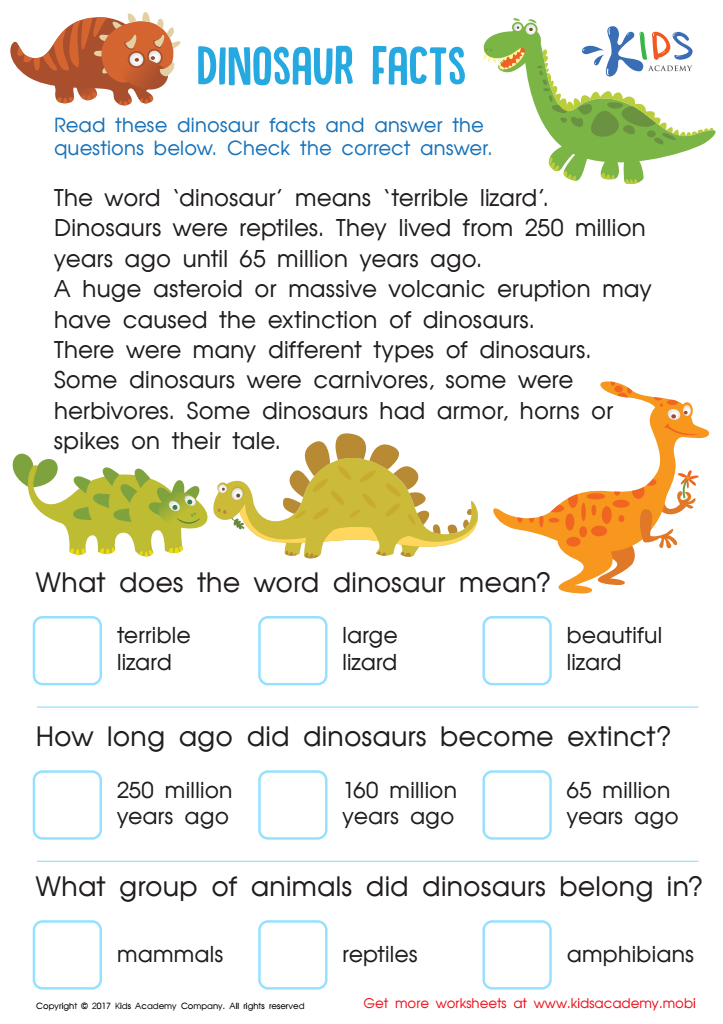
Dinosaur Facts Worksheet
 Assign to My Students
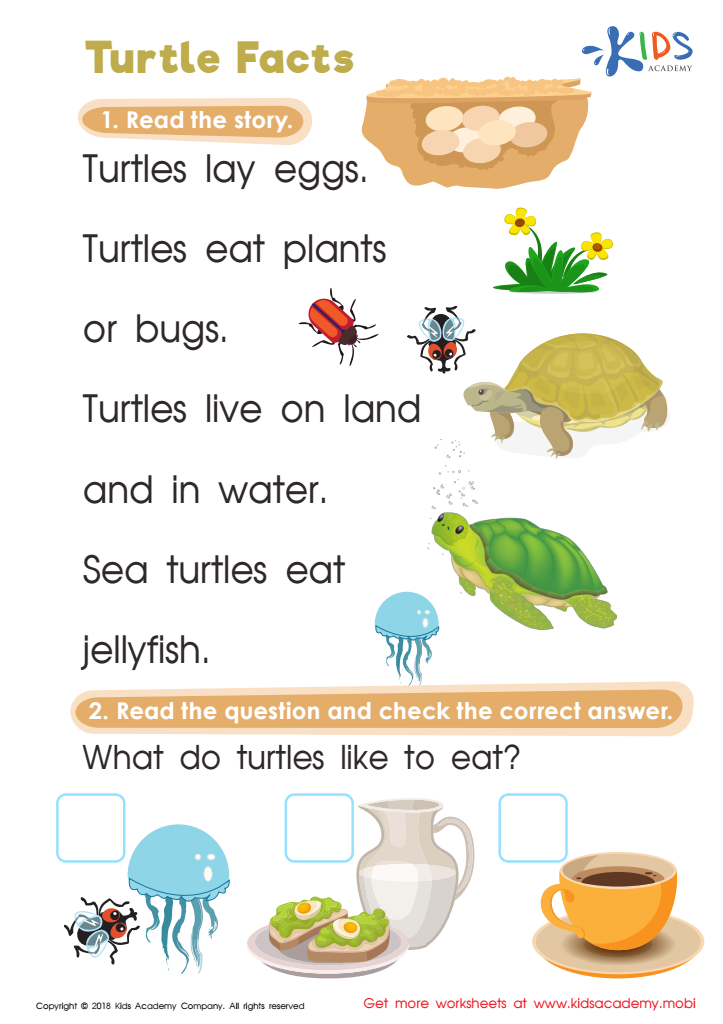
Turtle Facts Worksheet
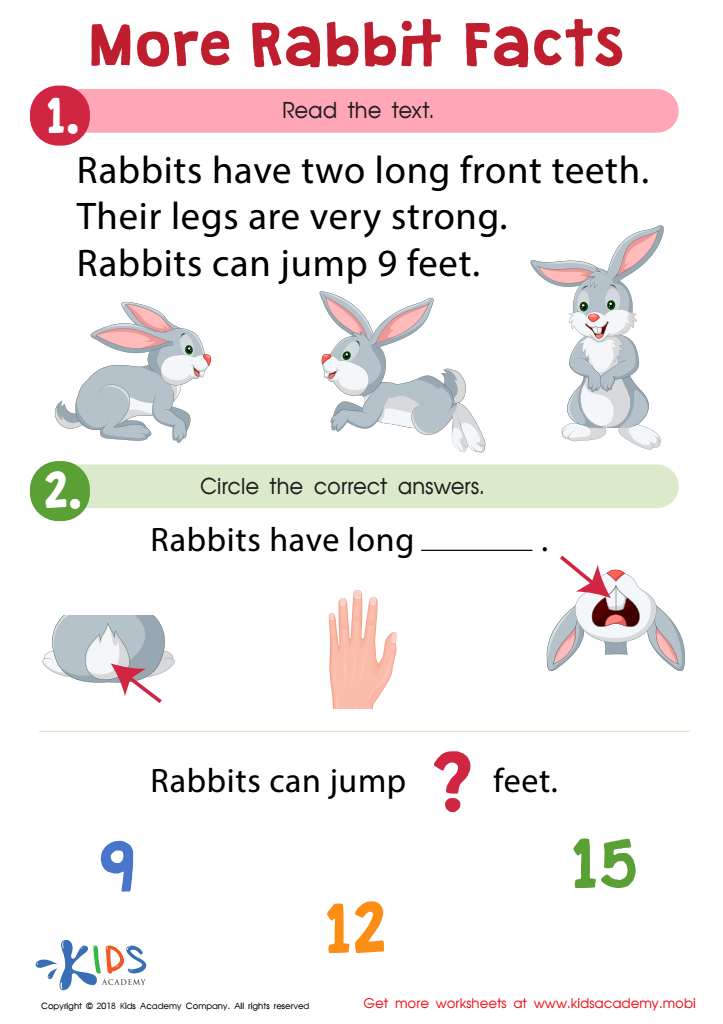
More Rabbit Facts Worksheet

More About the White House Worksheet


.jpg)





Information retention and reading comprehension are crucial developmental milestones for children ages 5-9 and warrant significant attention from parents and teachers. These foundational skills form the bedrock of a child's educational journey and overall cognitive development. When children effectively retain information, they create a repository of knowledge that aids in academic success. Reading comprehension, on the other hand, allows them to understand and interpret text, fostering critical thinking and problem-solving abilities.
At this age, children's brains are highly plastic, meaning they are primed to absorb information quickly. Effective reading comprehension practices enhance their vocabulary, understanding of grammar, and ability to grasp complex concepts early on. These skills are not just limited to language arts but extend to other subjects like math, science, and social studies, creating a well-rounded learner.
Furthermore, strong reading comprehension and information retention contribute to a child's confidence and self-esteem. When children understand what they read, they are more likely to engage in classroom discussions, participate in activities, and enjoy learning.
Parents and teachers play pivotal roles in cultivating these skills by providing age-appropriate reading materials, engaging in discussions about readings, and employing interactive and multisensory teaching methods. Prioritizing these skills early on opens the door to lifelong learning and personal growth, making them essential components of early childhood education.








