Text analysis Reading Fiction Worksheets for Ages 5-9
3 filtered results
-
From - To
Explore the engaging world of "Text Analysis Reading Fiction Worksheets" designed for children aged 5-9! Our carefully crafted worksheets help young learners develop essential reading comprehension skills by diving into fictional stories. Each activity encourages children to identify themes, character motivations, and plot elements, fostering a deeper understanding of the text. With vibrant illustrations and age-appropriate language, these worksheets provide a fun and interactive way to enhance critical thinking and analytical abilities. Perfect for classroom or home use, these resources make learning enjoyable. Ignite a passion for reading and writing while boosting confidence in literary skills! Start your journey today!
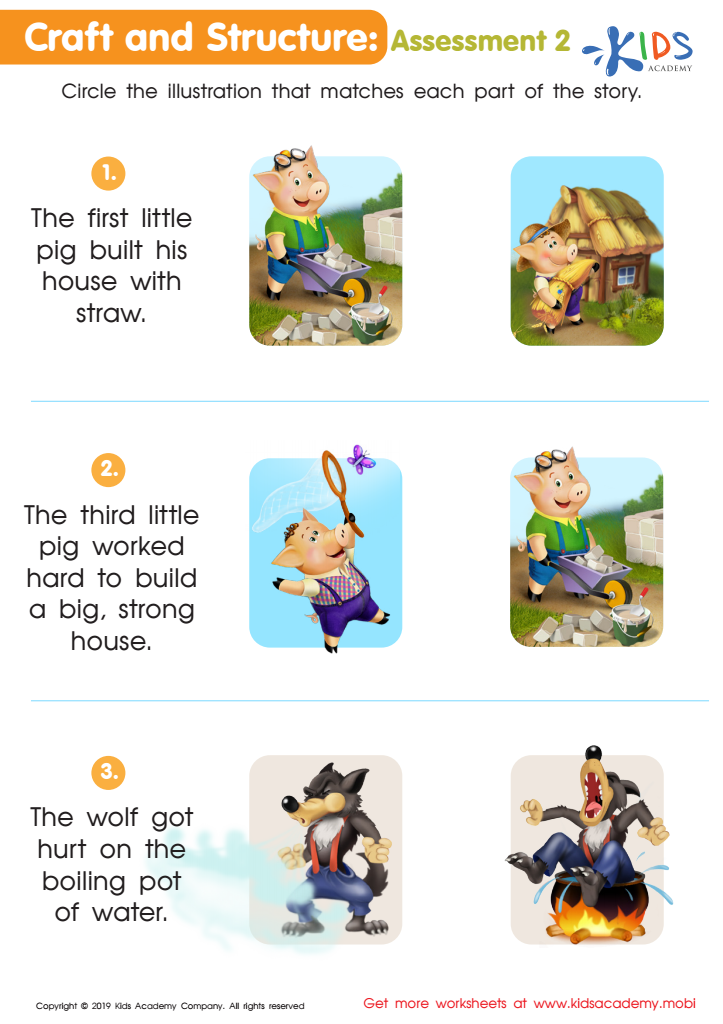
Craft and Structure: Assessment 2 Worksheet 2
 Assign to My Students
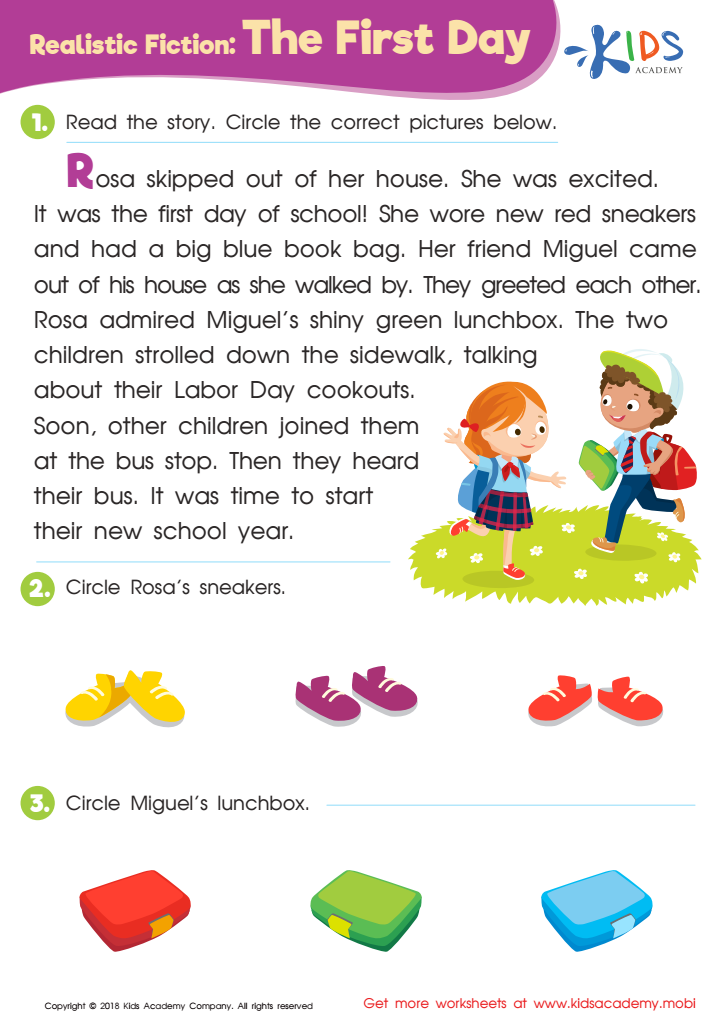
Realistic Fiction: The First Day Worksheet
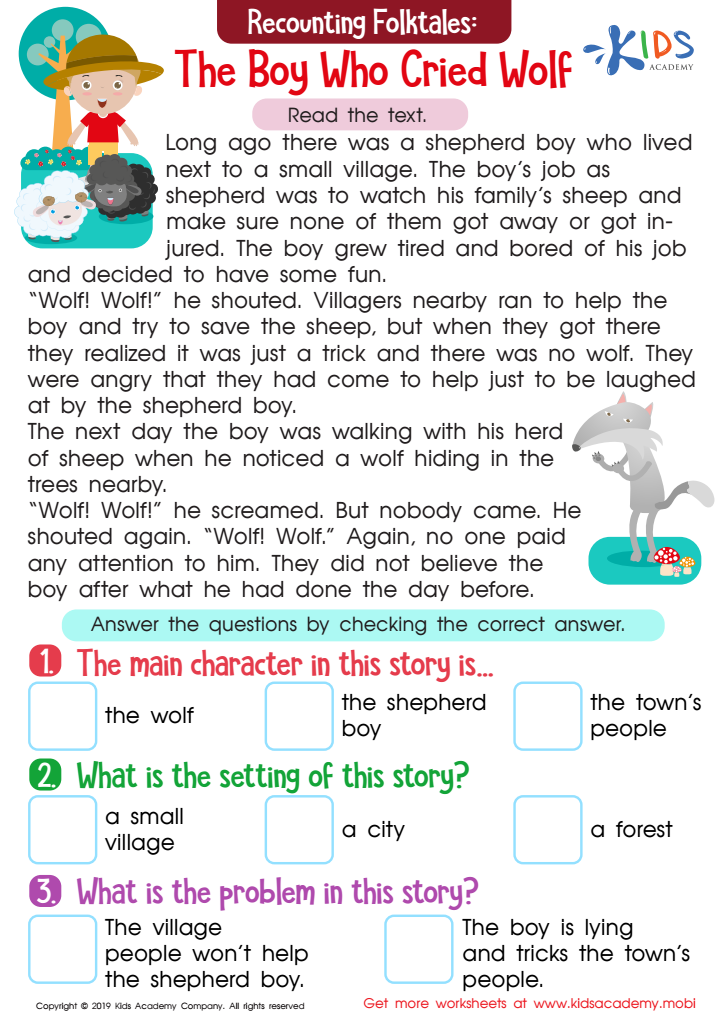
The Boy Who Cried Wolf Part 1 Worksheet








Text analysis in reading fiction is essential for children aged 5-9 as it lays the foundation for critical thinking, comprehension, and emotional intelligence. At this stage, children are not just learning to read but are also beginning to understand and interpret the meanings behind stories. Engaging with fiction through text analysis helps them recognize themes, character motivations, and the implications of narrative choices.
Parents and teachers should care because fostering these analytical skills enhances literacy development and promotes a love for reading. When children analyze texts, they learn to ask questions, make predictions, and draw connections to their own lives, all of which are crucial for effective learning. This engagement also nurtures creativity and empathy as young readers explore diverse perspectives and experiences presented in stories.
Moreover, text analysis encourages discussion, collaboration, and communication, skills that are vital for social interactions. By nurturing these competencies, both parents and teachers can help children develop a more profound appreciation for literature and prepare them for more complex texts in the future. Ultimately, reading fiction with an analytical lens equips children with the skills they need to navigate both academic challenges and personal experiences throughout their growth.








