Division practice Science Worksheets for Ages 5-9
5 filtered results
-
From - To
Discover engaging Division Practice Science Worksheets for ages 5-9 at Kids Academy! Our thoughtfully designed worksheets blend math and science concepts to make learning division exciting and meaningful. Ideal for young learners, these activities help build a strong foundation in both subjects through interactive and colorful exercises. Perfect for classroom and at-home practice, our resources foster critical thinking, problem-solving, and a love for learning. Visit us today to access a treasure trove of free, printable worksheets that support your child's educational journey while making practice fun and effective! Let’s make math and science an adventure!
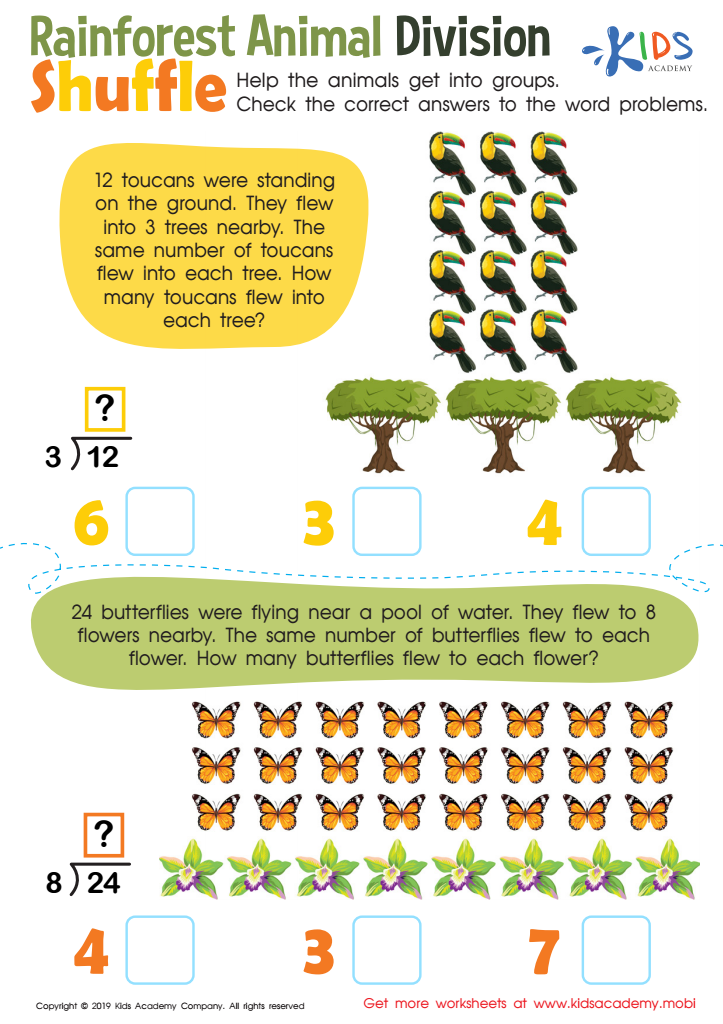
Rainforest Animal Division Worksheet
 Assign to My Students
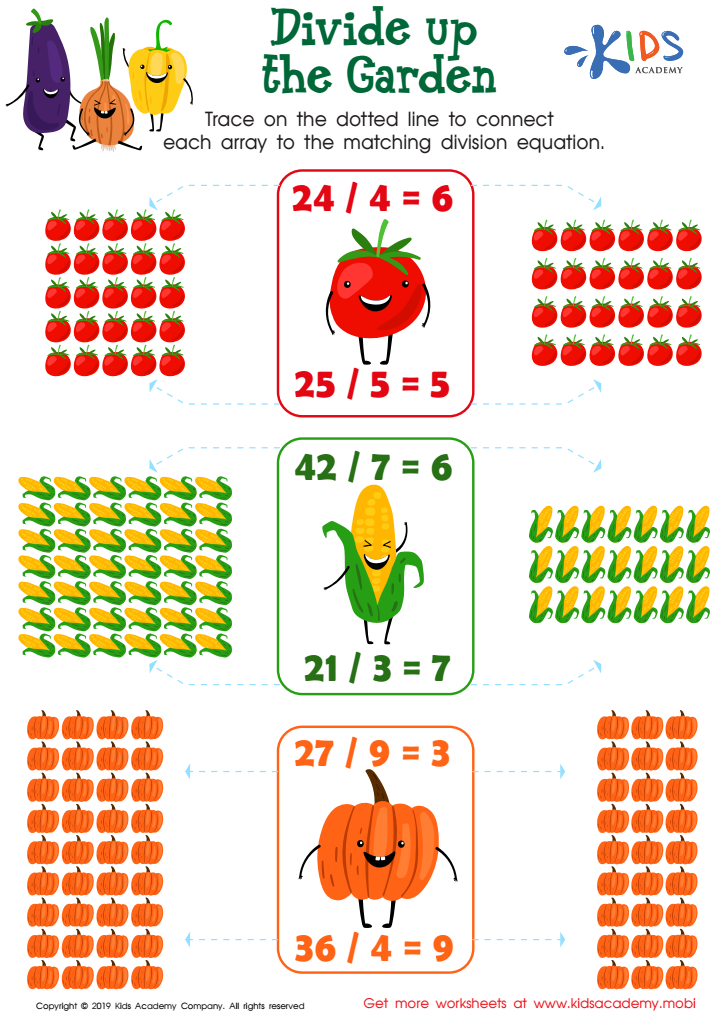
Divide up the Garden Worksheet
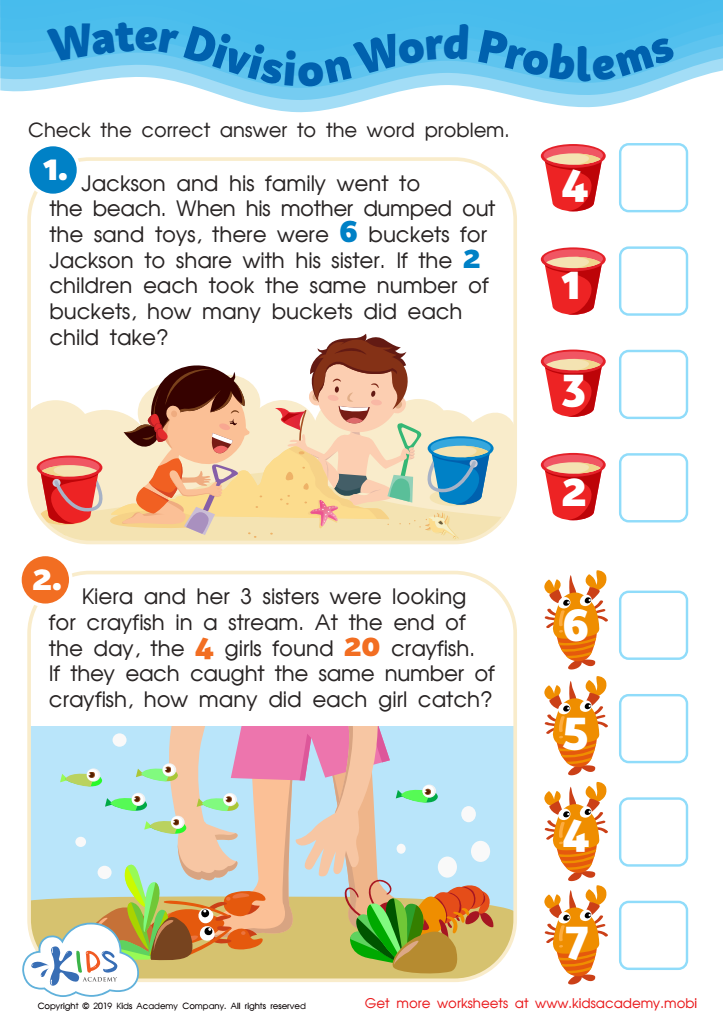
Water Division Word Problems Worksheet
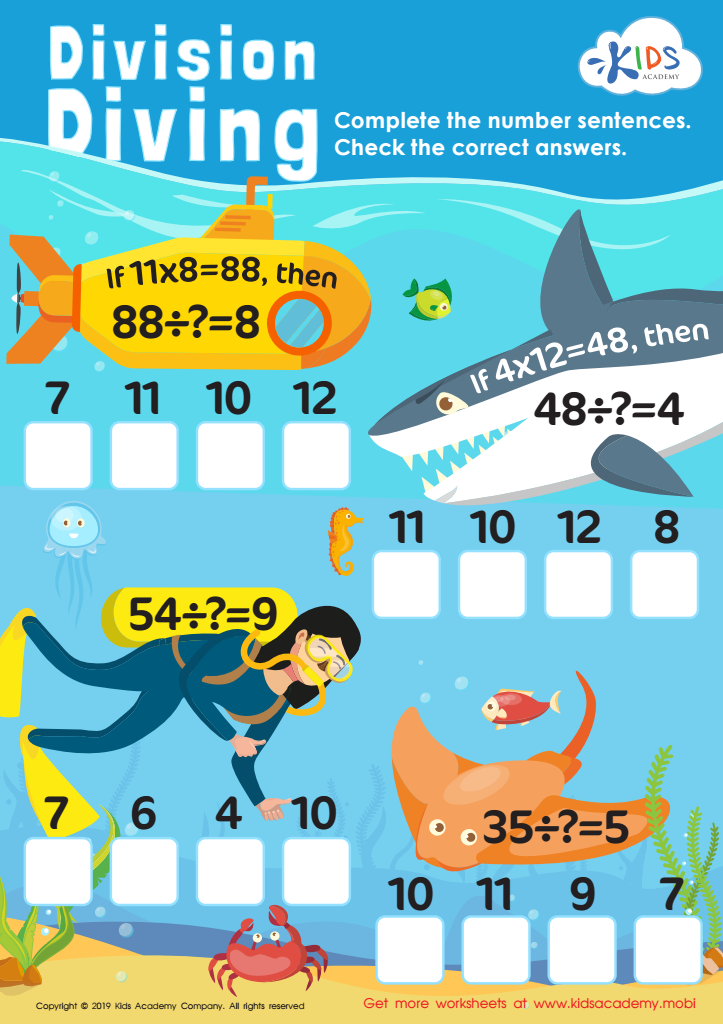
Division Diving Worksheet
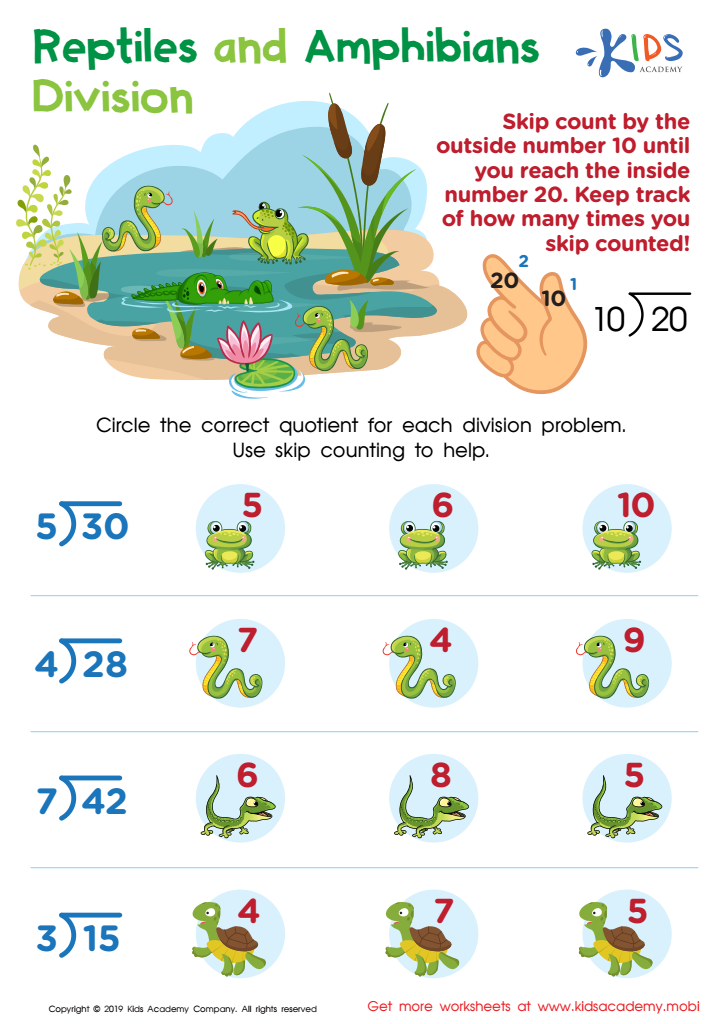
Reptile and Amphibians Division Worksheet







Parents and teachers should care about division practice in science for children ages 5-9 because it fosters essential cognitive and academic skills critical for overall development. At this formative stage, children are naturally curious and highly adaptable. By introducing division, a foundational mathematical concept, through engaging and contextually relevant science activities, children learn problem-solving skills that are applicable across various subjects.
Division practice helps children understand the concept of sharing, partitioning, and distributing evenly, which are crucial for both mathematical reasoning and everyday activities. For example, dividing groups of objects or understanding measurements in simple science experiments helps solidify these concepts in practical scenarios. Hands-on science activities that incorporate division provide a multisensory learning experience, thus enhancing retention and comprehension.
Furthermore, early exposure to these concepts develops logical thinking and encourages precision and accuracy. Integrating division in early science education aligns with national educational standards aiming for well-rounded STEM proficiency.
Additionally, such practices nurture a growth mindset by showing children that complex problems can be broken down into manageable parts. This early foundation boosts confidence, minimizes math anxiety, and sets the stage for future academic success. Therefore, attention to division practice in science at this age ensures fundamental skills are established, making learning both effective and enjoyable.







