Identifying Animals Science Worksheets for Ages 5-9
3 filtered results
-
From - To
Discover our engaging Identifying Animals Science Worksheets designed specifically for children aged 5-9. These printable resources encourage budding young scientists to explore the animal kingdom through fun activities that enhance their observational skills and understanding of various species. With vibrant illustrations and straightforward exercises, kids will learn to recognize different animals, their habitats, and characteristics. Our worksheets aim to foster a love for science while developing critical thinking and problem-solving skills. Perfect for classroom use or at-home learning, these worksheets ready your child for an exciting adventure into the world of animals. Start exploring today!
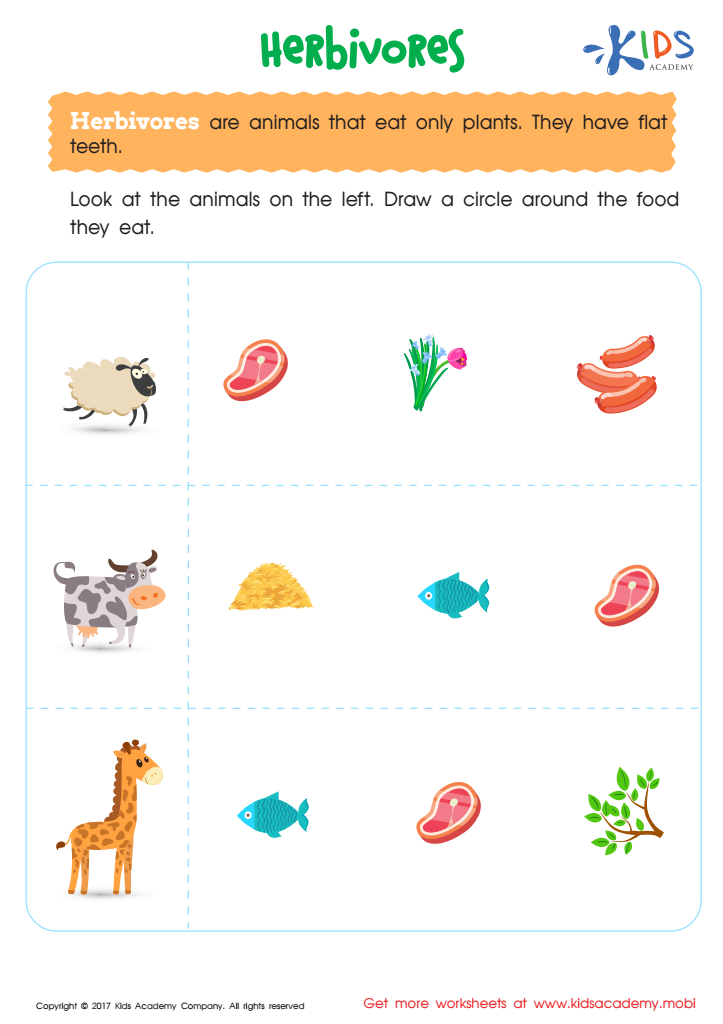
Herbivores Printable
 Assign to My Students
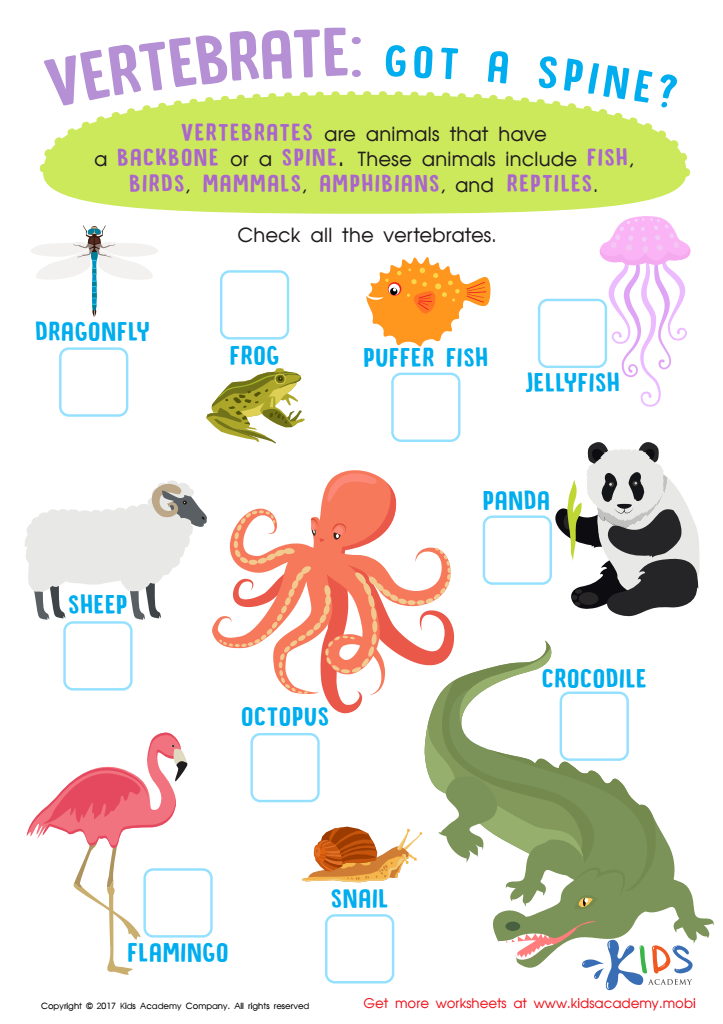
Vertebrates Animals Worksheet for 3rd Grade
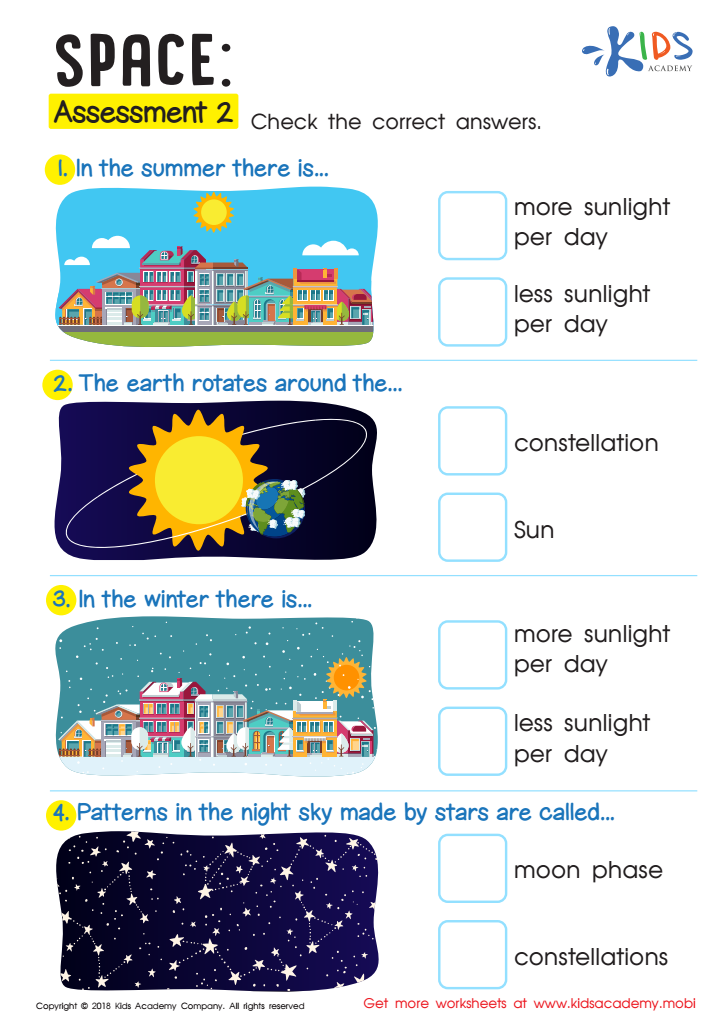
Space: Assessment 2 Worksheet








Identifying animals plays a crucial role in early science education for children aged 5-9, as it fosters a foundational understanding of the natural world. Engaging in activities that involve recognizing different animals enhances children's observational skills, critical thinking, and vocabulary. It encourages curiosity, leading to further exploration and inquiry into various habitats, diets, and behaviors.
Moreover, identifying animals helps children appreciate biodiversity and the importance of conservation. Understanding the roles that different species play in ecosystems instills respect for wildlife and awareness of environmental issues from a young age. This can lead to responsible attitudes toward nature as they grow.
Teachers and parents can utilize animal identification to integrate lessons across subjects; for example, science concepts can be woven into art projects, storytelling, or even math (counting animals or comparing sizes). Such integration keeps learning engaging and relevant.
Furthermore, recognizing animals can enhance social skills through collaborative activities and discussions, promoting teamwork. Overall, investing time in animal identification lays essential groundwork for lifelong learning and fosters a well-rounded, informed generation that values and protects our planet's biodiversity.







