Information retention Science Worksheets for Ages 5-9
3 filtered results
-
From - To
Boost your child’s memory and understanding with our "Information Retention Science Worksheets for Ages 5-9." Created to enhance learning skills, these printables help kids grasp essential scientific concepts while boosting their information retention. Engaging and thoughtfully designed by education experts, each worksheet promotes active learning through fun exercises tailored to young minds. Ideal for home or classroom use, our worksheets cover a variety of topics from life sciences to physical sciences. Perfect for instilling a love of learning and science at an early age, these resources make mastering new information easier and enjoyable for young learners.
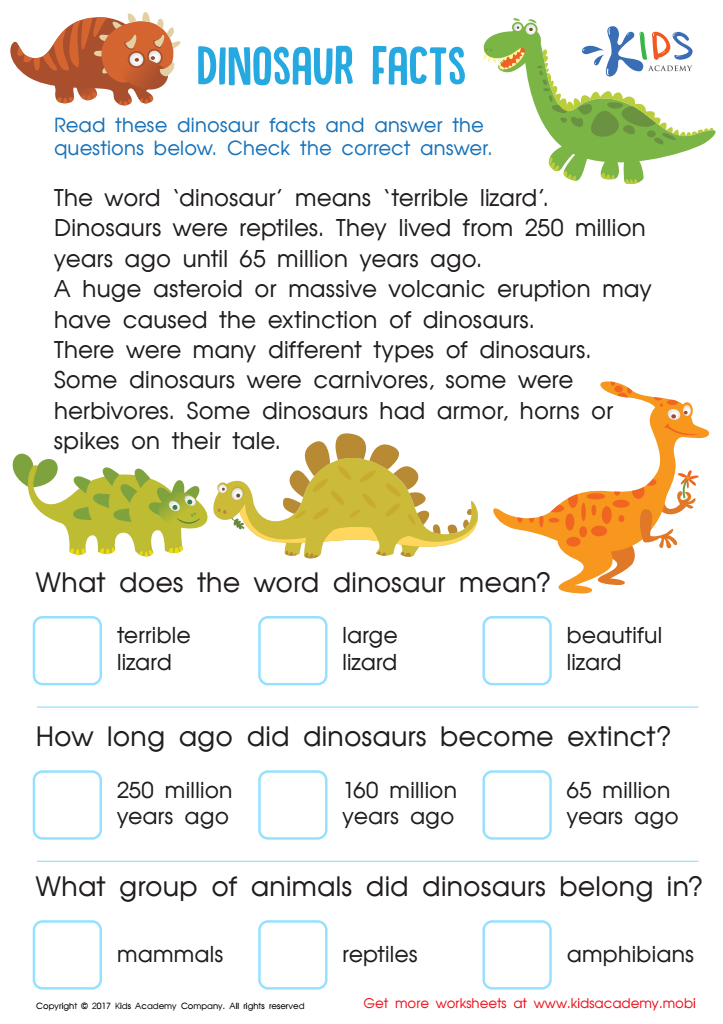
Dinosaur Facts Worksheet
 Assign to My Students
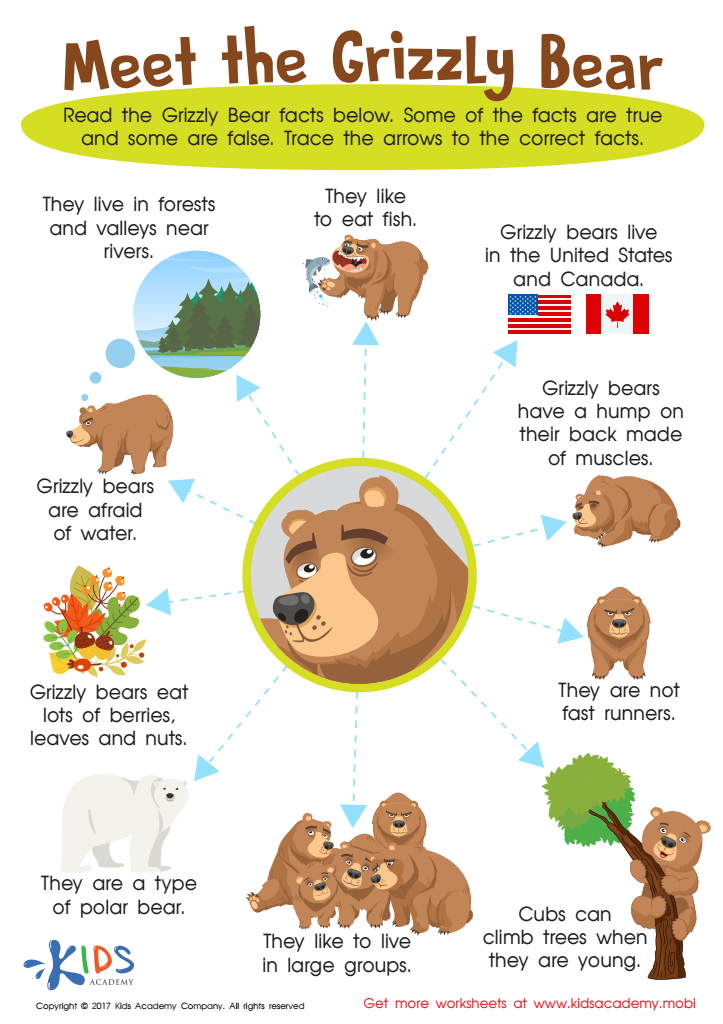
Grizzly Bear Facts Worksheet
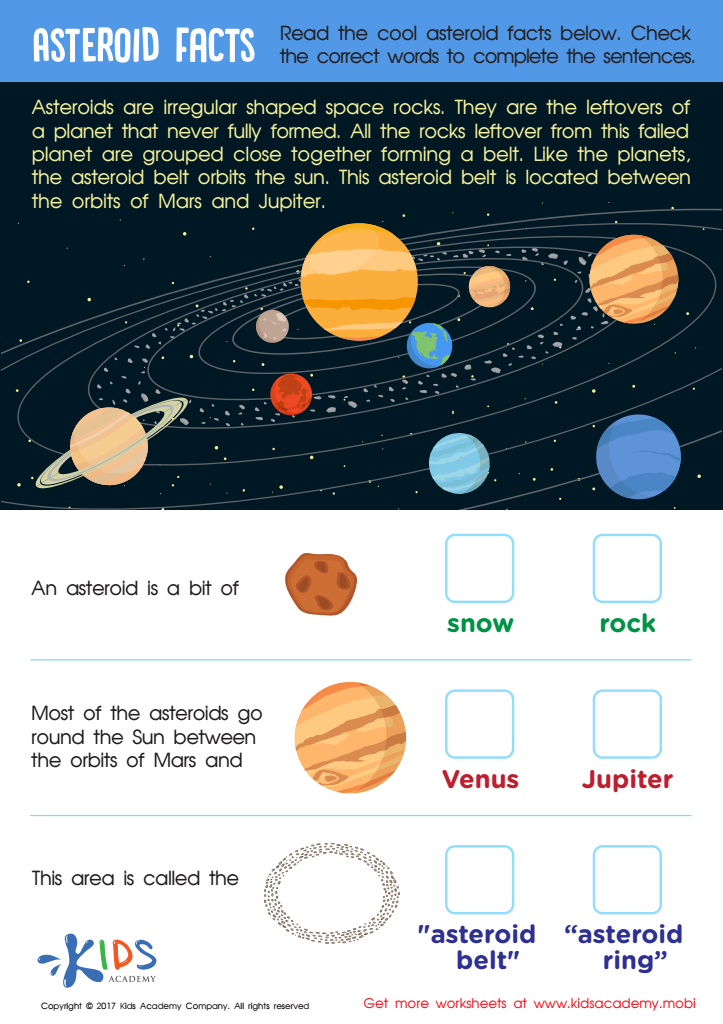
Asteroid Facts Worksheet







Information retention science is crucial for ages 5-9 because these early years form the foundation for future learning and cognitive development. During this period, children are almost like sponges; their brains are highly adaptable and can absorb a vast amount of information. Understanding the principles of information retention can help parents and teachers create more effective learning environments that can significantly impact a child’s academic success and lifelong learning habits.
By focusing on how children retain information, educators and parents can implement strategies that enhance memory and comprehension. Techniques like repetition, multi-sensory learning, and interactive activities make the learning process more engaging and effective. These methods can ensure that important concepts in reading, math, and other foundational subjects are solidly ingrained.
Furthermore, understanding information retention can help identify any potential learning deficits early on. If a child struggles with retaining information, early intervention can provide the necessary support to address these challenges before they hinder future educational milestones.
Additionally, positive experiences with learning and retention build children’s confidence and motivation. When kids find learning enjoyable and feel competent in remembering what they’ve learned, their overall attitude toward education becomes more positive, fostering a lifelong love for learning. For these reasons, parents and teachers should prioritize information retention strategies, as investing in these early years yields long-term benefits.







