
Observational skills Science Worksheets for Ages 5-9
14 filtered results
Difficulty Level
Grade
Age
-
From - To
Subject
Activity
Standards
Unlock your child’s curiosity with our "Observational Skills Science Worksheets" for ages 5-9! Designed to cultivate critical thinking and keen observation, these engaging worksheets provide fun and interactive activities that encourage young learners to explore their environment. From identifying community helpers and examining plant growth to conducting simple experiments, these resources inspire discovery and enhance cognitive development. Ideal for classrooms and home learning, our worksheets cater to various learning styles and abilities. Foster a love for science while building essential observational skills, laying a strong foundation for future academic success. Explore the world around us with our vibrant, easy-to-use worksheets today!
Favorites
With answer key
Interactive
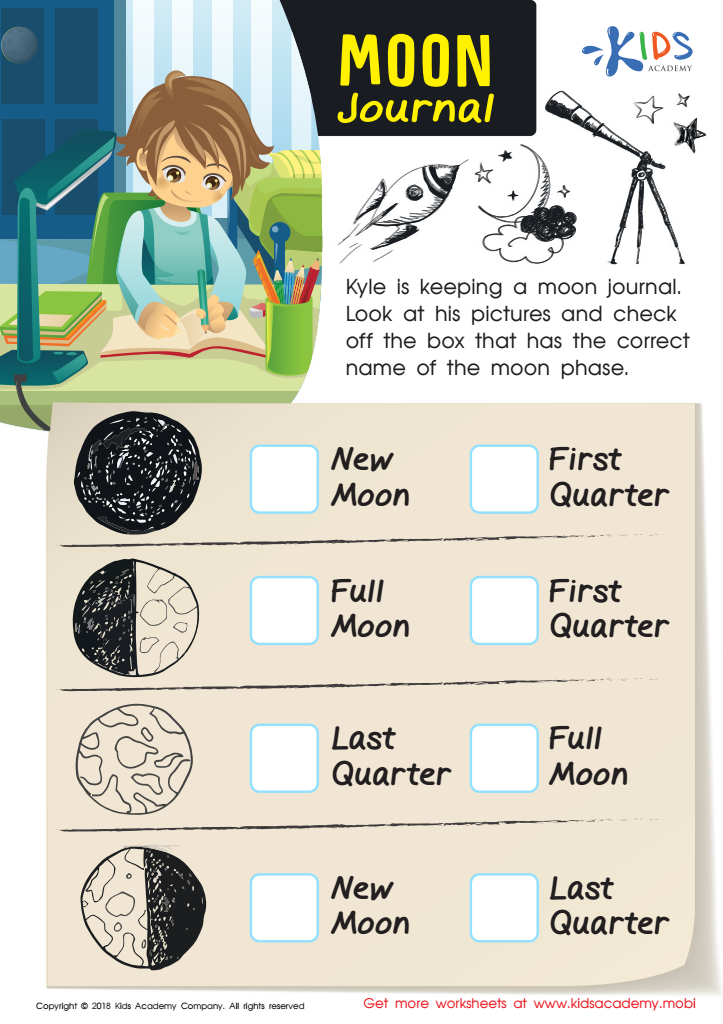
Moon Journal Worksheet
Observe the moon and its 8 phases with your child by downloading this free PDF worksheet from Kids Academy! Review the moon phases with them then help them label Kyle's moon journal. Select the right moon phase for each picture to complete the page!
Moon Journal Worksheet
Worksheet
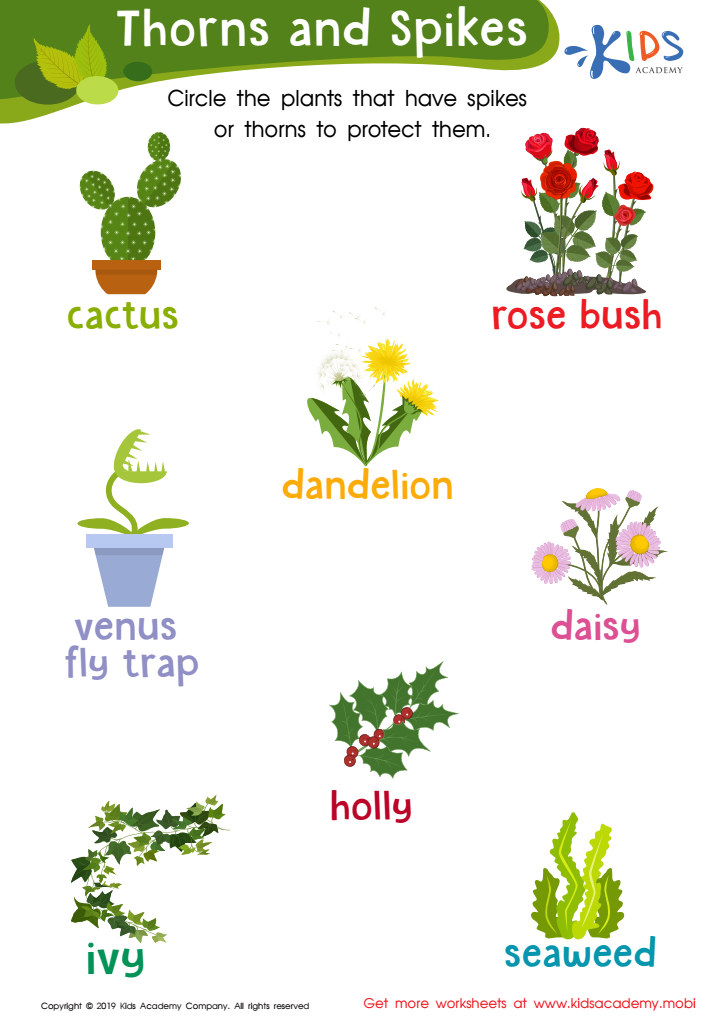
Thorns and Spikes Worksheet
Can your students name and identify the plants and flowers in this worksheet? Ask them to read out the names and circle the ones with spikes or thorns. Help them appreciate nature's beauty and understand how plants protect themselves.
Thorns and Spikes Worksheet
Worksheet
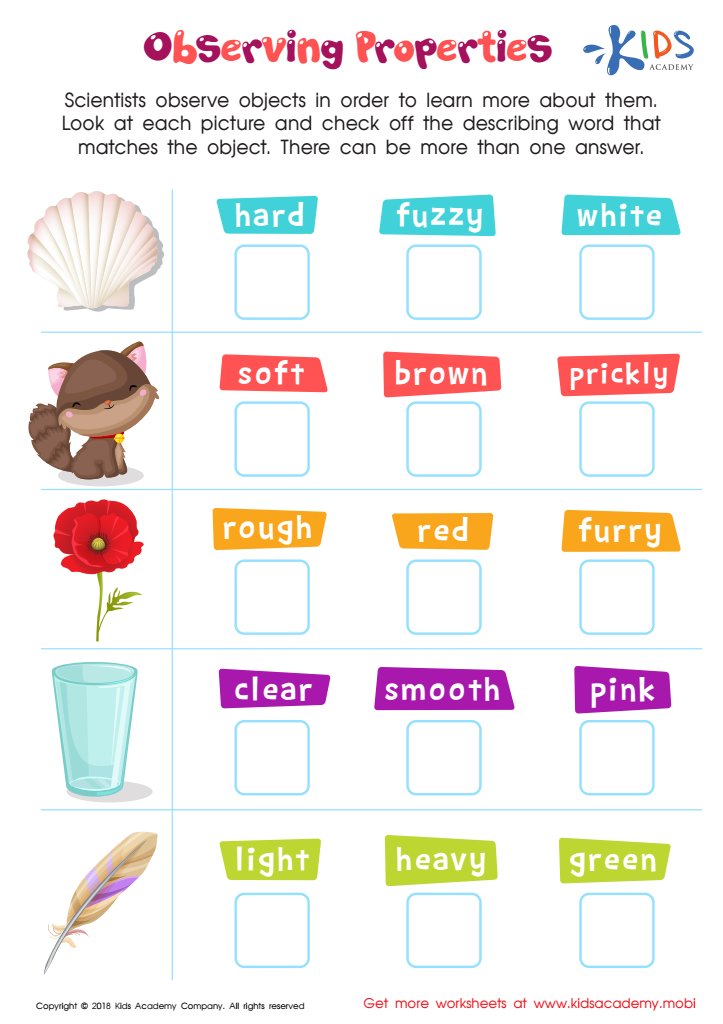
Observing Properties Worksheet
Encourage your kid's interest in science with this fun worksheet! Let them identify the five objects on the left, then choose the most accurate word from the options on the right. There might be more than one answer, so remind them to take their time observing the objects.
Observing Properties Worksheet
Worksheet
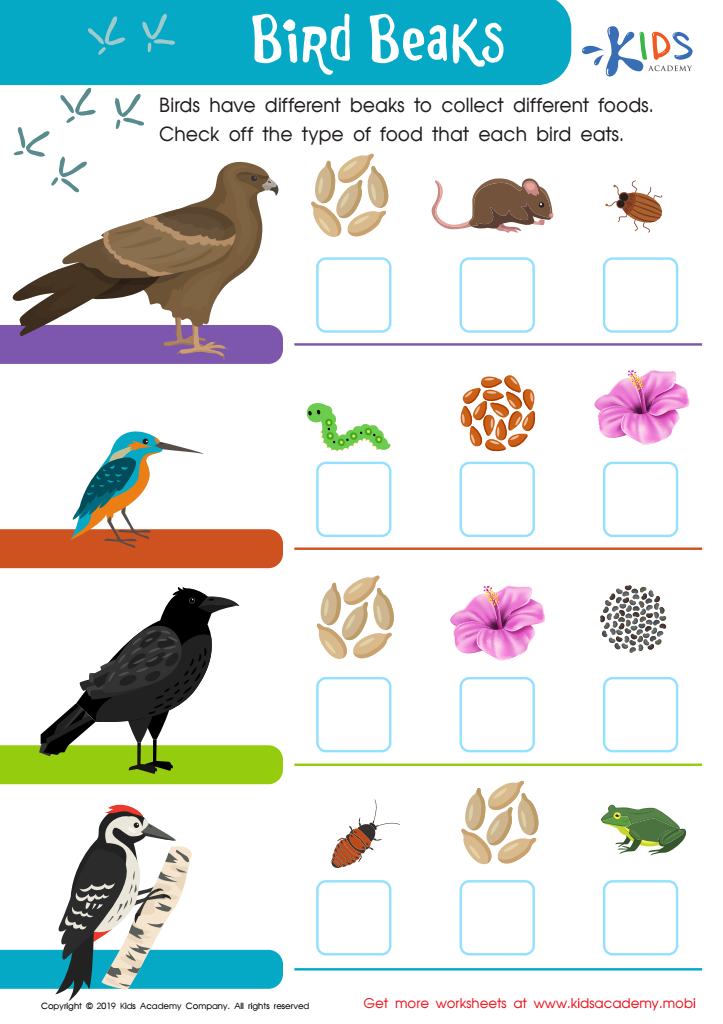
Bird Beaks Worksheet
Birds have beaks to eat different types of food. Let your little nature lover explore why with this free worksheet! They'll learn about different beak shapes and match them to the food that's best for them. Be an adorable bird watcher together!
Bird Beaks Worksheet
Worksheet
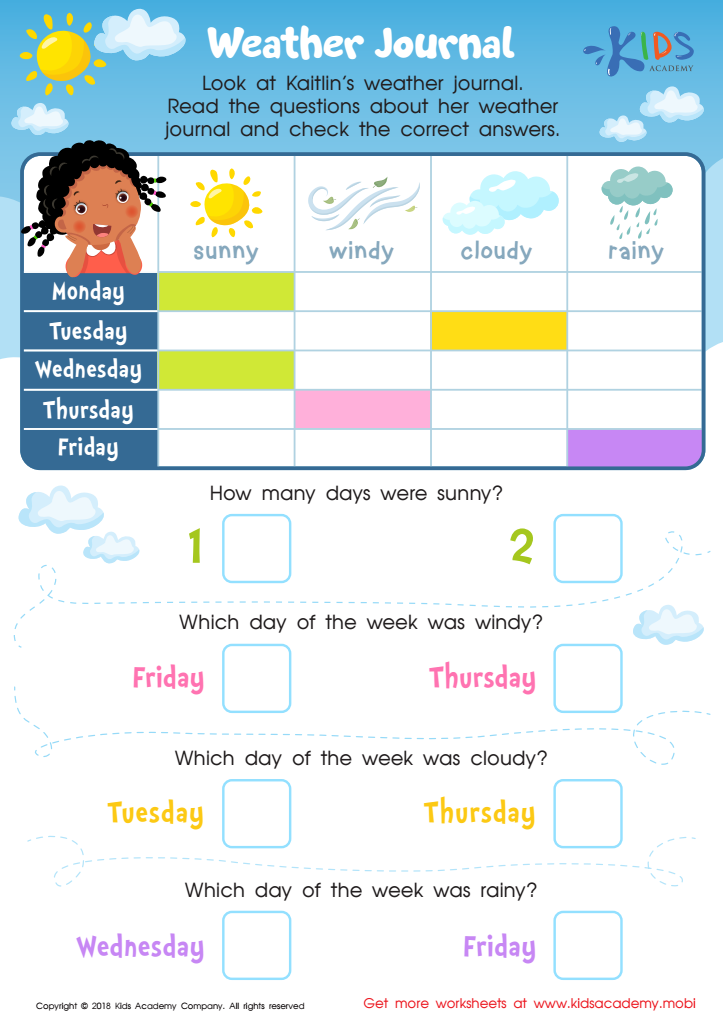
Weather Journal Worksheet
Kaitlin keeps a weather journal. Encourage your child to do the same! Look at Kaitlin's journal with them, and have them note the weather for each day. Read aloud the questions and check the correct answers.
Weather Journal Worksheet
Worksheet
Summer and Winter Worksheet
Ask your child what they associate with winter and summer. What do they look forward to in winter? What colors do they see most? What do they love doing in summer? Help them color in the pictures of winter and summer in the worksheet, choosing the colors they think best represent each season.
Download (PDF)
 Assign to My Students
Assign to My Students
Summer and Winter Worksheet
Worksheet
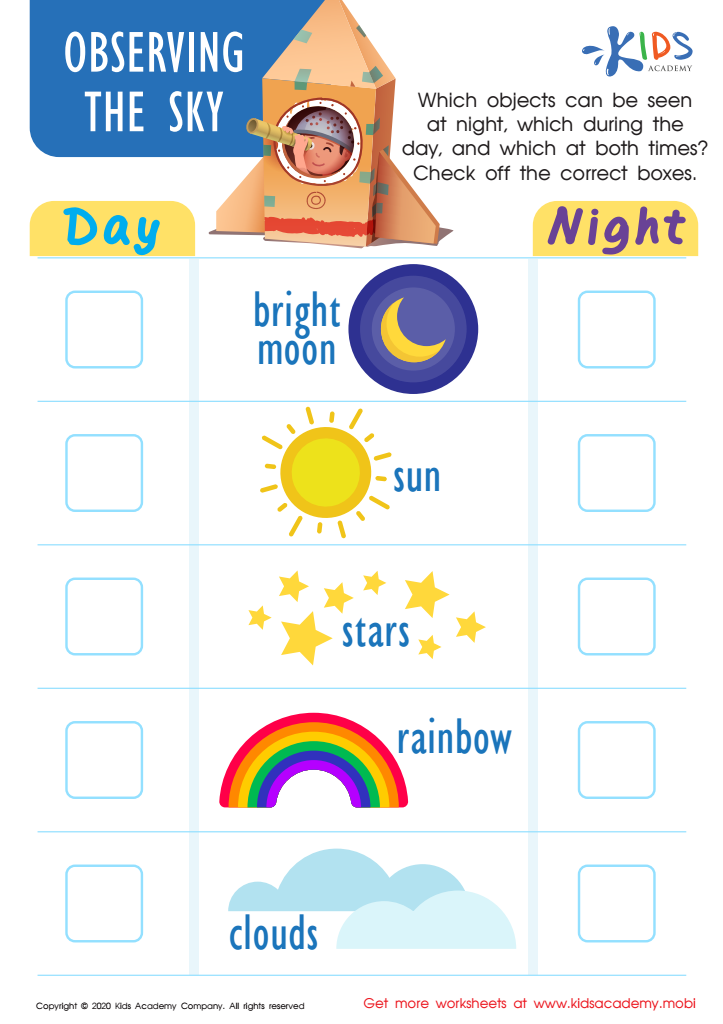
Observing the Sky Worksheet
Look up to the sky and observe day and night objects! See a rainbow or some clouds by day and stars and the moon at night. Help your little learner review this science concept with Kids Academy's fun and colorful worksheet. Have them sort and check off the objects seen by day or night, going down the column in the center.
Observing the Sky Worksheet
Worksheet
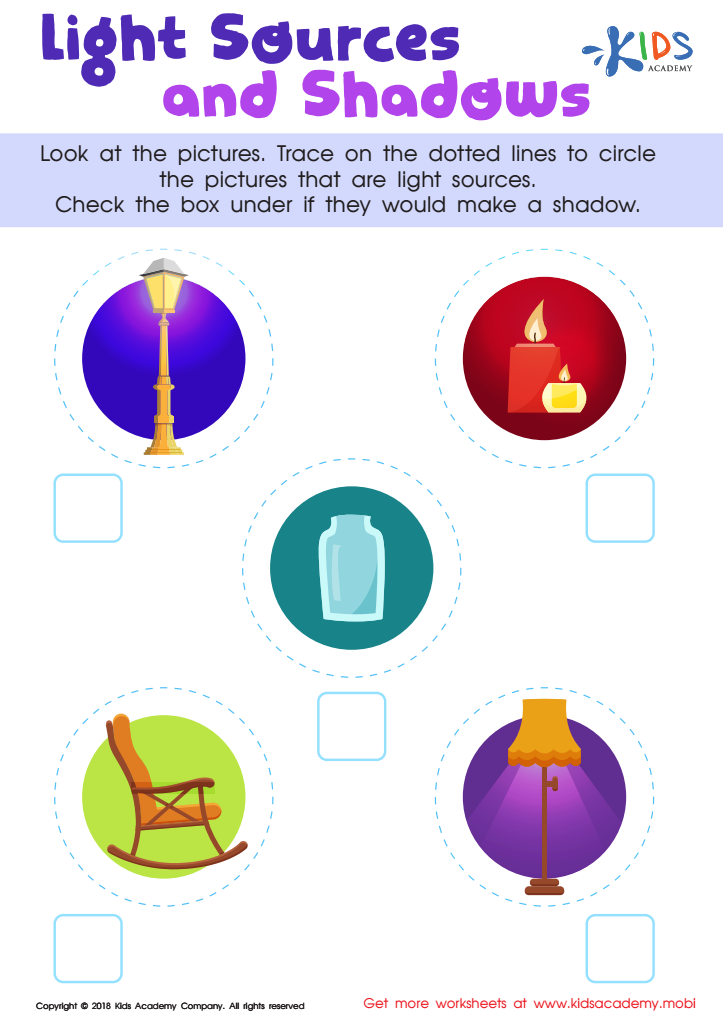
Light Sources and Shadows Worksheet
During the day, the sun radiates bright light. At night, when it's time for bed, the sun sets and darkness takes over. To light our way, we use other sources of light. With your students, trace the dotted lines around the pictures of light sources and check the boxes under the objects that will cast shadows.
Light Sources and Shadows Worksheet
Worksheet
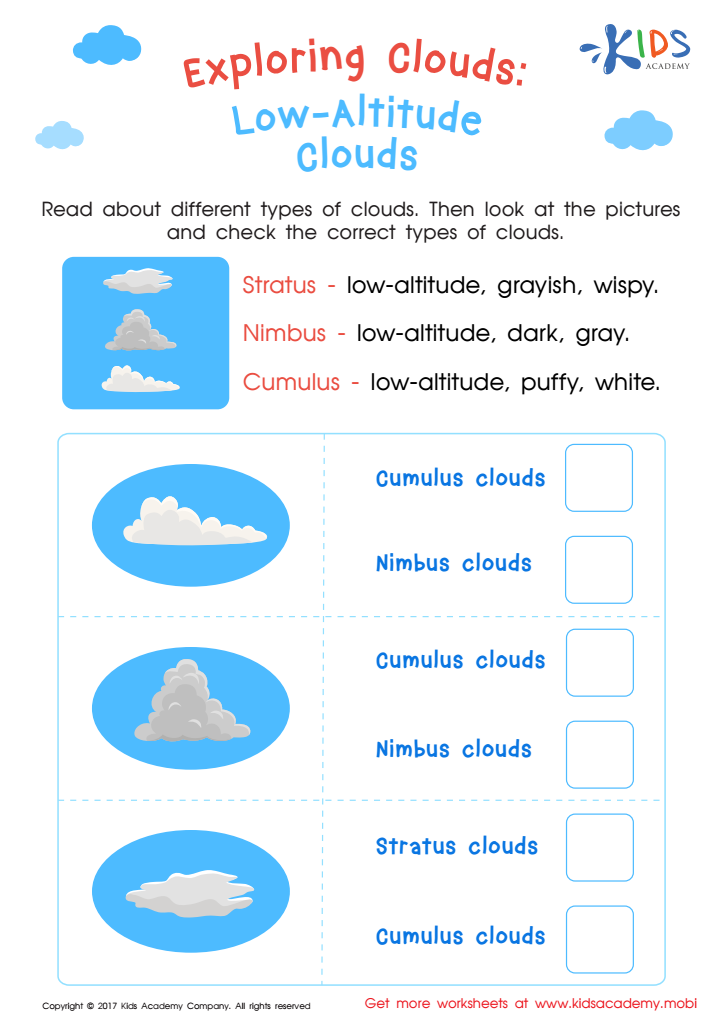
Exploring Clouds: Low Altitude Clouds Printable
Use this fun worksheet to teach them about the different types of low altitude clouds like cirrocumulus, stratocumulus, and cumulonimbus. 80 words.
When a storm clouds up the sky, have your child identify the different types of clouds! This worksheet can help them learn about the nimbus, cirrocumulus, stratocumulus, and cumulonimbus clouds. It's a great way to teach them about the various low altitude clouds and have fun at the same time!
Exploring Clouds: Low Altitude Clouds Printable
Worksheet
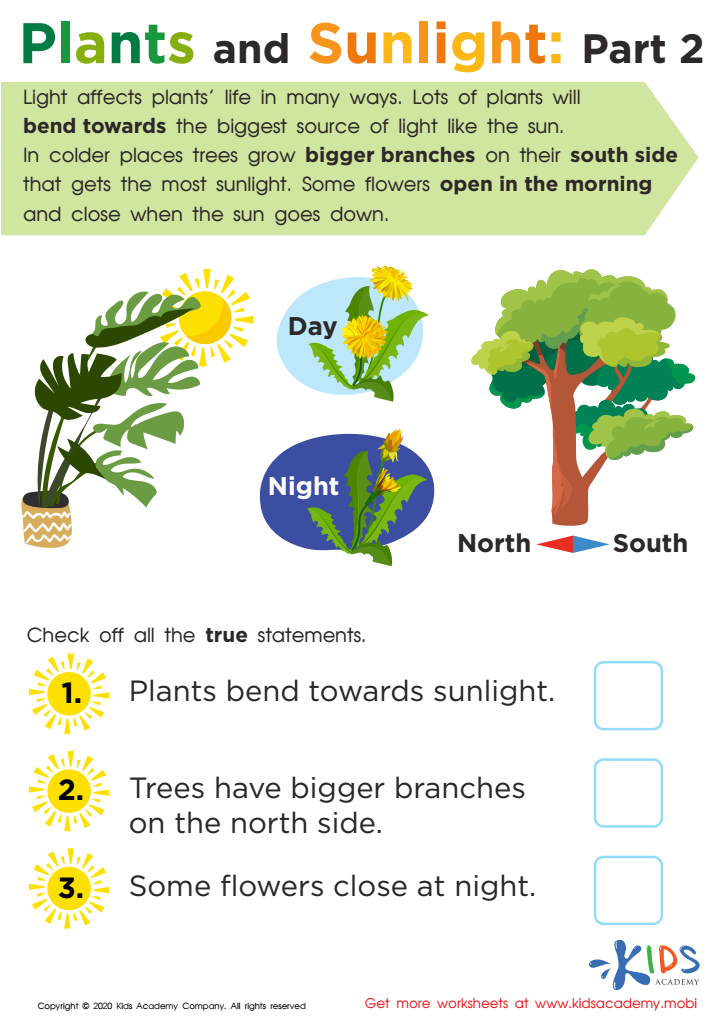
Plants and Sunlight: Part 2 Worksheet
Place a houseplant near the window and observe how it bends to get more sunlight! The sun's effects on plants and trees are amazing - flowers opening and closing, trees growing stronger branches on the south side. Let your child learn with this free Kids Academy printable science worksheet!
Plants and Sunlight: Part 2 Worksheet
Worksheet
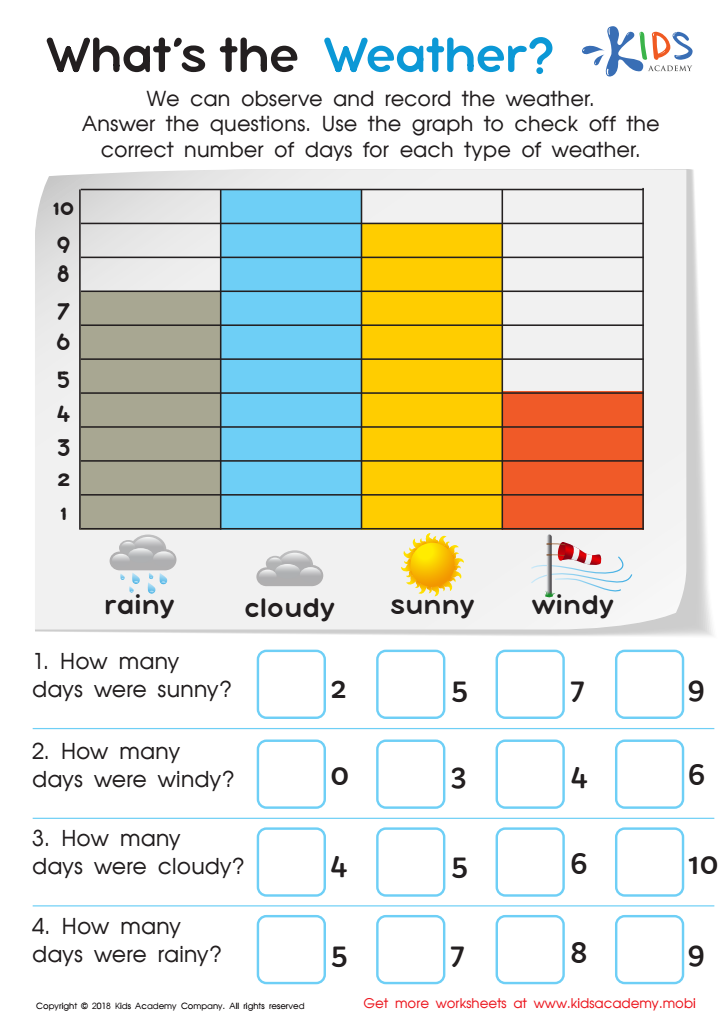
What's the Weather? Worksheet
Check the weather outside. Help kids learn and practice science and math by tracking different types of days using this printable worksheet. Have them count bars next to weather types like cloudy, sunny, windy, and rainy. Answer the questions and take the lesson further by creating a bar graph to show the monthly weather.
What's the Weather? Worksheet
Worksheet
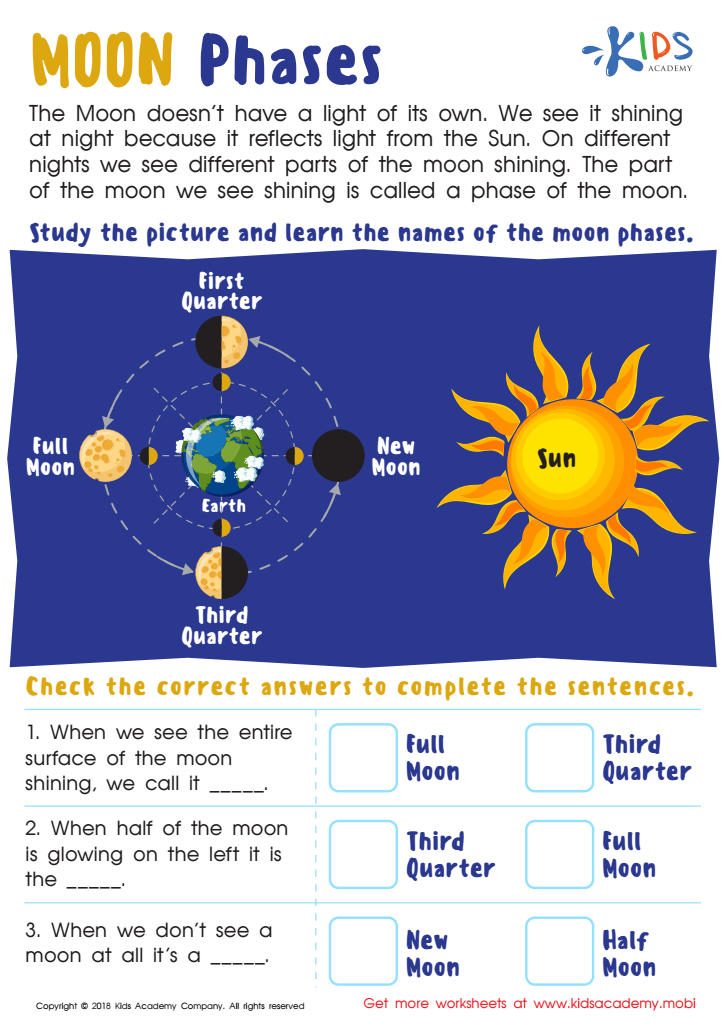
Moon Phases Worksheet
Gaze up at the night sky and the moon's appearance may change from night to night. Encourage your child to learn more about the sun, the moon, and space with this science worksheet. Have them read the text then study the picture. Finally, read the sentences and check the answers to identify the moon's phases.
Moon Phases Worksheet
Worksheet
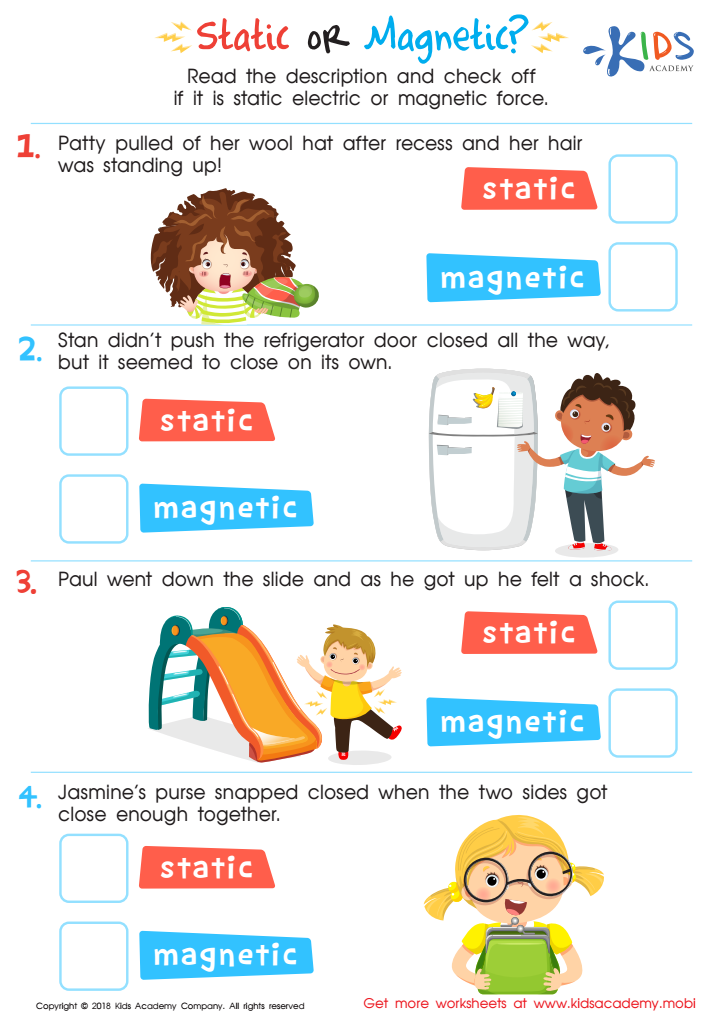
Static or Magnetic Printable Worksheet
Ever wondered if a situation involved static or magnetic force? This printable worksheet has the answer! Read the scenarios and check out the illustrations to decide which force is in play for each. Learn about these two amazing forces with this fun activity!
Static or Magnetic Printable Worksheet
Worksheet
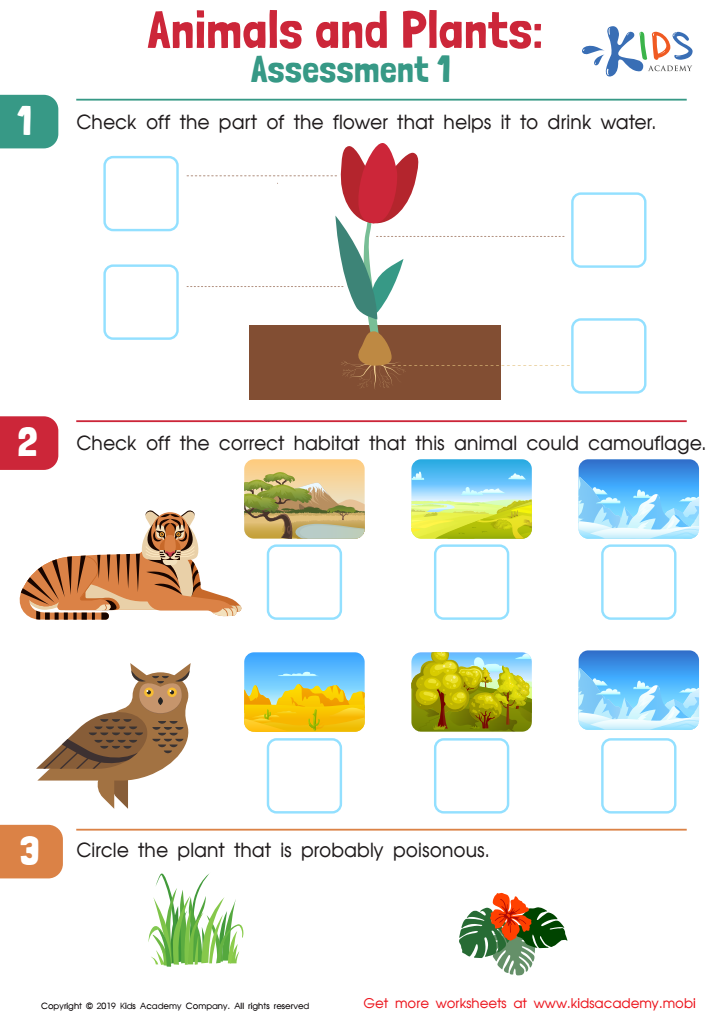
Animals and Plants: Assessment 1 Worksheet
Do you want to easily assess your child's understanding of basic science concepts? This colorful PDF offers a free opportunity for them to test their knowledge about parts of a flower, poisonous plants, animal habitats and more! Bright pictures make it fun and easy for you to see what they know.
Animals and Plants: Assessment 1 Worksheet
Worksheet
Join Kids Academy for Free
Who is primarily going to use this learning content?






Observational skills are crucial for children aged 5-9 as they lay the foundation for critical thinking and scientific reasoning. At this age, children are naturally curious about the world around them. Cultivating their observational skills enables them to notice details, recognize patterns, and make connections, which are fundamental components of scientific inquiry.
Teachers and parents should care because strong observational skills enhance a child’s ability to ask questions and explore concepts actively. By engaging in hands-on activities, observations become opportunities for learning, fostering a sense of wonder and excitement about discovery. Encouraging children to observe and describe their environment helps them develop language skills and the ability to articulate their thoughts, which is vital for both academic success and effective communication.
Moreover, these skills boost children’s confidence in expressing their findings and developing theories based on evidence. In a world increasingly reliant on critical thinking and problem-solving, nurturing observational abilities at this formative age sets a precedence for lifelong learning and curiosity. By valuing and promoting these skills, teachers and parents empower children to become resourceful learners, paving the way for future scientific engagement and exploration.







