Reading thermometers Science Worksheets for Ages 5-9
3 filtered results
-
From - To
Discover engaging science worksheets designed to help children ages 5-9 master reading thermometers. Our printable resources from Kids Academy simplify temperature reading concepts with colorful, easy-to-understand visuals. Kids will enhance their learning skills by measuring and interpreting different temperatures, fostering a love for science in a fun, hands-on way. These worksheets support classroom learning and at-home practice, making science accessible and exciting. Empower your child to confidently read thermometers and grasp important scientific principles early on. Explore our collection to boost their foundational knowledge and inspire a passion for discovery.
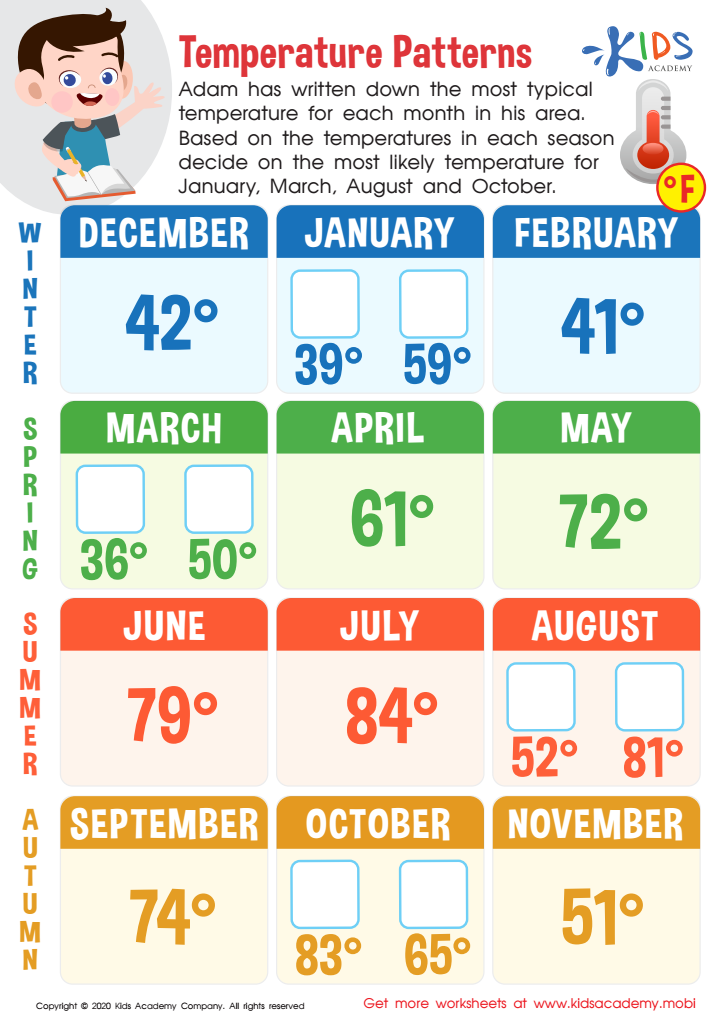
Temperature Patterns Worksheet
 Assign to My Students
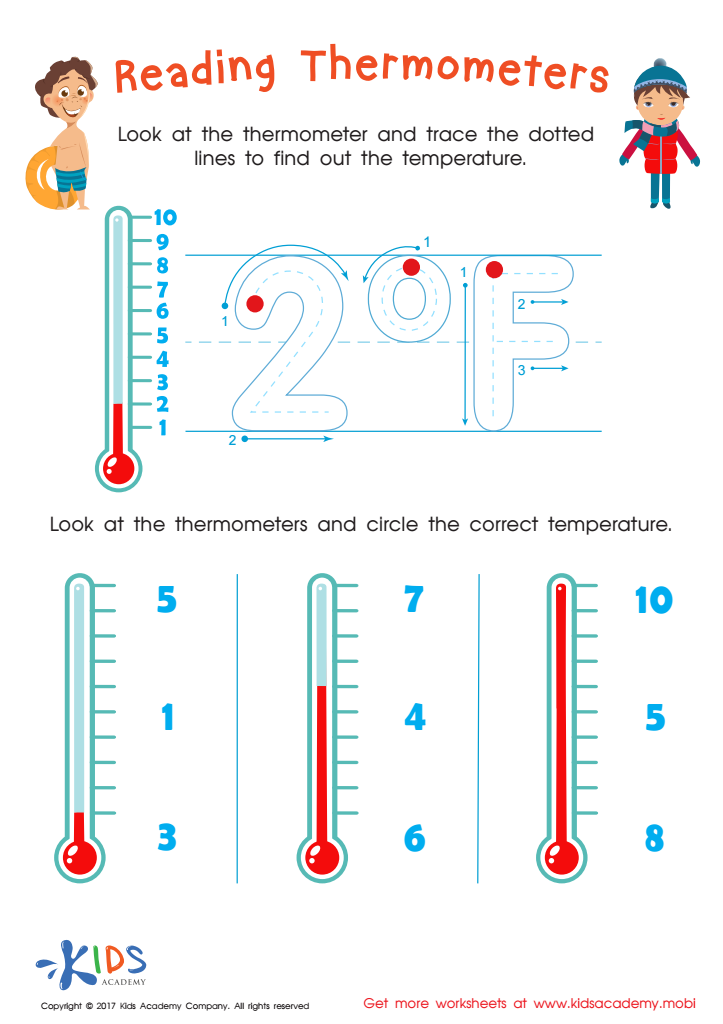
Reading Thermometers Printable
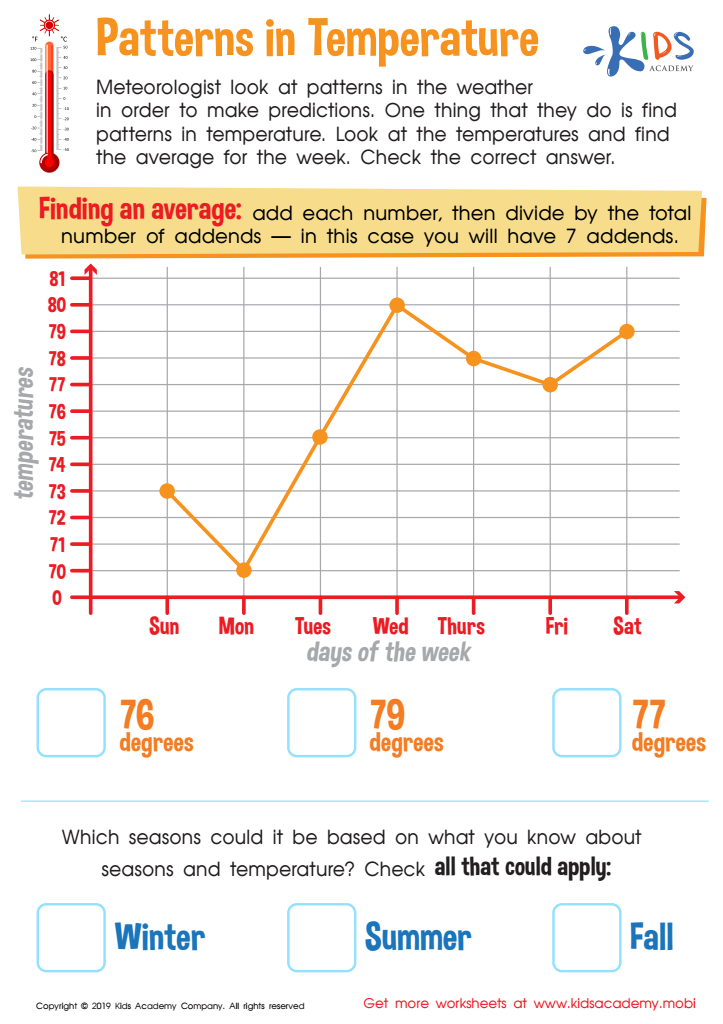
Patterns in Temperature Worksheet


%20(1).jpg)



Reading thermometers is an essential skill for young children, particularly ages 5-9, because it lays the foundation for their understanding of science and everyday life. For one, learning to read thermometers helps kids grasp basic principles of temperature, weather patterns, and seasons, fostering an early interest in environmental science. This awareness is critical not only for academic development but also for practical, real-world problem-solving skills like deciding what to wear or recognizing the signs of illness and fevers.
Parents and teachers should care about teaching this skill because it also builds numeracy and analytical abilities. Young children develop their ability to interpret scales, distinguish between different units of measurement, and draw simple inferences from data they observe. These are foundational skills that contribute significantly to mathematics comprehension and scientific inquiry.
Moreover, the hands-on learning experience of using a thermometer can engage children more deeply compared to abstract concepts, promoting curiosity and patience. Keeping kids excited about science at an early age can inspire lifelong learning and an appreciation for STEM disciplines.
Lastly, parents and teachers can integrate this knowledge into everyday activities, making learning seamless and relevant. Whether discussing weather forecasts, cooking recipes, or ensuring safety during play, understanding temperature enriches a child’s interactive experience with the world around them.







