Science knowledge Science Worksheets for Ages 5-9
3 filtered results
-
From - To
Explore our engaging Science Knowledge Worksheets designed for children ages 5-9! These printable resources make learning about the natural world exciting and interactive. Featuring a variety of activities, our worksheets cover essential topics such as plants, animals, weather, and the human body. Tailored to ignite curiosity and foster a love for learning, each worksheet prompts young learners to think critically while reinforcing scientific concepts. With vibrant visuals and simple instructions, you can easily incorporate these worksheets into your classroom or home study routine. Equip your child with a foundation in science and watch them thrive! Start exploring science today!
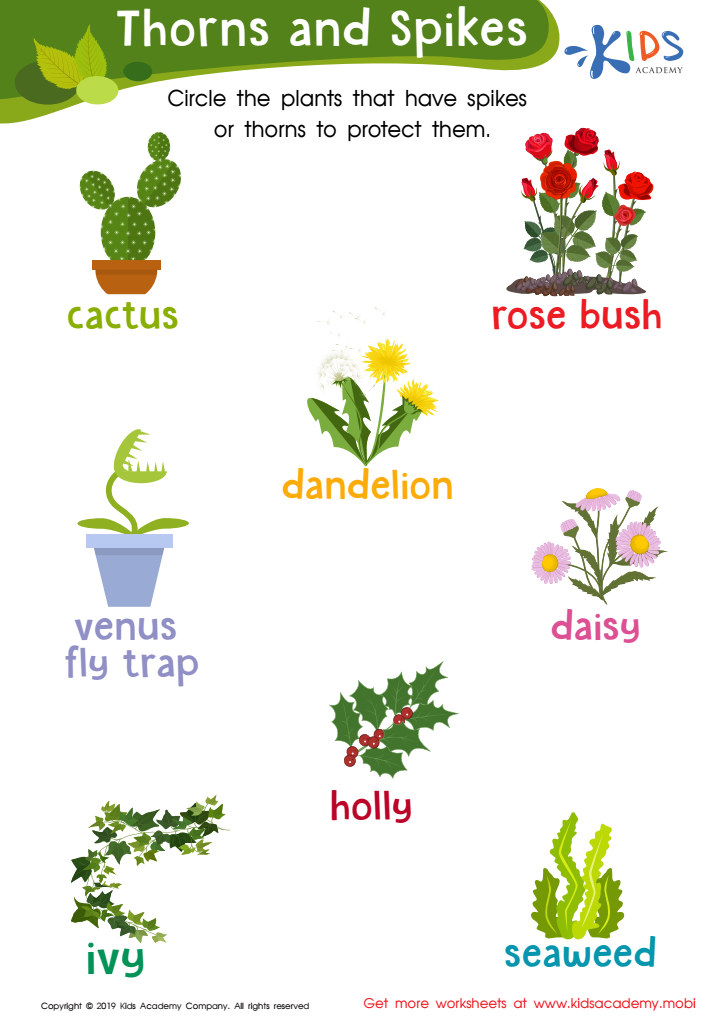
Thorns and Spikes Worksheet
 Assign to My Students
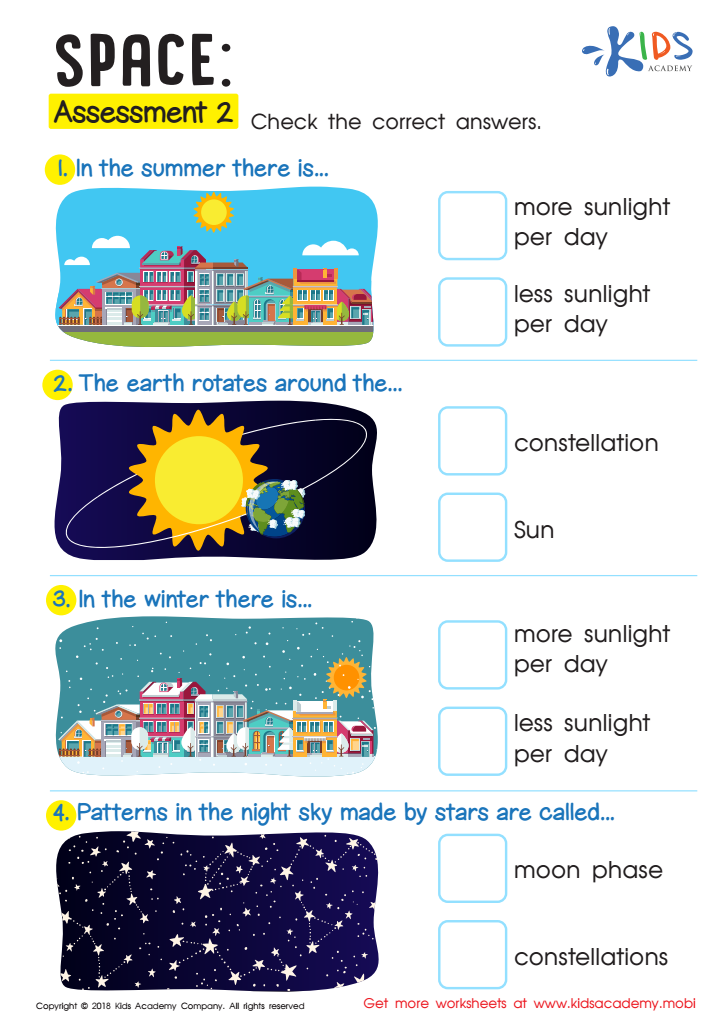
Space: Assessment 2 Worksheet


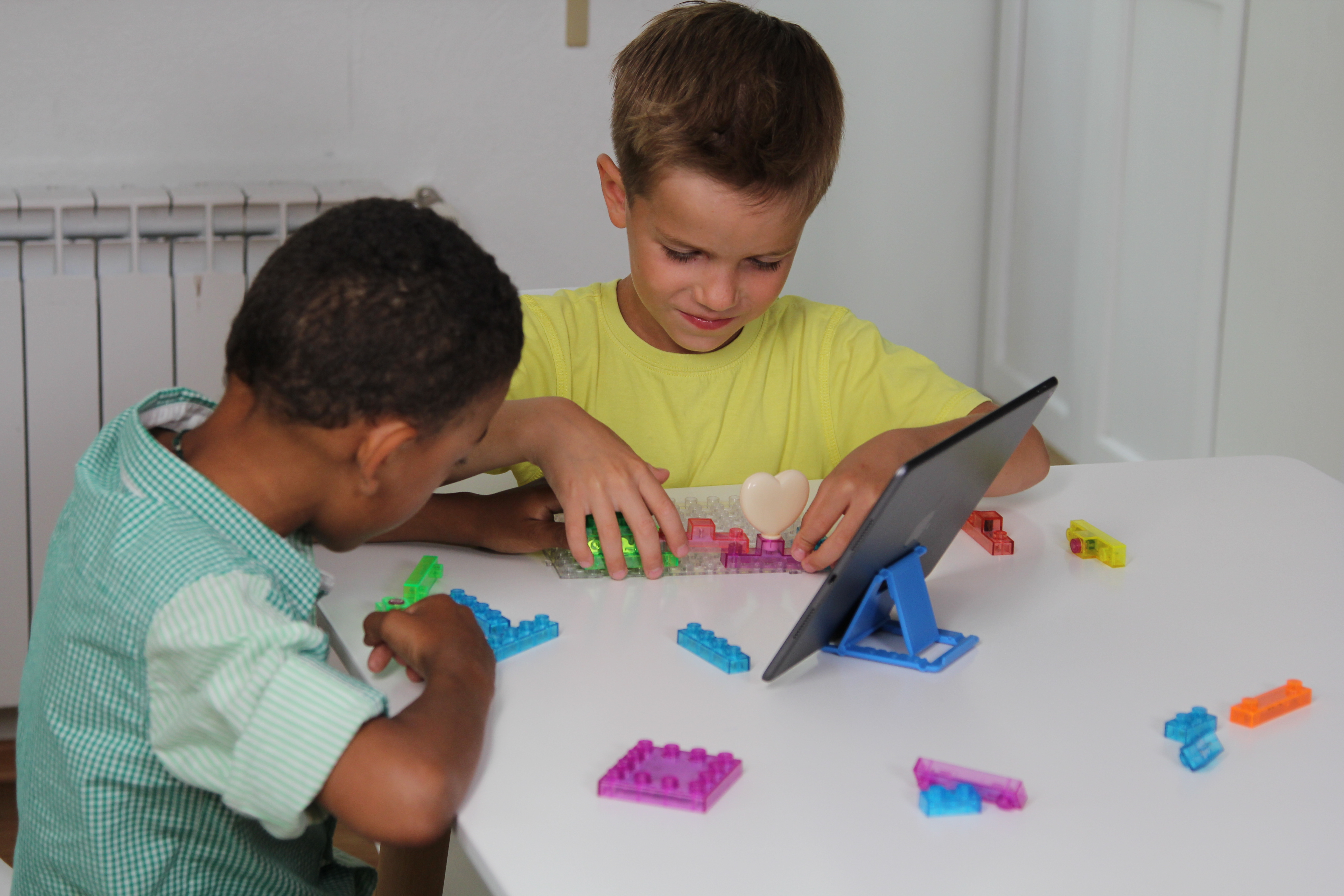





Parents and teachers should prioritize science knowledge for children aged 5-9 because it lays the foundation for critical thinking and problem-solving skills essential for lifelong learning. At this age, children are naturally curious, often asking "why" and "how." Engaging this curiosity through science fosters a love for inquiry and exploration, encouraging them to seek answers, think critically, and understand the world around them.
Additionally, early science education helps develop essential skills such as observation, experimentation, and reasoning. These skills are not just crucial for scientific understanding but also contribute to literacy in other subjects, including mathematics and social studies. As these children grow, a solid grounding in science promotes informed decision-making about health, the environment, and technology.
Furthermore, in our increasingly technological society, instilling a sense of scientific literacy prepares students for future educational and career opportunities in STEM (Science, Technology, Engineering, and Mathematics) fields, which are vital for economic growth. Ultimately, supporting early science education equips young learners with the tools to navigate and contribute meaningfully to an ever-changing world, making it a vital area of focus for both parents and teachers.







