Science vocabulary enhancement Science Worksheets for Ages 5-9
3 filtered results
-
From - To
Enhance your child's scientific vocabulary with our engaging Science Worksheets designed for ages 5-9! Our thoughtfully crafted resources will introduce young learners to essential science terms, ensuring they grasp fundamental concepts in a fun and interactive way. Each worksheet is packed with colorful graphics, captivating activities, and informative content that promote learning through exploration. Perfect for home or classroom use, these worksheets help children build essential communication skills while fostering a love for science. Download now and watch your child's understanding of the world around them grow, one word at a time! Empower their learning journey today!
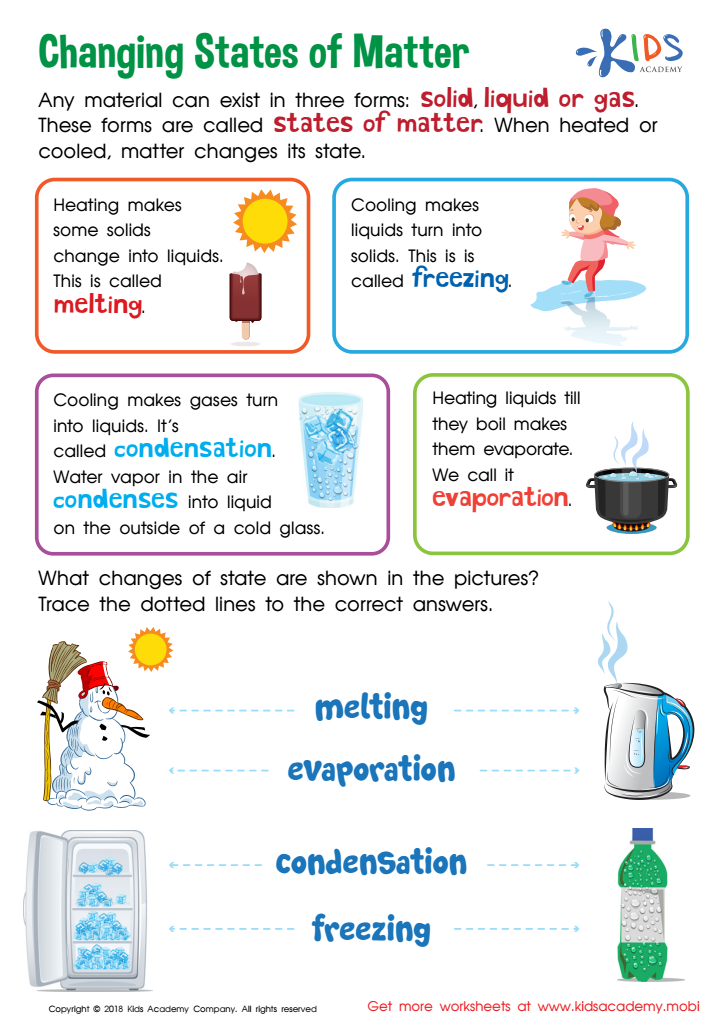
States of Matter Worksheet
 Assign to My Students
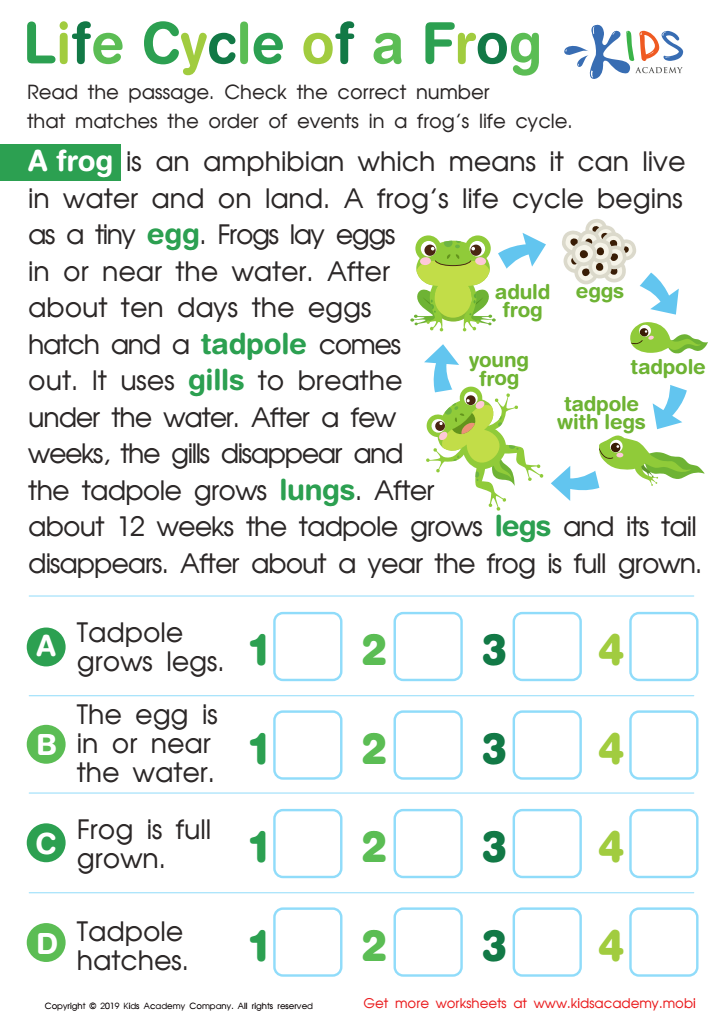
Life Cycle of a Frog Worksheet
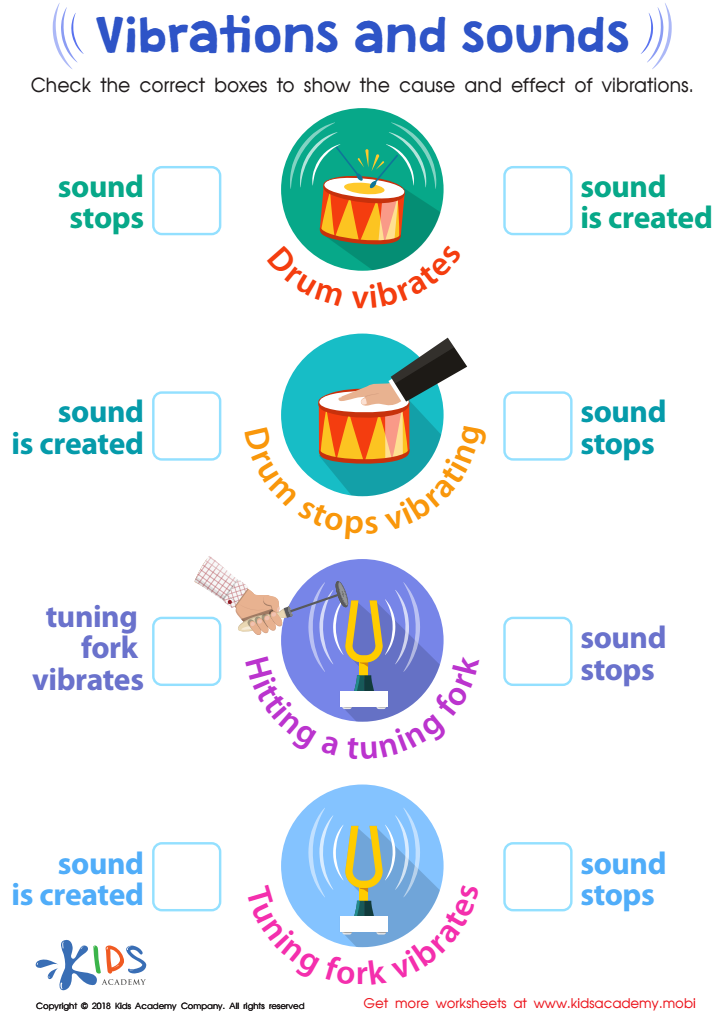
Vibrations and Sounds Worksheet








Enhancing science vocabulary for children aged 5-9 is crucial for several reasons. First, a robust science vocabulary equips young learners with the language needed to engage with scientific concepts effectively. At this age, children are naturally curious about the world around them. By introducing age-appropriate science terms, teachers and parents can foster this curiosity and develop critical thinking skills.
Secondly, a strong vocabulary forms the foundation for successful learning across various subjects. Science vocabulary often overlaps with concepts used in math and reading. As children learn descriptors and identities like "renewable," "habitat," or "magnet," they naturally expand their overall linguistic capabilities, enhancing their comprehension.
Furthermore, understanding science vocabulary fosters a sense of inclusiveness, enabling kids to participate in discussions, ask questions, and articulate their thoughts coherently. Engaged students are more likely to develop a lasting interest in science, laying the groundwork for future educational pursuits.
Lastly, parents and educators who prioritize vocabulary development show children the importance of communication within the scientific community. By understanding these terms, children can appreciate the role of language in innovation, advocacy, and environmental stewardship, ultimately preparing them to navigate and contribute positively to the world around them.







