Understanding pollination Science Worksheets for Ages 5-9
3 filtered results
-
From - To
Discover the vibrant world of pollination with our "Understanding Pollination Science Worksheets for Ages 5-9." These engaging, age-appropriate worksheets teach young learners the vital role of pollination in nature. Activities include interactive diagrams, coloring sheets, and simple experiments to make learning fun and effective. Perfect for classroom or home use, these resources help children grasp concepts through hands-on experience and playful inquiry. Introduce your kids to the wonders of nature, fostering a lifelong love for science and the environment today! Download our free worksheets to get started on this captivating educational journey.
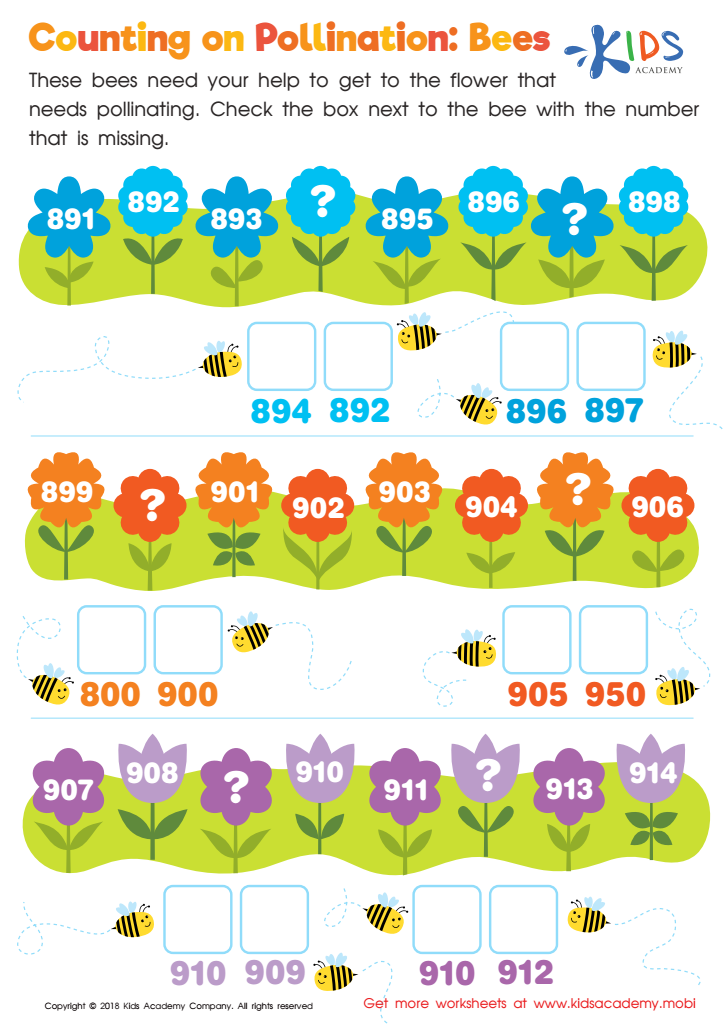
Counting on Pollination: Bees Worksheet
 Assign to My Students
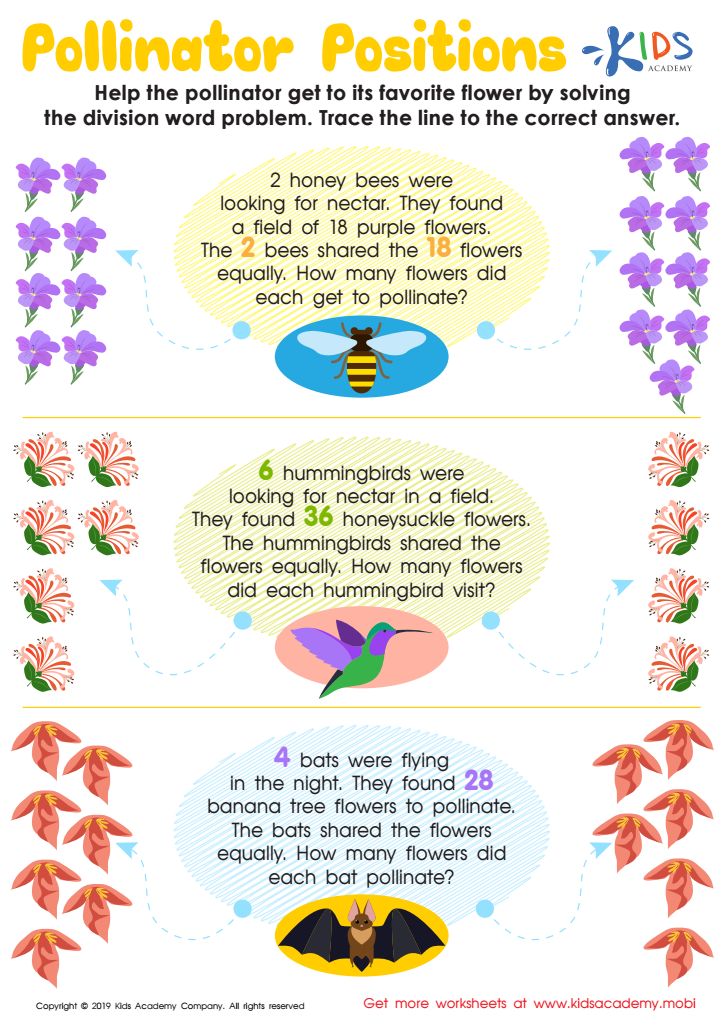
Pollinator Positions Worksheet
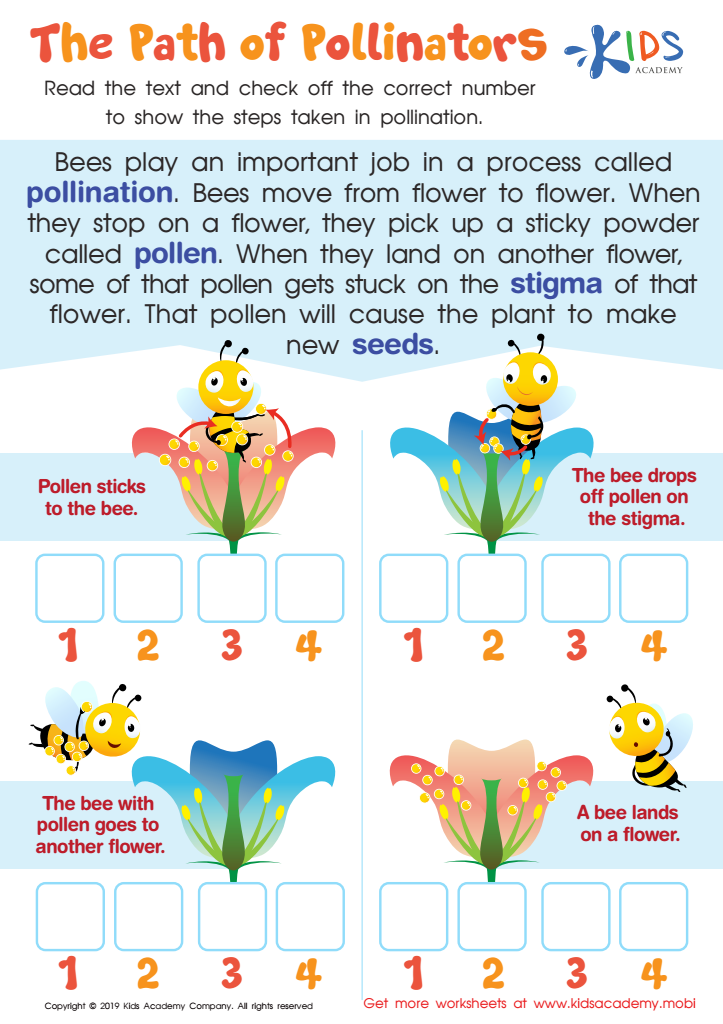
The Path of Pollinators Worksheet






Understanding pollination science is pivotal for young minds aged 5-9, as it lays the groundwork for crucial environmental education and fosters a broader appreciation of nature. Pollination, the process by which plants reproduce and produce fruit, is an essential aspect of our ecosystem. By educating children about pollination, parents and teachers can instill a sense of responsibility towards the environment and an understanding of how interconnected natural systems are.
Children who learn about pollination gain insight into the roles of bees, butterflies, and other pollinators, emphasizing the importance of biodiversity. This early education nurtures empathy and awareness for these crucial species, which are currently threatened by human activities. Promoting an understanding of these concepts can inspire future generations to adopt eco-friendly practices and support conservation efforts.
Additionally, learning about pollination can enhance children's scientific curiosity and observation skills. It encourages them to explore nature, ask questions, and develop critical thinking skills. Teachers and parents who engage children in hands-on activities, like planting flowers or observing insects, build a strong foundation for scientific inquiry.
By caring about pollination science, instructors and caregivers not only contribute to children's academic growth but also cultivate environmentally conscious individuals prepared to tackle future ecological challenges.







