Explore the fascinating world of animal classification with our engaging worksheets designed for ages 5-9! These printable resources make learning about the differences and similarities between plants and animals fun and interactive. Young learners will discover the fundamental categories of the animal kingdom, enhancing their understanding of habitat, food chains, and characteristics. Each worksheet includes exciting activities that encourage critical thinking and creativity, perfect for both classroom and at-home learning. Foster a love of science in your child as they classify and categorize various species, all while developing essential skills. Download our animal classification worksheets today and embark on this educational adventure!

Check out this FREE Trial Lesson on Plants and Animals for age 5-9!

Animal Adaptations

Favorites
With answer key
Interactive
  • 5-9
  • Animal Classification
  • Plants and Animals
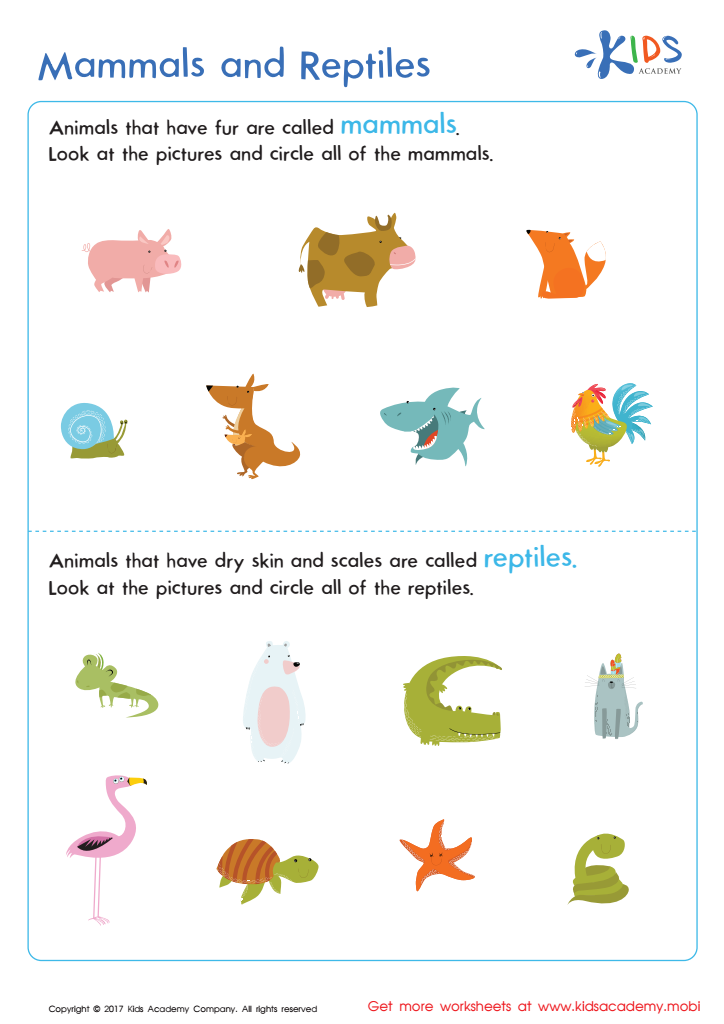
Mammals and Reptiles Worksheet

Mammals and Reptiles Worksheet

Challenge your child to identify mammals and reptiles with this worksheet. It's a great way to help them recognize the differences between these two types of animals.
Mammals and Reptiles Worksheet
Worksheet
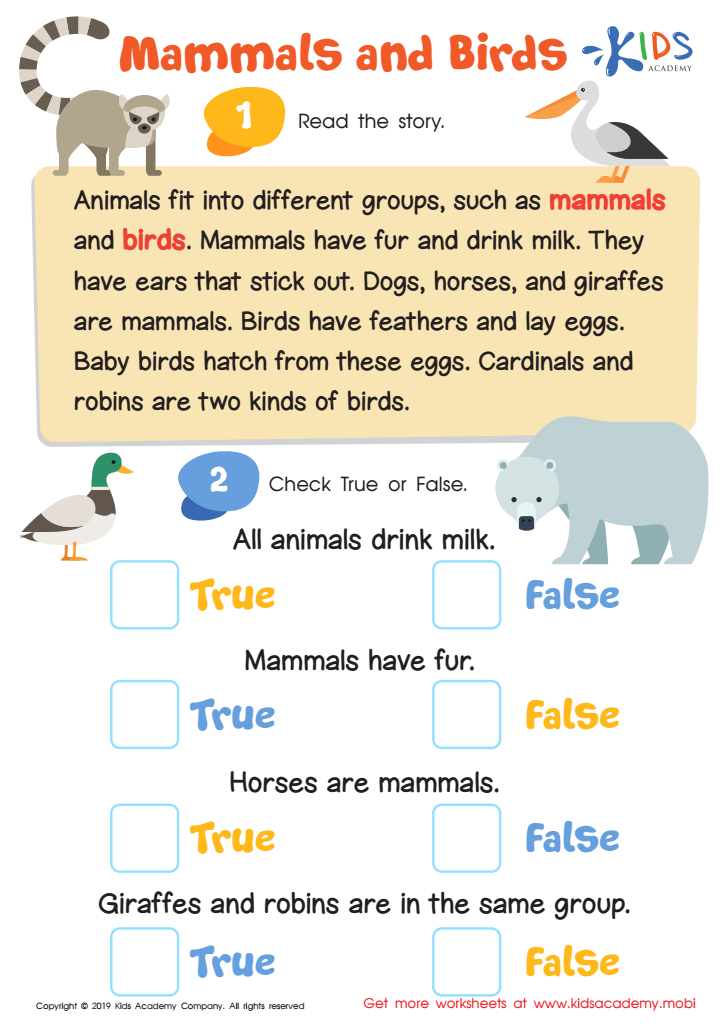
Mammals and Birds Worksheet

Mammals and Birds Worksheet

This worksheet challenges kids to read an informational text and review science facts about mammals and birds. Have them read the passage then mark statements true or false. Remind them to go back to the text if they get stuck! Get started now and help your child enhance multiple skills in one go!
Mammals and Birds Worksheet
Worksheet
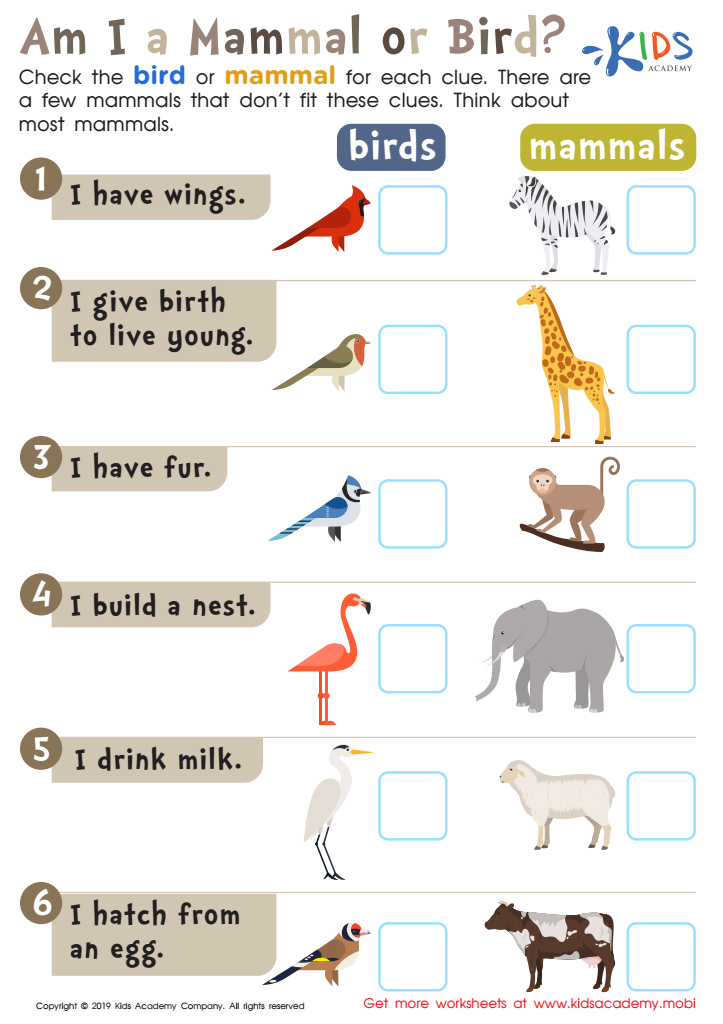
Am I a Mammal or Bird? Worksheet

Am I a Mammal or Bird? Worksheet

We categorize animals into groups such as mammals, birds, reptiles, etc. This worksheet helps kids understand the difference between birds and mammals. Read through the clues and think about each one. Then decide if it describes a bird or mammal, check the box and complete!
Am I a Mammal or Bird? Worksheet
Worksheet
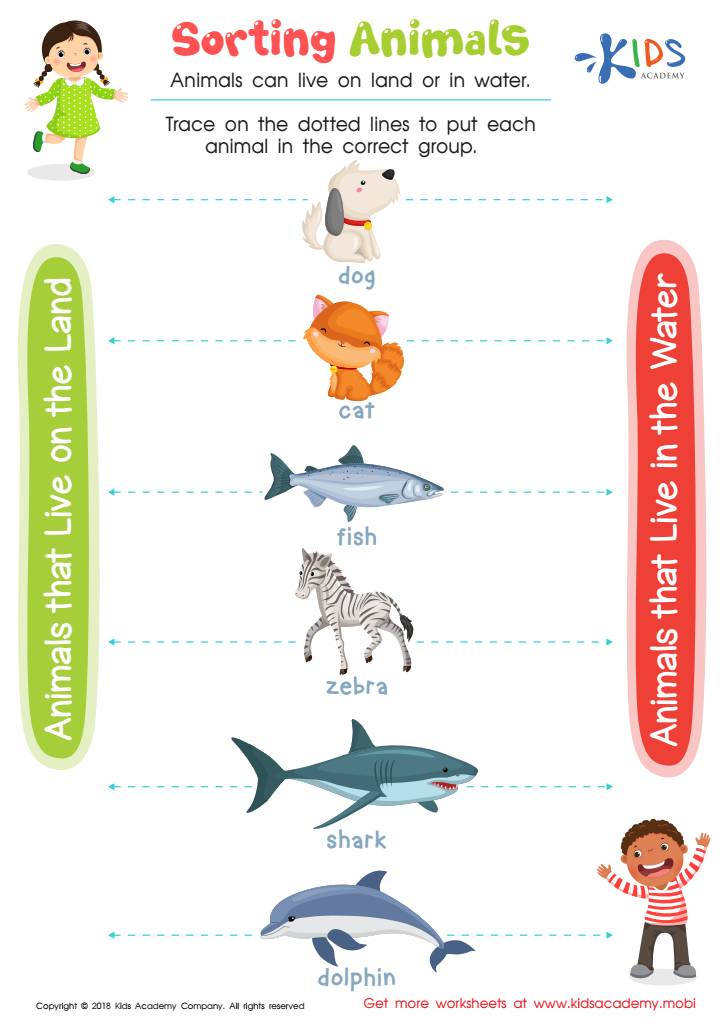
Sorting Animals Worksheet

Sorting Animals Worksheet

Your kids will love this free, interactive worksheet! With image clues, they can read and trace the animal names, and then sort them into groups of land or water animals. It's an enjoyable way to boost their critical thinking, fine motor and prior knowledge skills.
Sorting Animals Worksheet
Worksheet
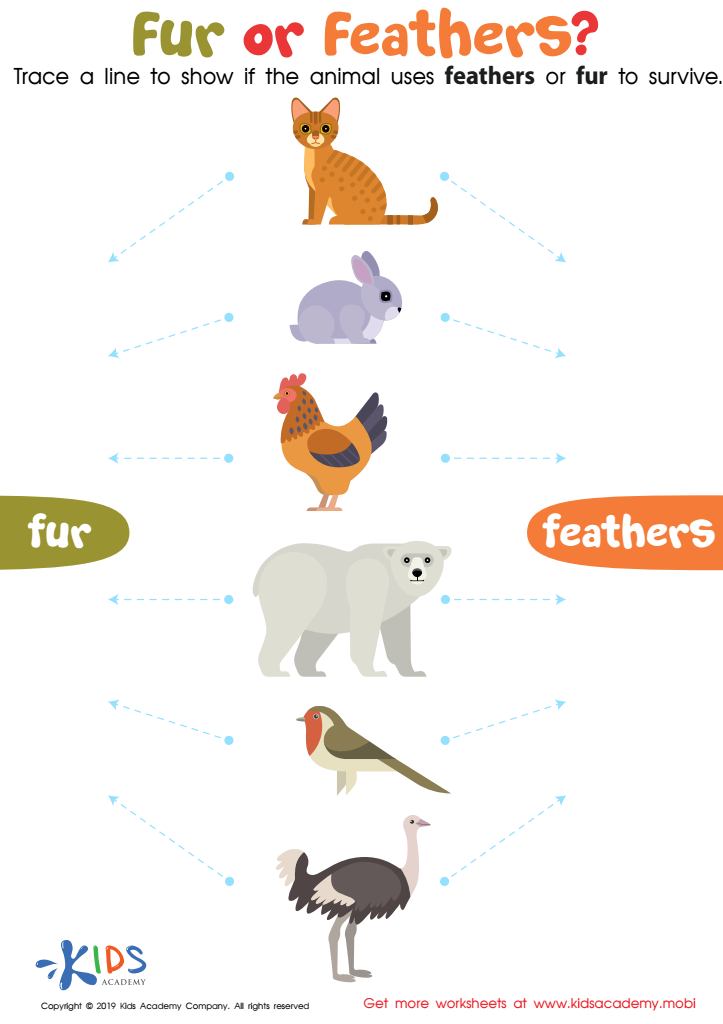
Fur or Feathers? Worksheet

Fur or Feathers? Worksheet

Examine animals you see daily. How do they differ from humans? With a pet in your home, ask your child to touch it and identify what covers the animal's body - fur or feathers? Birds have feathers, while mammals have fur. Guide your kids to identify animals in this worksheet and determine if fur or feathers keep them alive.
Fur or Feathers? Worksheet
Worksheet
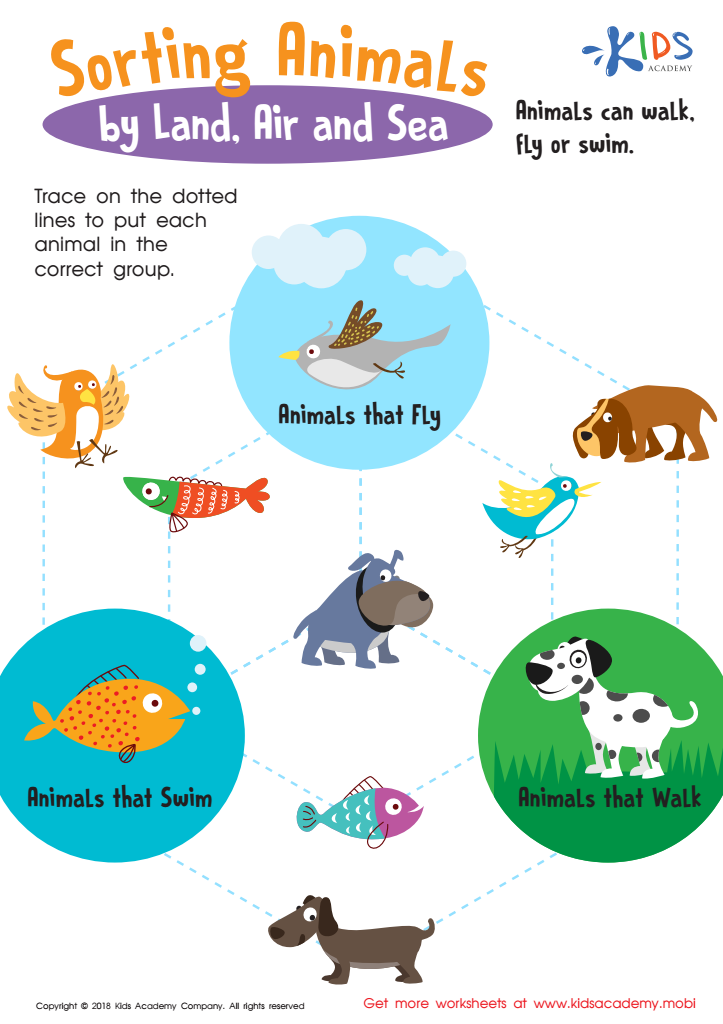
Sorting Animals by Land, Air and Sea Worksheet

Sorting Animals by Land, Air and Sea Worksheet

Kids will use critical thinking and fine motor skills with this worksheet! They'll analyze animal traits and draw lines to sort them into groups of those that fly, swim, or walk. It's a fun way to hone skills and have a great time!
Sorting Animals by Land, Air and Sea Worksheet
Worksheet
Classifying animals worksheet 2nd grade

Classifying Animals Worksheet

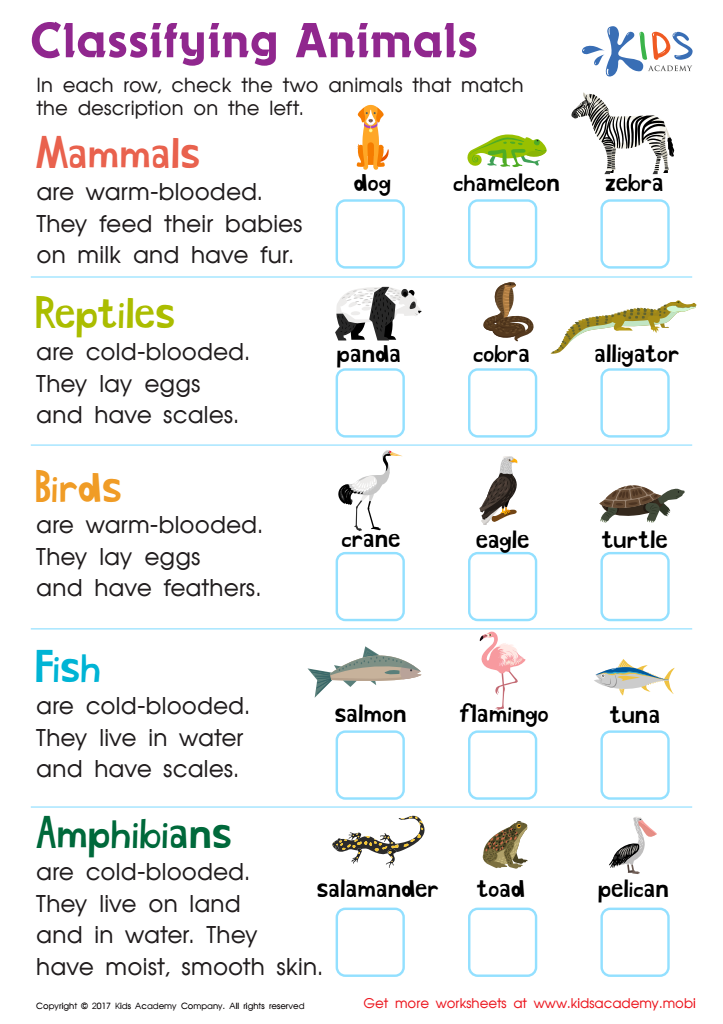
Print the 2nd grade animal classification worksheet and help kids study the differences between mammals, reptiles, birds, fish and amphibians. Let them pick two examples from the options given.
Classifying Animals Worksheet
Worksheet


Animal classification, including both plants and animals, is a fascinating topic that sparks curiosity in young learners aged 5-9. Understanding the basic categories of living organisms not only enhances children's observational skills but also deepens their appreciation of biodiversity. When parents or teachers engage children in this subject, they help them develop critical thinking and analytical skills as they learn to group and differentiate organisms based on characteristics such as appearance, habitat, and behavior.

Furthermore, teaching children about animal classification fosters a sense of respect and responsibility towards nature. In an age where environmental awareness is crucial, understanding the roles of various species can ignite a passion for conservation in young minds. By recognizing the interdependence of plants and animals, children learn the importance of preserving ecosystems.

Moreover, animal classification ties directly into various educational standards, making it an essential component of science curricula. Incorporating interactive activities like nature walks, classification games, or creative projects can make learning enjoyable and memorable. Thus, parents and teachers play a vital role in establishing a strong foundation for scientific literacy and encouraging a lifelong love of learning and nature conservation.