Cursive Writing Worksheets for Ages 5-9 - Page 2
26 filtered results
-
From - To
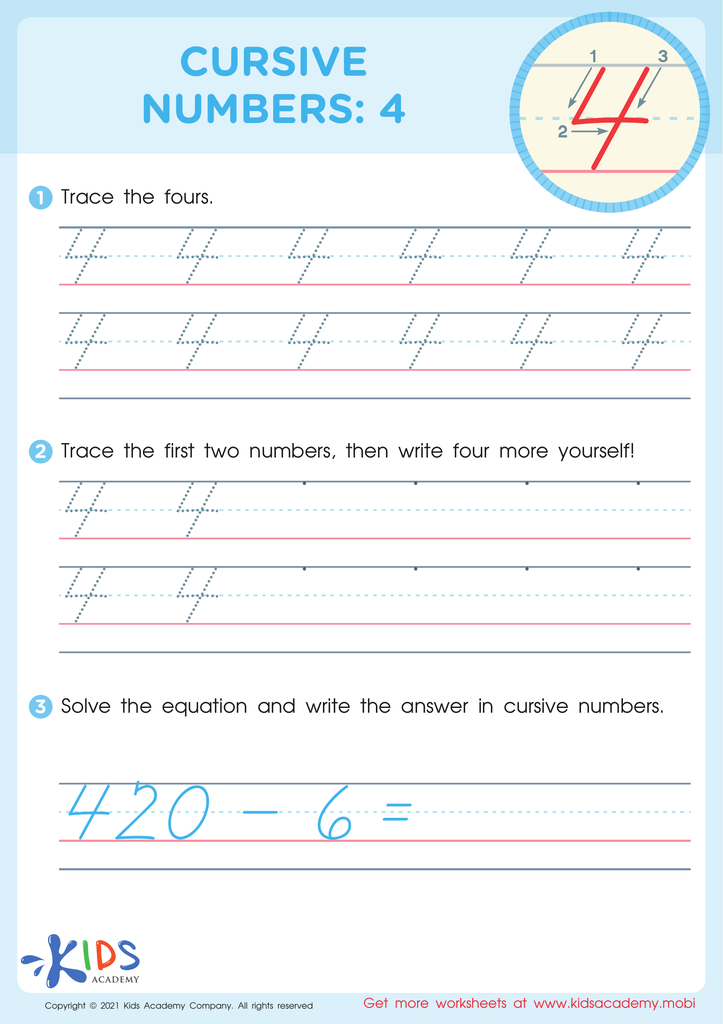
Cursive Numbers: 4 Worksheet
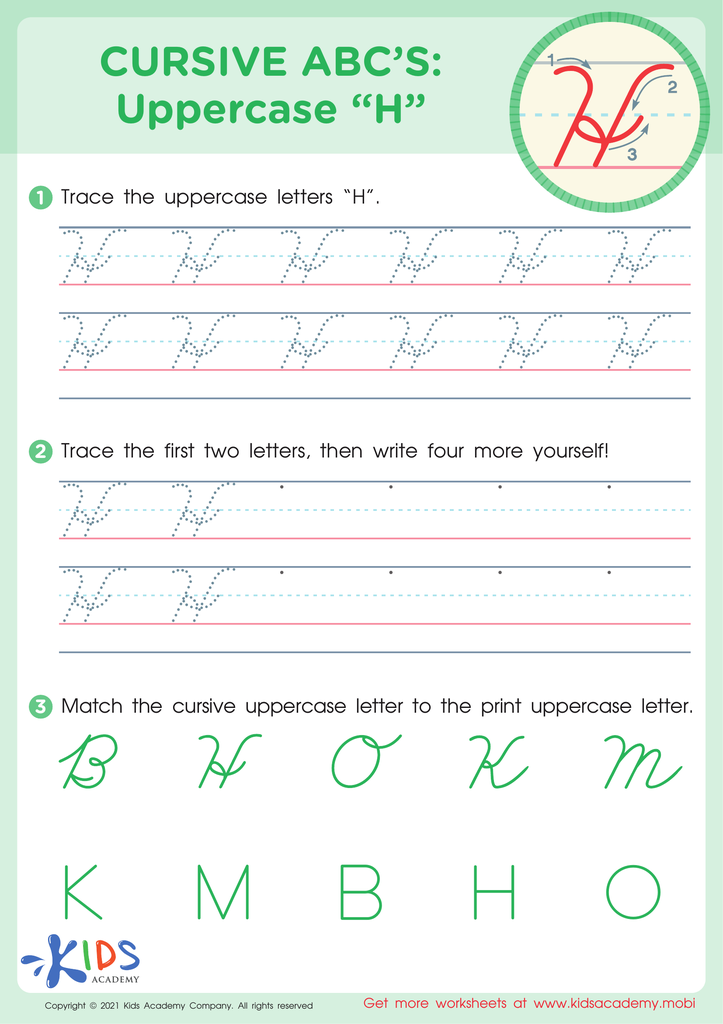
Cursive ABCs: Uppercase H







Cursive writing plays a crucial role in the early development of handwriting skills for children ages 5-9. One of the primary benefits is that it promotes fine motor skills. The fluid motion required for cursive helps strengthen hand muscles and enhances coordination, which is vital for various everyday tasks.
Additionally, cursive writing supports cognitive development. The continuous, flowing strokes engage different brain areas, fostering better retention and understanding of language. Children often grasp spelling and phonetics more seamlessly when practicing cursive, making it a valuable tool for literacy.
Another significant aspect is that cursive writing can enhance children's creativity. As they learn to connect letters and create their unique style, they gain a sense of personal expression. This can boost confidence and encourage them to take pride in their handwriting.
Lastly, cursive writing often brings a nostalgic quality, stemming from its historical use in letter writing and personal communication. By teaching cursive in today's digital age, parents and teachers ensure that children appreciate the art of penmanship, fostering a connection to their heritage while preparing them for future communication skills. Encouraging cursive writing can provide a robust foundation for cognitive, motor, and emotional growth in young learners.








