Grammar skills Writing Worksheets for Ages 5-9
5 filtered results
-
From - To
Enhance your child's writing foundations with our "Grammar Skills Writing Worksheets for Ages 5-9." Designed to support young learners, these engaging worksheets cover essential grammar topics, including sentence structure, punctuation, nouns, verbs, and more. Our age-appropriate exercises provide a fun and interactive way for kids to develop strong grammar skills, enhancing their overall writing abilities. Perfect for both classroom and home use, these printable worksheets help children build confidence and proficiency in writing. Explore our collection to give your child the tools they need for academic success and effective communication. Discover the joy of learning with Kids Academy today!
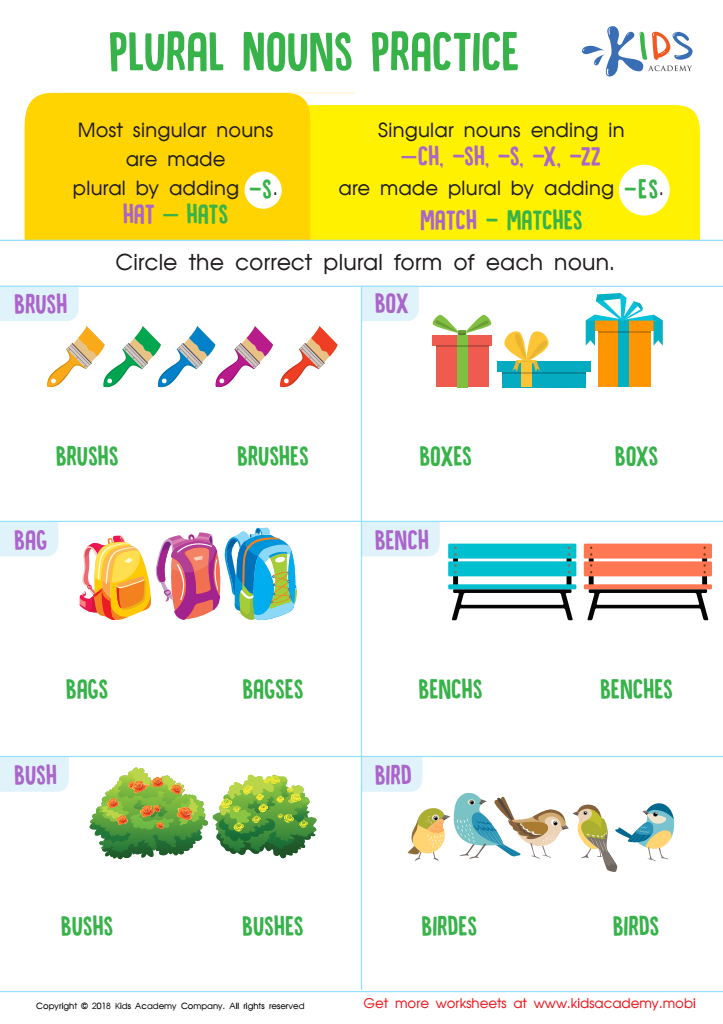
Plural Nouns Practice Worksheet
 Assign to My Students
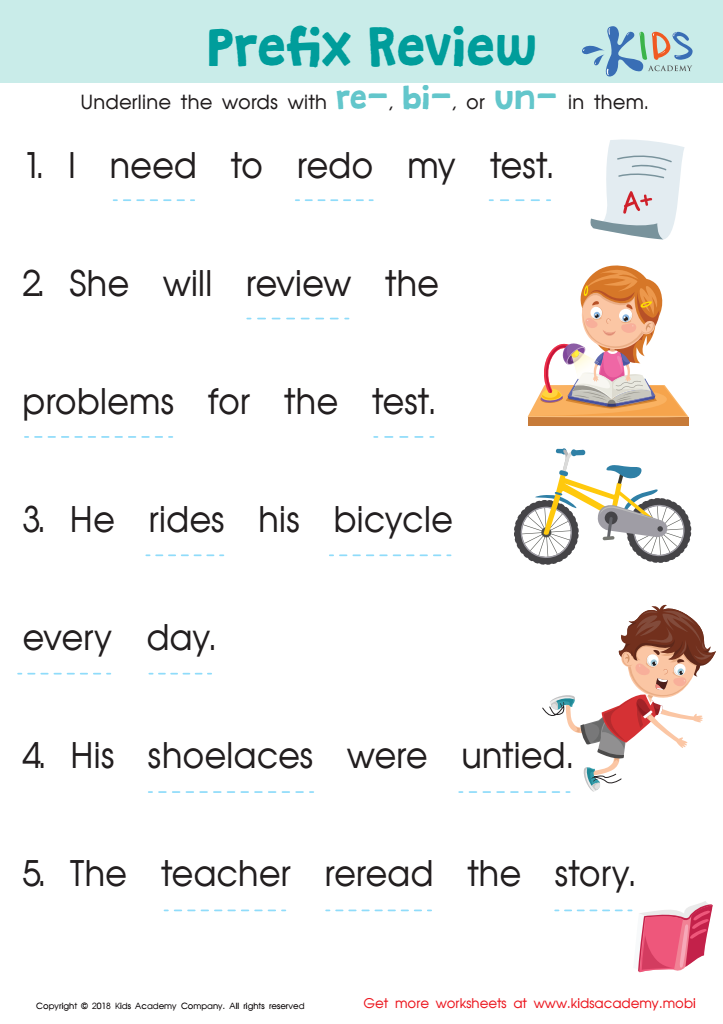
Prefix Review Worksheet
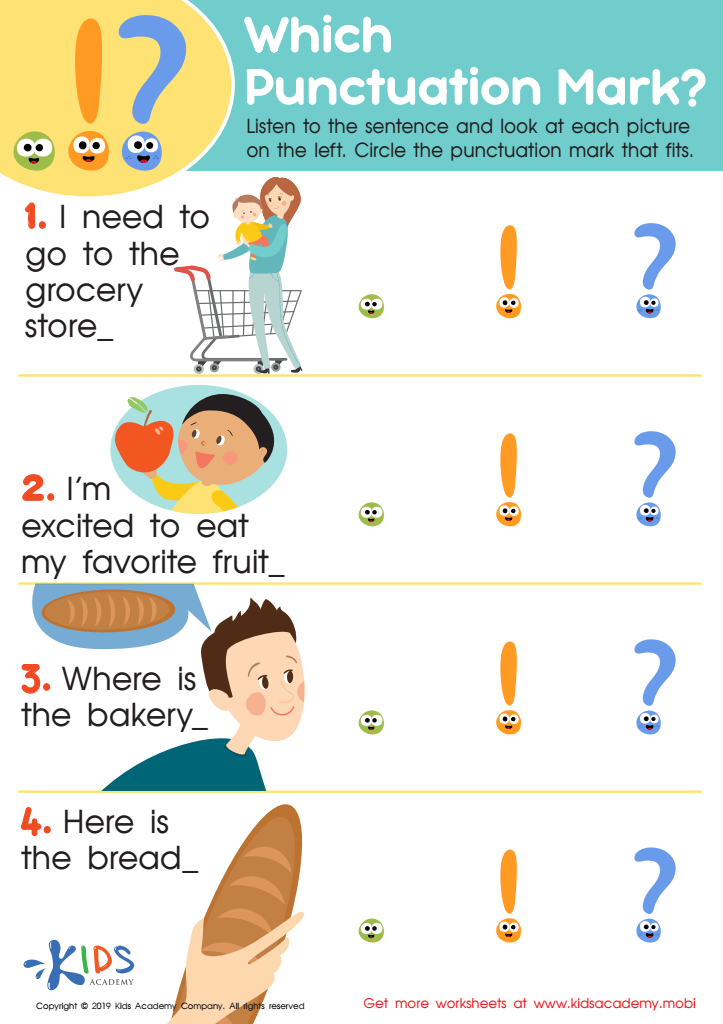
Which Punctuation Mark Worksheet
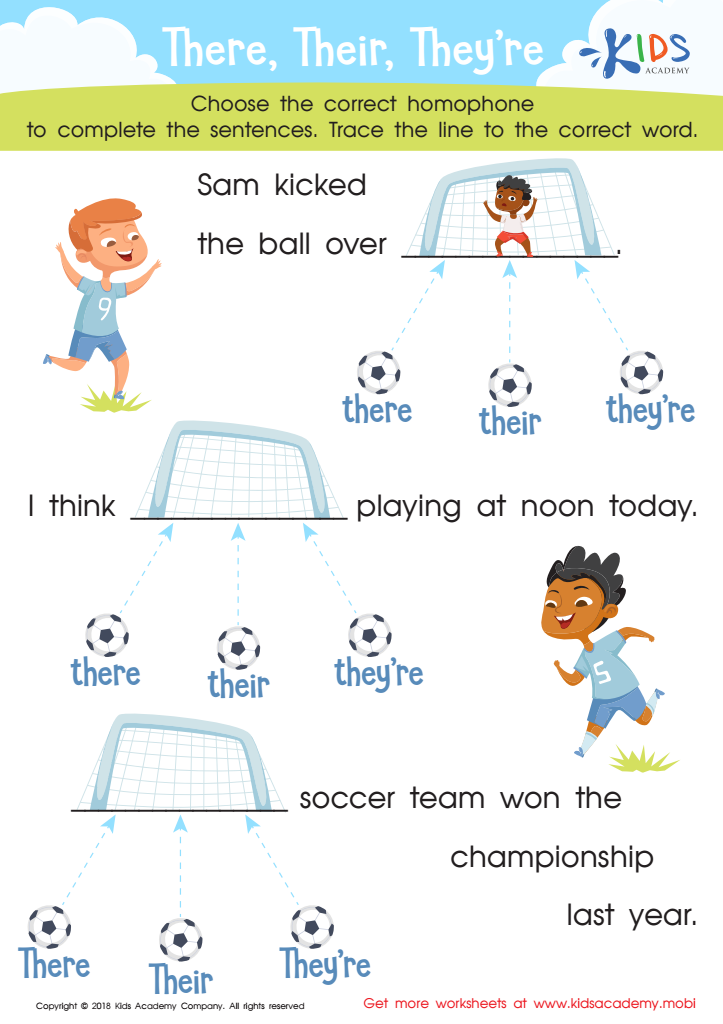
There, Their, They're Worksheet
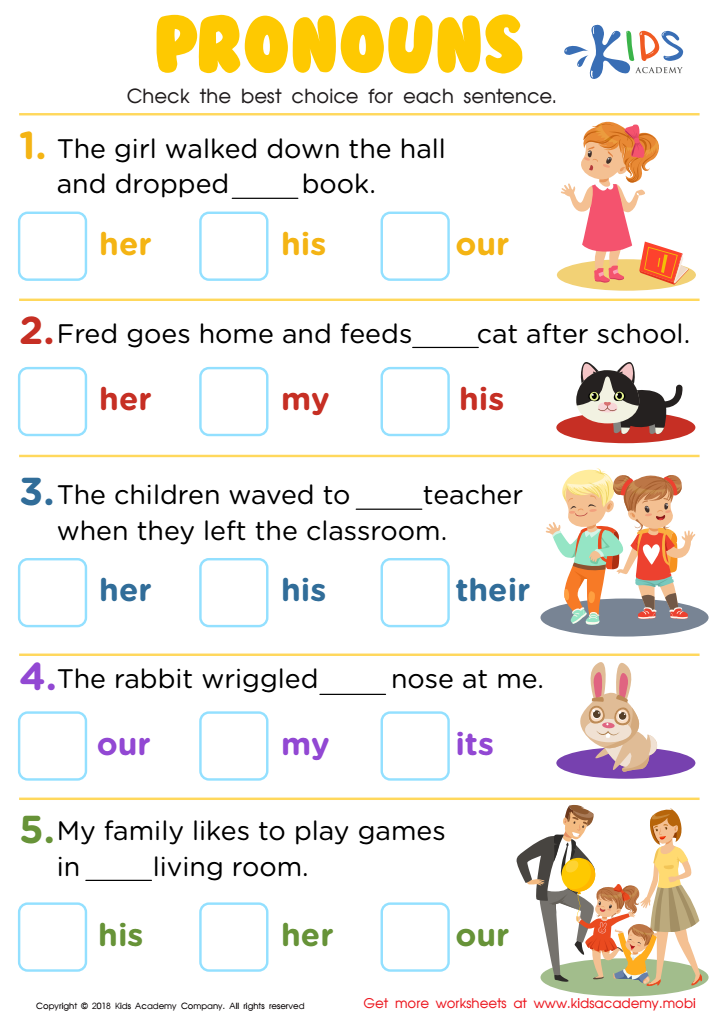
Pronouns Worksheet








Parents and teachers should pay close attention to grammar skills for children aged 5-9 as this foundational period is critical to their language development. Grammar helps children construct sentences effectively, enabling them to communicate their thoughts clearly and precisely. Proficiency in grammar not only improves their writing ability but also enhances their reading comprehension, boosting overall academic achievement. Early exposure to correct grammar usage instills confidence, empowering children to express themselves both verbally and in written form.
Teaching grammar at a young age primes children for future learning. It establishes good habits that simplify the complexities of more advanced language and writing skills they will encounter later. Moreover, strong grammar skills support better performance in standardized tests, laying the groundwork for future educational opportunities.
Socially, grammar proficiency aids in building connections with others. Clear communication helps eliminate misunderstandings and fosters effective interactions, critical for forming relationships and teamwork. For bilingual or multilingual children, understanding grammar can ease switching between languages more fluidly, improving cognitive flexibility.
Lastly, fostering grammar skills at an early age encourages a lifelong appreciation of reading and writing. This foundational literacy empowers students with the skills necessary to succeed academically and navigate various aspects of daily life competently. Thus, investing in early grammar education offers enduring advantages that ripple throughout a child’s life.








