Filters

11 filtered results

Clear all filters
Favorites
With answer key
Interactive

11 filtered results

Difficulty Level

Grade


Unlock your child’s potential with our Hand-eye Coordination Writing Worksheets for ages 5-9! Designed to seamlessly develop fine motor skills, these worksheets use fun, engaging activities to improve hand-eye coordination. From tracing lines and shapes to crafting letters and numbers, each exercise helps boost your child's writing skills while fostering essential learning development. Perfect for young learners, these worksheets are thoughtfully crafted to make learning enjoyable, building a solid foundation for academic success. Printable and easy to use, our resources make it simple to practice and improve crucial early writing skills at home or in the classroom.

Check out this FREE Trial Lesson on Writing for age 5-9!

Long Vowels

Favorites
With answer key
Interactive
  • 5-9
  • Hand-eye Coordination
  • Writing
Tracing Winter Words : Snowman

Snowman Tracing Winter Words Worksheet

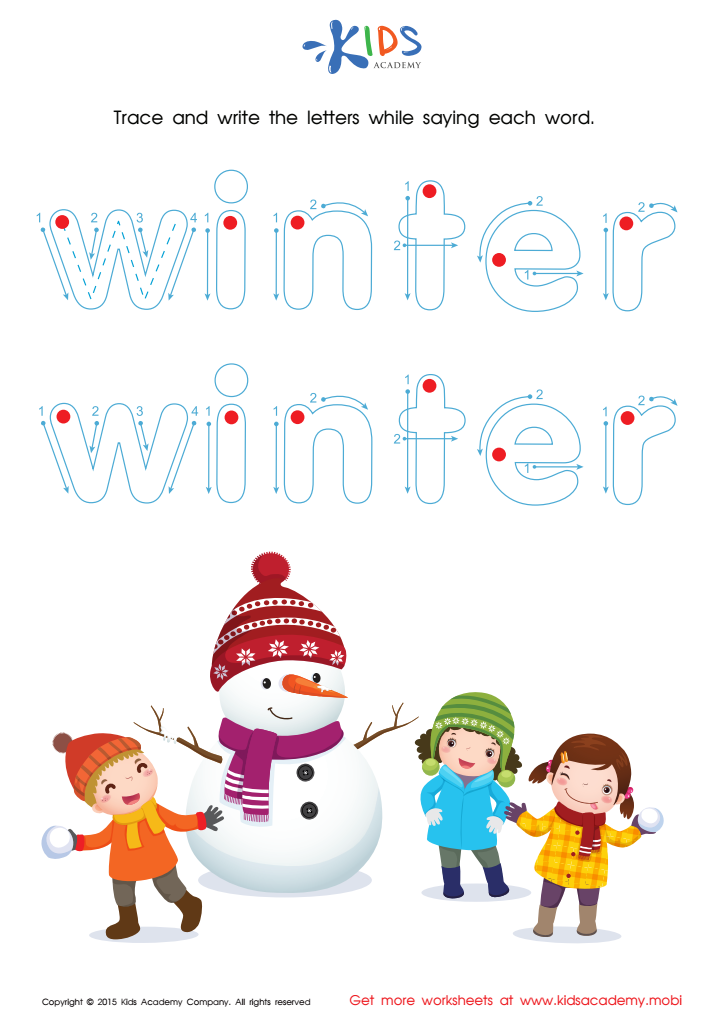
This free winter printable teaches handwriting and spelling with the word "snowman". It's a fun way to get your kid ready for Christmas cheer! Want more tracing worksheets? Check out here.
Snowman Tracing Winter Words Worksheet
Worksheet
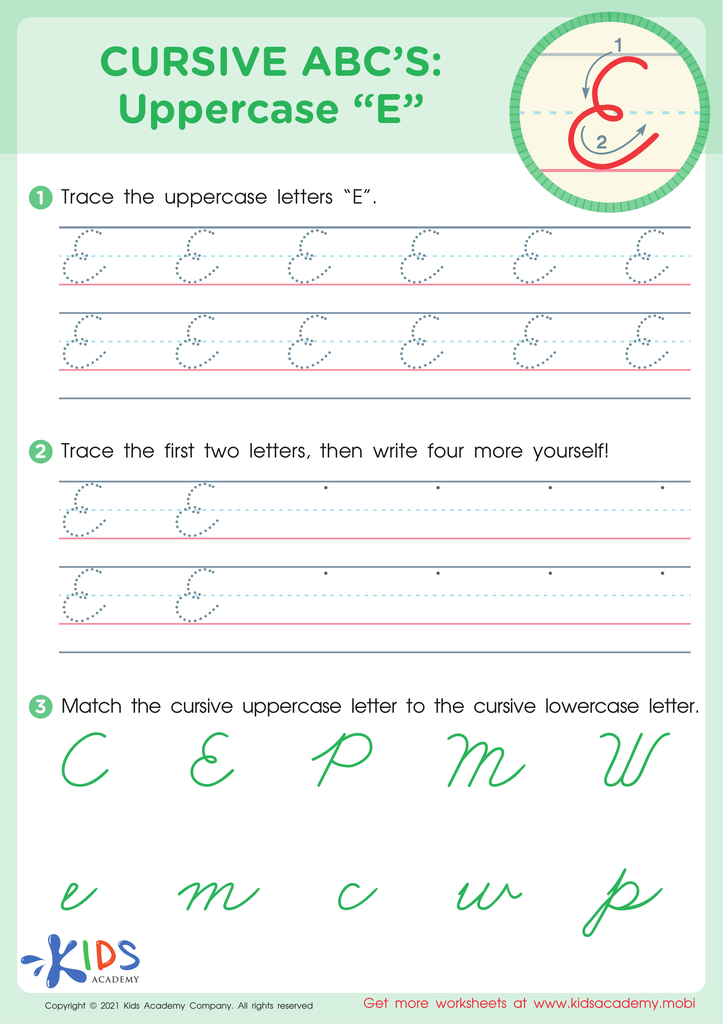
Cursive ABCs: Uppercase E

Cursive ABCs: Uppercase E

Ask your child if they can identify the letter 'E' and give examples. Each letter is unique, so provide coaching. Have them trace cursive 'E' to become familiar and boost confidence. Then, ask them to write it on their own.
Cursive ABCs: Uppercase E
Worksheet
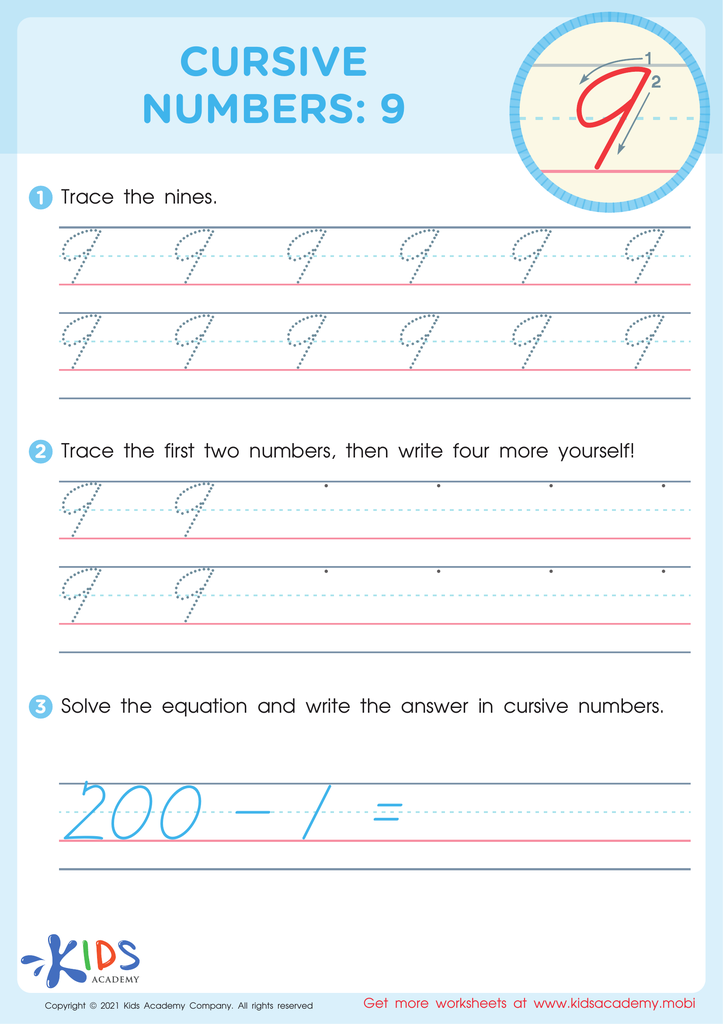
Cursive Numbers: 9 Worksheet

Cursive Numbers: 9 Worksheet

Identifying and writing numbers is key to math success. These worksheets help kids learn to trace the number 9 and build confidence. As they practice, they'll soon be able to write it on their own. Plus, they get to apply their learning and solve a simple equation at the bottom of the page. Writing the answer in cursive is a great way to help them remember!
Cursive Numbers: 9 Worksheet
Worksheet
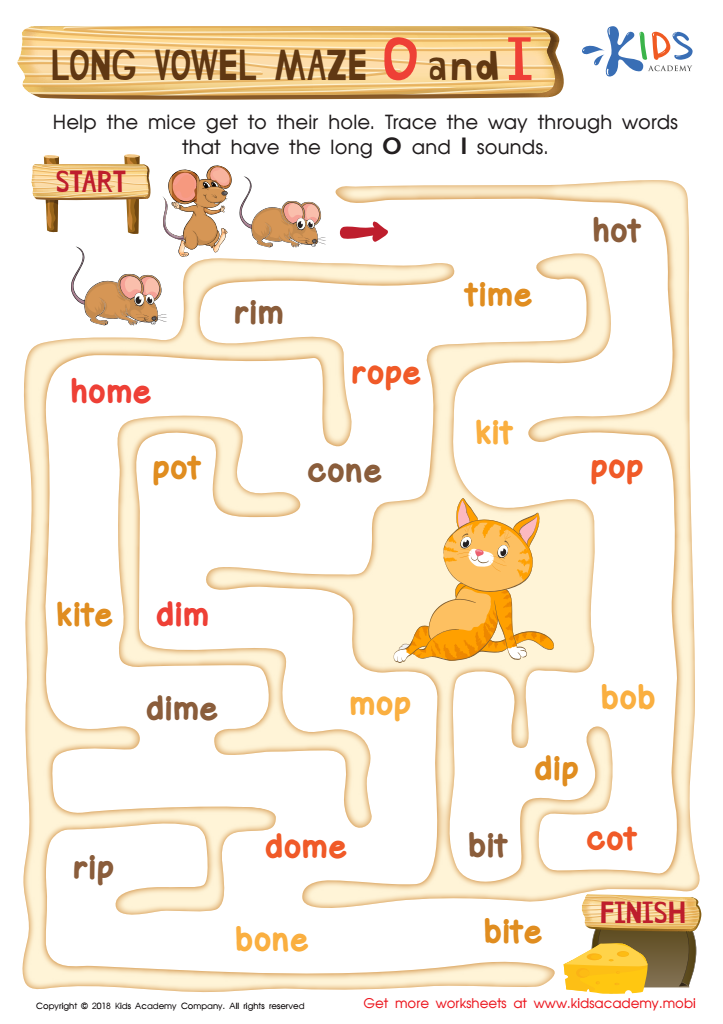
Long Vowel Maze /o/ and /i/ Worksheet

Long Vowel Maze /o/ and /i/ Worksheet

Help your new readers have fun and build their sight word vocabulary! Guide the mice to their prize cheese by having them trace the route on the worksheet, using words with the long o and long i sounds. But watch out for the kitty!
Long Vowel Maze /o/ and /i/ Worksheet
Worksheet
Cursive ABCs: Uppercase F

Cursive ABCs: Uppercase F

Help your kids trace the letters in these worksheets and watch their confidence grow as they learn to write cursive uppercase and lowercase letters. Ask them to identify the letters in words and give examples of words that start with an uppercase 'F', then have them write some letters on their own and assess their progress.
Cursive ABCs: Uppercase F
Worksheet
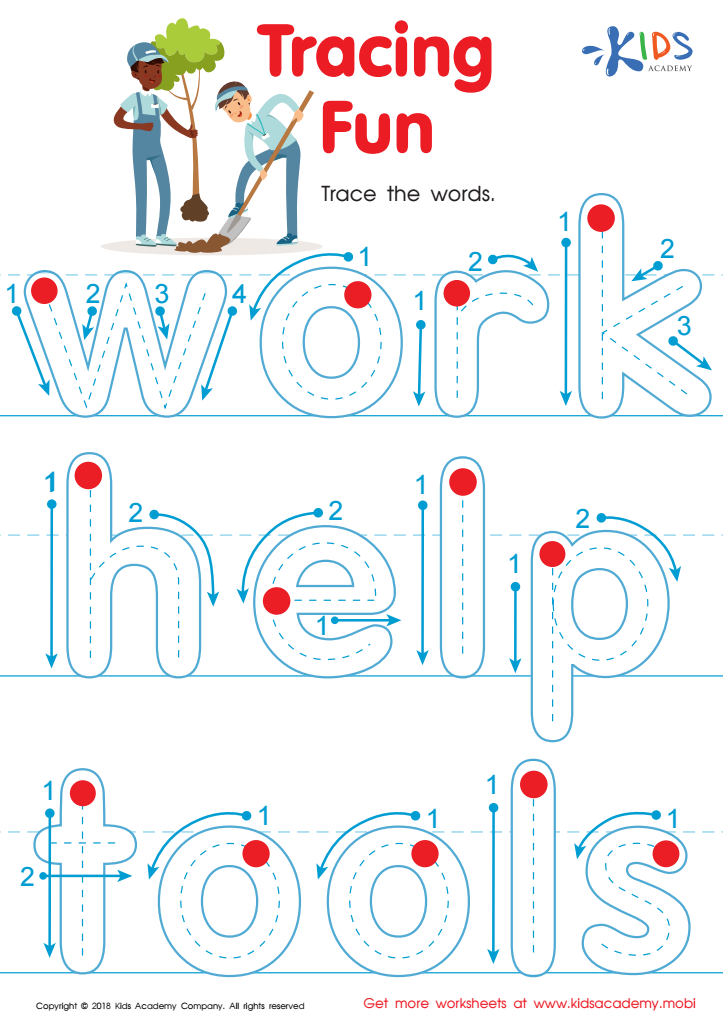
Tracing Fun Worksheet

Tracing Fun Worksheet

Believe it or not, good handwriting helps with reading! Starting at the top left and writing legibly builds reading skills. This free worksheet helps little learners practice basic sight words. Red dots show them where to start and the words provide reinforcement without them realising. An enjoyable way to boost their reading and writing.
Tracing Fun Worksheet
Worksheet
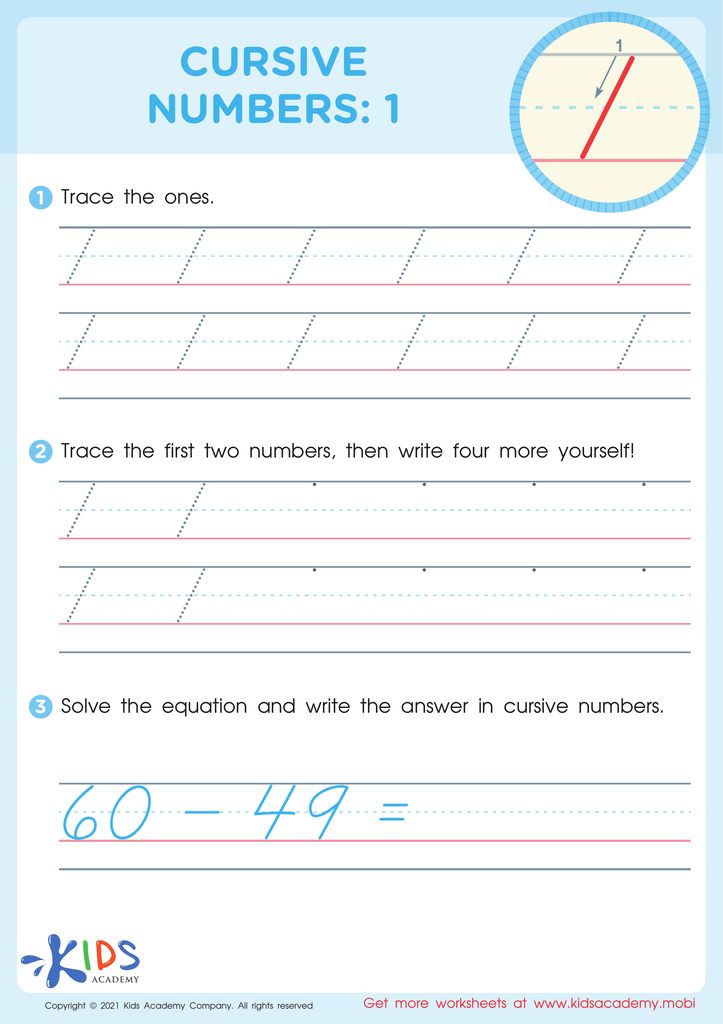
Cursive Numbers: 1 Worksheet

Cursive Numbers: 1 Worksheet

Math and handwriting are connected! Try these traceable worksheets to help your children learn cursive numbers. The tracing lines make it easy to follow, plus there's a simple subtraction exercise at the bottom for them to try. This is perfect for kids who struggle with handwriting and gives them a fun way to practice.
Cursive Numbers: 1 Worksheet
Worksheet
Cursive ABCs: Uppercase C

Cursive ABCs: Uppercase C

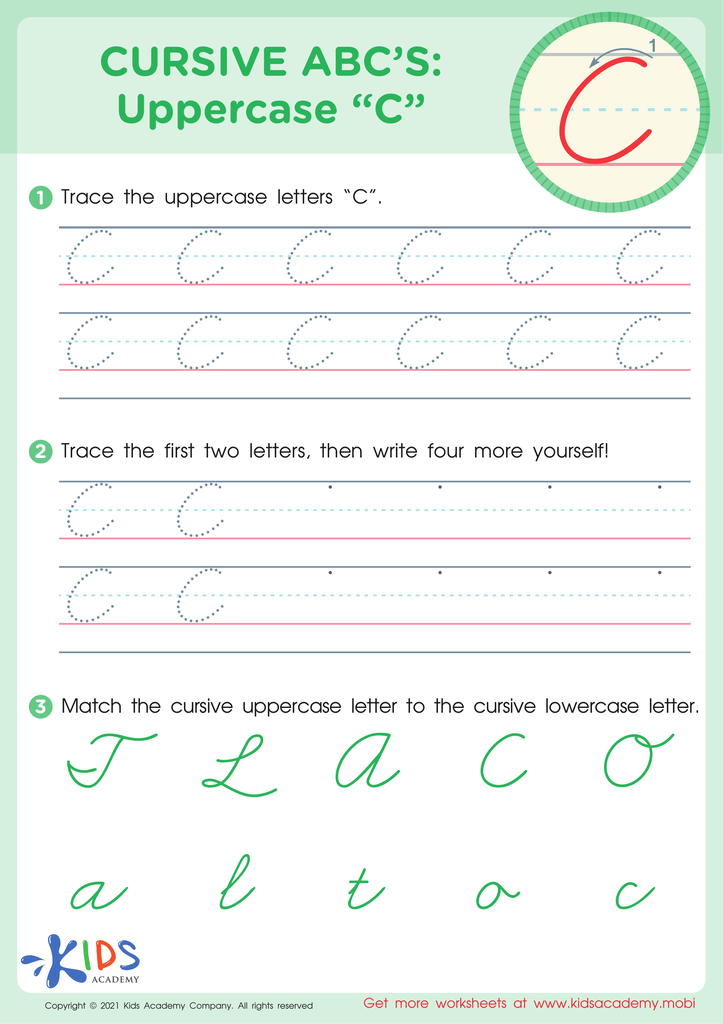
These worksheets are perfect for those wanting to improve their handwriting or learn letter recognition. The tracing exercises help younger students sharpen their writing skills and teach how to write the 'C' in cursive. First, they trace the given examples and then practice writing it solo. A letter recognition test is at the bottom of the page to check progress.
Cursive ABCs: Uppercase C
Worksheet
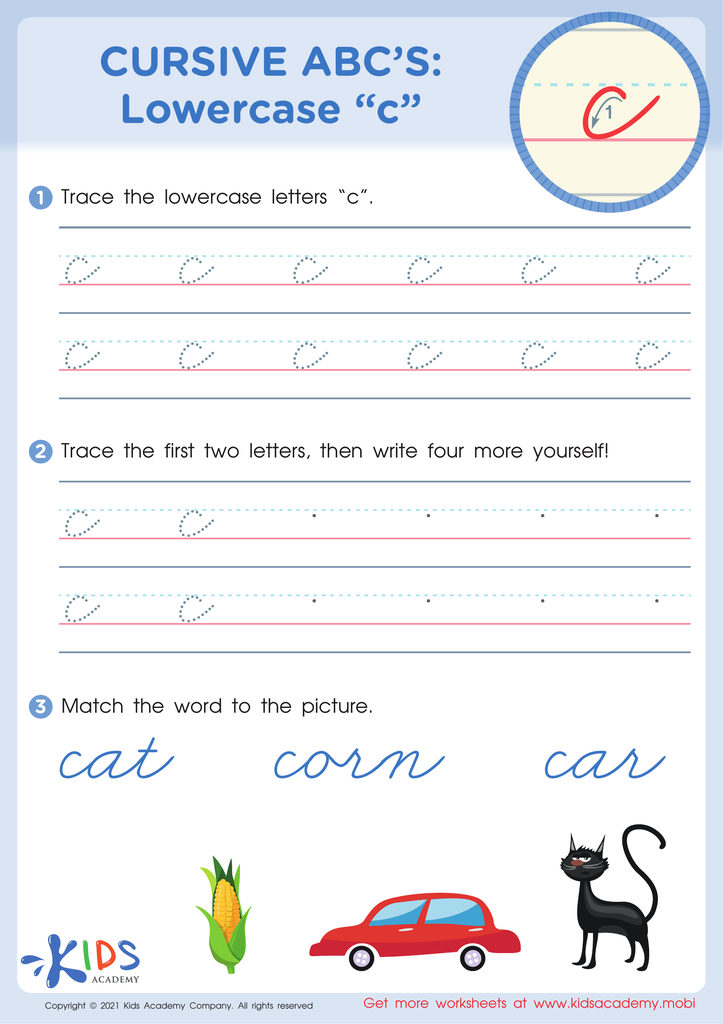
Cursive ABCs: Lowercase c

Cursive ABCs: Lowercase c

Once your child has successfully printed their letters, help them learn to recognize and write the alphabet in cursive. Struggling? This worksheet is perfect to assist them. Writing is an essential skill for kids to learn, so do all you can to help them. Use these tracing worksheets and guide them as they write the lowercase letter 'c' in cursive.
Cursive ABCs: Lowercase c
Worksheet
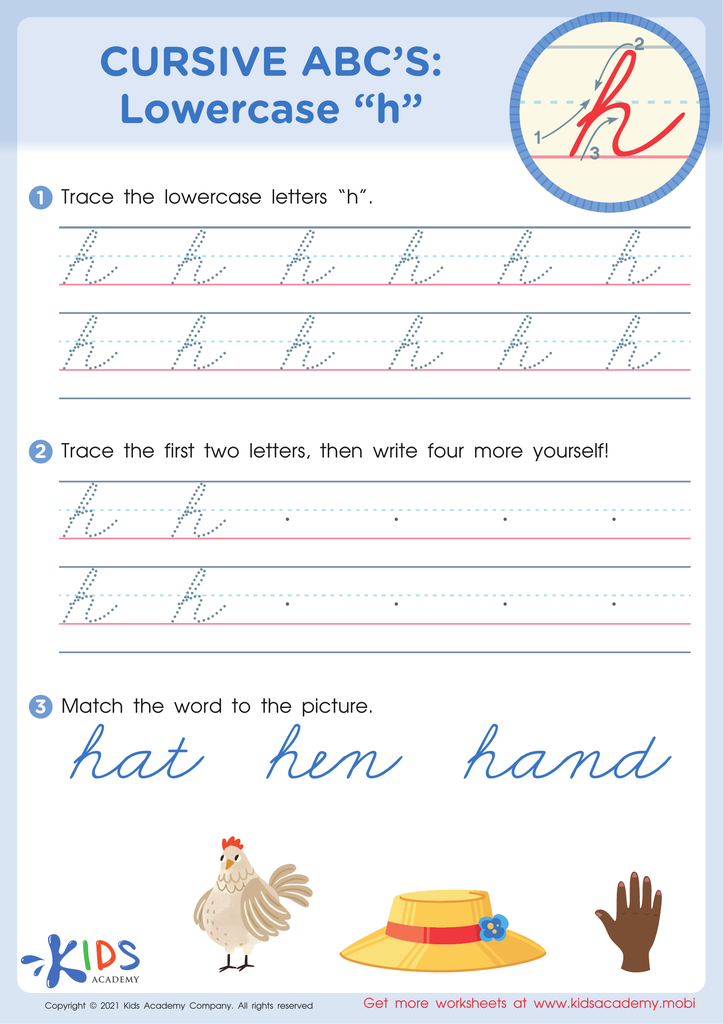
Cursive ABCs: Lowercase h

Cursive ABCs: Lowercase h

Your children will need more than just reciting the alphabet; they need to learn how to identify and write it. Cursive writing helps with neatness, and these tracing worksheets are great learning aids and offer exercises to practice writing lowercase 'h'. With these, your children get better writing skills and learn new words.
Cursive ABCs: Lowercase h
Worksheet
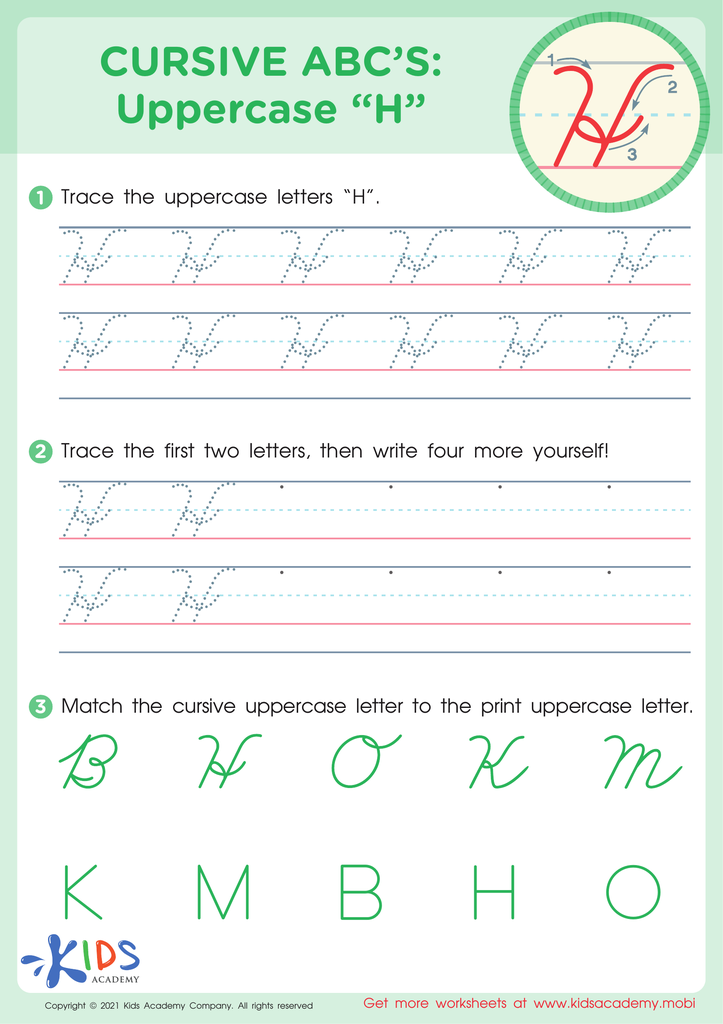
Cursive ABCs: Uppercase H

Cursive ABCs: Uppercase H

Have your child recite the alphabet and give you words beginning with H. This tracing sheet is perfect to help them improve their handwriting. Guide their hands as they trace the uppercase H, then have them practise writing it alone. At the bottom is an exercise to check their letter recognition.
Cursive ABCs: Uppercase H
Worksheet


Hand-eye coordination is crucial for children aged 5-9 as it underpins many developmental milestones necessary for academic and personal success. This skill involves synchronizing visual input with hand movements to perform tasks effectively. In early school years, it directly impacts writing abilities—a fundamental skill that influences virtually all areas of learning.

For instance, good hand-eye coordination enhances a child's ability to form letters correctly, leading to clearer handwriting. This clarity improves their communication skills and boosts self-confidence as their written work better matches their ideas. Moreover, fine motor tasks like cutting with scissors, using a ruler, or navigating digital devices are dependent on this coordination, making learning more interactive and enjoyable.

Beyond academics, robust hand-eye coordination affects physical activities, from sports to playing musical instruments, fostering a well-rounded development. Children proficient in these skills often find it easier to engage socially, participating in games that require teamwork and coordination.

Parents and teachers play a pivotal role by providing targeted activities, such as drawing, painting, or simple ball games, to enhance these capabilities. Their support is key to ensuring children develop at an optimal pace, equipping them with the tools needed for future learning and daily life tasks.