
Sound-letter association Alphabet Worksheets for Ages 6-7
3 filtered results
Difficulty Level
Grade
Age
-
From - To
Subject
Activity
Standards
Enhance your child's reading skills with our Sound-Letter Association Alphabet Worksheets for Ages 6-7. These engaging printables help young learners effectively connect sounds to corresponding letters, fostering foundational literacy. Perfect for first and second graders, each activity promotes phonemic awareness through fun exercises like identifying beginning sounds, matching letters to sounds, and tracing letters. Ideal for classroom use or at-home practice, these well-structured worksheets support the development of essential early reading skills. Boost your child’s confidence and reading ability with our expertly designed resources tailored to make learning a delightful experience. Explore now to kickstart their literacy journey!
Favorites
With answer key
Interactive
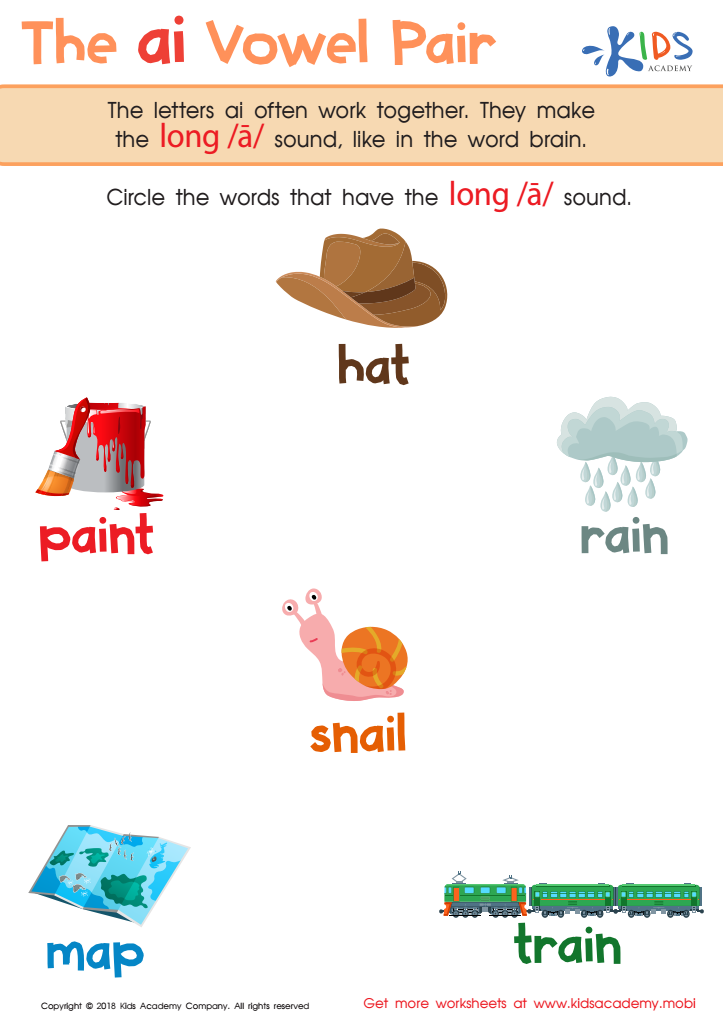
The AI Vowel Pair Worksheet
Vowel pairs make different sounds than individual letters. The 'ai' combination often forms the long /a/ sound, like in 'brain' and 'strain'. Get your kids to look at the pictures in the worksheet, identify each and say the name aloud. Help them circle the words with the long /a/ sound.
The AI Vowel Pair Worksheet
Worksheet
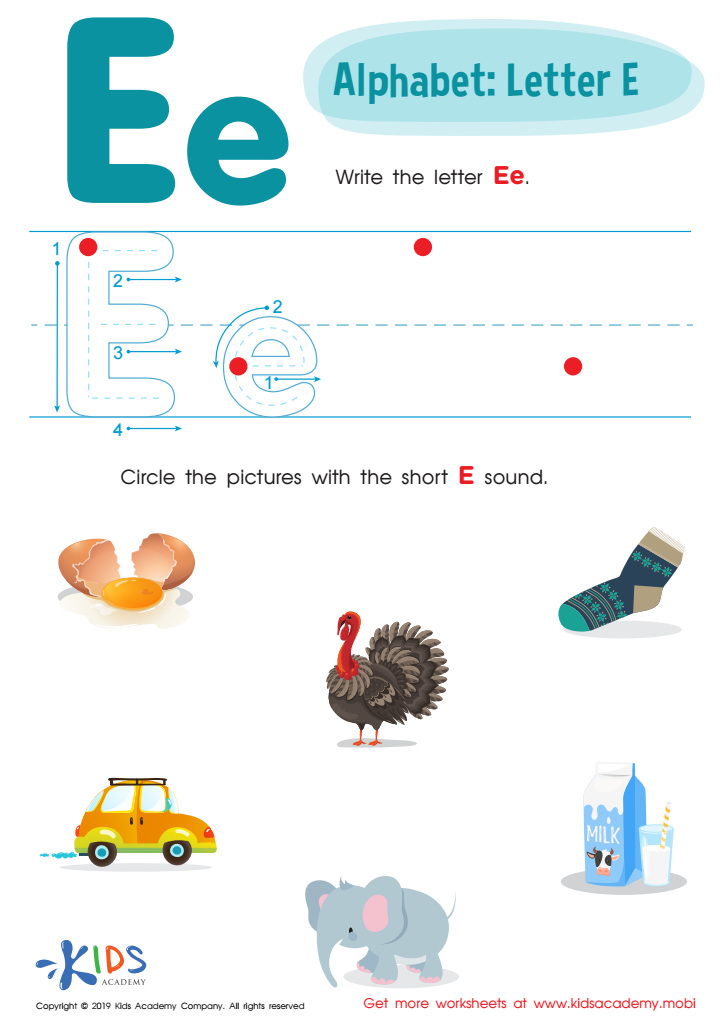
Letter E Tracing Worksheet
Students trace and write uppercase and lowercase letter E. They sound out "E" words, choosing those with short "E" sounds. Preschoolers identify the difference between the 'E' sounds in words like "egg" and "turkey." A tracing sheet helps them to understand.
Letter E Tracing Worksheet
Worksheet
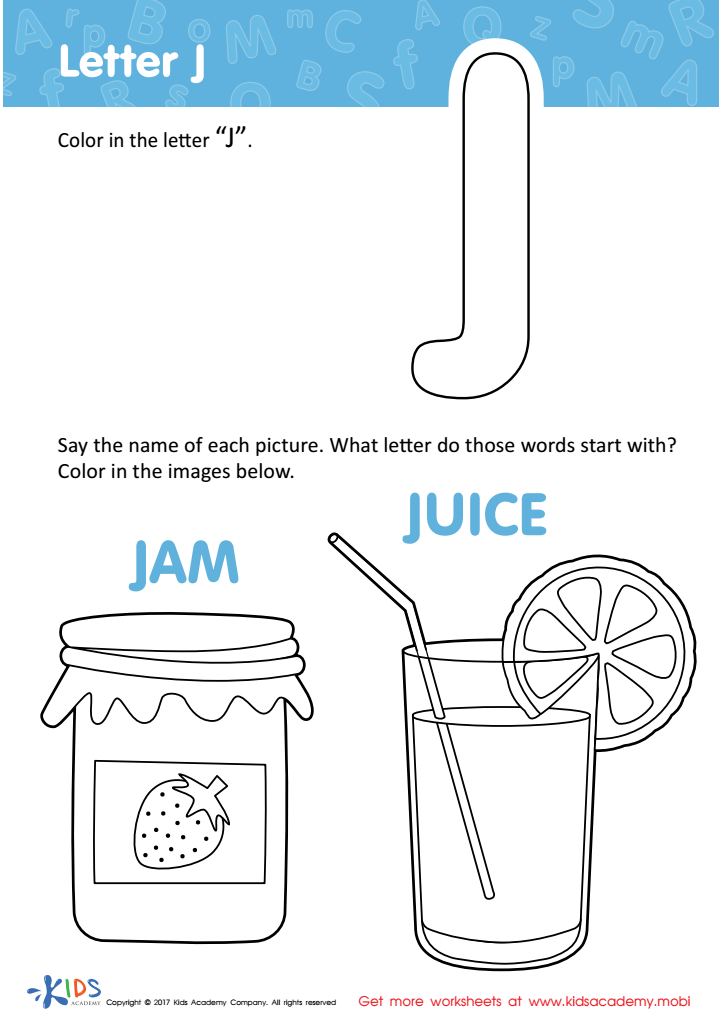
Letter J Coloring Sheet
Practice the letter 'J' with your little one with this fun coloring page! Pictures of jar, juice, jam and jelly make it an enjoyable experience for kids. Learning the letter and coloring is fun for even the youngest learners.
Download (PDF)
 Assign to My Students
Assign to My Students
Letter J Coloring Sheet
Worksheet
Join Kids Academy for Free
Who is primarily going to use this learning content?







Sound-letter associations are foundational for early reading and writing skills, making them vital for children ages 6-7, who are in crucial stages of learning. Understanding how sounds map onto letters helps children decode words, develop phonemic awareness, and build a robust vocabulary, which are all essential components of literacy.
Parents and teachers who emphasize these associations create a learning environment where literacy can flourish. By mastering sound-letter correlations, children become more proficient in sounding out unfamiliar words, which enhances their confidence and engagement in reading activities. Consistently successful word recognition can make reading a pleasurable rather than frustrating experience, fostering a lifelong love for books and learning.
Furthermore, establishing solid sound-letter associations early on can mitigate future reading difficulties. Children who struggle to make these connections may fall behind, experiencing negative academic and self-esteem repercussions that can persist throughout their school years. Early intervention can therefore set a positive trajectory for a child's entire educational journey.
Additionally, the integration of sound-letter association activities, such as phonics games and reading aloud, can foster stronger parent-child and teacher-student bonds. Engaging in these interactive learning experiences together adds a supportive and social dimension to the journey of becoming literate, making the educational process a more integral and happy part of the child's daily life.







