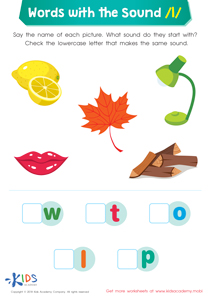
Uppercase Letters Worksheets for Ages 6-7
22 filtered results
-
From - To
Cultivate your child's writing and reading skills with our Uppercase Letters Worksheets designed for ages 6-7. Featuring engaging and educational activities, these worksheets are perfect for young learners. Each sheet focuses on a different uppercase letter, helping children practice proper letter formation, recognition, and reinforcement. From tracing to independent writing, students build confidence and proficiency in their handwriting skills. Elevate their learning experience with fun exercises that make mastering uppercase letters enjoyable and effective. Ideal for both classroom use and home practice, these worksheets lay a strong foundation for future literacy success. Download now to support your child's educational journey!
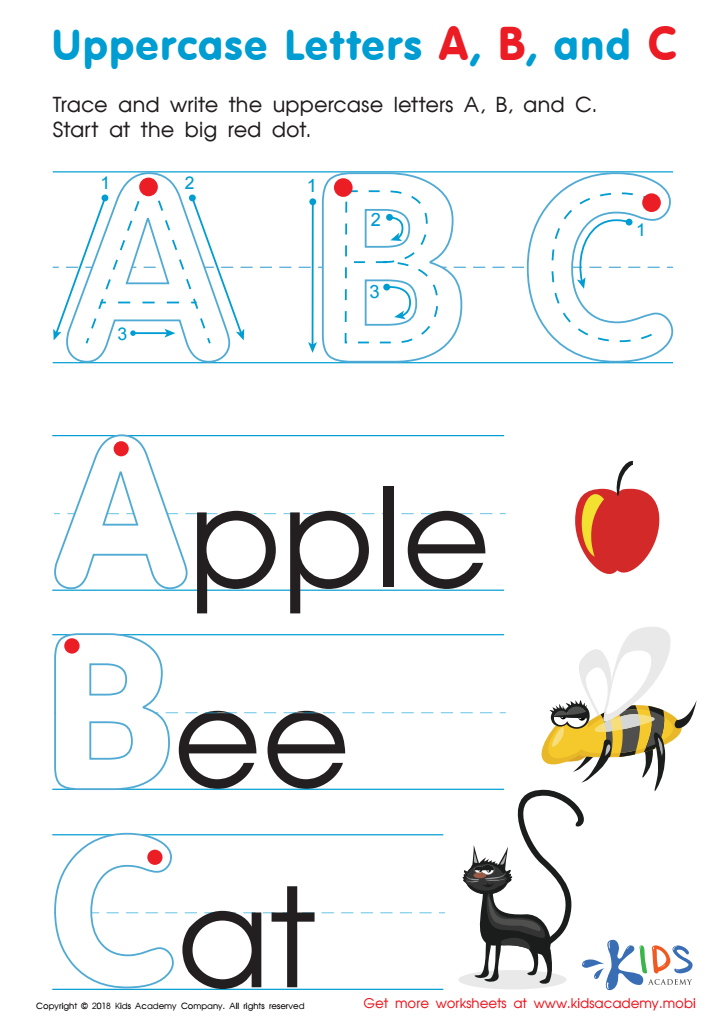
Uppercase Letters A, B, and C Worksheet
 Assign to My Students
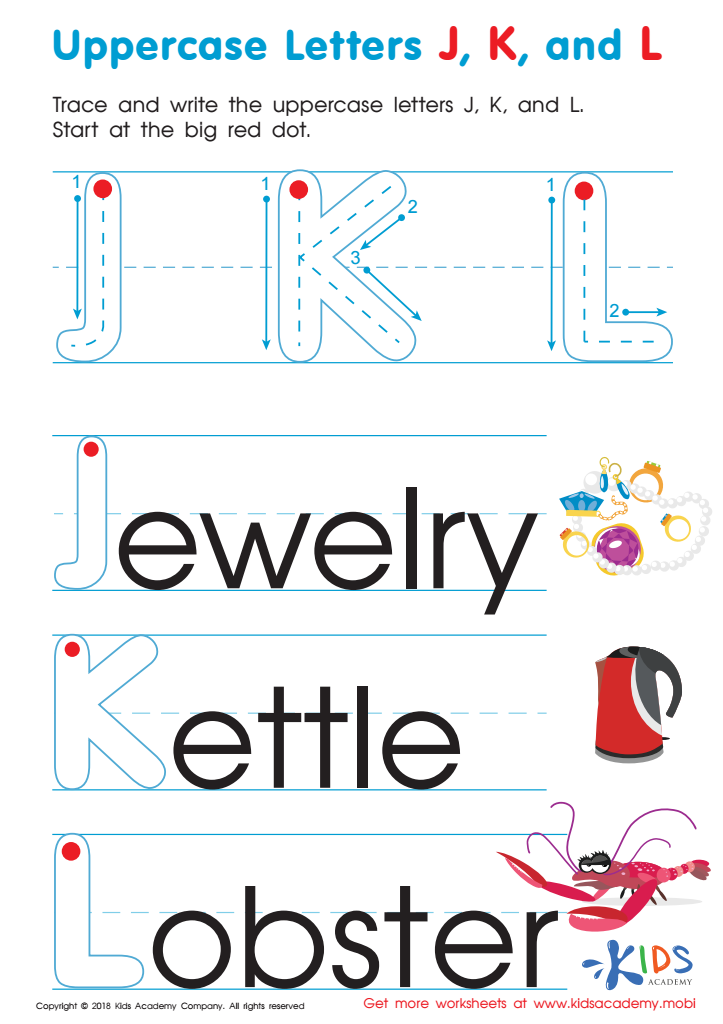
Uppercase Letters J, K, and L Worksheet
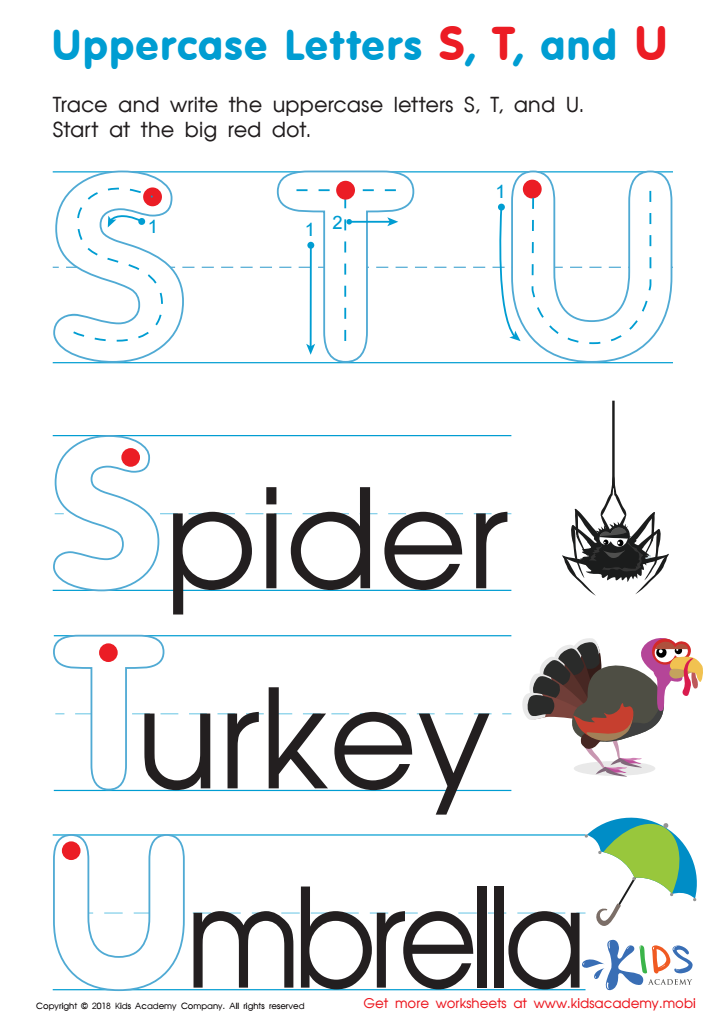
Uppercase Letters S, T, and U Worksheet
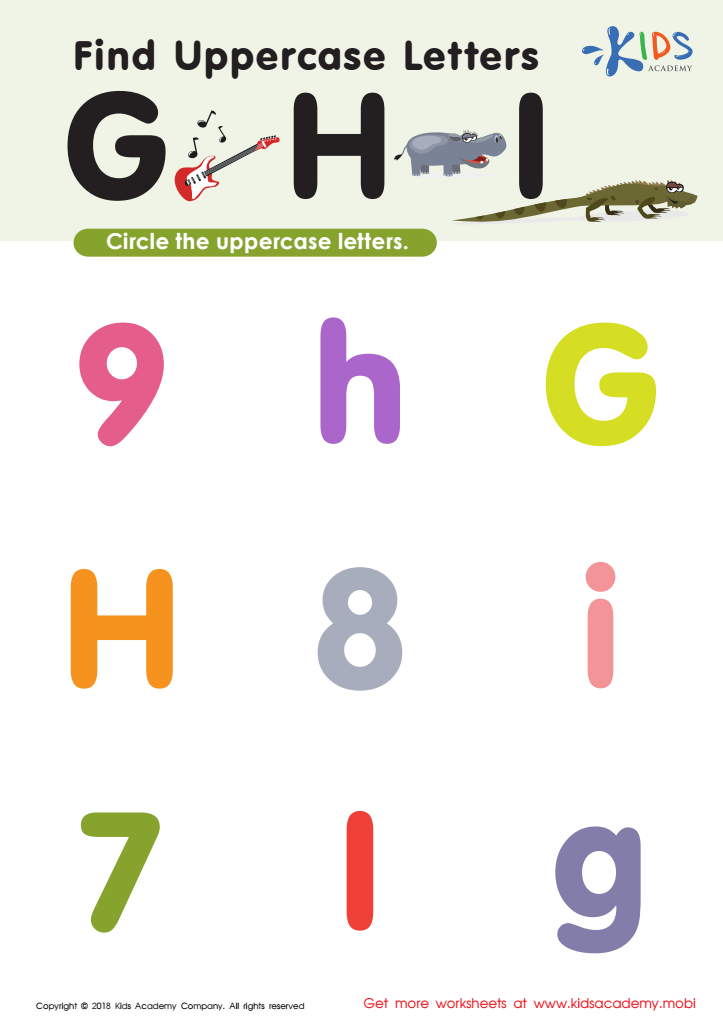
Find Uppercase Letters G, H, and I Worksheet
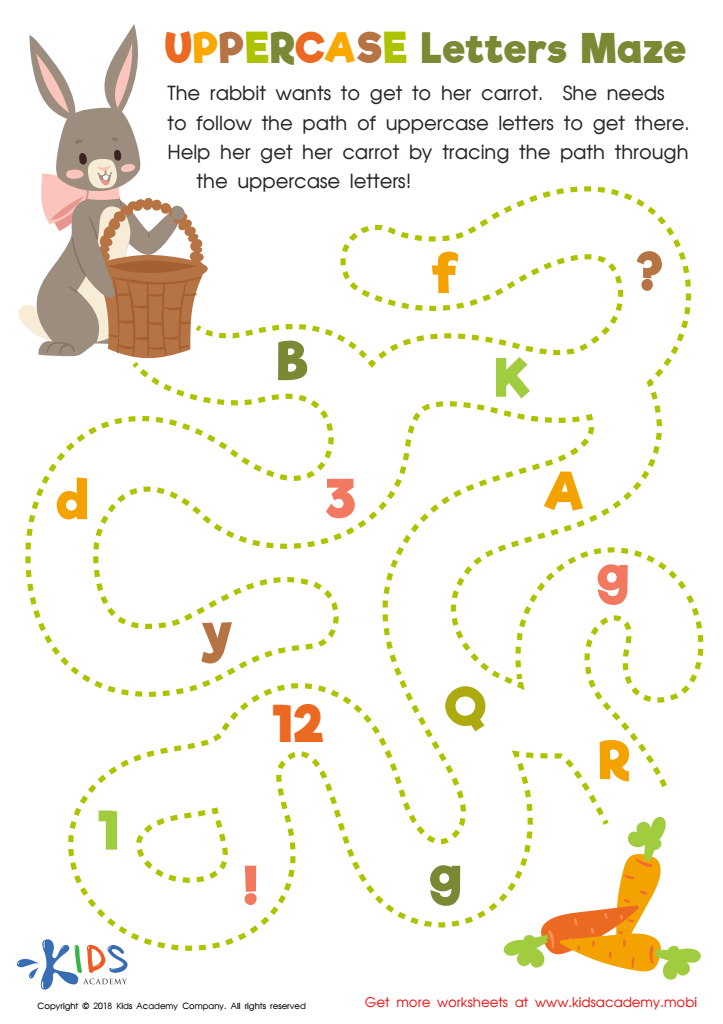
Uppercase Letters Maze Worksheet
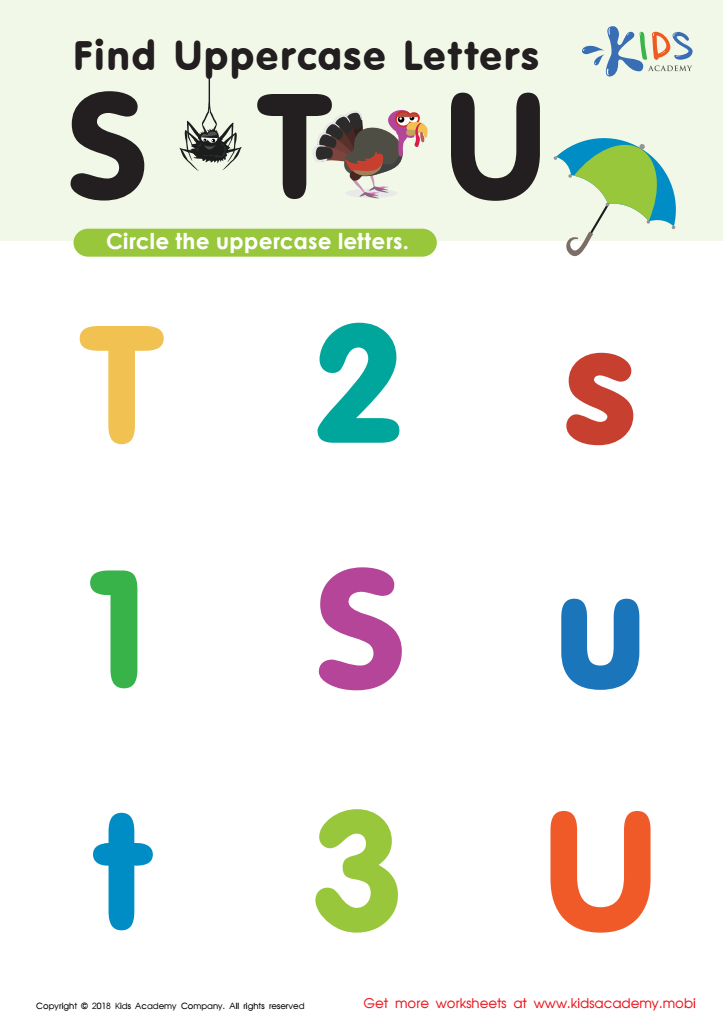
Find Uppercase Letters Worksheet
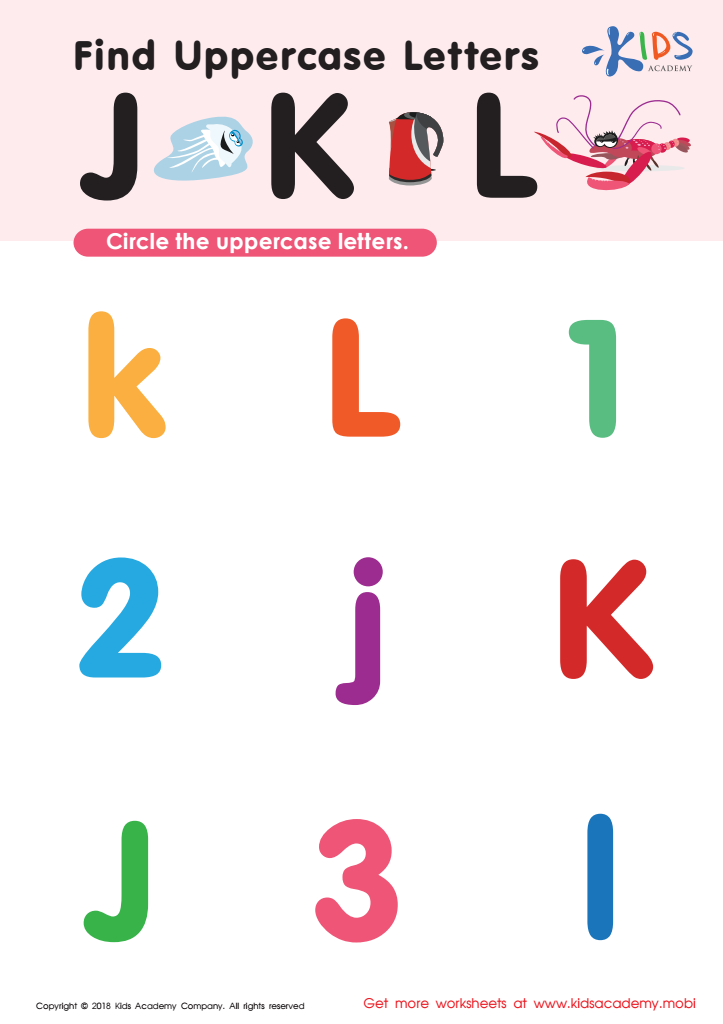
Find Uppercase Letters J, K, and L Worksheet
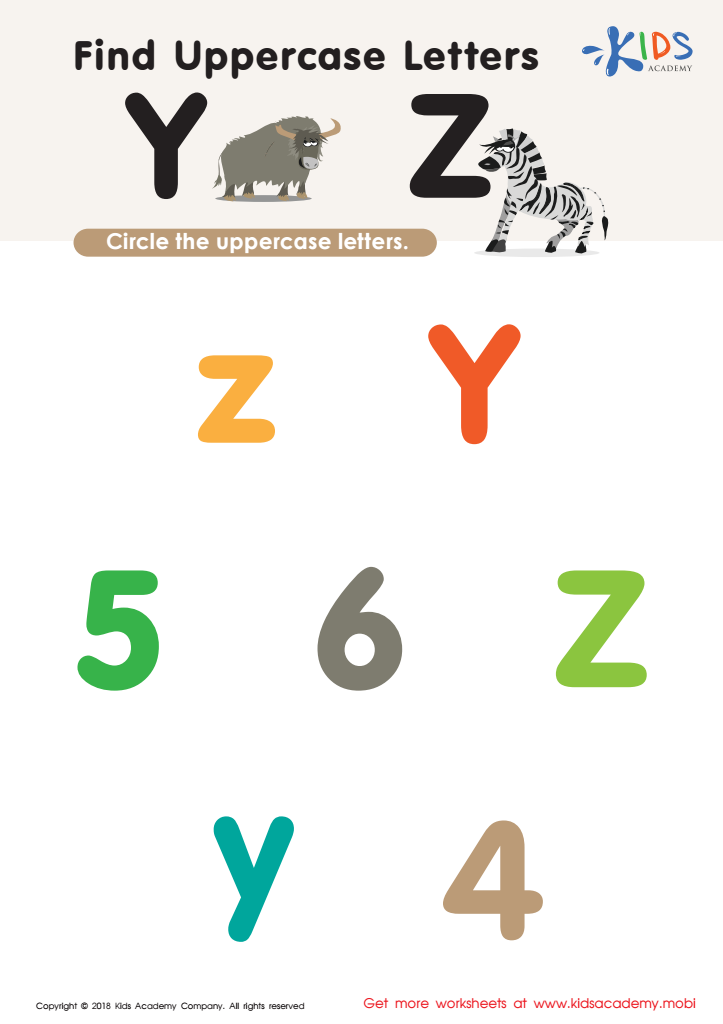
Find Uppercase Letters Y Z Worksheet
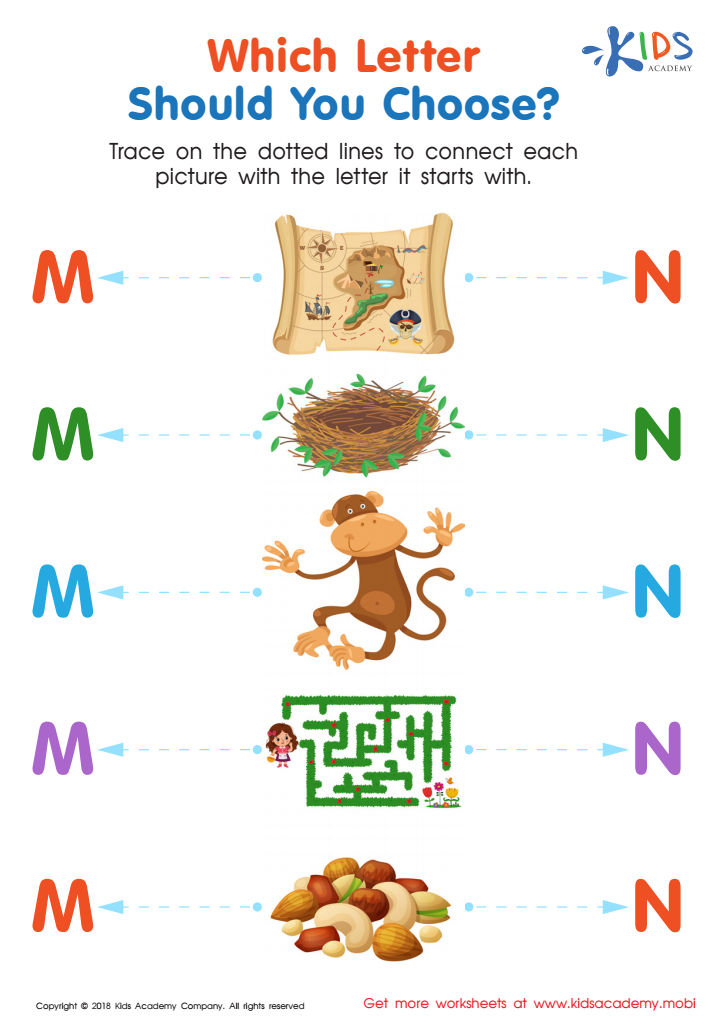
Which Letter Should you Choose? Worksheet
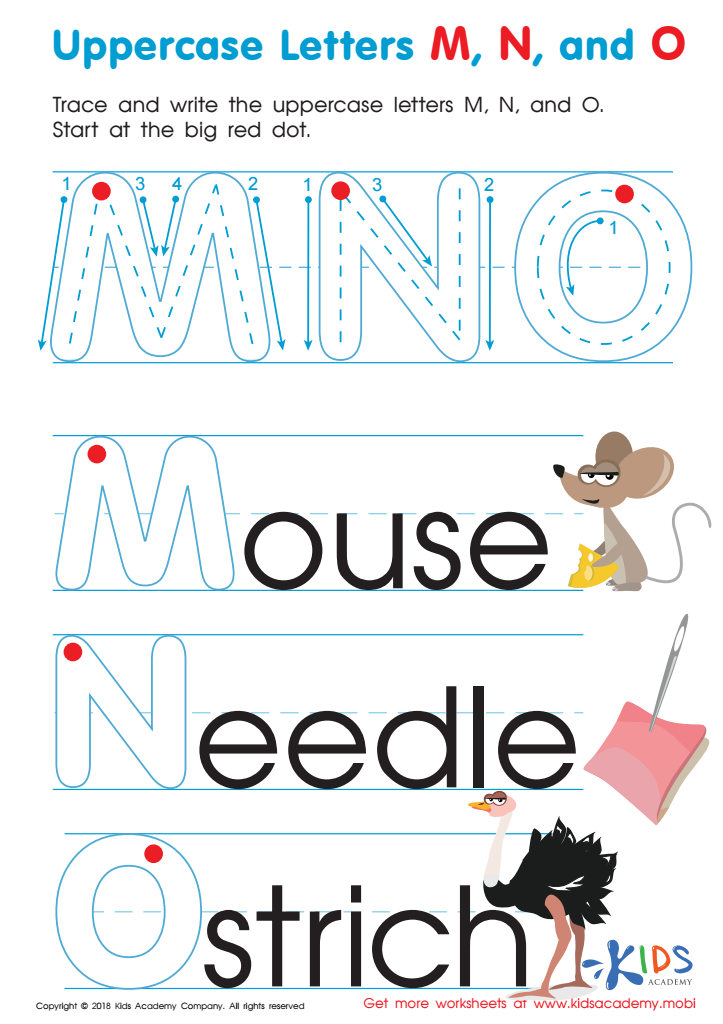
Uppercase Letters M, N, and O Worksheet
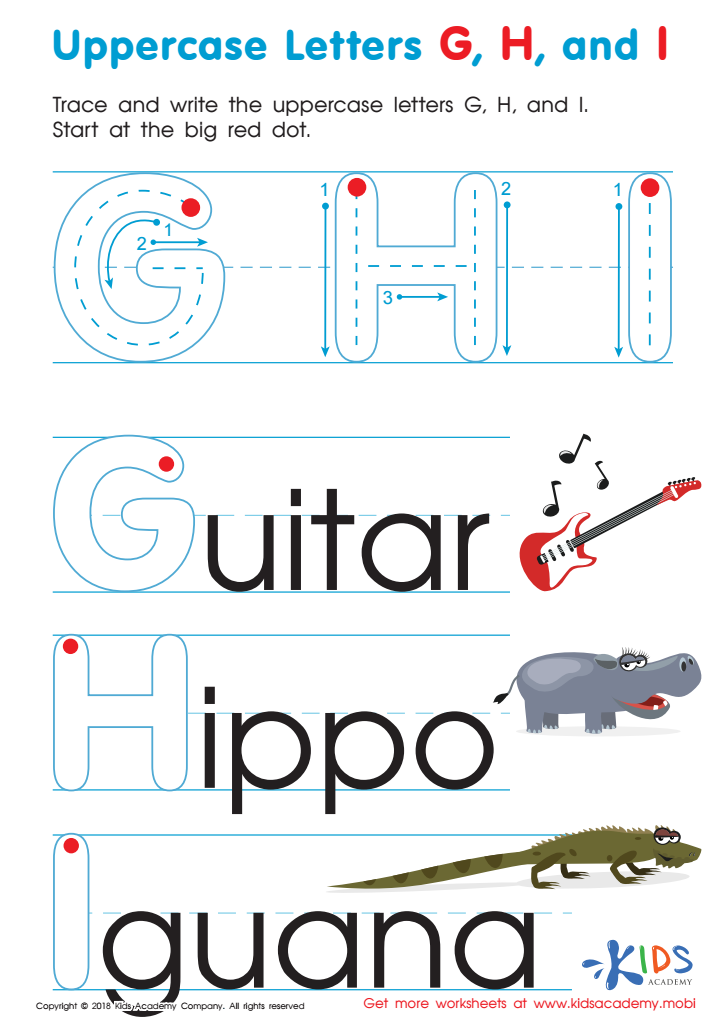
Uppercase Letters G, H, and I Worksheet
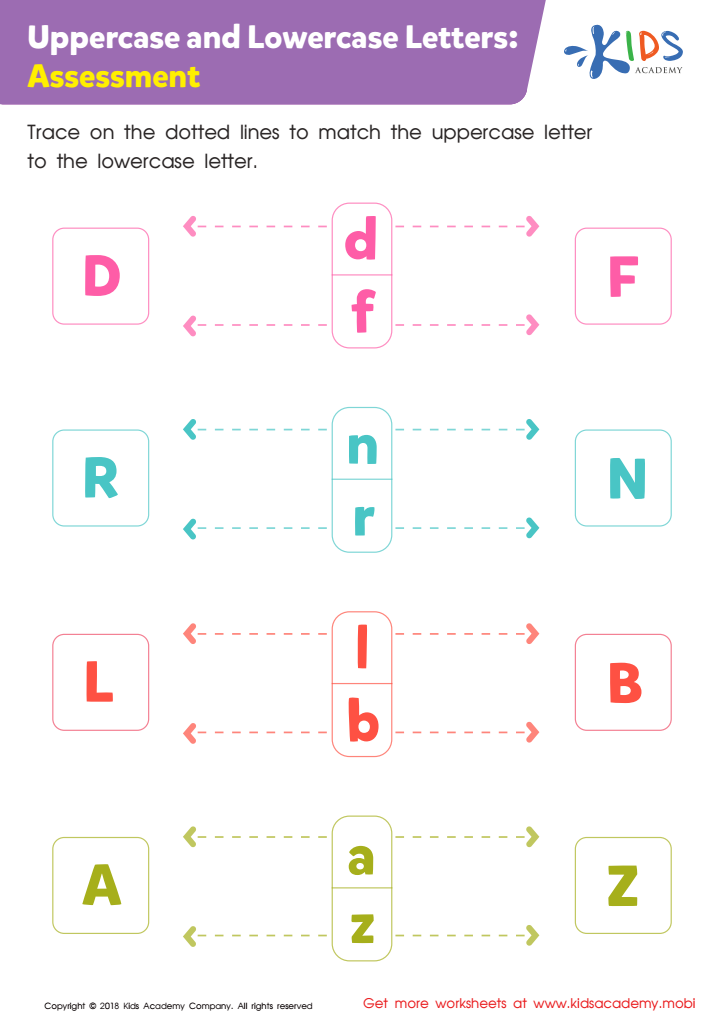
Uppercase and Lowercase Letters: Assessment Worksheet
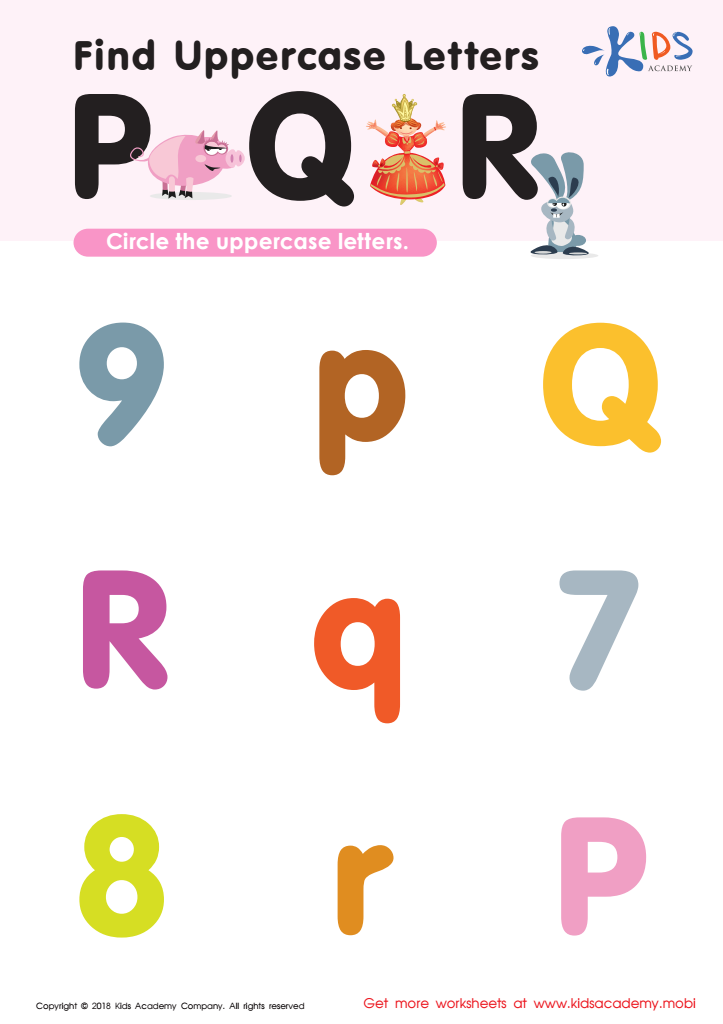
Find Uppercase Letters P, Q, and R Worksheet
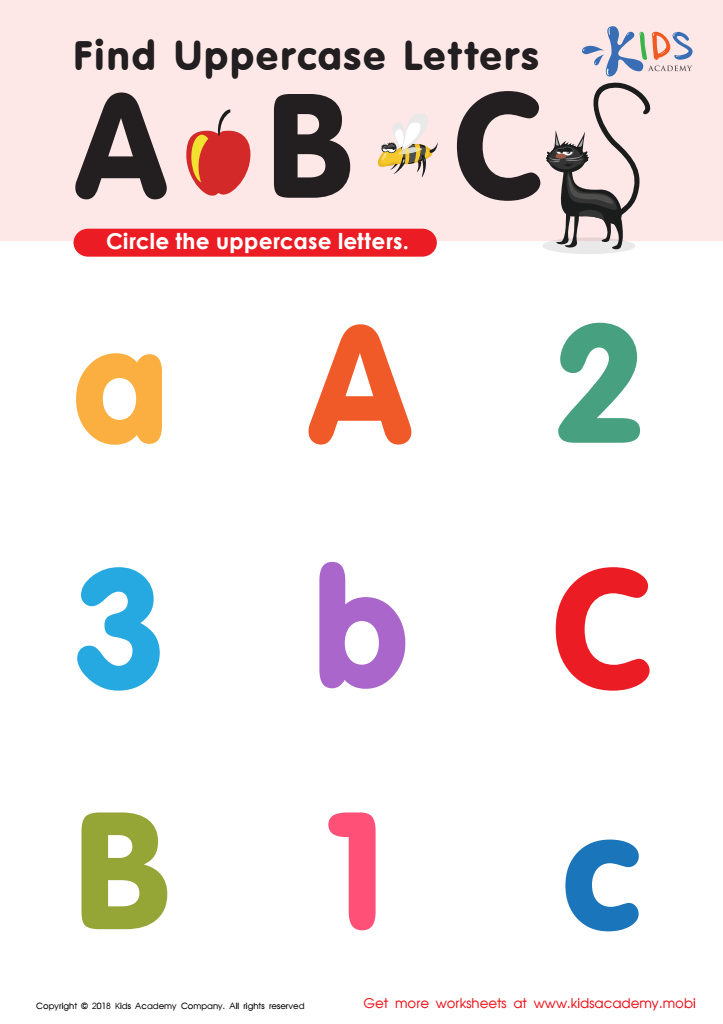
Find Uppercase Letters A, B, and C Worksheet
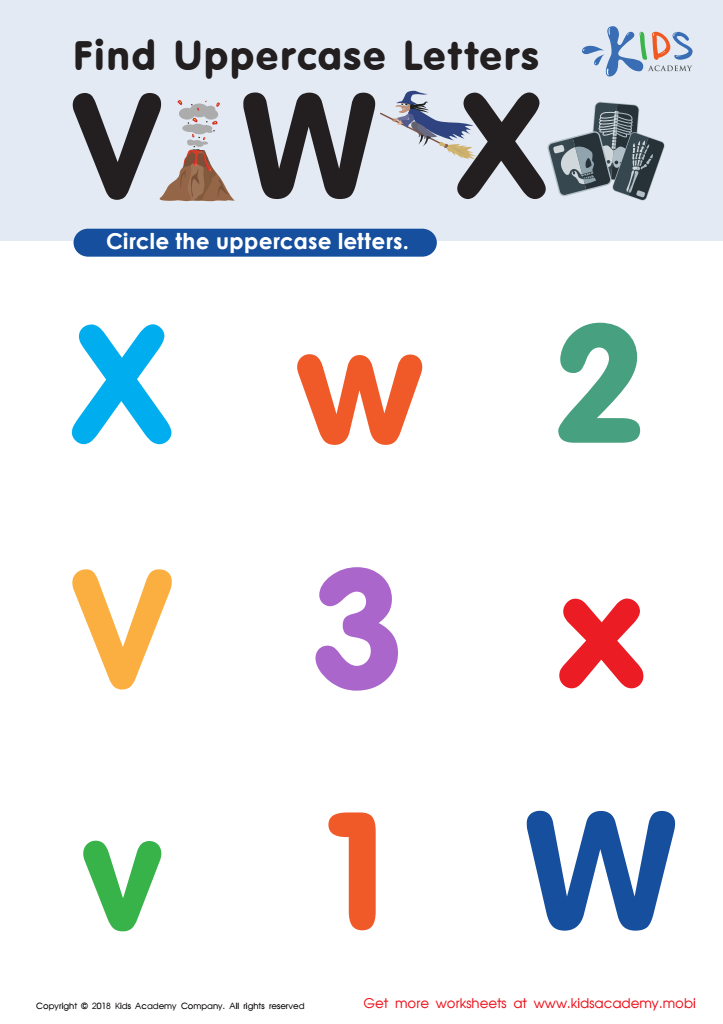
Find Uppercase Letters V, W, X Worksheet
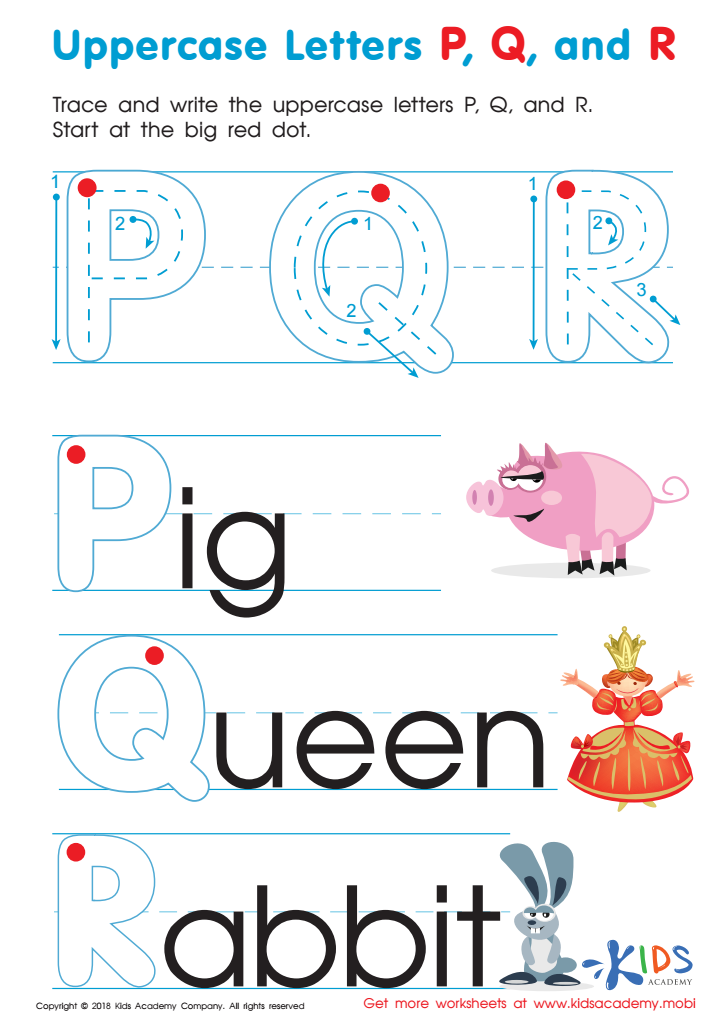
Uppercase Letters P, Q, and R Worksheet
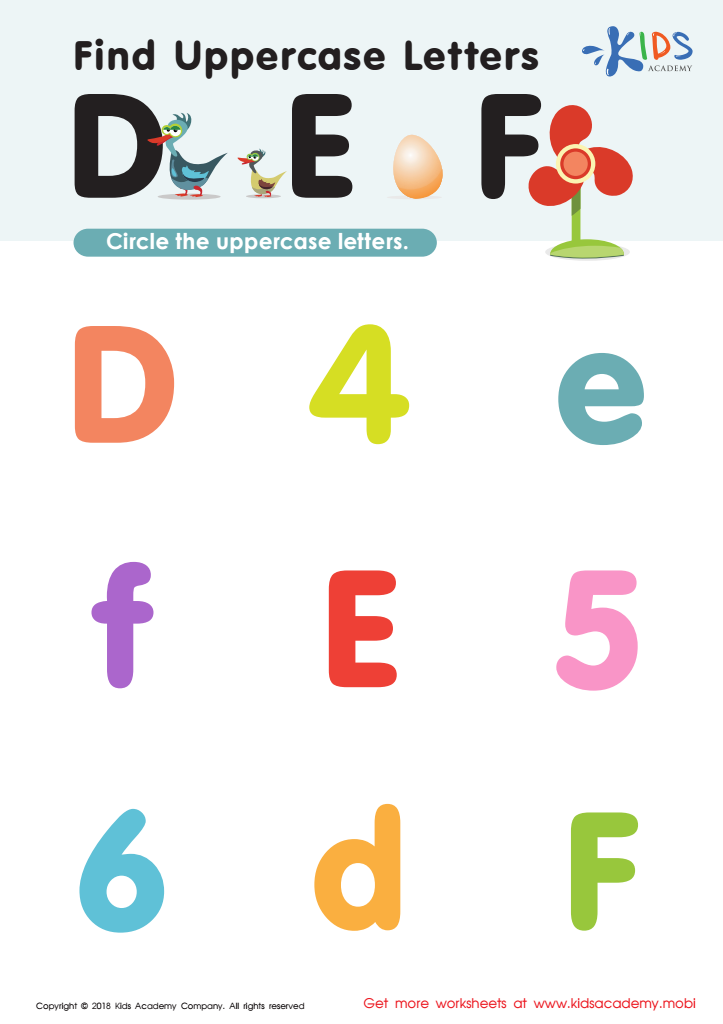
Find Uppercase Letters D, E, and F Worksheet
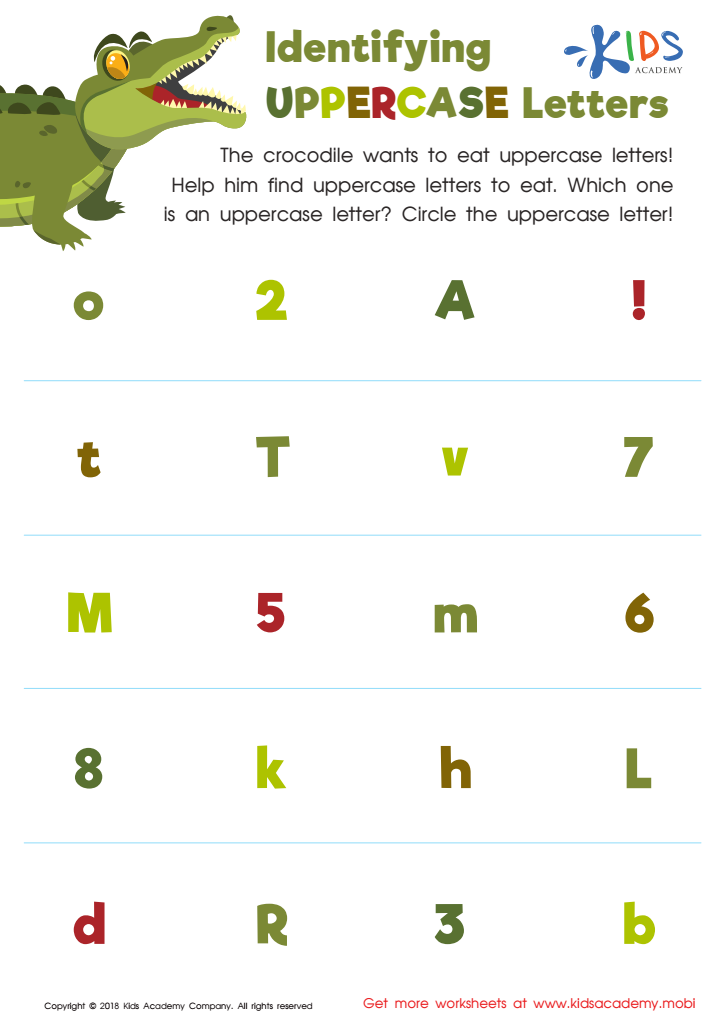
Identifying Uppercase Letters Worksheet
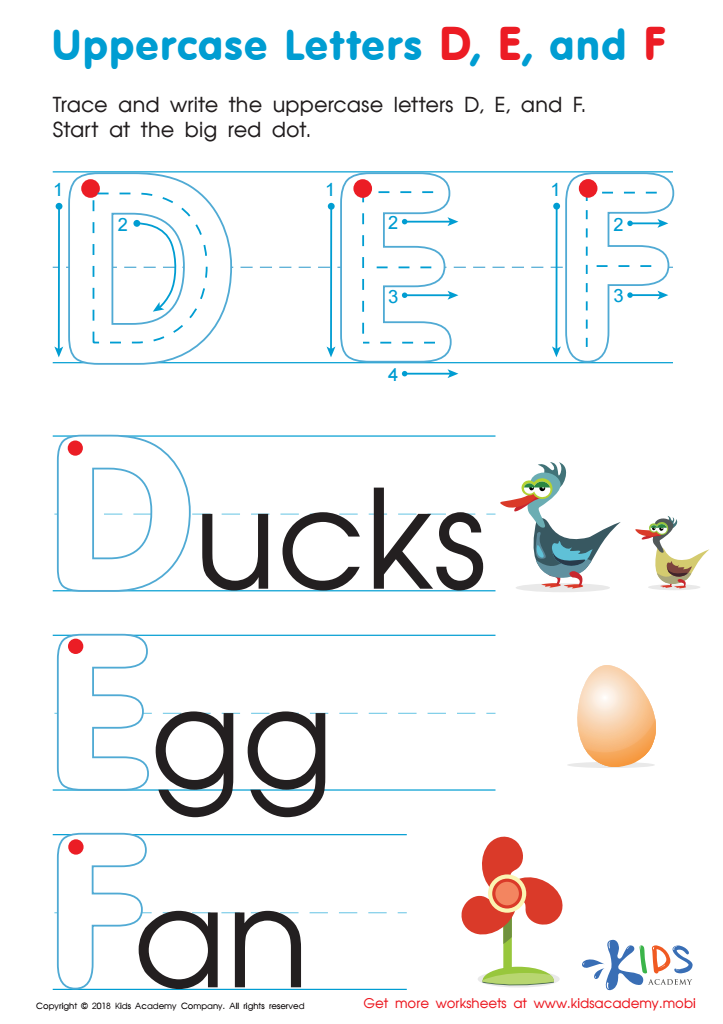
Uppercase Letters D, E, and F Worksheet
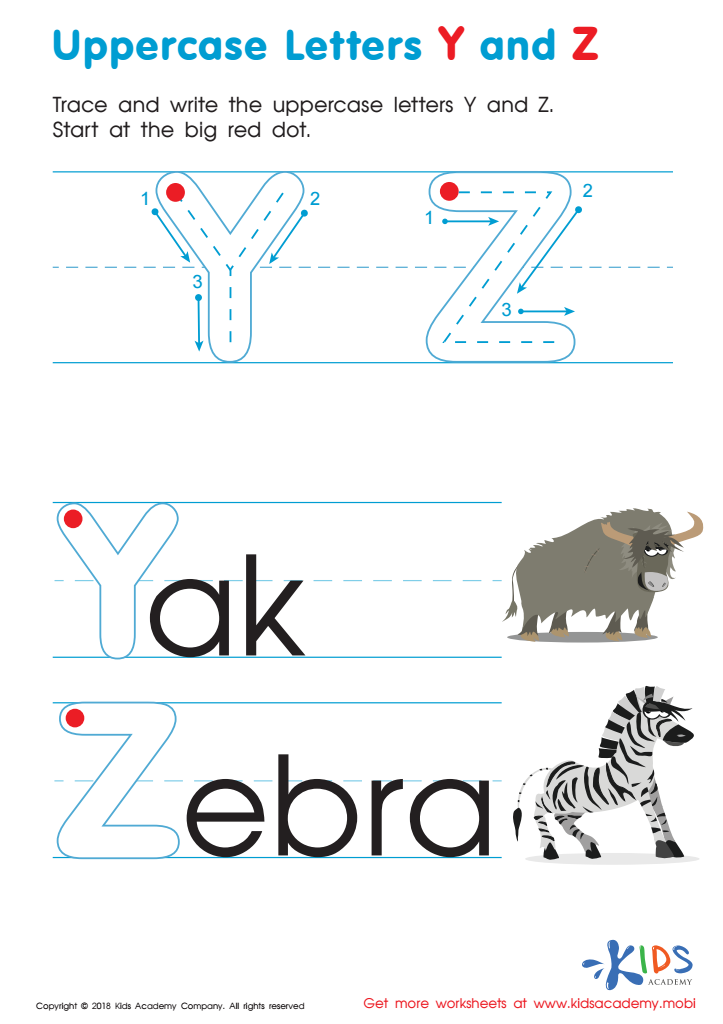
Uppercase Letters Y Z Worksheet
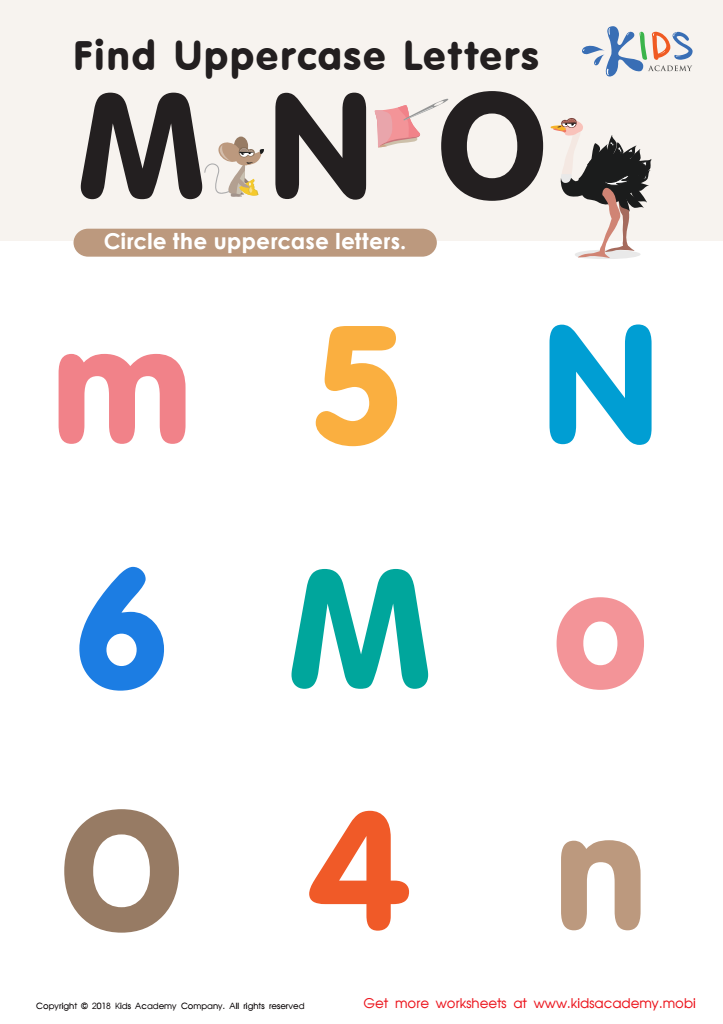
Find Uppercase Letters M, N, and O Worksheet
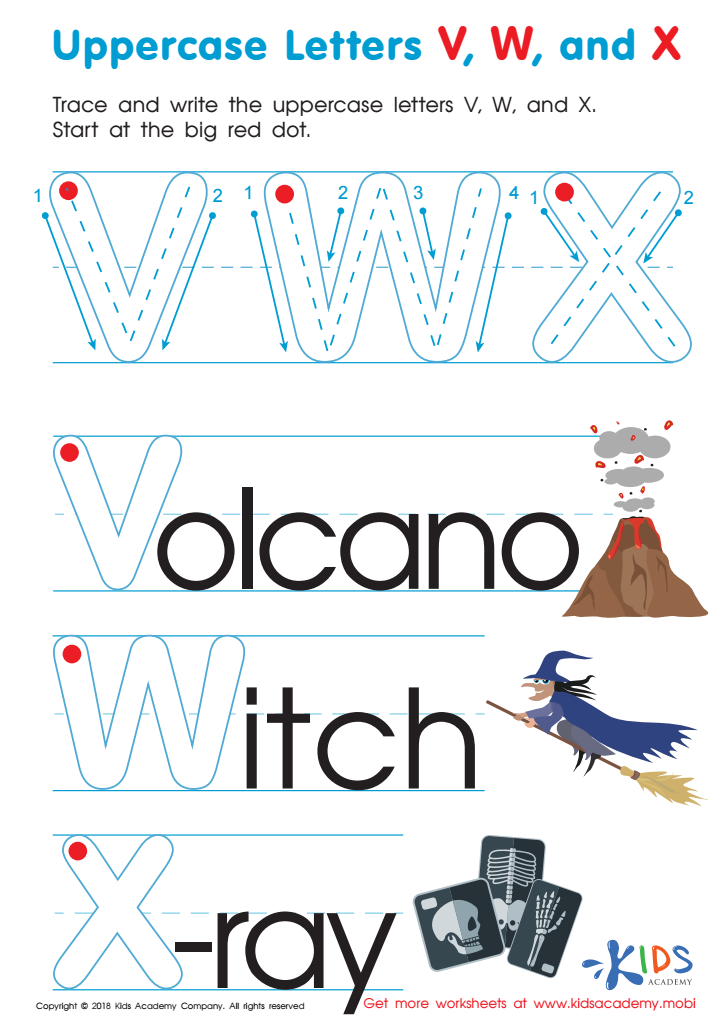
Uppercase Letters V, W, and X Worksheet








Uppercase letter recognition is essential for young learners ages 6-7 because it forms the foundation of their literacy skills. At this stage, children are developing their reading and writing abilities, and understanding uppercase letters significantly contributes to their success. Uppercase letters are often the first form of the alphabet children encounter, as they are visually distinct and easier for them to distinguish. Recognizing and using uppercase letters appropriately can boost their confidence and readiness to engage with text.
Additionally, uppercase letters are commonly used in important text such as the beginning of sentences, names, and titles, which are vital for children to recognize for reading comprehension. Mastering uppercase letters helps children follow written directions, read signs and labels, and understand the structure of stories and sentences. This skill is crucial for their ability to read smoothly and retain information.
From a handwriting perspective, uppercase letters often have simpler, more uniform shapes than lowercase letters, enabling children to practice their fine motor skills and build the muscle memory required for writing.
Overall, prioritizing uppercase letter recognition and usage helps create a holistic foundation for reading and writing, fostering academic growth, self-confidence, and a positive attitude towards learning—a combination critical to a child’s ongoing educational journey.