Critical thinking enhancement Chess Worksheets for Ages 6-7
4 filtered results
Difficulty Level
Grade
Age
-
From - To
Subject
Activity
Standards
Boost your child's critical thinking skills with our engaging Chess Worksheets designed for ages 6-7. These worksheets combine fun and education, offering young learners an opportunity to think strategically while enjoying the timeless game of chess. Each worksheet features age-appropriate puzzles and exercises that encourage problem-solving, decision-making, and analytical thinking. Our resources aim to foster a love for chess while developing cognitive skills essential for academic success. Perfect for home or classroom use, these worksheets will make learning an adventure, helping children gain confidence as they unlock the mysteries of chess! Start enhancing critical thinking today with our interactive materials.
Favorites
With answer key
Interactive
King and Queen Mate Strategy: Part 2 Worksheet
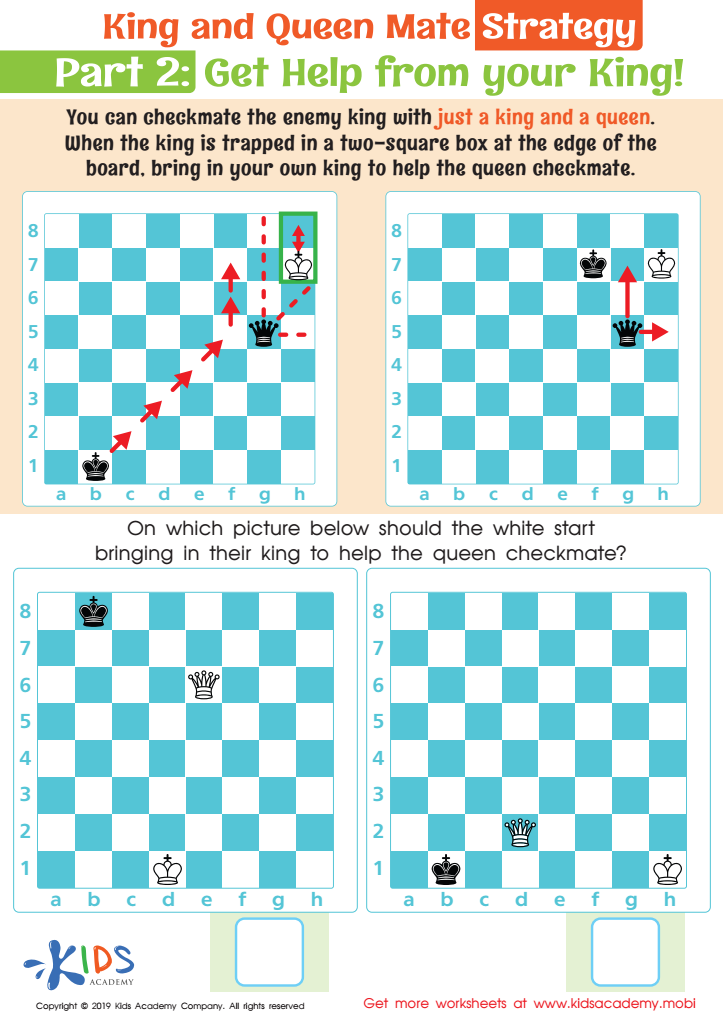
This worksheet helps your child learn to checkmate the opposing king with their king and queen. Descriptive sample boards show the strategy, and more boards help determine which one demonstrates how the king assists the queen.
 Assign to My Students
King and Queen Mate Strategy: Part 2 Worksheet
Worksheet
Attacking Power of Chess Pieces Worksheet
.
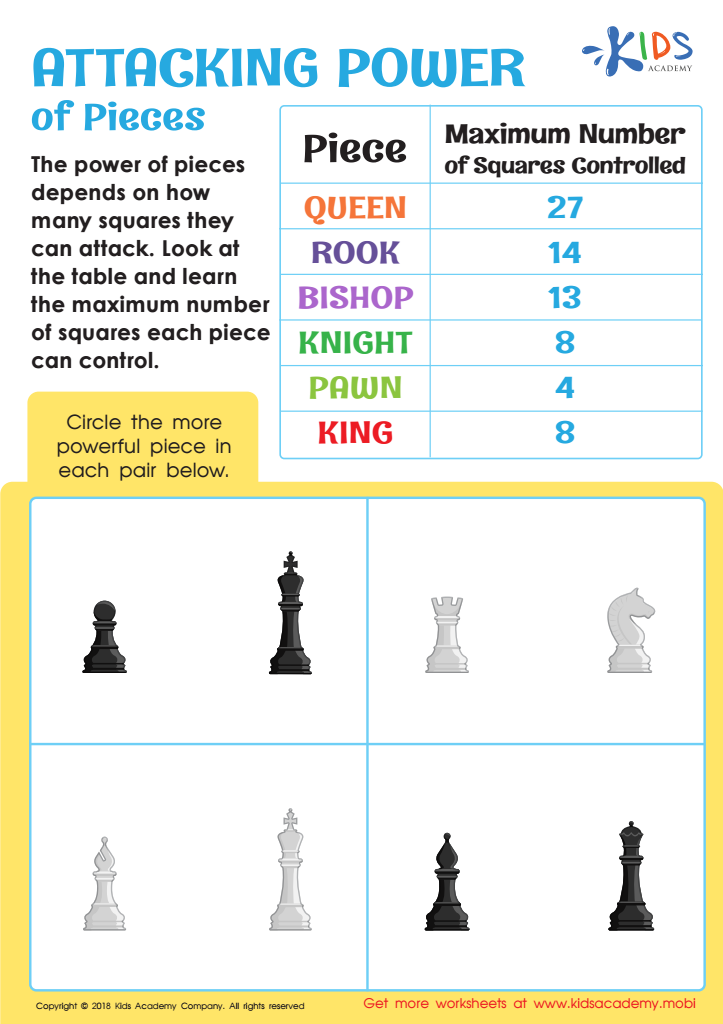
This worksheet introduces your child to chess pieces and how they move. Ask them to look at the table, noting the squares each piece can control. Then, have them circle the most powerful piece among each power pictured at the bottom. With this insight, your child will gain an understanding of a chess piece's power and how many squares it can attack.
Attacking Power of Chess Pieces Worksheet
Worksheet
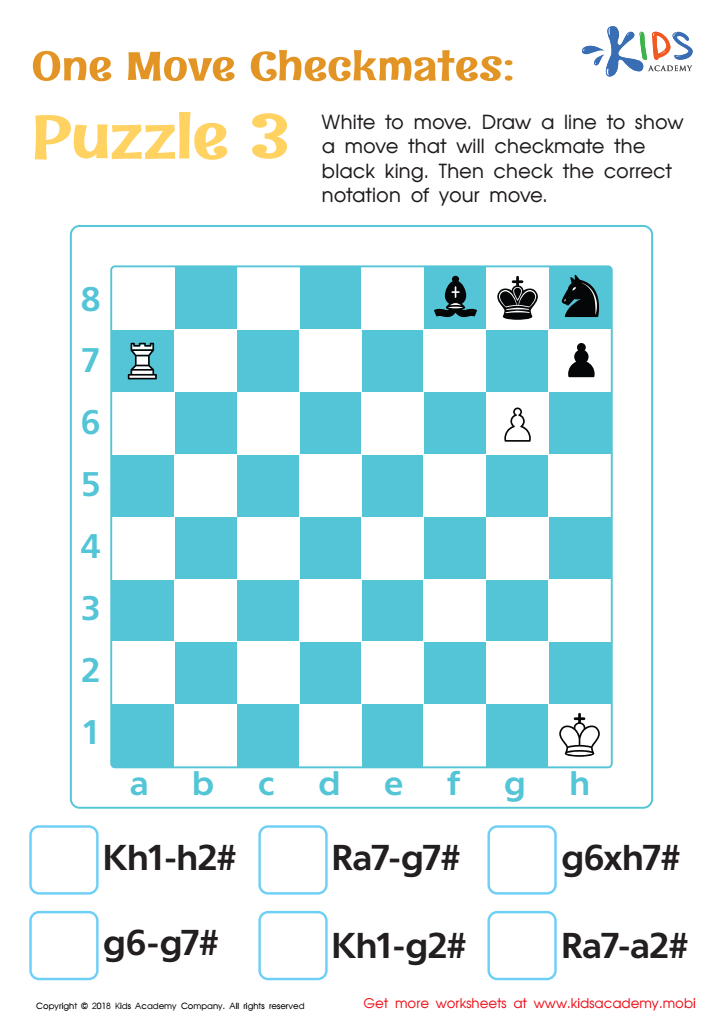
One Move Checkmates: Puzzle 3 Worksheet
Boost your child's critical thinking and strategy skills with this fun puzzle activity. They'll use their logical thinking to plot ways to checkmate the black king, and then check their answer with the given choices. A great way to improve their skills and have a blast doing it!
One Move Checkmates: Puzzle 3 Worksheet
Worksheet
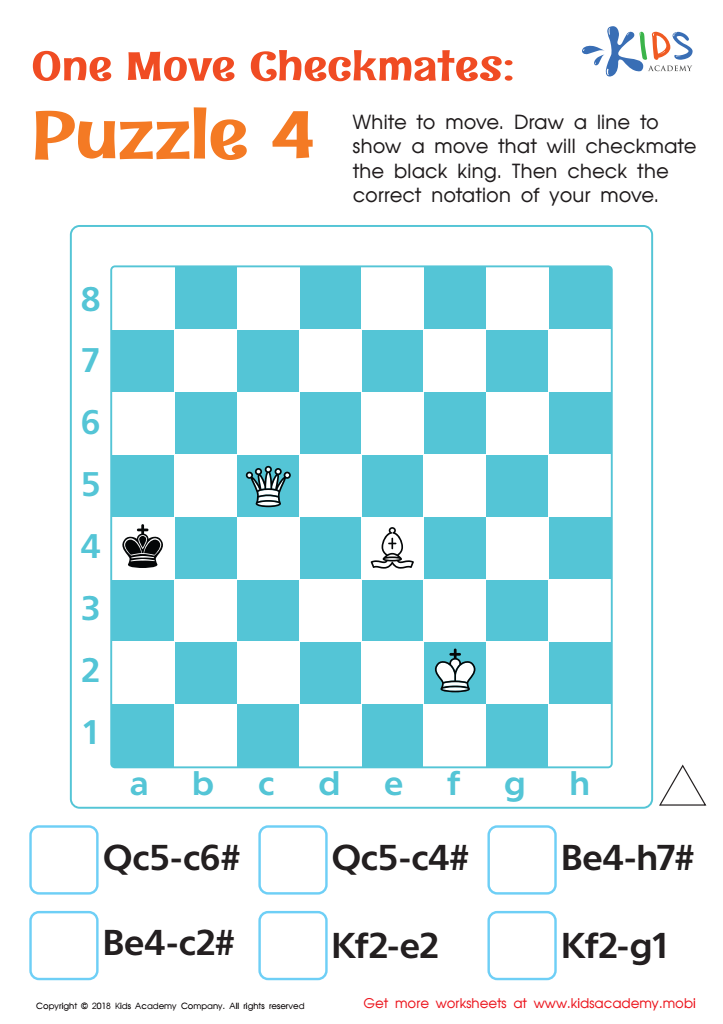
One Move Checkmates: Puzzle 4 Worksheet
Want to challenge your logistician? This engaging PDF worksheet tests their critical thinking, strategy and visual-spatial skills. They must plot to overtake and checkmate the king and use the answer choices to check if they've strategized correctly. It's a fun way to build problem-solving skills needed for higher-level math.
One Move Checkmates: Puzzle 4 Worksheet
Worksheet
Join Kids Academy for Free
Who is primarily going to use this learning content?




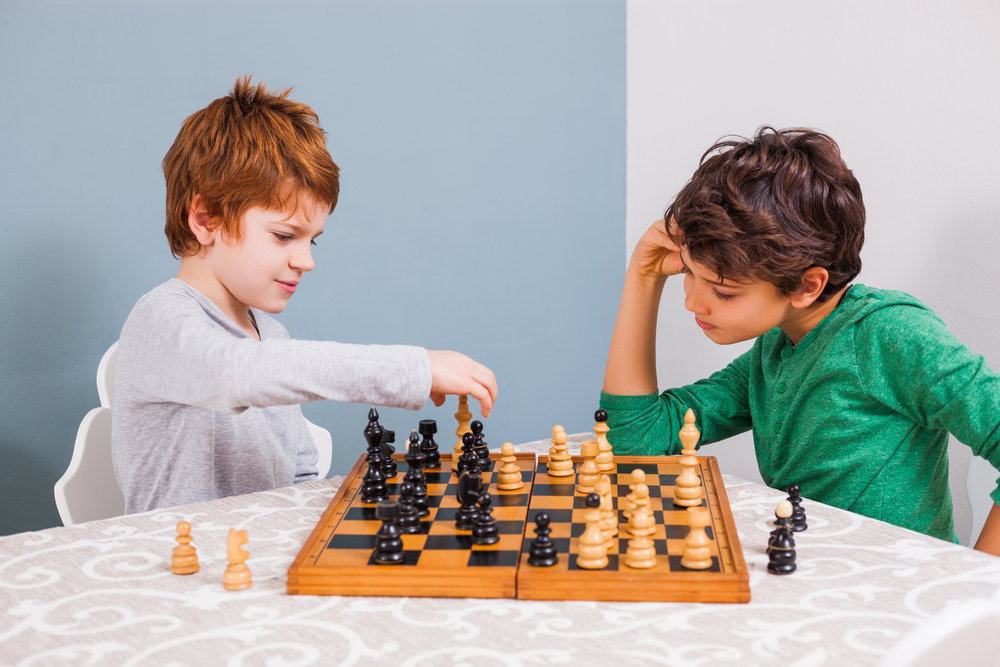


Parents and teachers should care about enhancing critical thinking through chess for children aged 6-7 because this ancient game cultivates vital cognitive skills essential for academic success and personal development. Chess not only teaches strategic thinking but also instills problem-solving skills, encouraging children to analyze different scenarios, weigh options, and forecast outcomes. This deep mental engagement nurtures creativity, as players must think outside the box to overcome their opponents.
At this developmental stage, children are naturally curious and open to learning. Chess provides a structured yet flexible environment for cultivating focus and patience, as children learn to concentrate on multiple aspects of the game simultaneously. Furthermore, it fosters resilience by teaching them to handle setbacks and persevere, important life skills that extend beyond the chessboard.
Additionally, participating in chess matches can enhance social skills, encouraging collaboration and sportsmanship – critical in building relationships with peers. By investing in chess as a tool for critical thinking, parents and teachers support holistic development, preparing children for not just academic challenges, but also fostering lifelong skills essential for their future. Ultimately, nurturing these abilities through a fun and engaging medium like chess can set the groundwork for a more informed, thoughtful generation.