Filters

21 filtered results

Clear all filters
Favorites
With answer key
Interactive

21 filtered results

Difficulty Level

Grade


Boost your child's math skills with our "Recognizing Patterns Addition Worksheets" for ages 6-7! These engaging and educational worksheets are designed to help young learners identify and understand patterns through fun addition exercises. By recognizing patterns, children enhance their critical thinking and problem-solving abilities. Each worksheet is crafted to keep young minds stimulated with colorful graphics and intriguing puzzles, ensuring learning math is enjoyable. Perfect for early grade students, these resources can be used at home or in the classroom to build a strong mathematical foundation. Download and print now to start making math fun and exciting for your child!
Check out this FREE Trial Lesson on Addition for age 6-7!

L

Favorites
With answer key
Interactive
  • 6-7
  • Recognizing Patterns
  • Addition
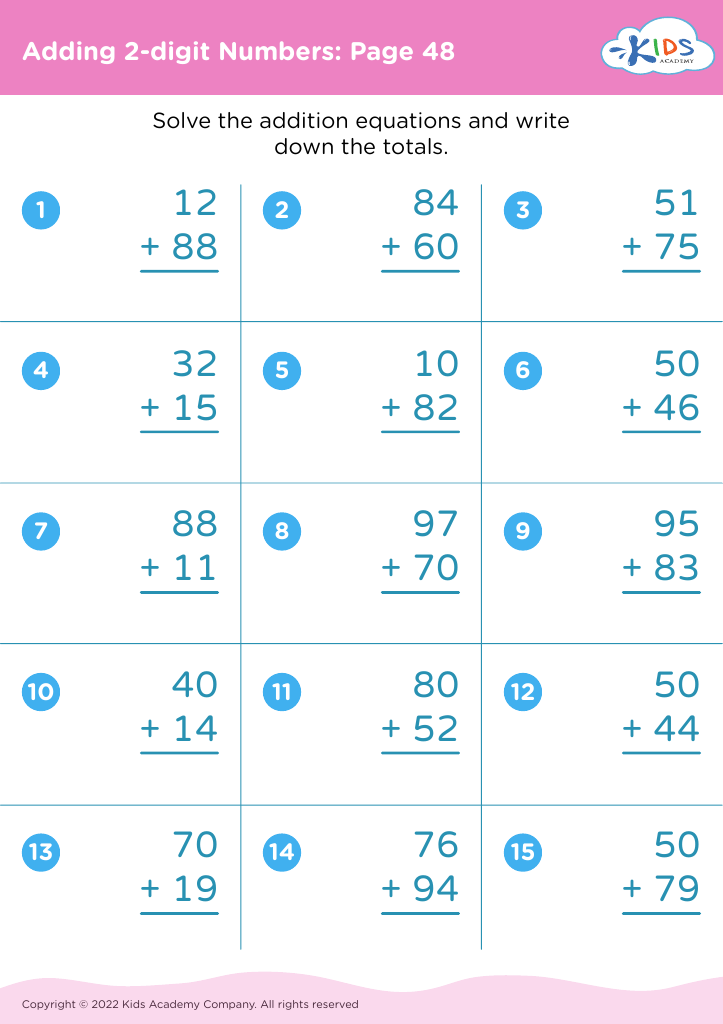
Adding 2-digit Numbers: Page 48

Adding 2-digit Numbers: Page 48

Adding 2-digit Numbers: Page 48
Worksheet
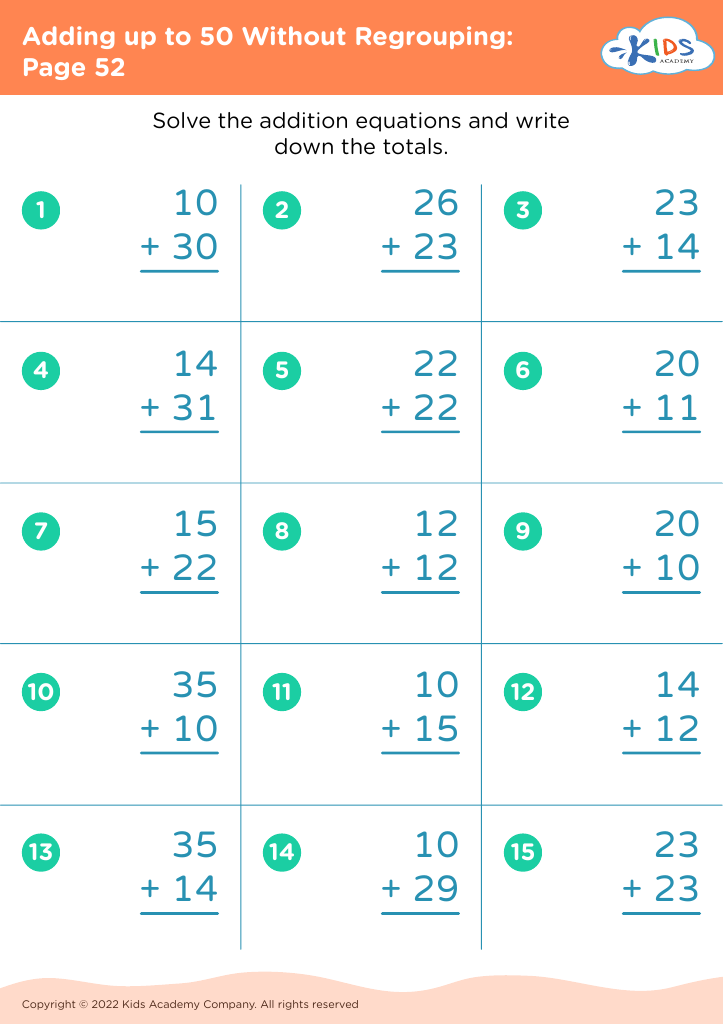
Adding up to 50 Without Regrouping: Page 52
Worksheet
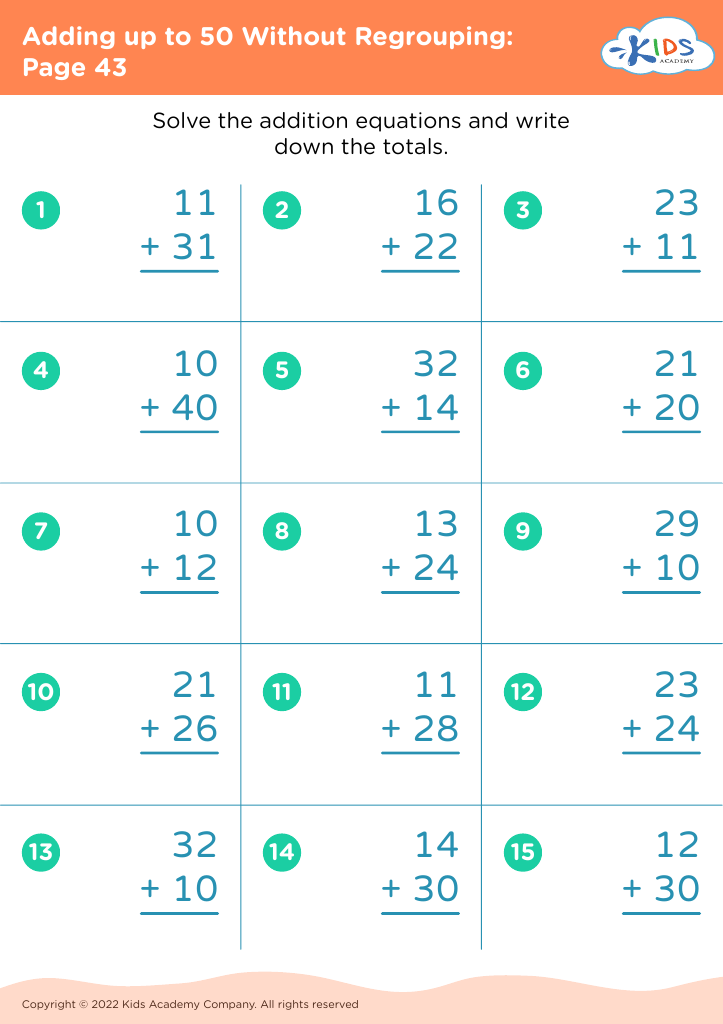
Adding up to 50 Without Regrouping: Page 43
Worksheet
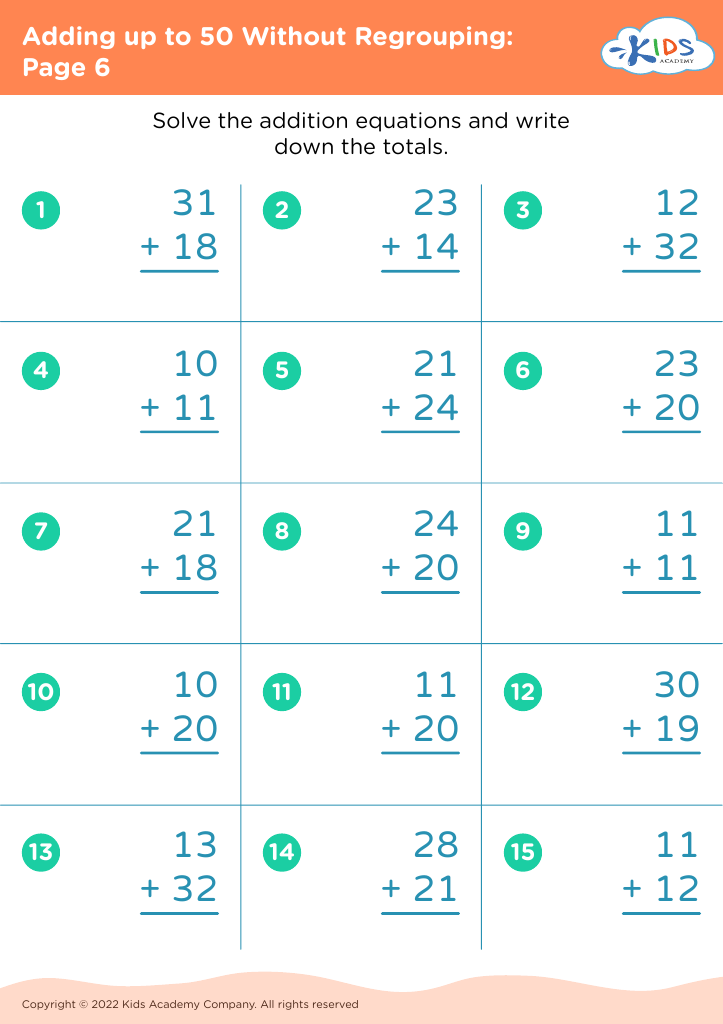
Adding up to 50 Without Regrouping: Page 6
Worksheet
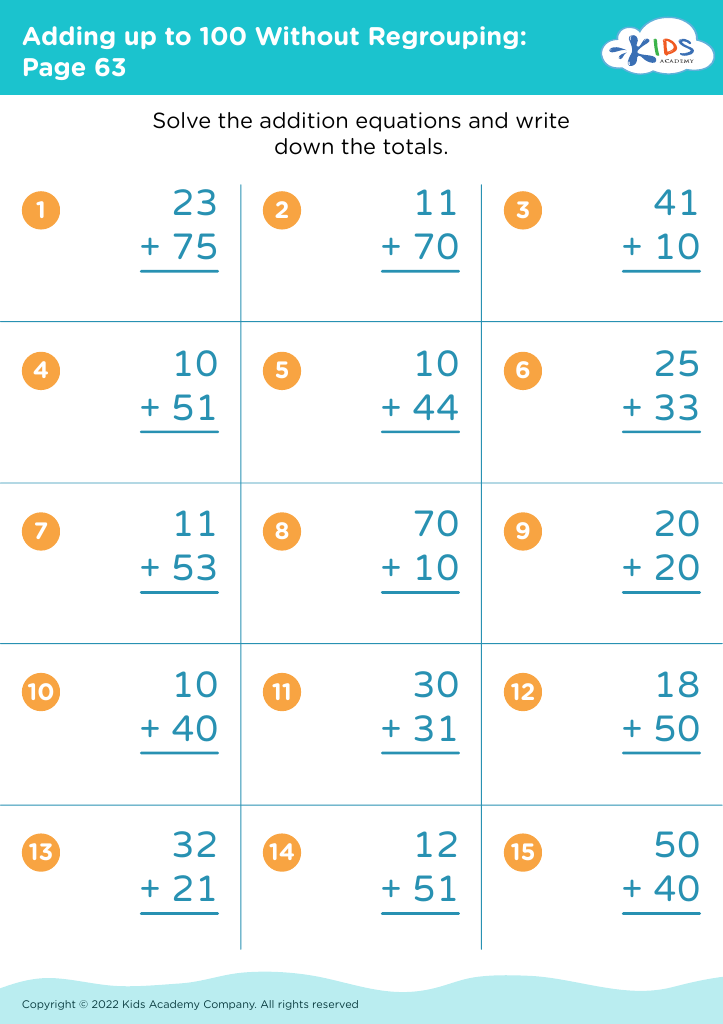
Adding up to 100 Without Regrouping: Page 63
Worksheet
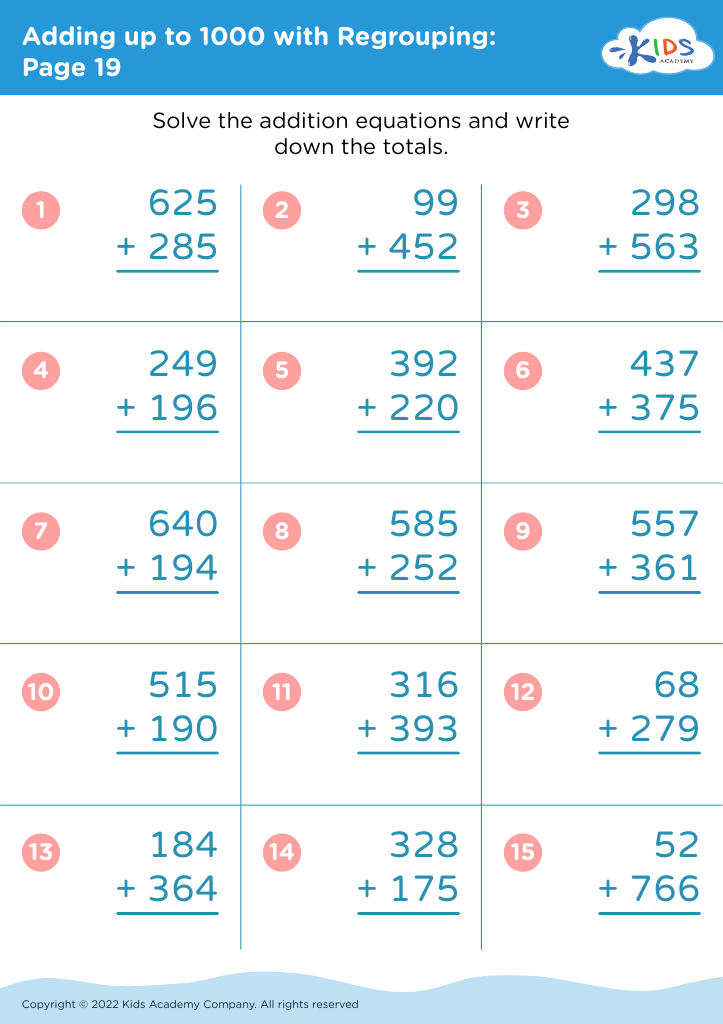
Adding up to 1000 with Regrouping: Page 19
Worksheet
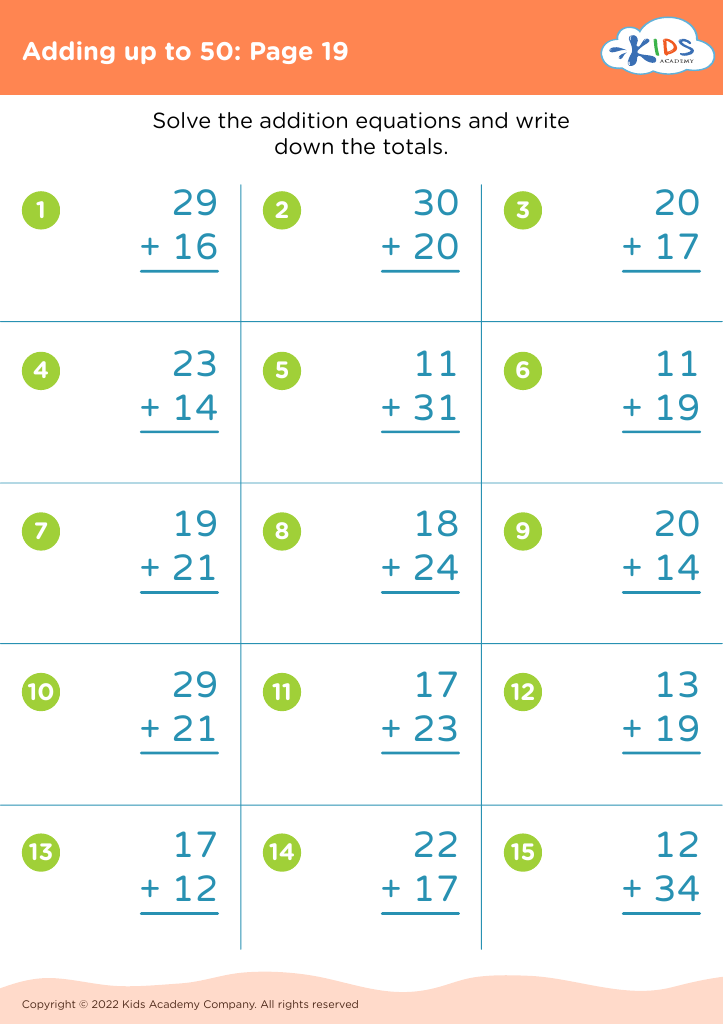
Adding up to 50: Page 19

Adding up to 50: Page 19

Adding up to 50: Page 19
Worksheet
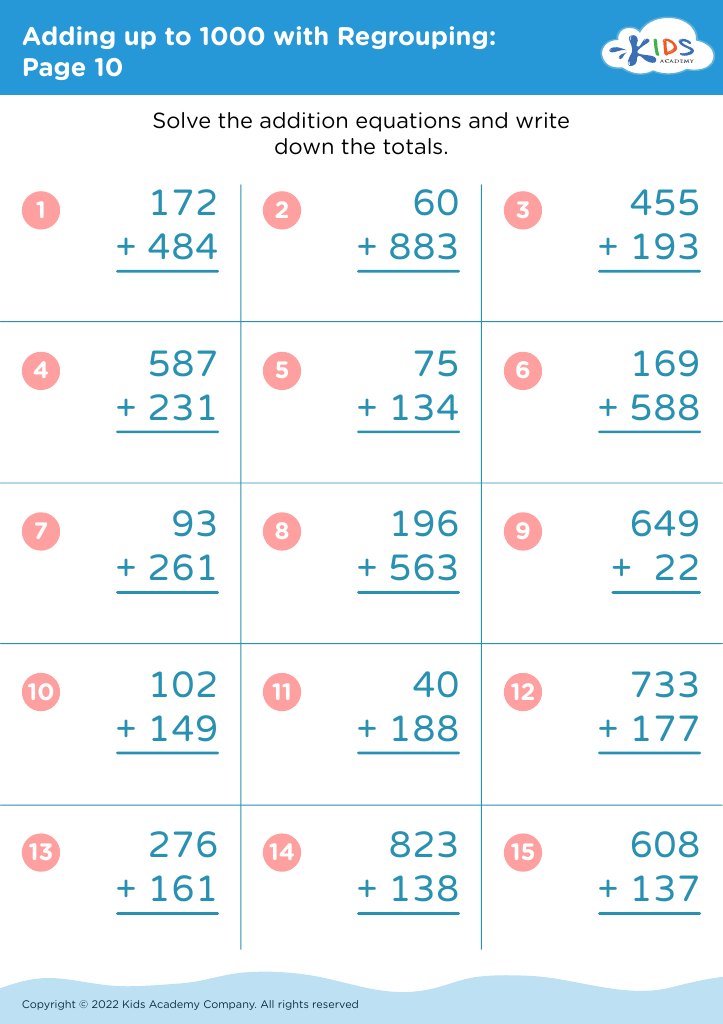
Adding up to 1000 with Regrouping: Page 10
Worksheet
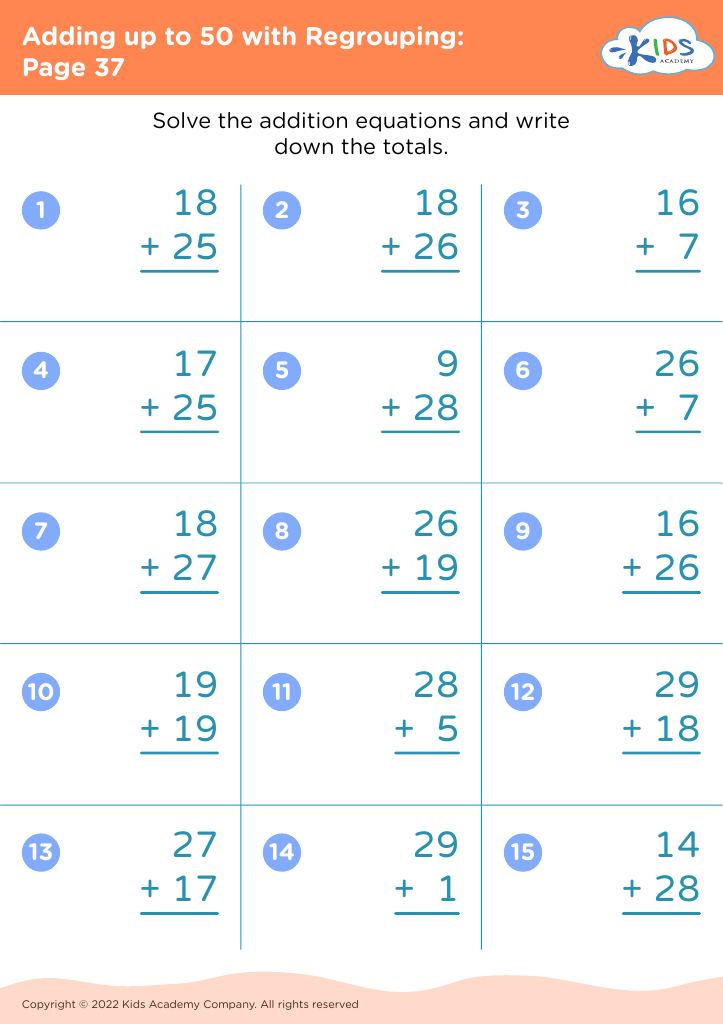
Adding up to 50 with Regrouping: Page 37
Worksheet
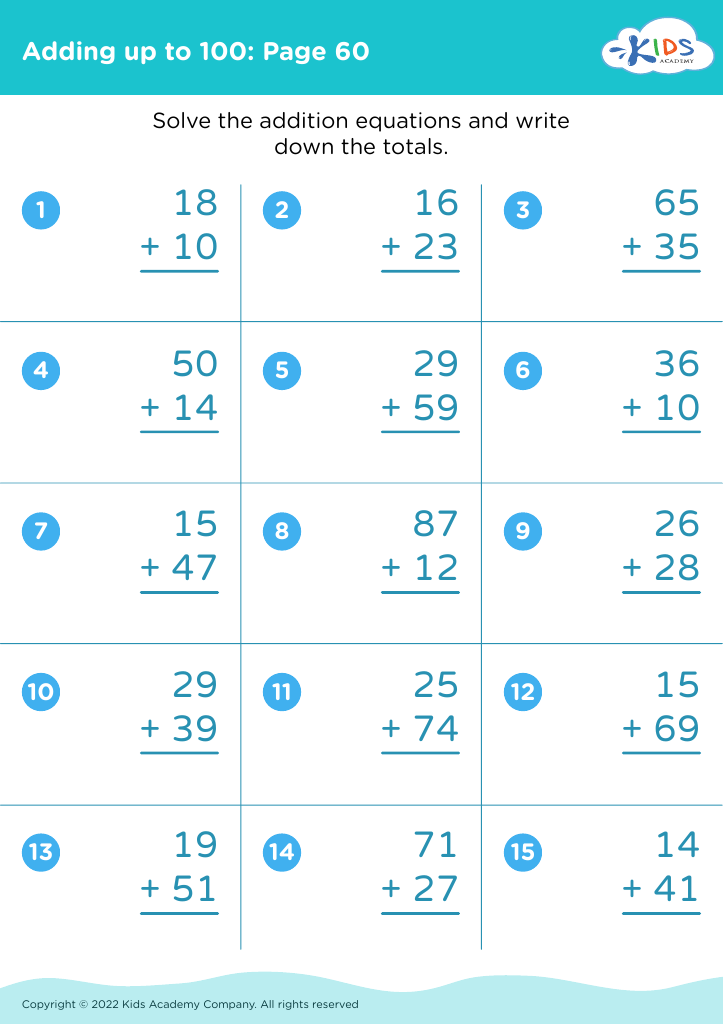
Adding up to 100: Page 60

Adding up to 100: Page 60

Adding up to 100: Page 60
Worksheet
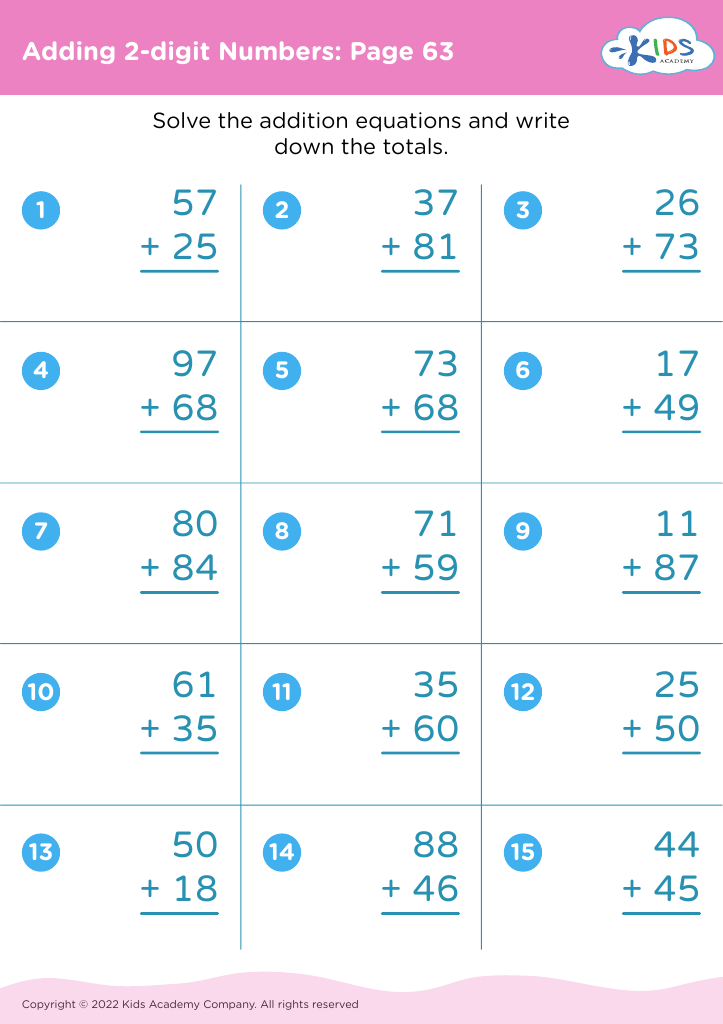
Adding 2-digit Numbers: Page 63

Adding 2-digit Numbers: Page 63

Adding 2-digit Numbers: Page 63
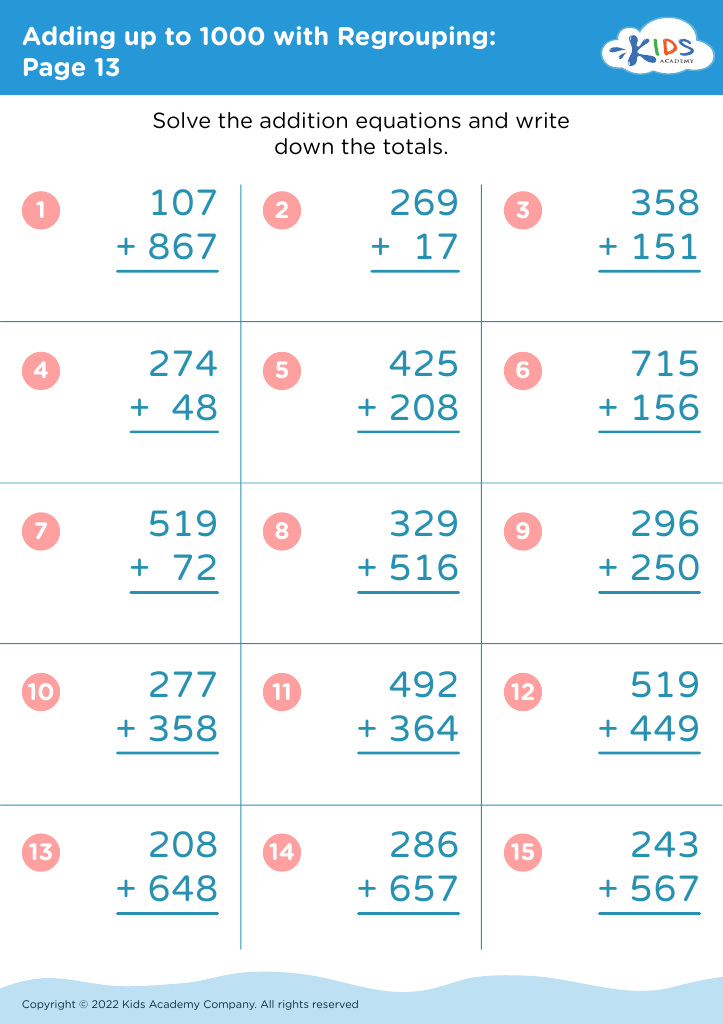
Worksheet
Adding up to 1000 with Regrouping: Page 13
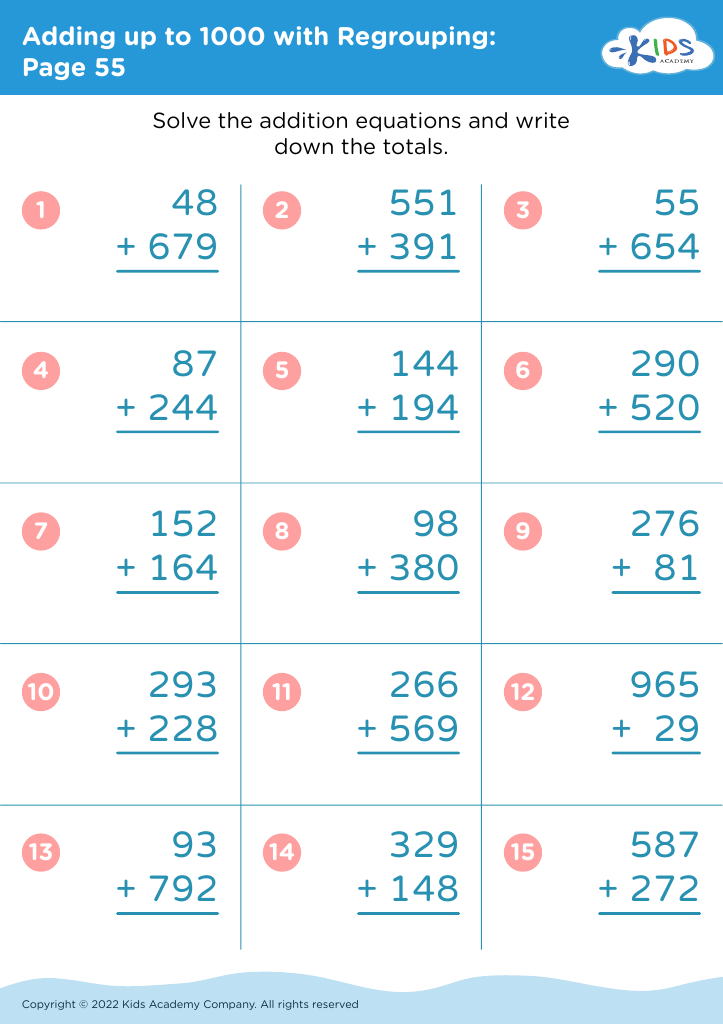
Worksheet
Adding up to 1000 with Regrouping: Page 55
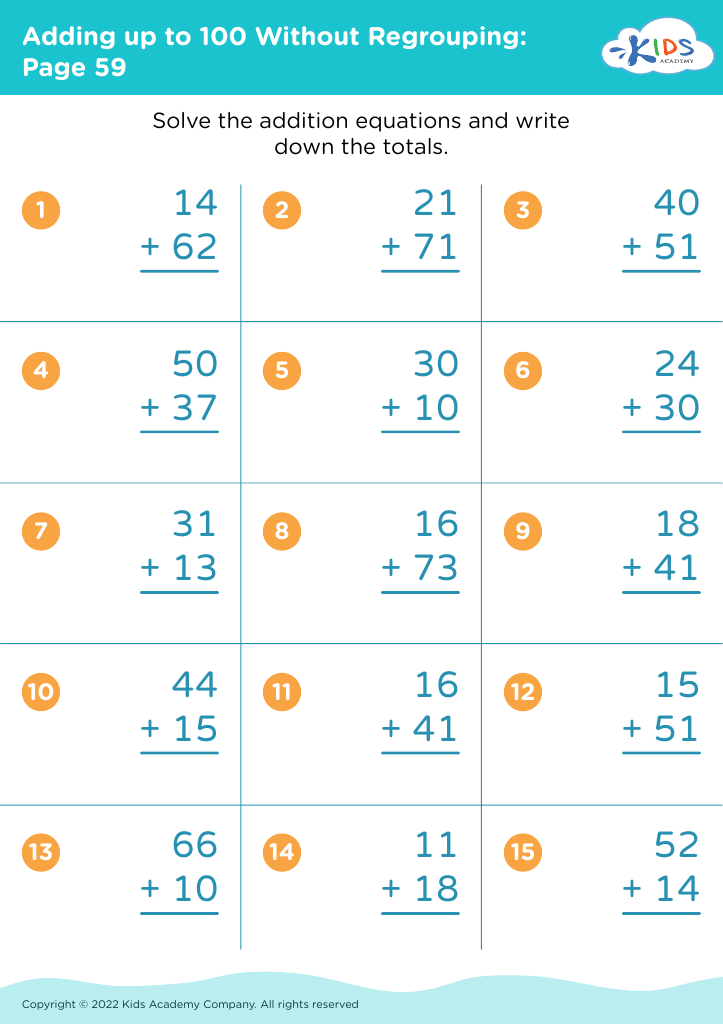
Worksheet
Adding up to 100 Without Regrouping: Page 59
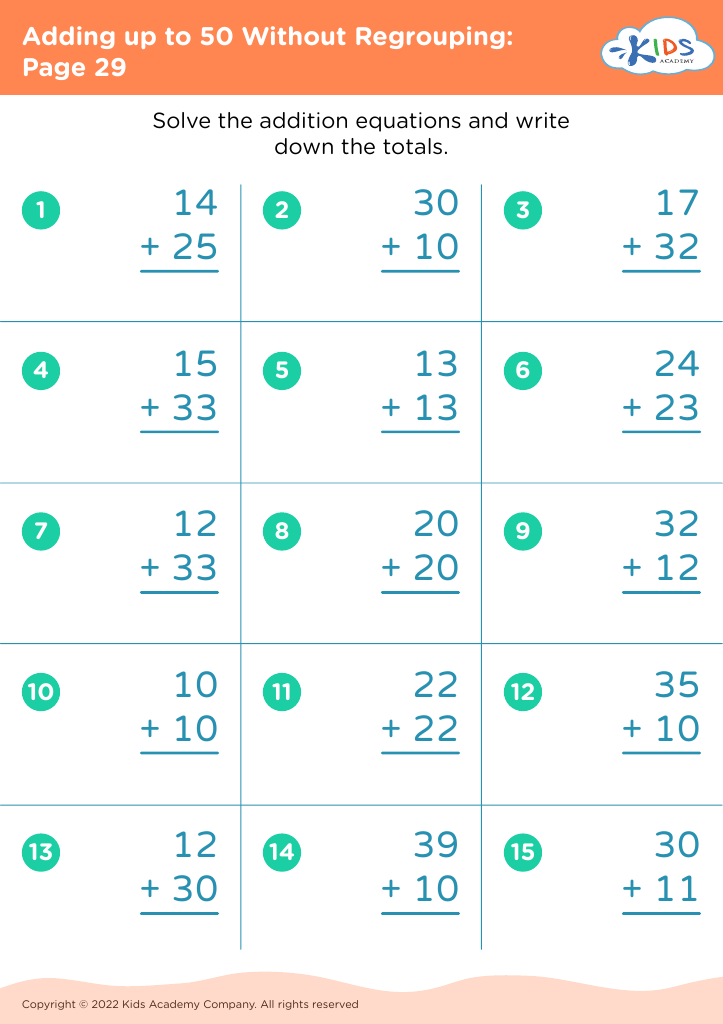
Worksheet
Adding up to 50 Without Regrouping: Page 29
Worksheet
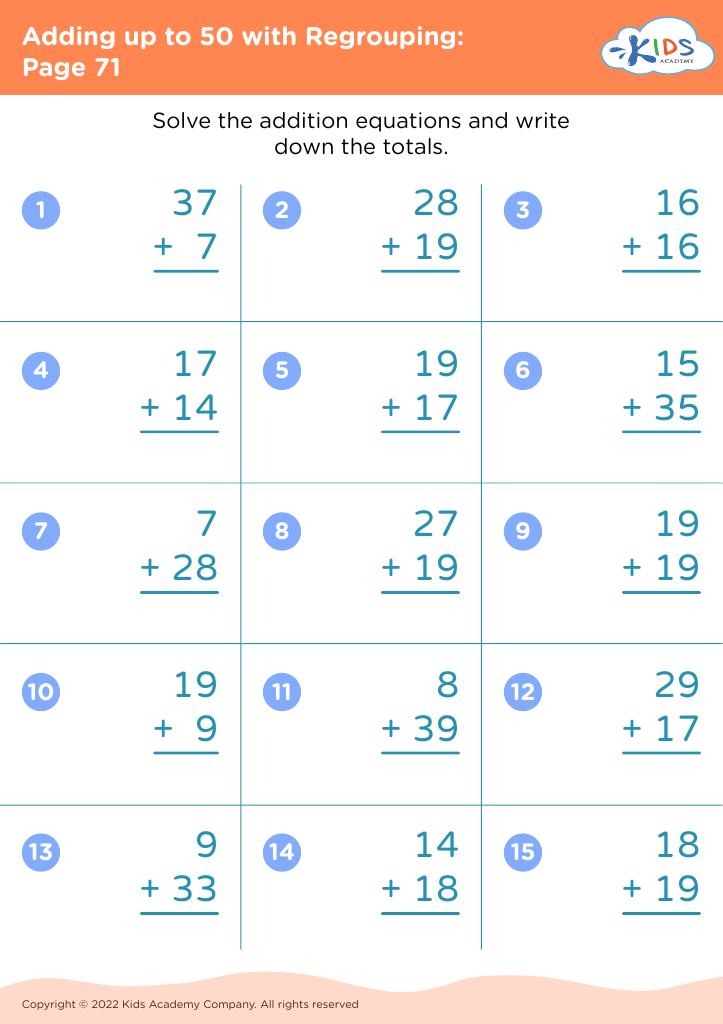
Adding up to 50 with Regrouping: Page 71
Worksheet
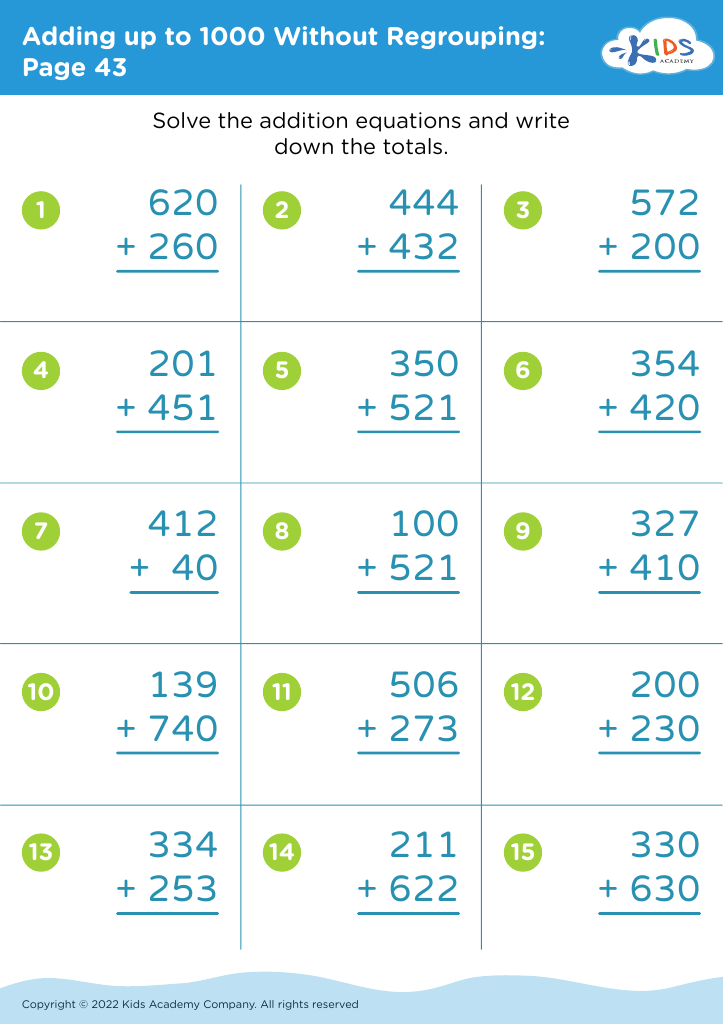
Adding up to 1000 Without Regrouping: Page 43
Worksheet
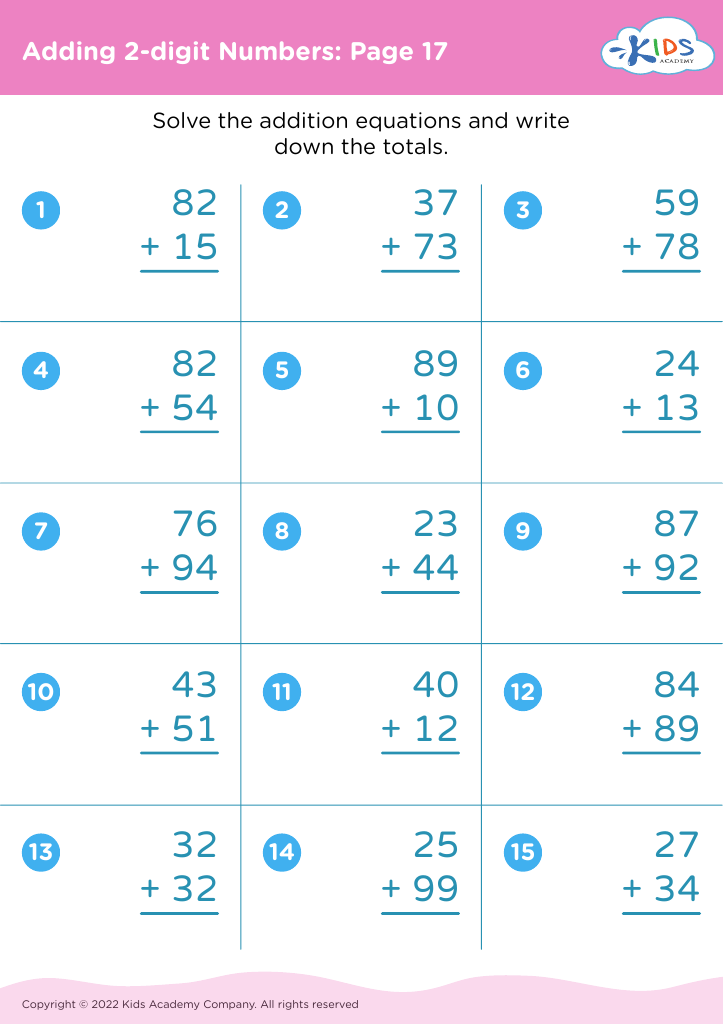
Adding 2-digit Numbers: Page 17

Adding 2-digit Numbers: Page 17

Adding 2-digit Numbers: Page 17
Worksheet
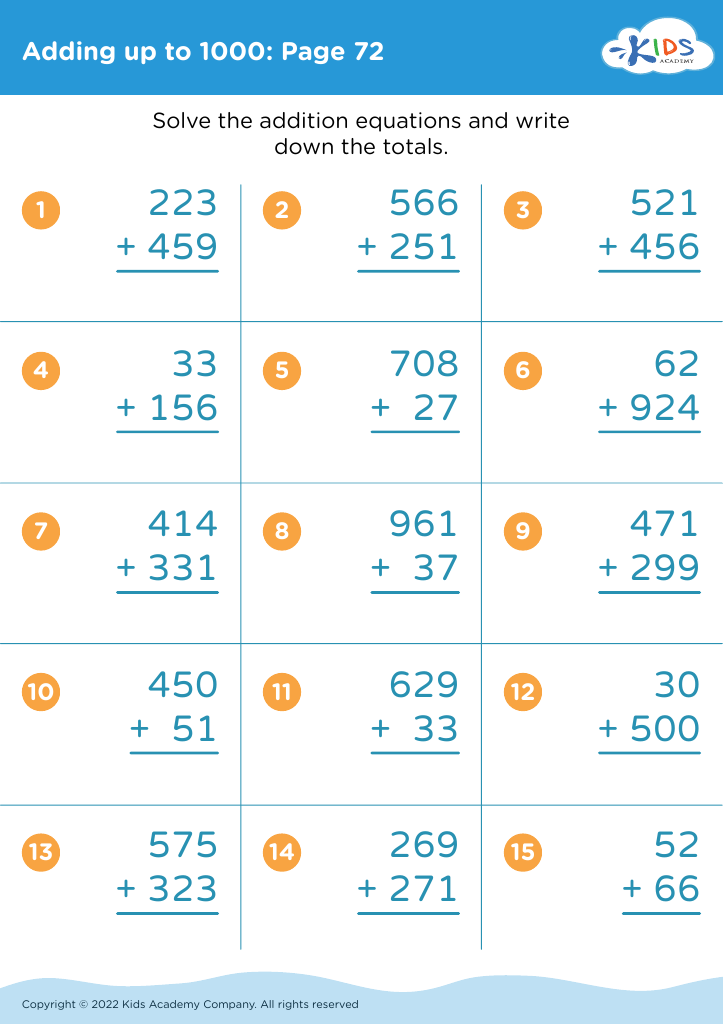
Adding up to 1000: Page 72

Adding up to 1000: Page 72

Adding up to 1000: Page 72
Worksheet
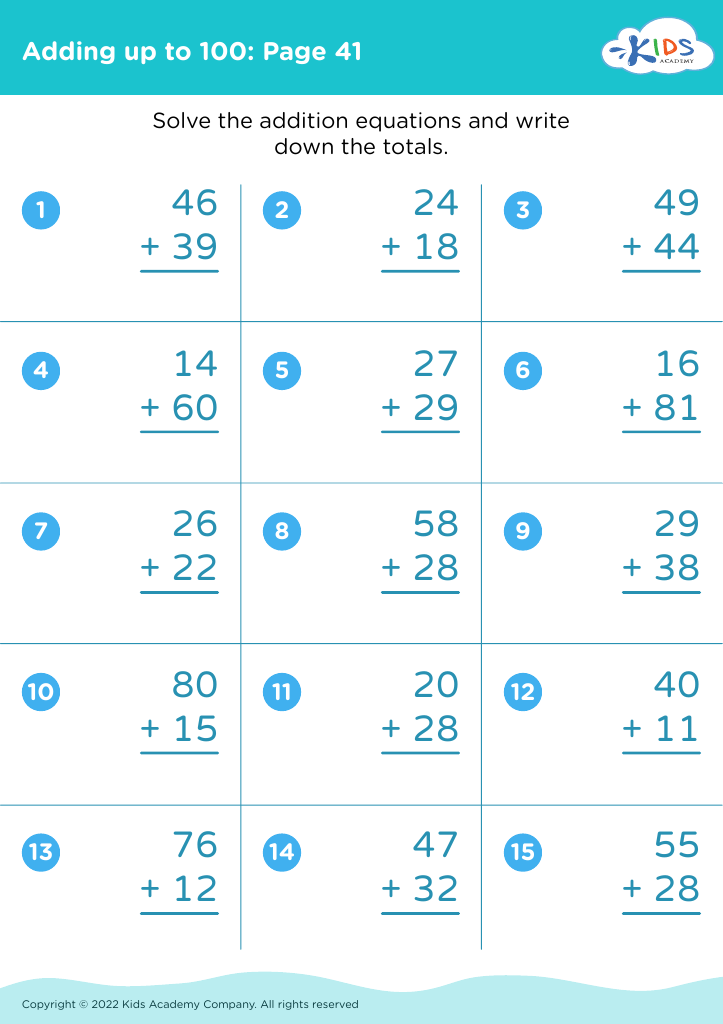
Adding up to 100: Page 41

Adding up to 100: Page 41

Adding up to 100: Page 41
Worksheet
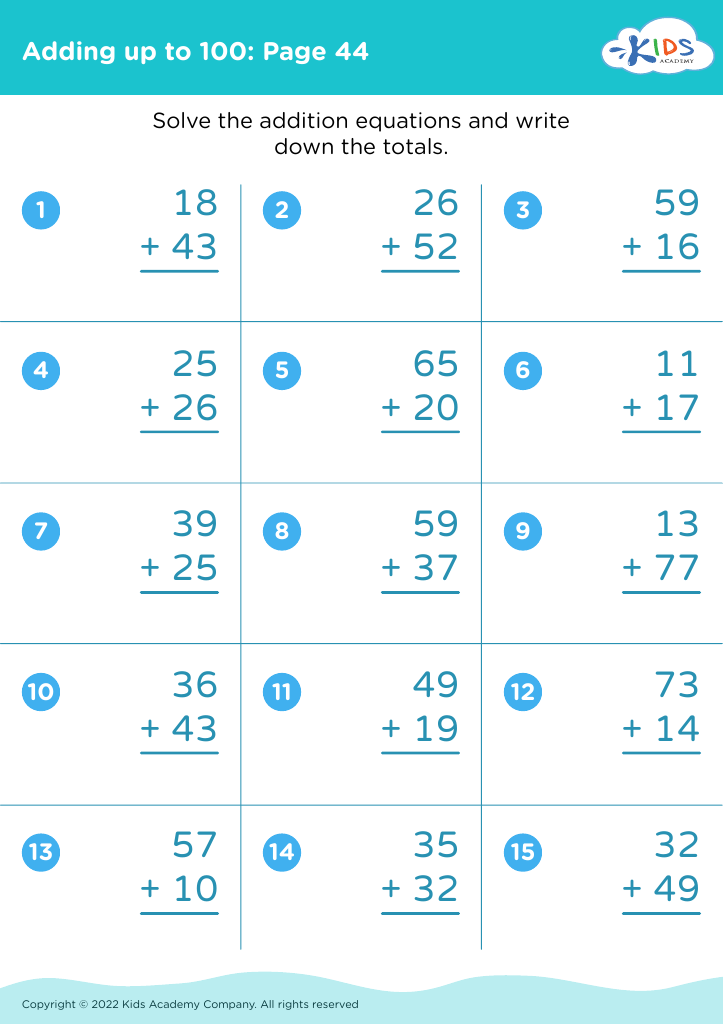
Adding up to 100: Page 44

Adding up to 100: Page 44

Adding up to 100: Page 44
Worksheet


Recognizing patterns in addition is a foundational skill important for children ages 6-7 because it supports mathematical understanding and cognitive development. At an early age, children start to see relationships between numbers. For instance, realizing that 2 + 3 has the same result as 3 + 2 introduces them to the commutative property, which is different but connected to patterns. This not only helps with addition but also builds a concrete base for more complex arithmetic operations like subtraction, multiplication, and division.

When children recognize patterns, they are better equipped to solve problems. Pattern recognition can lead to predicting the results of number operations, facilitating quicker and correct solutions. For instance, understanding patterns such as counting by 2’s or 5’s can expedite their ability to perform addition and can shape efficient mental math strategies.

For parents and teachers, fostering pattern recognition in addition means engaging children with practice opportunities that vary in method—such as storytelling, games, or visual aids that highlight numerical patterns. This diversified approach can cater to different learning styles, ensuring that the skill is internalized thoroughly. Besides academic benefits, this skill promotes critical thinking, boosts confidence, and instills a love for mathematics by making learning interactive and enjoyable.