Comparing shapes Geometry Worksheets for Ages 6-7
4 filtered results
-
From - To
Explore our engaging "Comparing Shapes Geometry Worksheets" designed for children ages 6-7! These interactive worksheets provide young learners with fun activities to identify, compare, and categorize various shapes. With vibrant illustrations and age-appropriate challenges, students will develop crucial spatial awareness and critical thinking skills. Each worksheet encourages hands-on learning, fostering a deeper understanding of geometric concepts through practice and exploration. Perfect for home or classroom use, our resources make math enjoyable and accessible. Download your free worksheets today and help your child master shape comparisons while building a solid foundation in geometry! Get started on a fun learning journey!
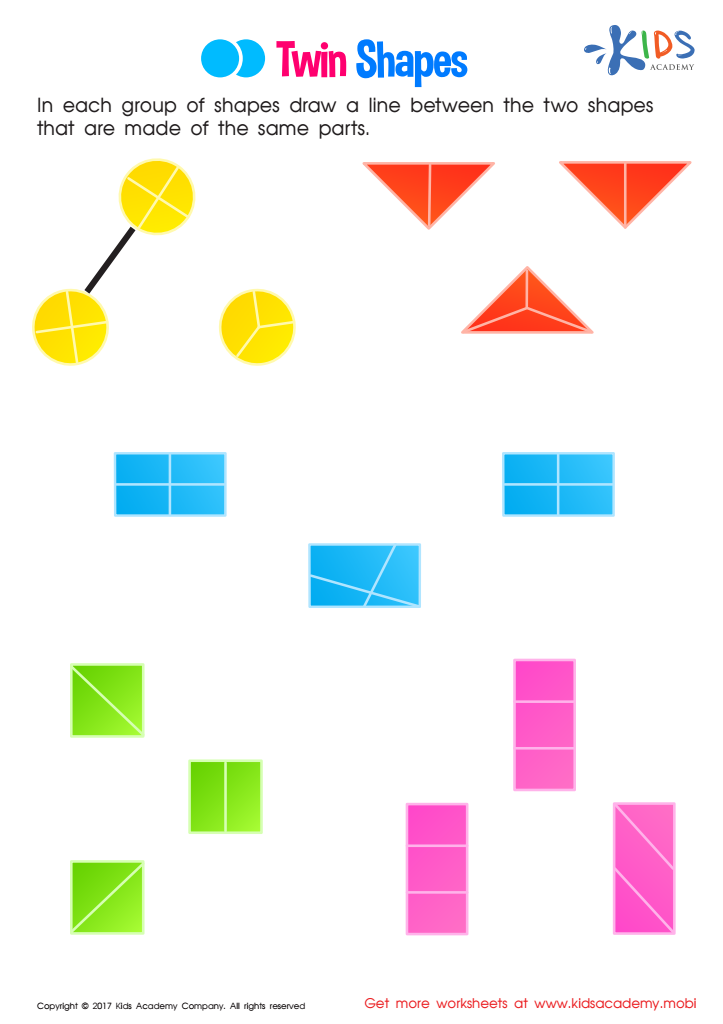
Twin Shapes Worksheet
 Assign to My Students











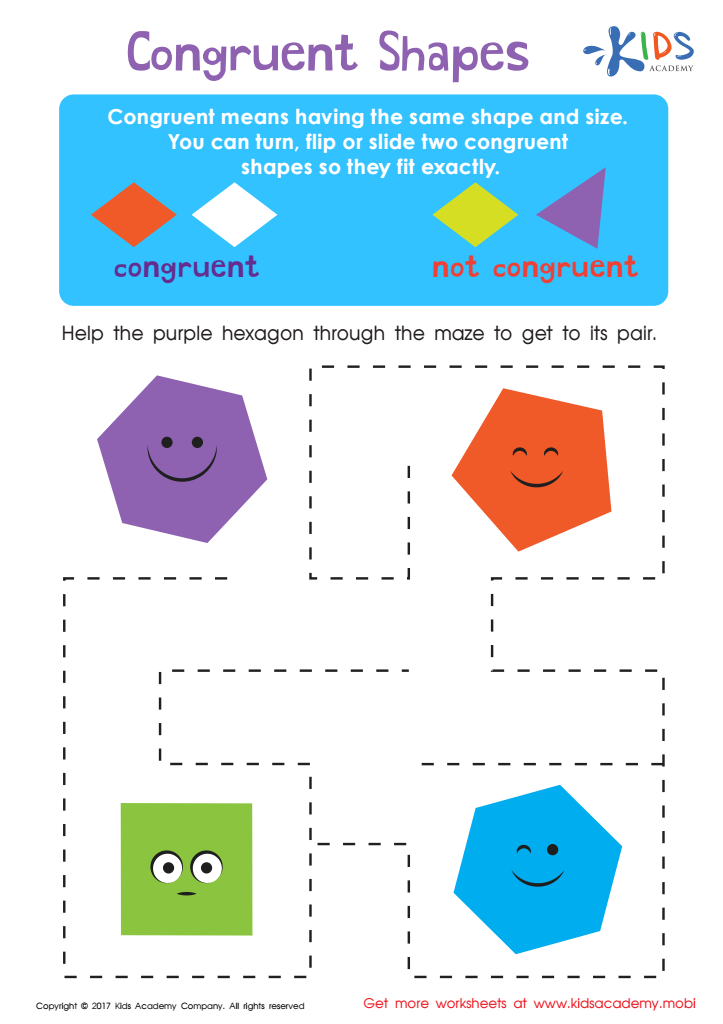
Congruent Shapes Worksheet
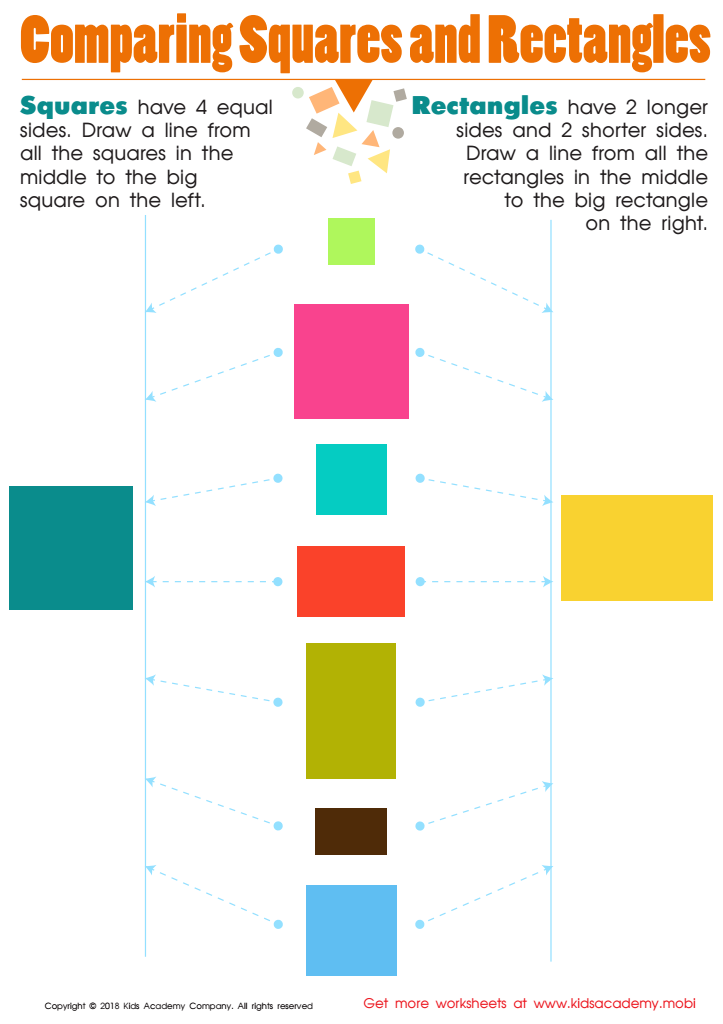
Comparing Squares Rectangles Worksheet
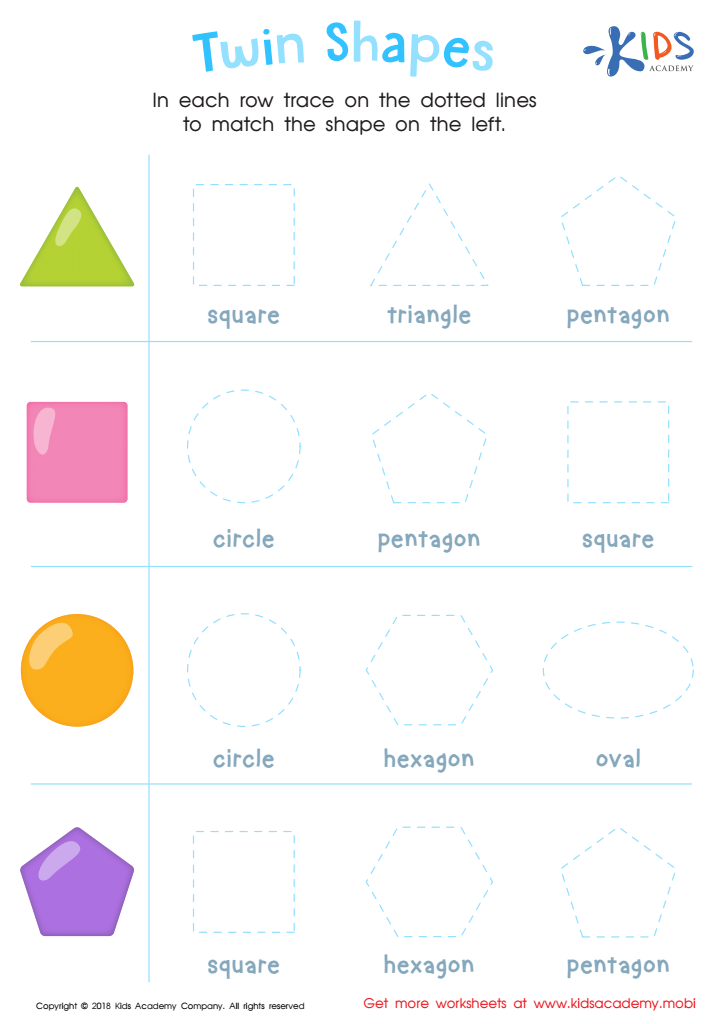
Twin Shapes Dot-to-Dot Worksheet








Comparing shapes is a fundamental concept in geometry that plays a vital role in the cognitive development of children aged 6-7. At this stage, children are not only learning about different shapes, but they are also beginning to recognize their properties, such as sides, angles, and symmetry. Parents and teachers should prioritize teaching this skill because it enhances critical thinking and reasoning abilities.
By comparing shapes, children develop skills in observation and classification, essential for problem-solving in math and science. This foundational understanding can also foster creativity as children are encouraged to visualize and create patterns and designs. Moreover, engaging with shapes strengthens spatial awareness, which is crucial for daily tasks like navigating through spaces and even in fields like engineering and architecture in later years.
Additionally, discussing and comparing shapes promotes communication skills, as children learn to articulate their thoughts about differences and similarities. Incorporating shape comparisons into everyday activities makes learning enjoyable and relatable. Ultimately, the knowledge and skills acquired through this playful yet educational approach lay a strong groundwork for future mathematical learning and cognitive development, making it imperative for parents and teachers to actively support this aspect of learning.








