Interpreting data Numbers Worksheets for Ages 6-7
3 filtered results
-
From - To
Boost your child's data interpretation skills with our engaging "Interpreting Data Numbers Worksheets for Ages 6-7". Designed by educational experts, these worksheets help young learners develop critical thinking and analytical abilities. Through fun, colorful exercises, kids will learn to read charts, graphs, and tables. By identifying patterns and drawing conclusions, children enhance their mathematical reasoning and data literacy, important skills for their academic journey. Ideal for classroom and home use, these printables support both structured learning and independent practice. Give your child a head start with our comprehensive collection of interpreting data worksheets, making math exciting and accessible.
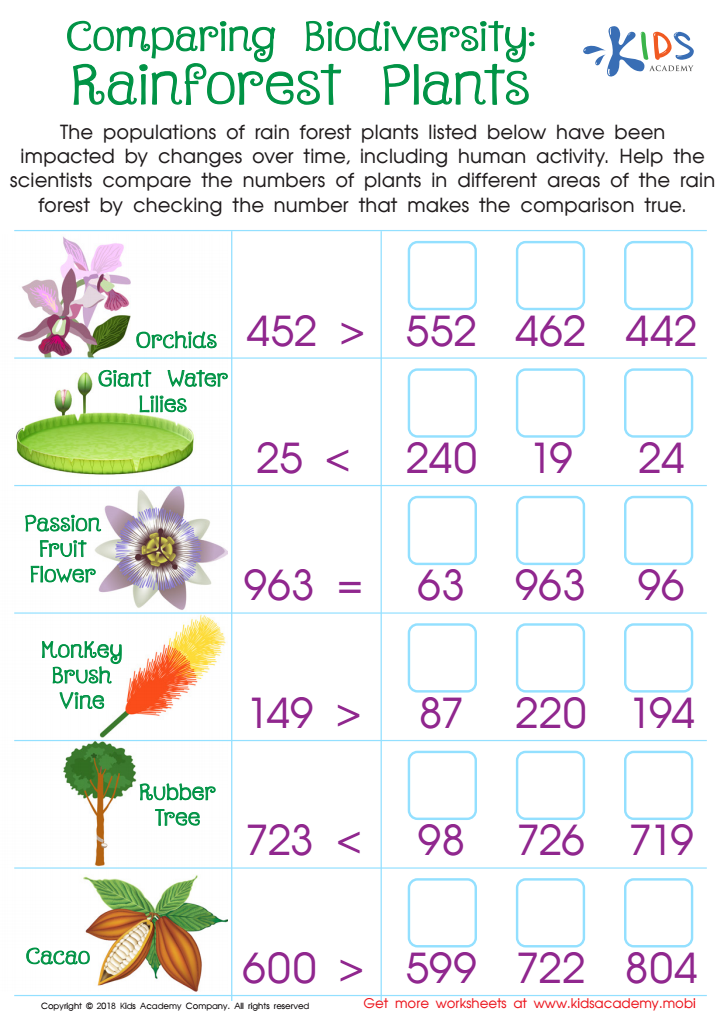
Comparing Biodiversity: Rainforest Plants Worksheet
 Assign to My Students
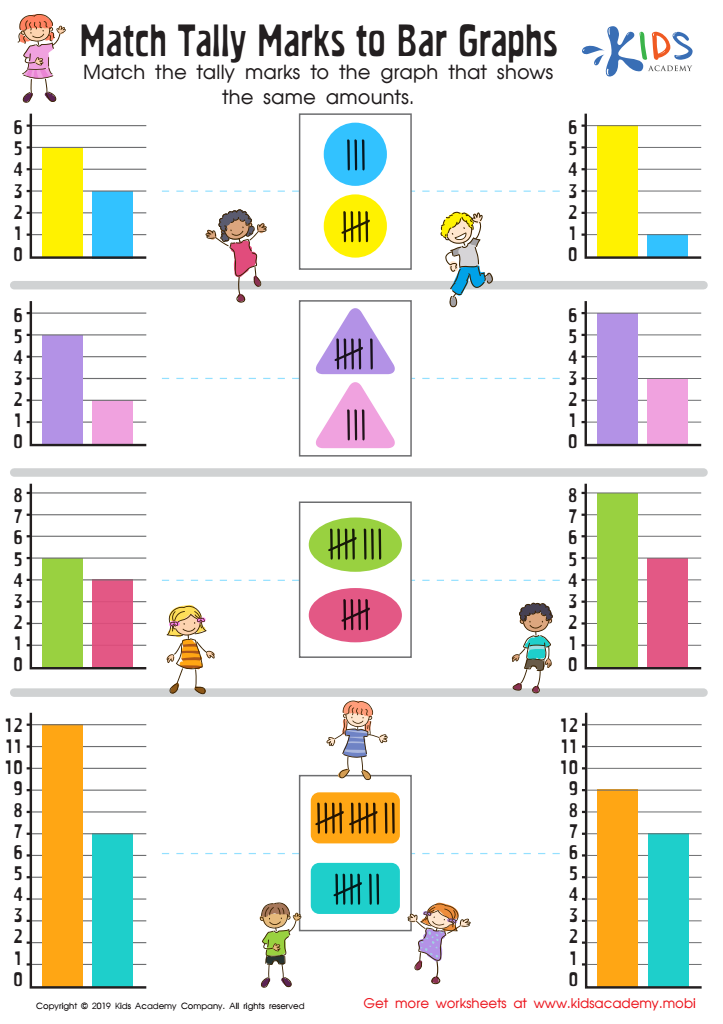
Match Tally Marks to Bar Graphs Worksheet
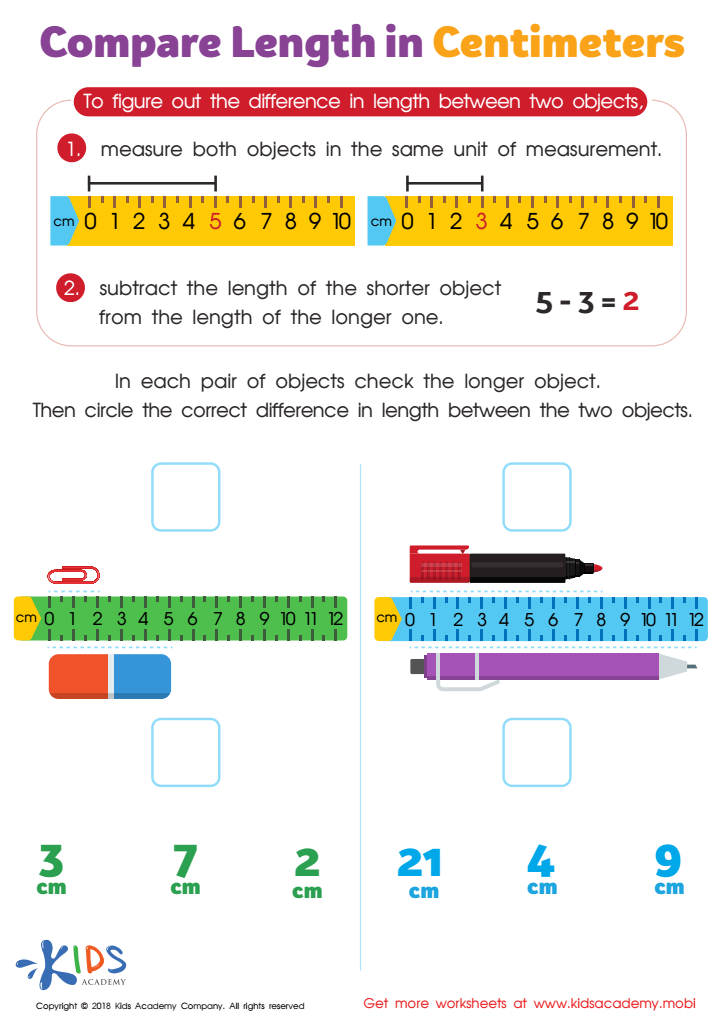
Compare Length in Centimeters Worksheet








Understanding and interpreting data are crucial skills that lay the foundation for a child's future academic success and daily decision-making abilities. For children ages 6-7, engaging with data starts with simple, age-appropriate activities such as counting objects, recognizing patterns, and interpreting basic charts and graphs.
When parents and teachers encourage these activities, they help children to develop critical thinking and problem-solving skills early on. These skills are not only vital for subjects like math and science but also important for real-life situations such as time management and making choices based on information.
Engaging in data interpretation activities can also boost a child's confidence and curiosity. When children successfully figure out trends and patterns, they feel a sense of accomplishment that encourages further learning. Knowing how to interpret data also improves their communication skills; they learn to discuss, explain, and share their insights clearly and effectively.
By fostering these skills early, parents and teachers not only support children in immediate educational endeavors but also prepare them for complex concepts they will encounter in later years. An early grasp of data interpretation sets the stage for informed, thoughtful decision-making, making it a vital aspect of early education.








