Analytical skills Math Worksheets for Ages 6-7
5 filtered results
-
From - To
Discover our engaging Analytical Skills Math Worksheets specifically designed for children aged 6-7. These worksheets aim to hone critical thinking and problem-solving abilities while reinforcing essential math concepts. Our expertly crafted exercises encourage kids to analyze information, discern patterns, and apply logical reasoning in fun, interactive ways. Covering topics like comparisons, categorization, and simple data interpretation, these worksheets help build a strong foundation for future learning. Ideal for both classroom use and at-home practice, our worksheets make learning math an enjoyable experience. Empower your child with the skills they need to succeed with our comprehensive analytical skills resources today!

Animal Features Worksheet
 Assign to My Students
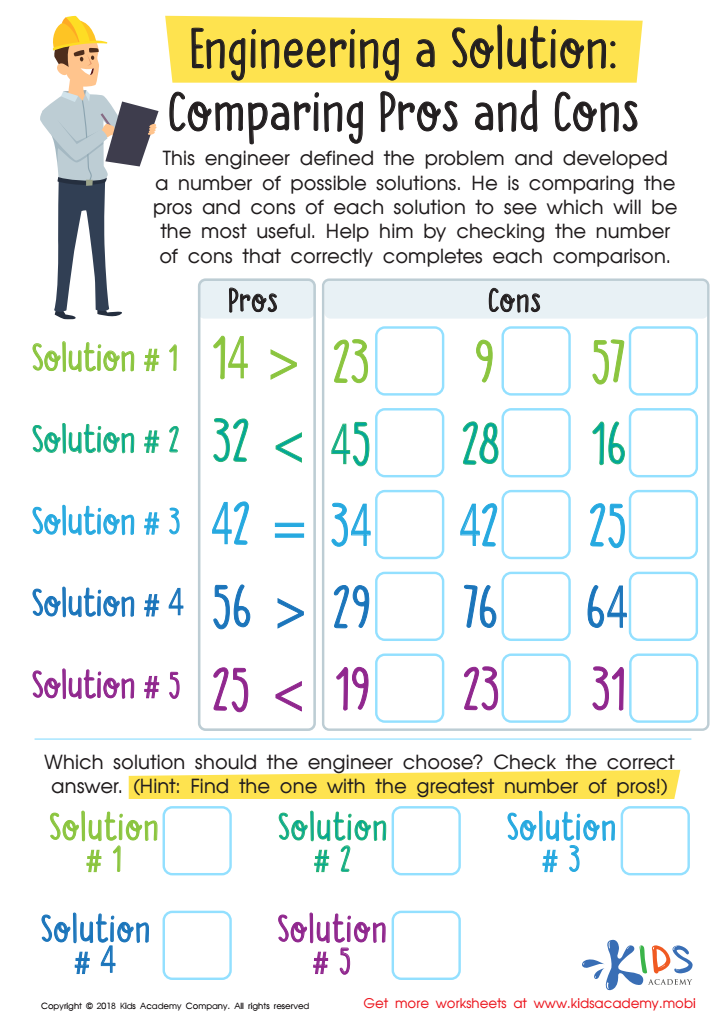
Engineering a Solution: Comparing Pros and Cons Worksheet

Stolen Cheese Case Maze Worksheet
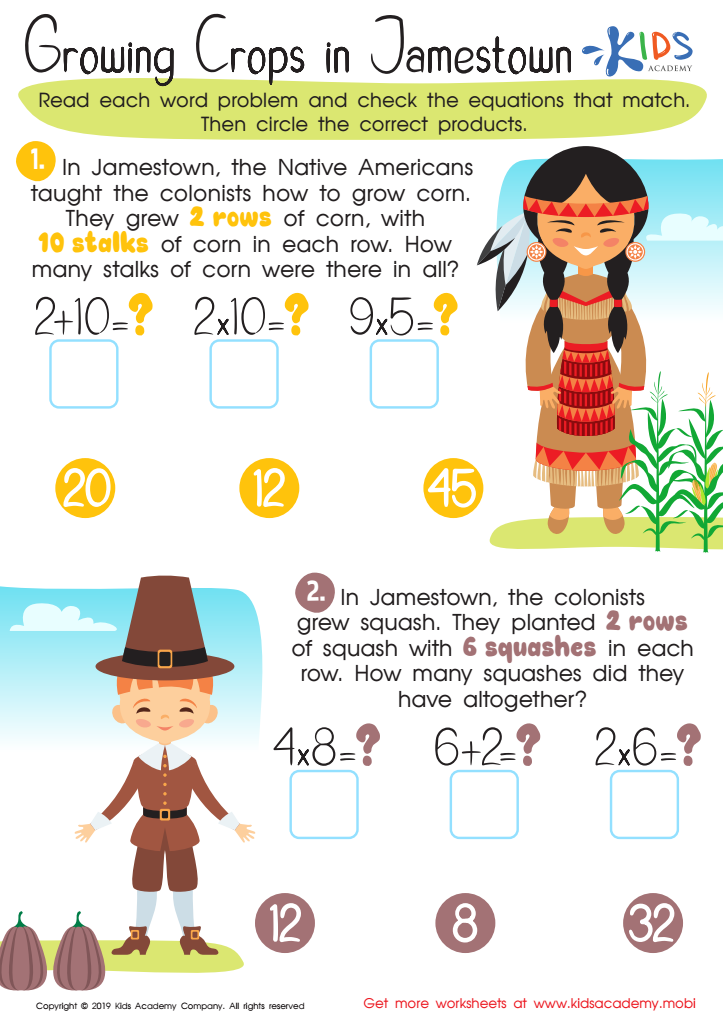
Growing Jamestown Worksheet

3D Shapes Quest Worksheet








Analytical skills in mathematics are crucial for children aged 6-7 as they form the foundation for problem-solving, critical thinking, and decision-making. At this age, children are naturally curious and eager to explore patterns, relationships, and logical reasoning, making it an ideal time to cultivate these skills through engaging mathematical activities.
Developing analytical skills helps children connect mathematical concepts to real-world scenarios, facilitating a deeper understanding of the subject. This includes recognizing patterns, organizing data, and understanding basic operations, which enhances computational fluency. When children can analyze and interpret information, they become more confident in tackling complex problems in the future.
Moreover, strong analytical skills promote a positive attitude towards learning and support academic success across various subjects. As children learn to approach problems systematically and think critically, they not only excel in mathematics but also develop competencies that benefit their overall cognitive development.
Ultimately, supporting the growth of analytical skills in young learners lays the groundwork for lifelong learning and adaptability, essential traits in our rapidly evolving world. It empowers children to think logically, make informed decisions, and face challenges with resilience and creativity. Both parents and teachers play a pivotal role in nurturing these essential skills during this formative stage.








