Basic Addition Skills Math Worksheets for Ages 6-7 - Page 2
38 filtered results
-
From - To
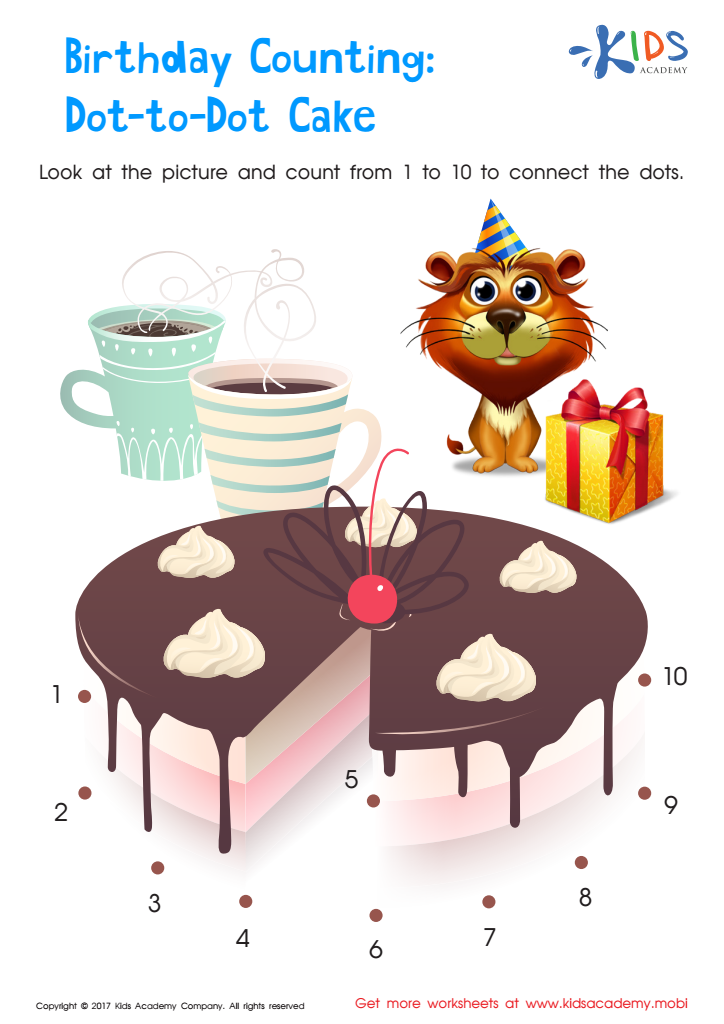
Birthday Counting Connect Dots Worksheet
 Assign to My Students
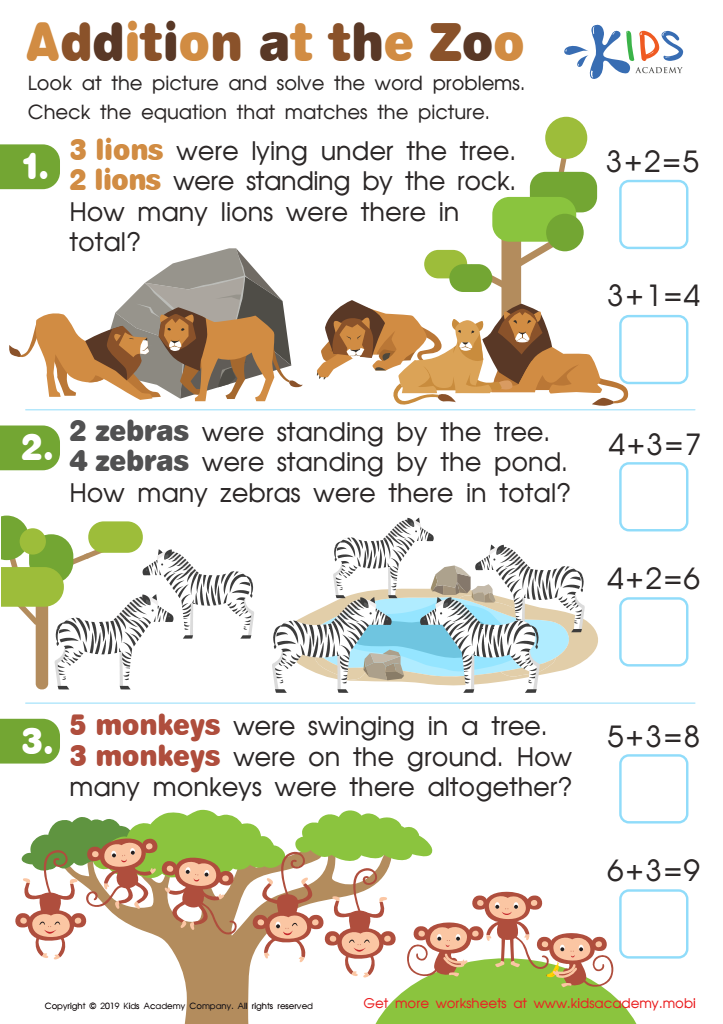
Addition at the Zoo Worksheet
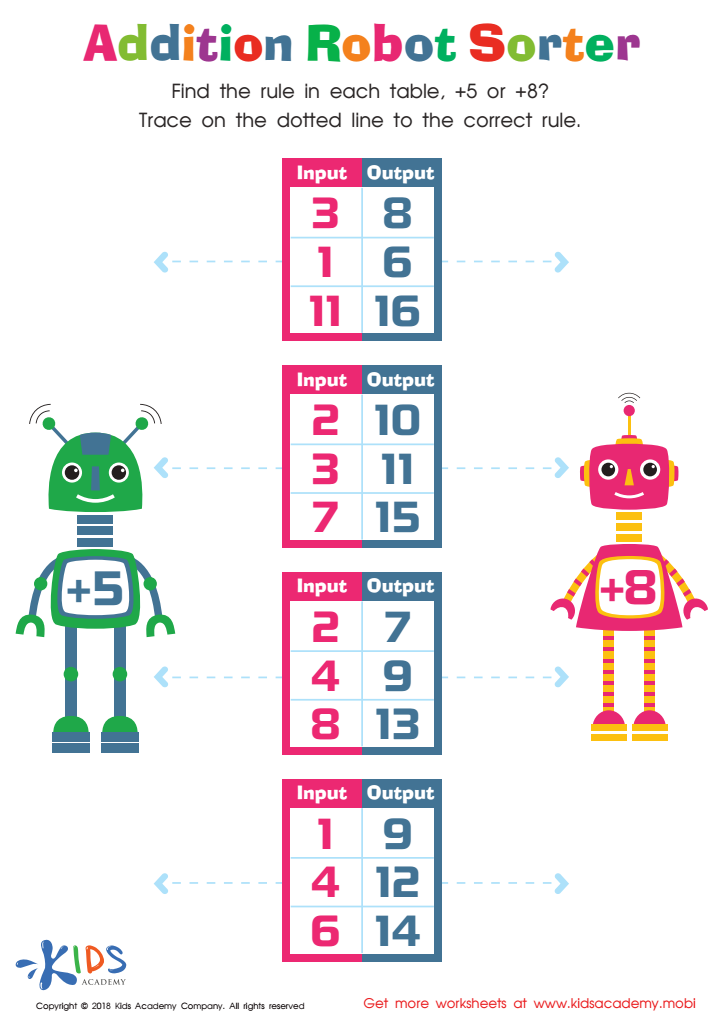
Addition Robot Sorter Worksheet
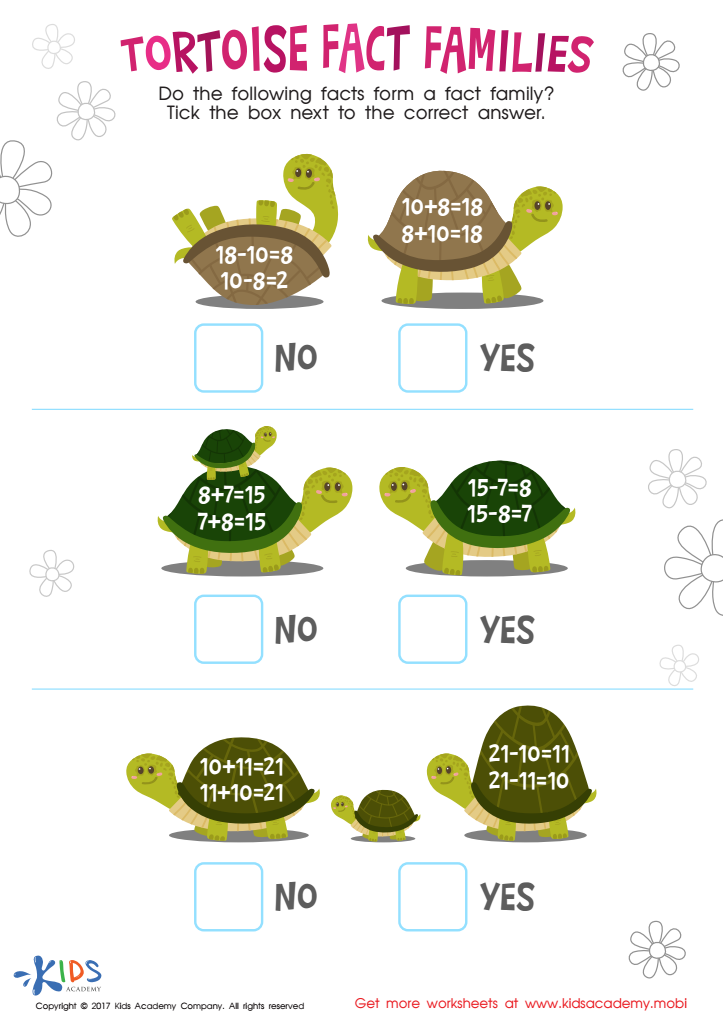
Tortoise Fact Families Printable
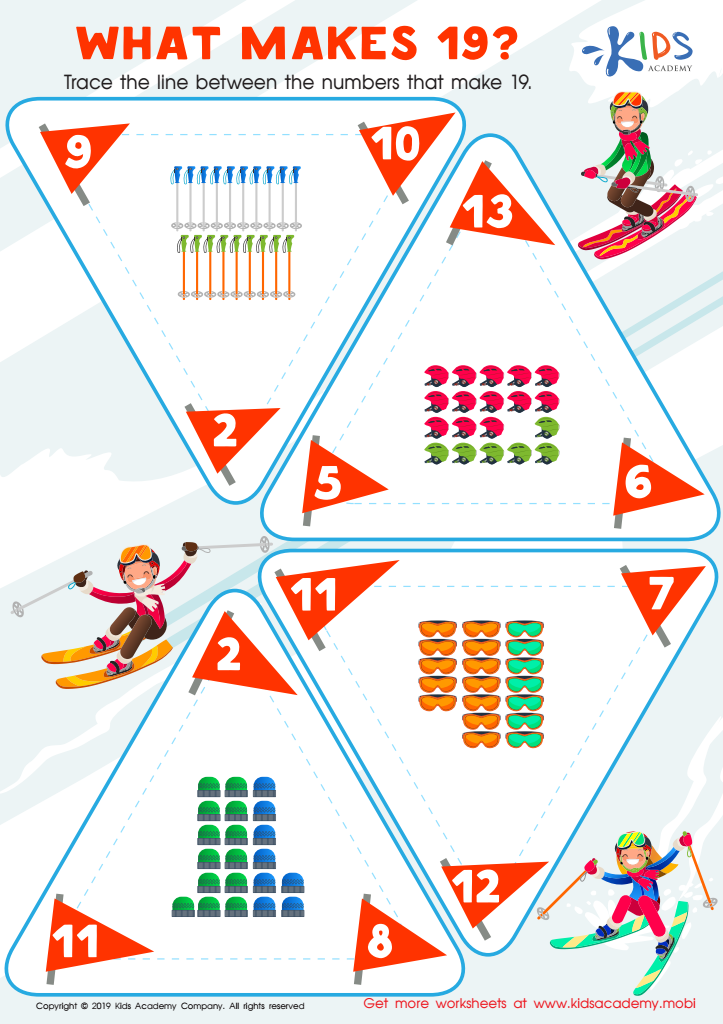
What Makes 19? Worksheet
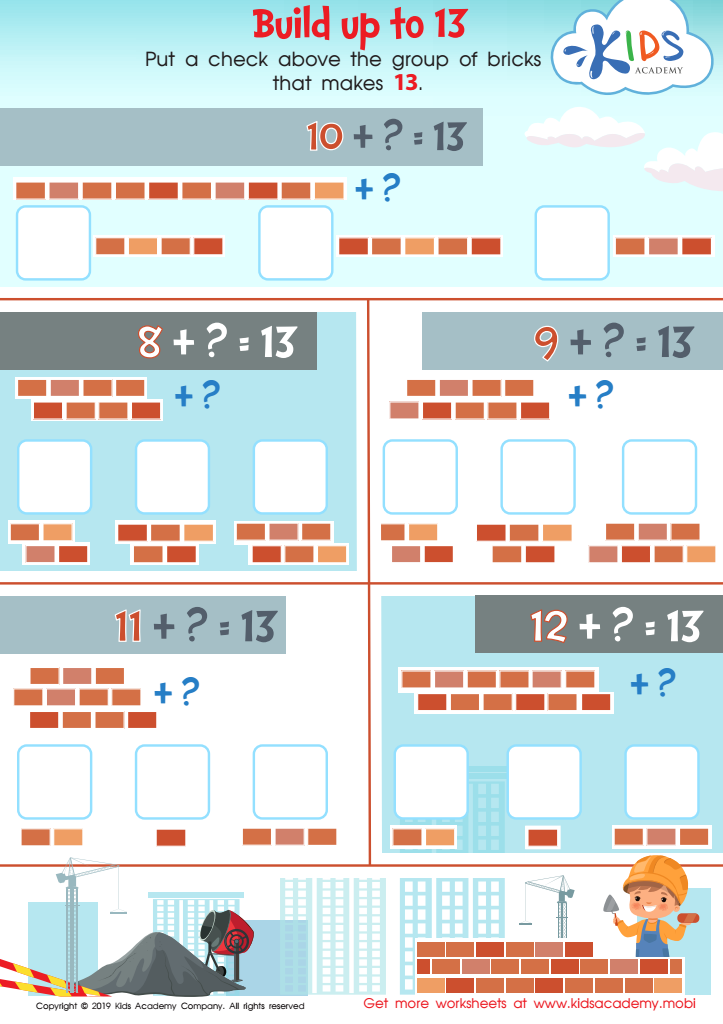
Build up to 13 Worksheet
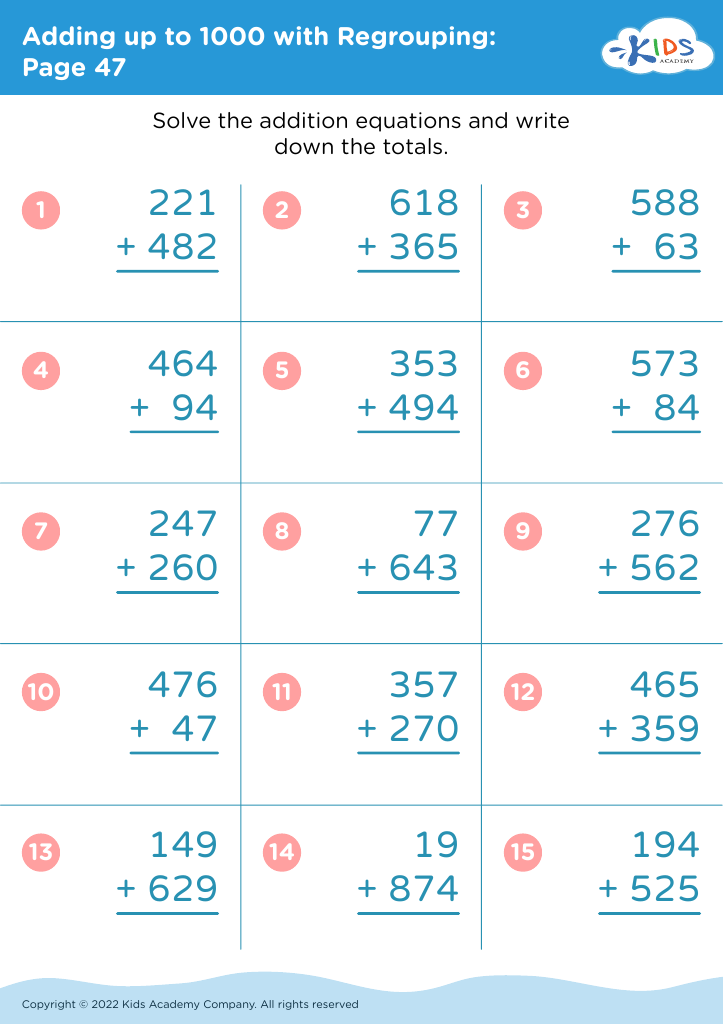
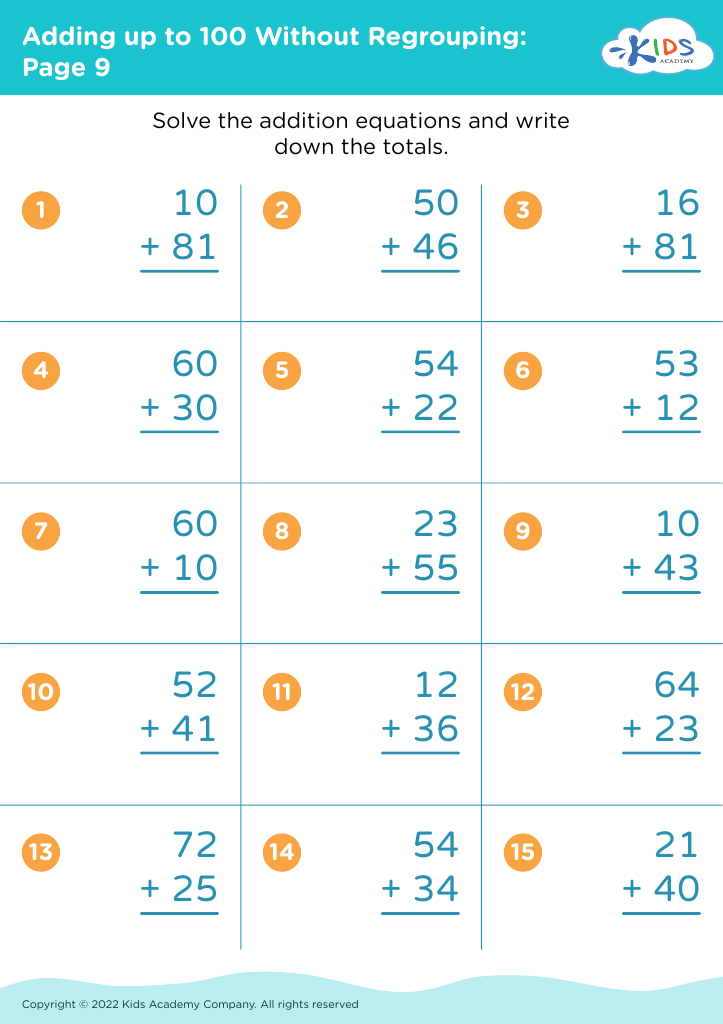
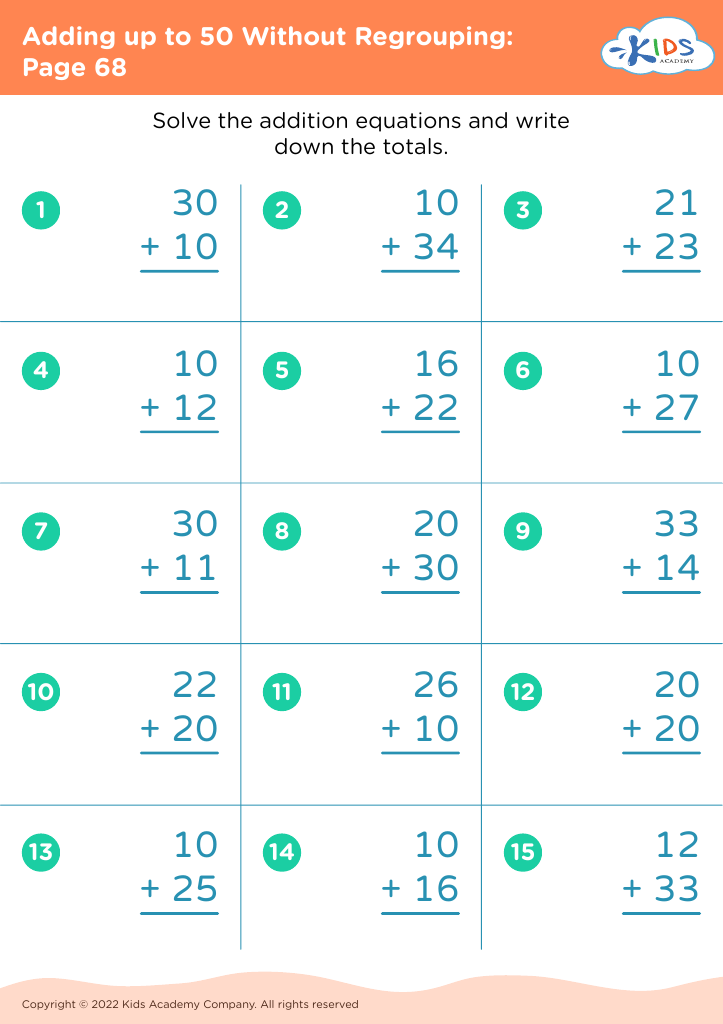
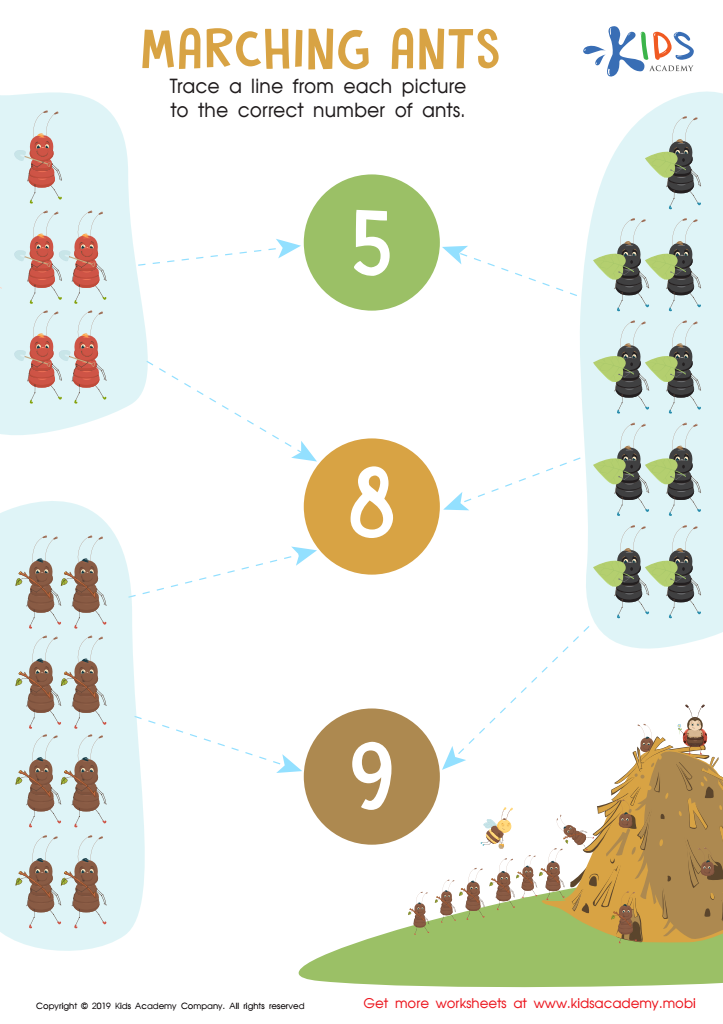
Marching Ants Worksheet
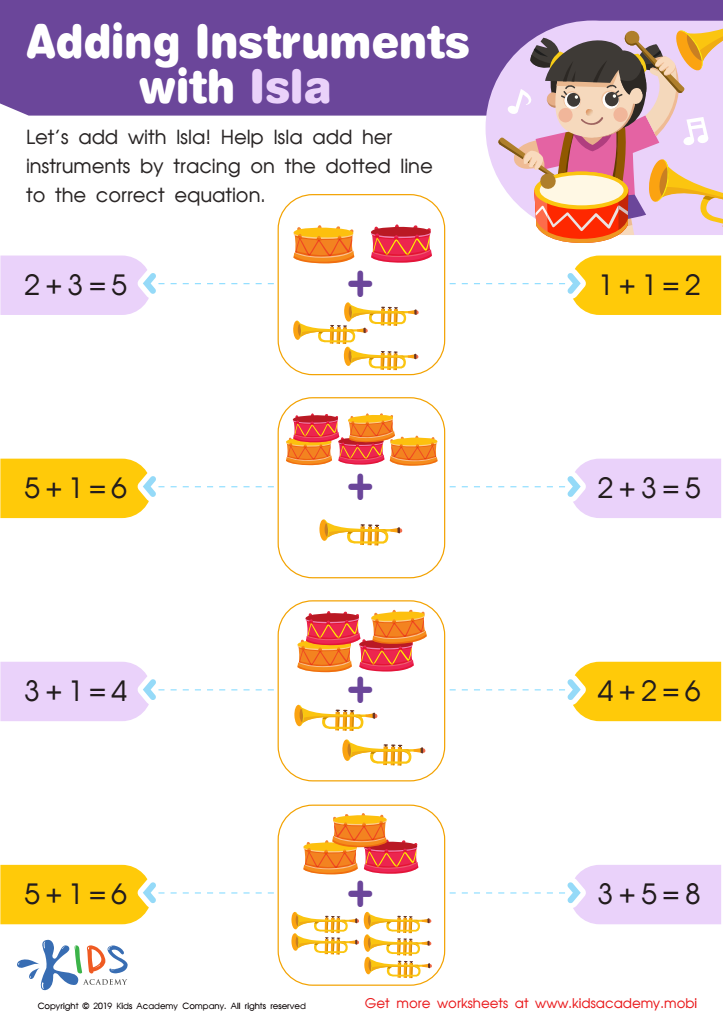
Adding Instruments with Isla Worksheet


.jpg)





Parents and teachers should care deeply about developing basic addition skills for children aged 6-7, as it forms the foundation for all future mathematics learning. At this critical stage, children's brains are highly receptive to numerical concepts. Mastery of basic addition not only enhances their numerical fluency but also builds their confidence in handling more complex mathematical procedures later on.
Basic addition helps children understand the concept of quantity and the relationship between numbers, which are essential for more advanced operations such as subtraction, multiplication, and division. It also strengthens their problem-solving and logical thinking skills. In addition, early success in math can foster a positive attitude toward the subject, reducing anxiety and boosting overall academic performance.
Parents and teachers can support children in developing these skills by incorporating fun and engaging activities, like math games, puzzles, and practical exercises. When children find joy in learning math, they are more motivated to practice and improve. This lifelong skill not only contributes to academic success but also enhances everyday decision-making and critical thinking abilities, ultimately preparing children for a society where numerical literacy is increasingly important. Therefore, investing time and effort in nurturing basic addition skills at a young age yields long-lasting benefits.








