Logical Reasoning Word Problems Worksheets for Ages 6-7
5 filtered results
-
From - To
Enhance your child's problem-solving abilities with our engaging Logical Reasoning Word Problems Worksheets for ages 6-7! Designed to captivate young minds, these worksheets foster critical thinking through fun, relatable scenarios. Each problem encourages kids to apply logic and reasoning skills as they navigate through practical math challenges. Perfect for reinforcing classroom learning or providing additional practice at home, our worksheets offer a variety of themes and difficulty levels suited for early learners. With colorful illustrations and clear instructions, your child will enjoy building a strong foundation in logical reasoning while boosting their confidence in mathematics. Explore our collection today!
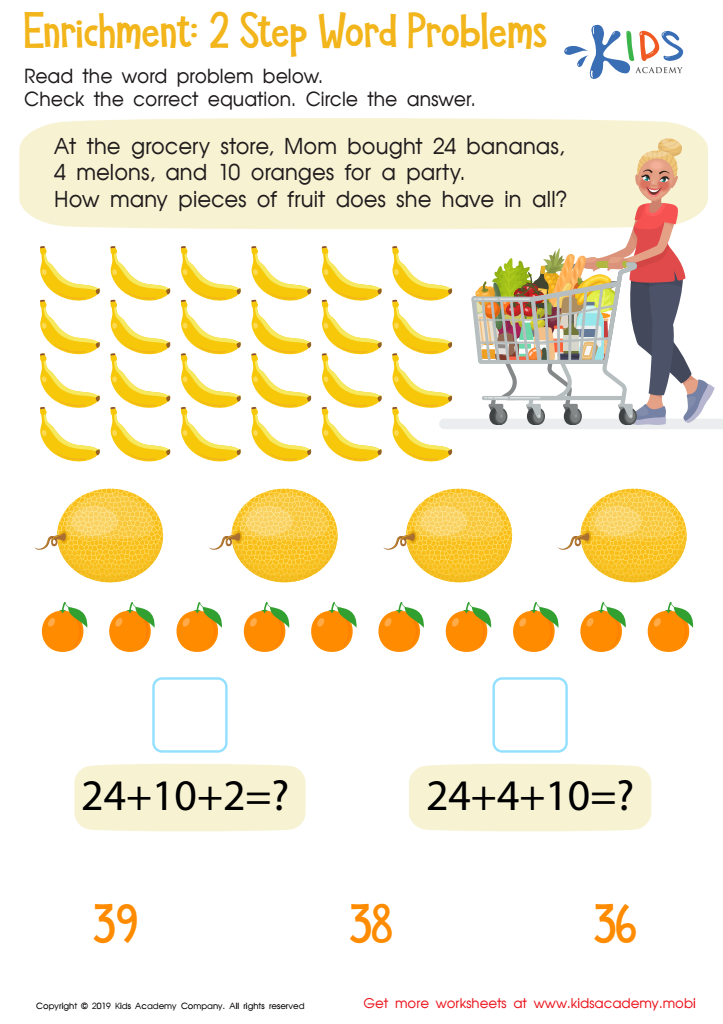
Enrichment -2 Step Word Problems Worksheet
 Assign to My Students
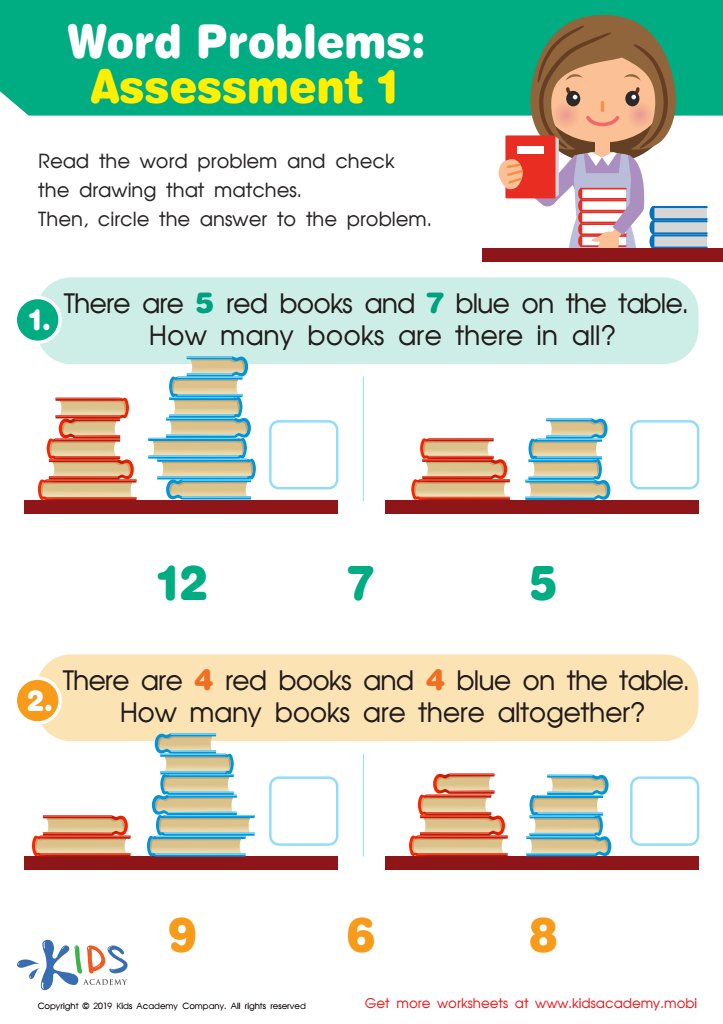
Word Problems: Assessment 1 Worksheet
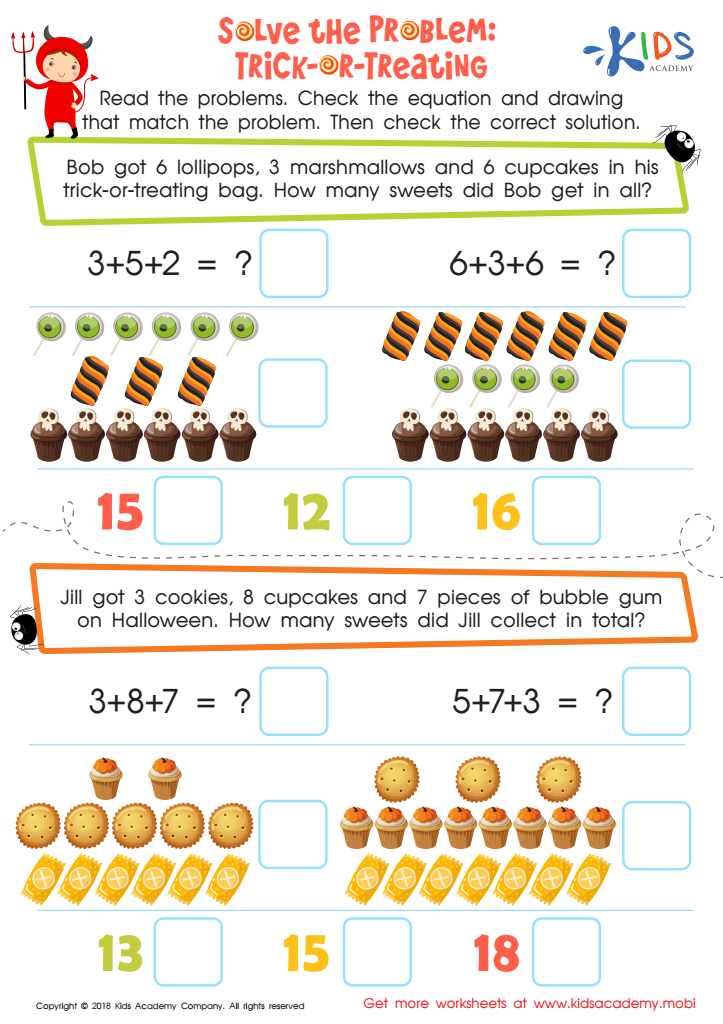
Solve the Problem: Trick–or–treating Worksheet
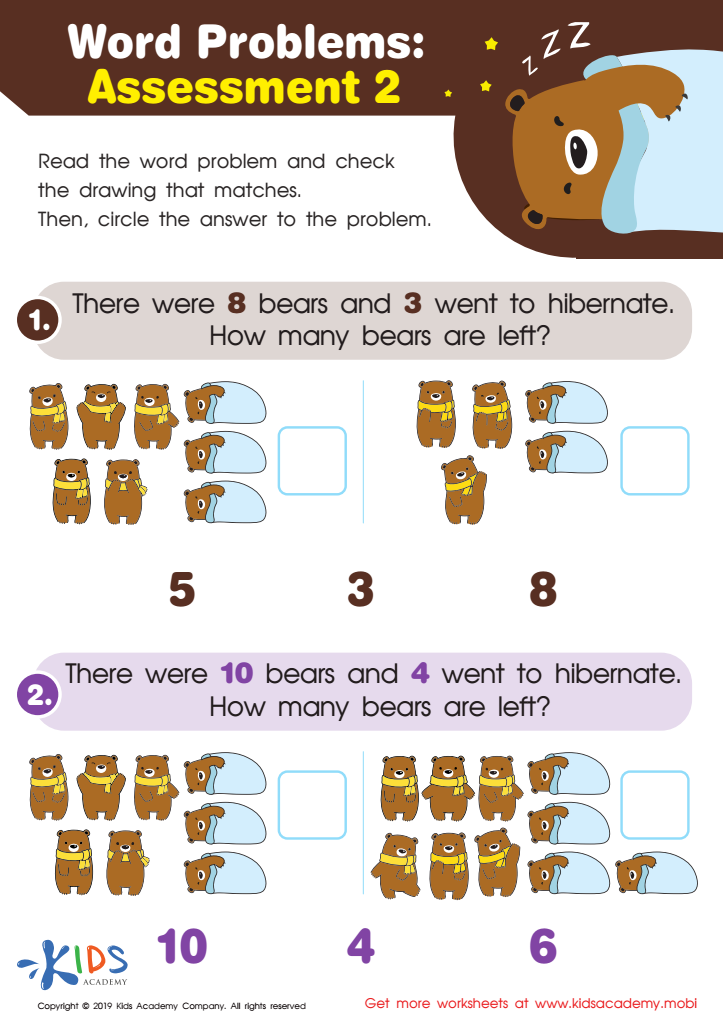
Word Problems: Assessment 2 Worksheet
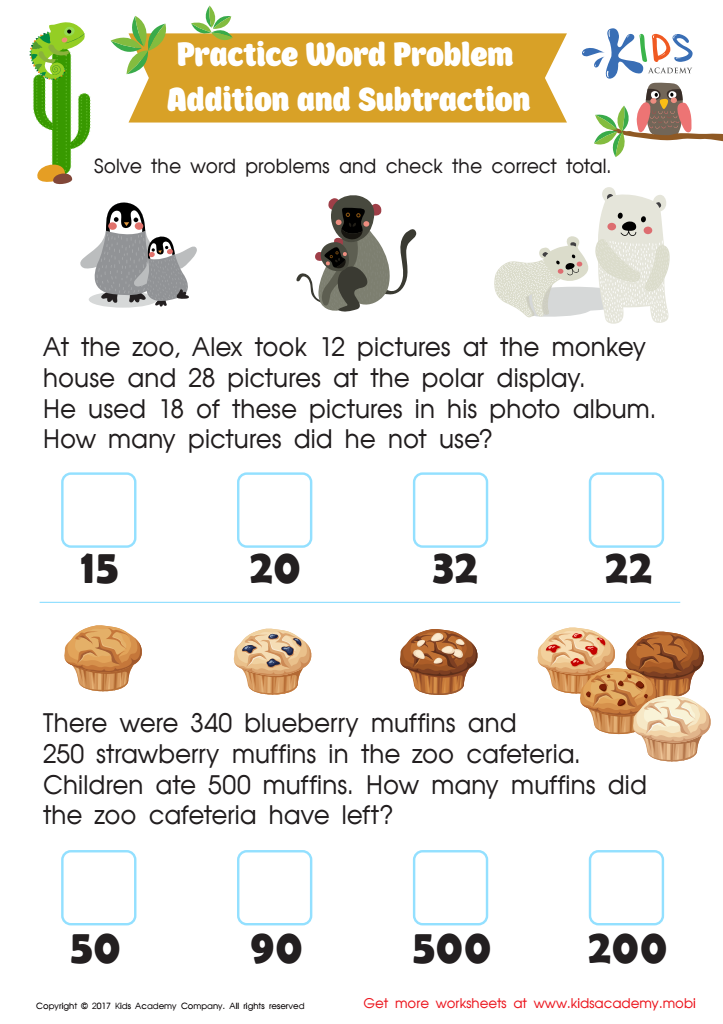
Addition and Subtraction: Word Problems Worksheet








Parents and teachers should prioritize Logical Reasoning Word Problems for children ages 6-7 because these exercises are vital for developing critical thinking skills. At this age, children begin to build reasoning abilities that support their understanding of mathematics and everyday situations.
Logical reasoning word problems encourage children to analyze scenarios, identify key information, and apply problem-solving strategies. This process not only helps them grasp mathematical concepts, such as addition and subtraction, but also fosters a mindset where they can approach challenges methodically.
Moreover, these problems enhance language skills as children learn to interpret words and phrases to shape their answers. This comprehension boosts reading skills alongside numerical abilities, creating a holistic approach to learning.
In addition, logical reasoning fosters resilience in young learners. By tackling complex problems, children learn the importance of persistence and making sense of mistakes. Collaboratively solving word problems can also deepen parent-teacher relationships; discussions around challenges encourage teamwork and communication skills.
Overall, fostering logical reasoning from an early age prepares children for advanced learning, cultivates curiosity, and equips them with essential life skills beyond the classroom, making it a vital area for attention from both parents and teachers.








