
Improve vocabulary Reading Worksheets for Ages 6-7
3 filtered results
Difficulty Level
Grade
Age
-
From - To
Subject
Activity
Standards
Unlock your child's potential with our "Improve Vocabulary Reading Worksheets" designed specifically for ages 6-7. These engaging worksheets focus on enhancing vocabulary through fun, interactive activities. Ideal for early readers, each worksheet features age-appropriate tasks that encourage word recognition, comprehension, and usage in context. Kids will enjoy exploring new words through exciting exercises that make learning enjoyable. Parents and educators alike can benefit from these resources to boost literacy skills at home or in the classroom. Empower your young learners with the tools they need to succeed in their reading journey. Start your child's vocabulary improvement today!
Favorites
With answer key
Interactive
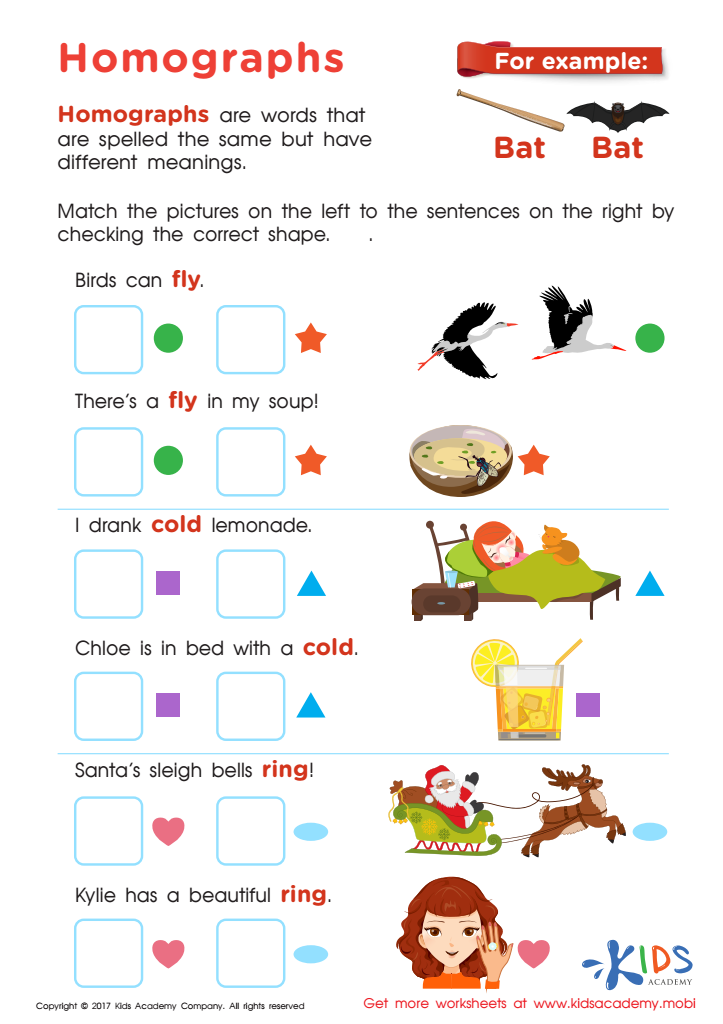
Homographs Free Printable Worksheet
Homographs can be tricky for kids. Help them gain valuable practice with this free printable worksheet. It has a selection of funny words with double meanings, and can be a great learning experience!
 Assign to My Students
Homographs Free Printable Worksheet
Worksheet
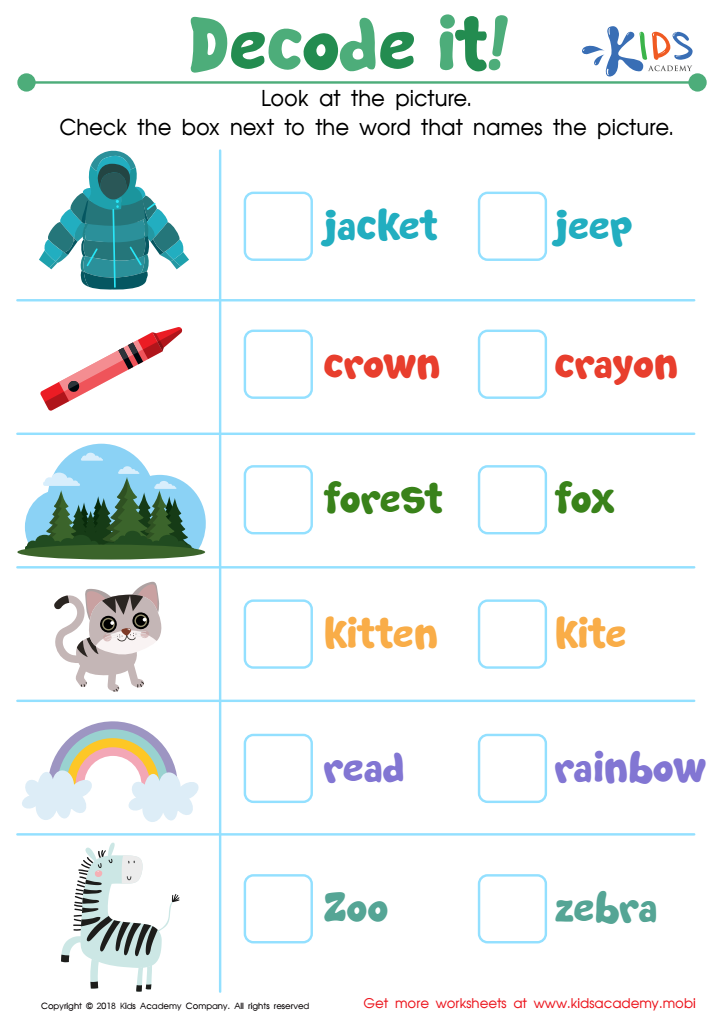
Reading: Decode It Worksheet
Look at the picture and circle the word that names it. This exercise helps kids practice picture cues and decoding words, with the same beginning sound. It builds their fluency and comprehension, giving them the skills to read unfamiliar words.
Reading: Decode It Worksheet
Worksheet
Join Kids Academy for Free
Who is primarily going to use this learning content?







Improving vocabulary and reading skills for children aged 6-7 is crucial for their academic development and everyday communication. At this age, children are transitioning from learning to read to reading to learn. A strong vocabulary enhances reading comprehension, enabling them to understand stories, follow instructions, and engage with more complex texts. This foundation is essential as it sets the stage for all future learning.
Moreover, a rich vocabulary facilitates better expression of thoughts and feelings, fostering confidence in social interactions and classroom discussions. Children with robust language skills are more likely to perform well in school and enjoy a love for reading that can last a lifetime. Engaging in vocabulary-building activities can also stimulate critical thinking and problem-solving skills.
Furthermore, parents and teachers play pivotal roles in this journey. By introducing new words through conversations, reading together, and encouraging curiosity about language, adults can make a significant impact. When educators and caregivers actively promote vocabulary development, they equip children with tools that enrich their learning experiences, spark creativity, and prepare them for success in an increasingly complex world. Ultimately, valuing and prioritizing these skills nurtures well-rounded, confident individuals ready to tackle future challenges.








