
Phonics recognition Reading Worksheets for Ages 6-7
5 filtered results
Difficulty Level
Grade
Age
-
From - To
Subject
Activity
Standards
Discover our engaging Phonics Recognition Reading Worksheets designed for children ages 6-7! These worksheets are crafted to help young learners master essential phonics skills, building a strong foundation for reading success. Featuring colorful illustrations and interactive exercises, our materials make learning phonics fun and effective. Children will practice identifying sounds, blending letters, and recognizing sight words, all while enhancing their reading fluency. Ideal for at-home study or classroom use, these worksheets cater to diverse learning styles and foster a love for reading. Empower your child’s literacy journey today with our phonics recognition resources and watch their reading skills flourish!
Favorites
With answer key
Interactive
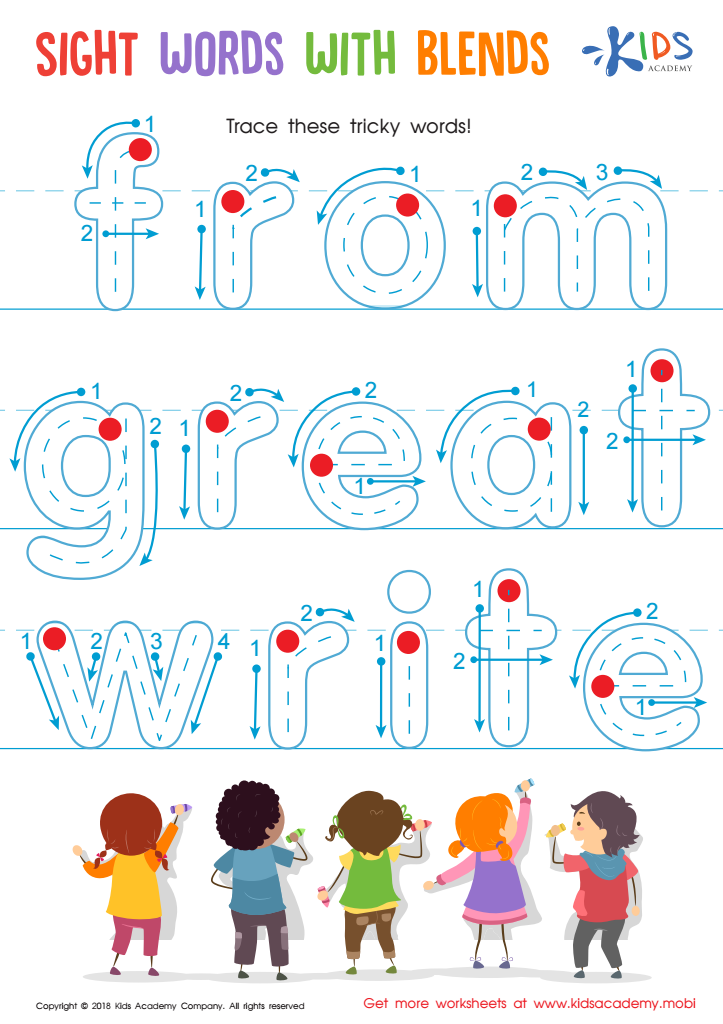
Sight Words with Blends Worksheet
This free PDF lets your children trace and write sight words with tricky blends. The guide numbers help them start from the top, building fine motor skills and enhancing sight word vocab. It's a great way to give your kids a solid foundation for reading!
 Assign to My Students
Sight Words with Blends Worksheet
Worksheet
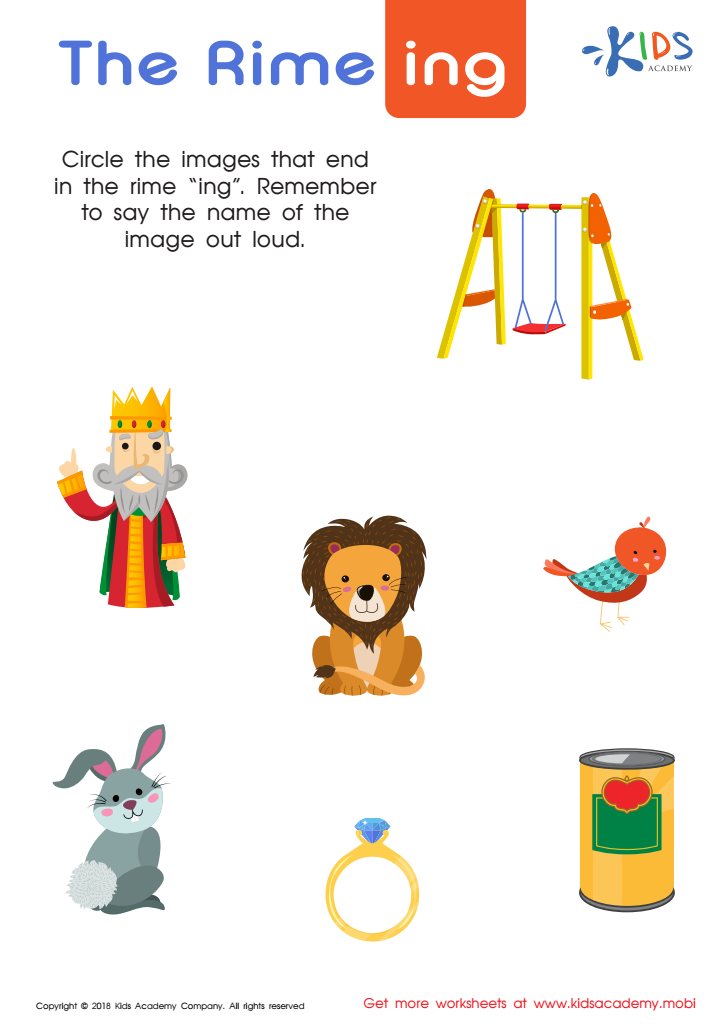
The Rime "ing" Worksheet
Teach children about word families and build their spelling and writing strategies with this colorful PDF worksheet. It features familiar pictures for children to name, encouraging them to circle those that end in "ing". This engaging activity will help develop reading skills in a fun way.
The Rime "ing" Worksheet
Worksheet
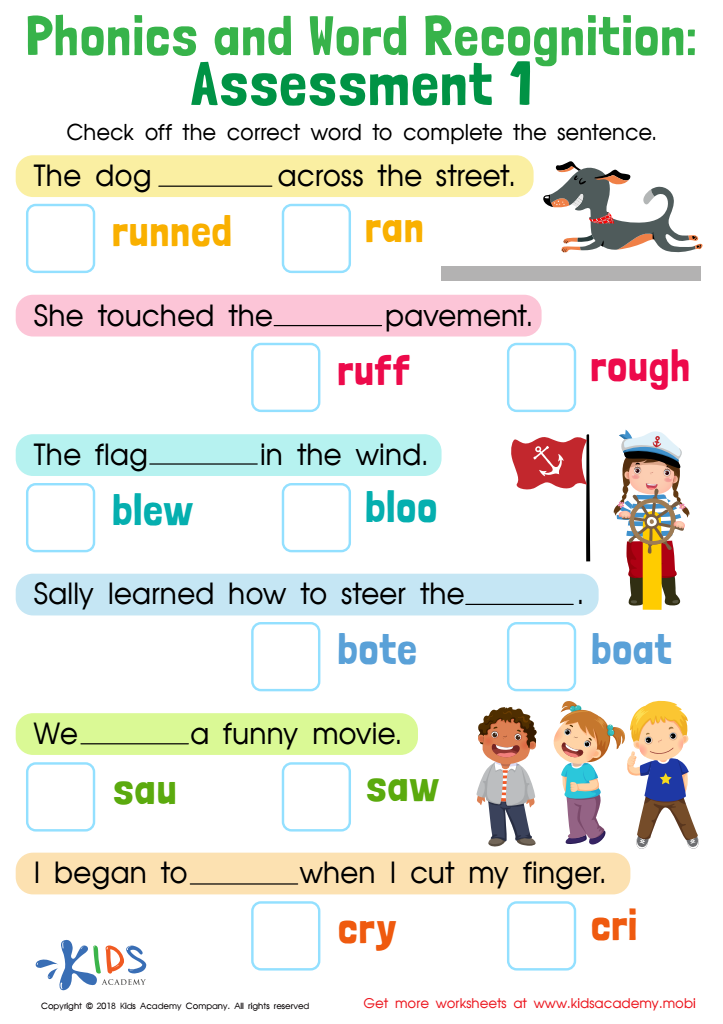
Phonics and Word Recognition: Assessment 1 Worksheet
This worksheet tests phonetics and word recognition. Students should be familiar with past tense verbs. Read incomplete sentences, then read multiple options and help students select the correct one.
Phonics and Word Recognition: Assessment 1 Worksheet
Worksheet
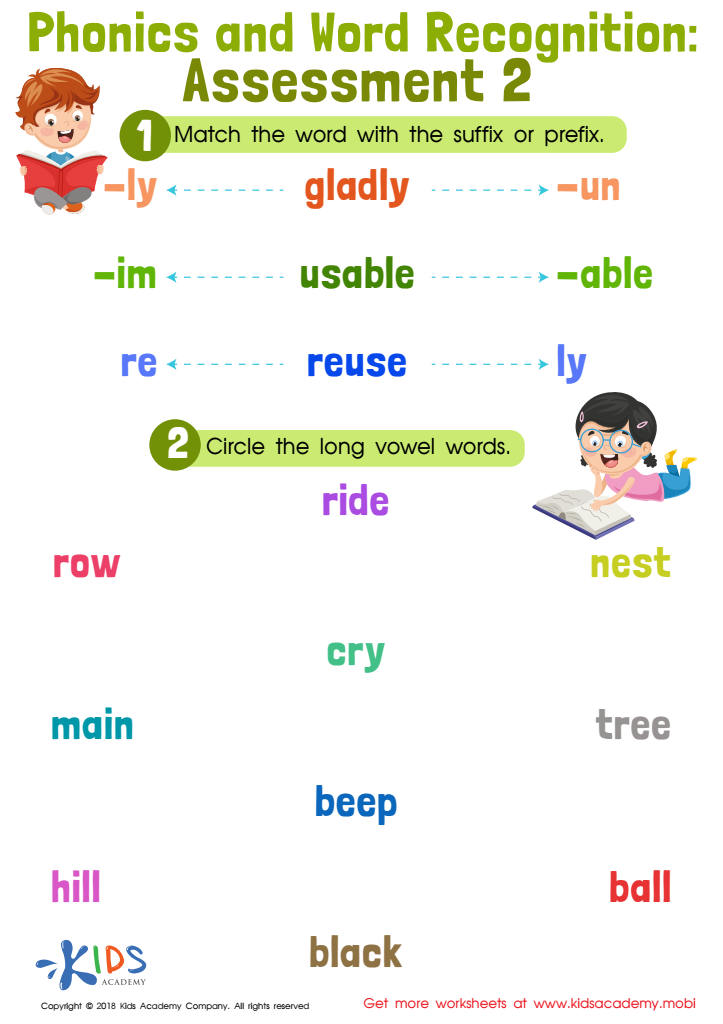
Phonics and Word Recognition: Assessment 2
Give kids common examples of suffixes and prefixes, such as "un-," "unhappy," "ness," "happyness." Ask them to match each word in the word recognition exercise to the correct suffix or prefix. Test phonetic understanding by having them circle the long vowel sounds.
Phonics and Word Recognition: Assessment 2
Worksheet
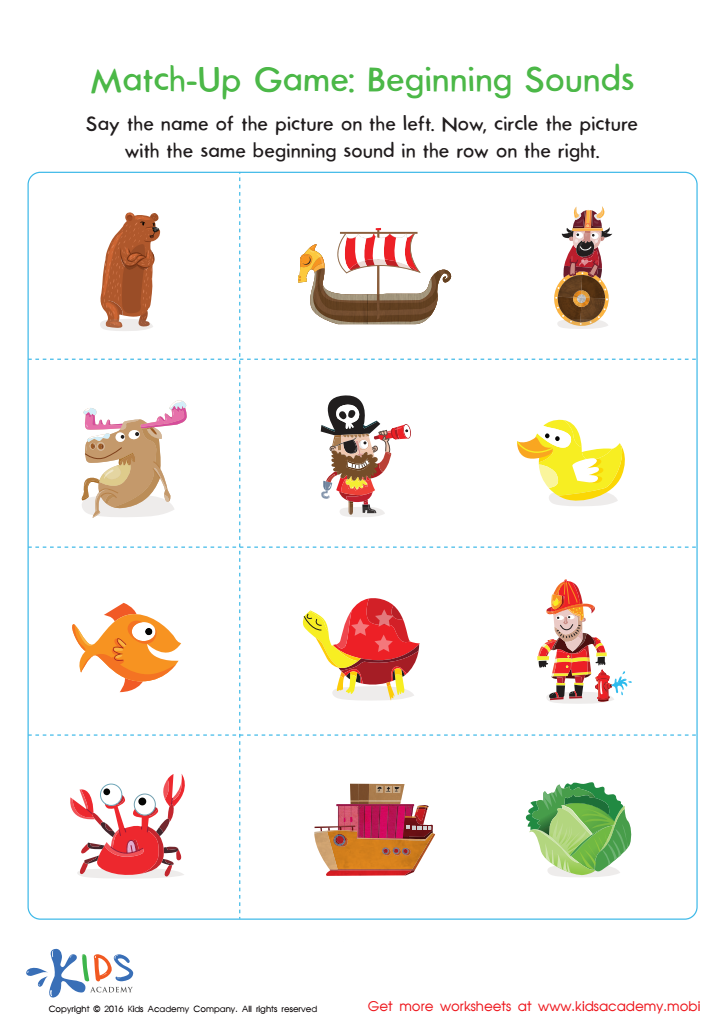
Match–Up Game: Beginning Sounds Worksheet
Start today with this beginning sounds match-up printable!
Teach your child to solve problems mentally with this beginning sounds match-up printable. They'll learn to categorize pictures based on phonics rules, developing mental stamina and focus. It's an important step for recognizing sounds and letters in print, building a foundation for reading and spelling. Start today and take your child's skills to the next level!
Match–Up Game: Beginning Sounds Worksheet
Worksheet
Join Kids Academy for Free
Who is primarily going to use this learning content?








Phonics recognition is crucial for children aged 6-7, as it serves as the foundation for reading proficiency. At this age, children are transitioning from learning to read to reading to learn. Effective phonics instruction empowers them to decode words, fostering greater fluency and comprehension. Understanding the relationship between sounds and letters allows young readers to tackle unfamiliar words independently, boosting their confidence and enthusiasm for reading.
Moreover, research consistently shows that strong phonics skills promote overall literacy development. When children can easily sound out words, they engage more fully with texts, which enhances vocabulary acquisition and critical thinking. This skill set not only aids in academic success but also encourages lifelong learning and curiosity.
Parents and teachers should prioritize phonics recognition because it also has societal implications. Proficient readers are better equipped for future educational challenges and are less likely to struggle with literacy-related issues later on. By supporting phonics-based programs and activities at home and in classrooms, caregivers can foster a rich reading culture, ensuring children develop the essential skills needed to navigate a world filled with information and opportunities. In essence, promoting phonics recognition is a significant investment in a child's future success.








