Animal recognition Science Worksheets for Ages 6-7
5 filtered results
-
From - To
Introduce your young learners to the fascinating world of animals with our Animal Recognition Science Worksheets for ages 6-7! Designed to engage and educate, these worksheets offer a variety of fun activities that help children identify different animals, their habitats, and unique characteristics. Through colorful illustrations and interactive tasks, kids will enhance their observation skills and expand their knowledge of the animal kingdom. Perfect for classroom use or at-home learning, these resources foster curiosity about wildlife while supporting foundational science concepts. Download now to inspire your child's appreciation for animals and the environment while making learning enjoyable and exciting!
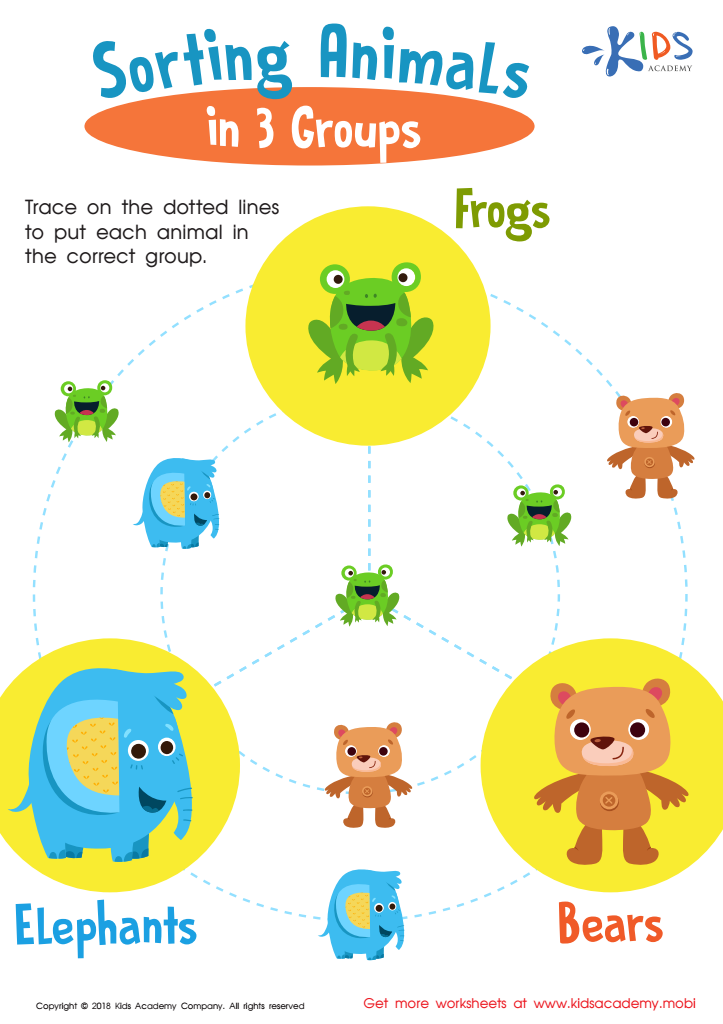
Sorting Animals in 3 Groups Worksheet
 Assign to My Students
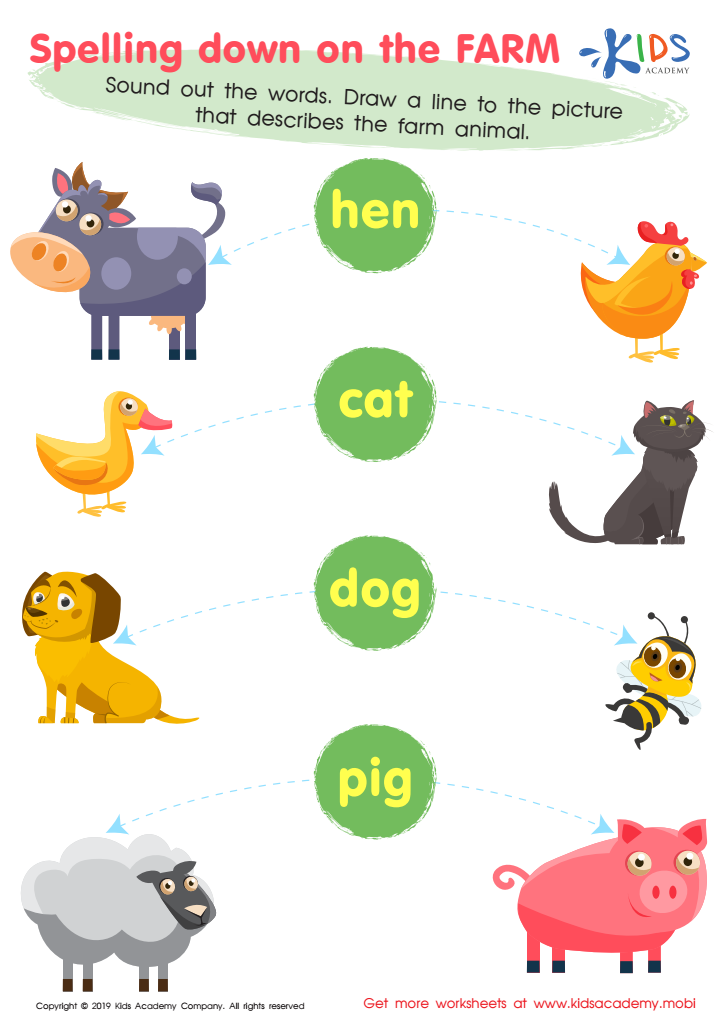
Spelling Down on the Farm Worksheet
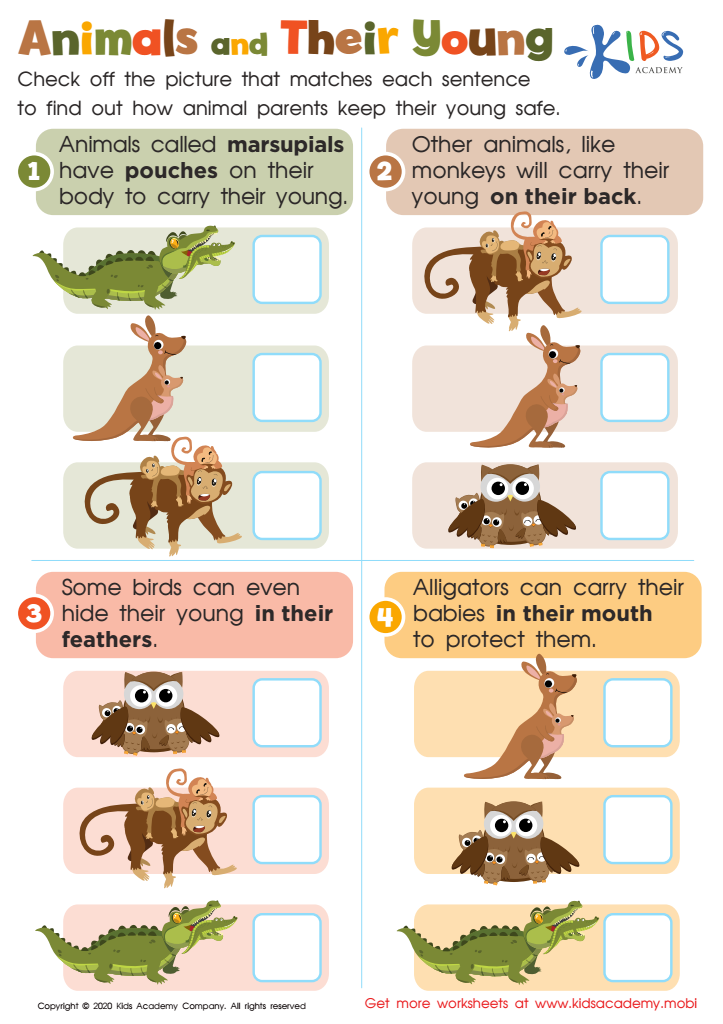
Animals and Their Young Worksheet
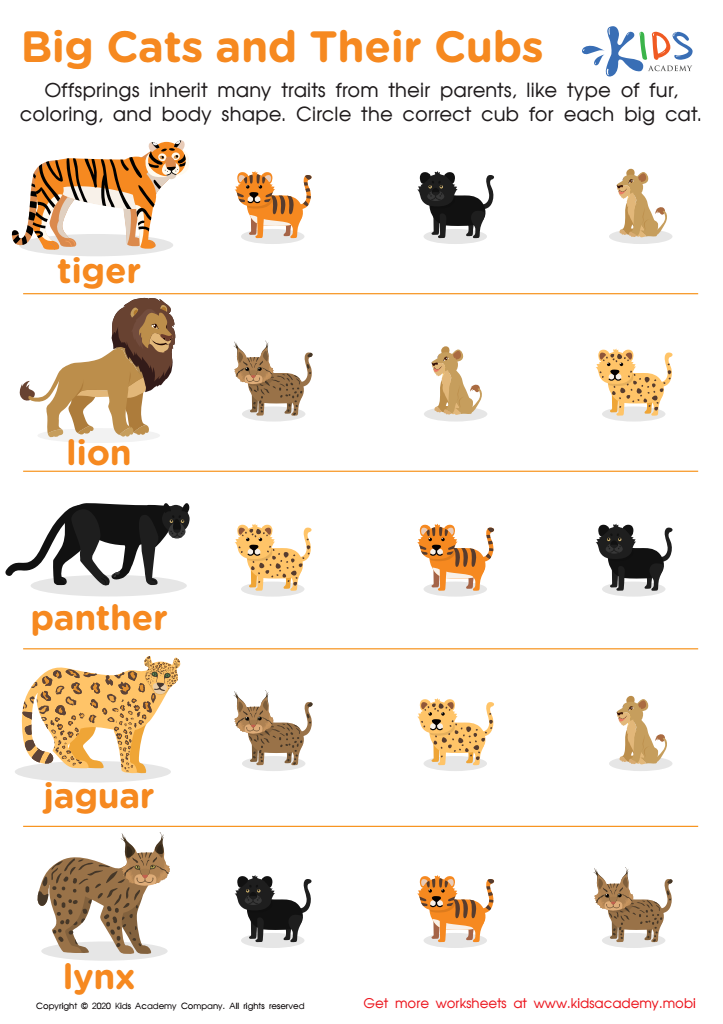
Big Cats and Their Cubs Worksheet
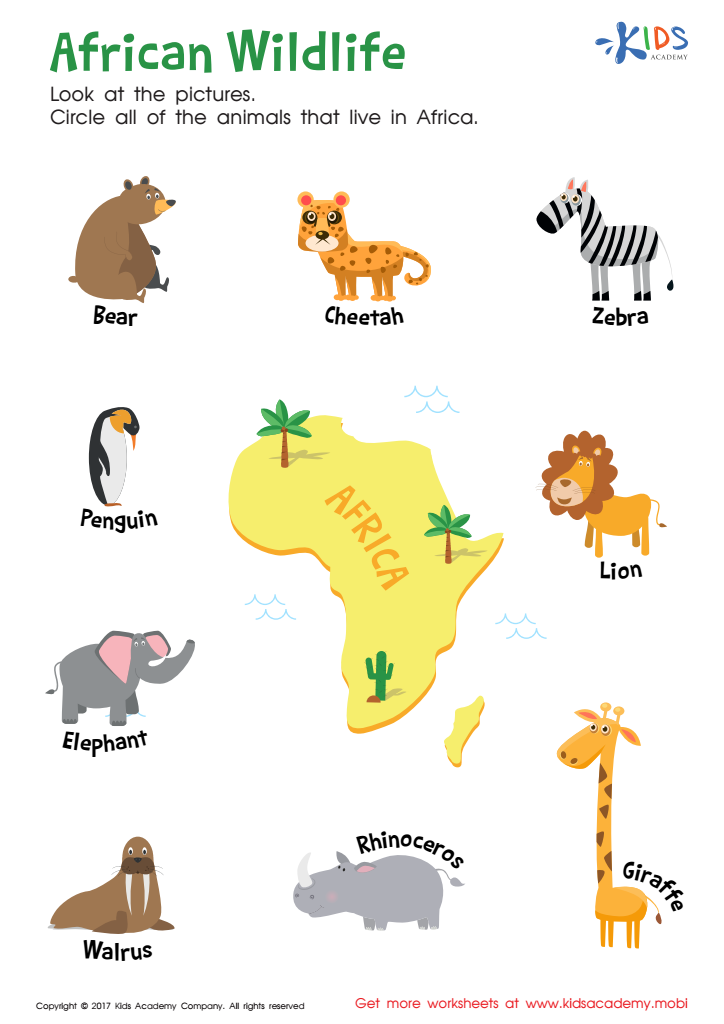








Animal recognition science is essential for children aged 6-7, as it fosters curiosity and awareness of the natural world. At this age, children are naturally inclined to explore their environment, making it the perfect time to introduce them to the diverse species that inhabit our planet. Understanding different animals and their characteristics not only enhances observational skills but also instills a sense of responsibility towards wildlife conservation.
Moreover, engaging with animal recognition can enhance cognitive development and social skills. Children learn to categorize animals, identify habitats, and understand different ecosystems. This not only aids their critical thinking but also encourages teamwork and collaboration when discussing animals with peers. Activities such as field trips, nature walks, or classroom projects promote active learning and spark enthusiasm for science.
Incorporating animal recognition aligns with many educational standards and can spark interdisciplinary learning, connecting subjects like art, geography, and ethics. Ultimately, parents and teachers who prioritize animal recognition equip children with valuable knowledge, foster a love for nature, and cultivate responsible future citizens who care about biodiversity. This awareness is crucial as it lays the foundation for environmental stewardship later in life.







